
Two minor characters from the play 'Hamlet' stumble around unaware of their scripted lives and unable to deviate from them.Two minor characters from the play 'Hamlet' stumble around unaware of their scripted lives and unable to deviate from them.Two minor characters from the play 'Hamlet' stumble around unaware of their scripted lives and unable to deviate from them.
- Awards
- 3 wins & 2 nominations total
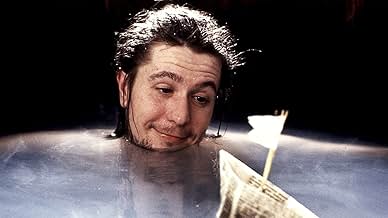
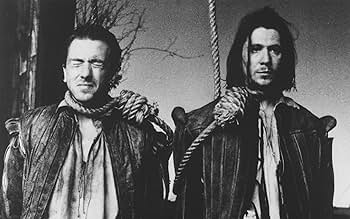
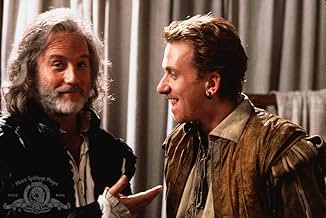

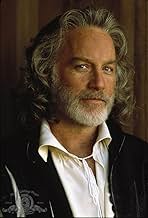



Serge Soric
- Tragedian
- (as Srdjan Soric)


Sven Medvesek
- Laertes
- (as Sven Medvesck)
- Director
- Writer
- All cast & crew
- Production, box office & more at IMDbPro
7.325.2K
1
2
3
4
5
6
7
8
9
10
Featured reviews
one of the best movies ever made
This is a truly unique movie, comic, sarcastic, tragic, ironic, and definitely hilarious. based on tom stoppard's play of the same name (stoppard also directs the film), "rosencrantz and guildenstern are dead" delves into the tragicomic lives of minor characters everywhere, on-stage and off. ros and guild's lives are thrown into turmoil every time they interact with the regular cast of hamlet, leaving them with few clues as to what their purpose is in the play and in life. stoppard's script is dizzying with puns, plays, feints and twists. the cinematography is minimalist to say the least (remember, the script was originally intended for the stage) but the "stage-presence" of the actors more than makes up for any lacks. if you like theatre and the absurd, this movie is for you.
Rosencrantz and Guildenstern, victims of circumstance...
Rosencrantz and Guildenstern Are Dead was one of my favourite films whilst growing up. The movie follows two irrelevant characters (irrelevant in that although they served a significant purpose, their characters were not developed in any depth... Rosencrantz and Guildenstern, as individuals, were relatively unimportant) through one of the most renowned stories ever told (Hamlet). It is a film about two characters that are completely unaware of the magnitude of the events taking place around them. This carries on throughout the entire film, and is also evidenced in their accidental discoveries of significant historical scientific findings (such as the steam engine or the concept of gravity). The characters stumble their way through the film, unaware of the consequences to their actions or their significance or importance.
The characters spend the entire film coming to terms with their existence. Shakespeare didn't provide any detailed character development of either Rosencrantz or Guildenstern, and as such, they are left confused as to the purpose of their own existence.
The film also looks at the concept of a predetermined destiny. Rosencrantz and Guildenstern's fate is already determined before the film begins. And although they play an important role in one of the greatest stories ever told, they are completely unaware of their destiny; they are merely victims of circumstance.
I should also note that the constant banter between the two characters (specifically in their 'Game of Questions') is pure quality.
The characters spend the entire film coming to terms with their existence. Shakespeare didn't provide any detailed character development of either Rosencrantz or Guildenstern, and as such, they are left confused as to the purpose of their own existence.
The film also looks at the concept of a predetermined destiny. Rosencrantz and Guildenstern's fate is already determined before the film begins. And although they play an important role in one of the greatest stories ever told, they are completely unaware of their destiny; they are merely victims of circumstance.
I should also note that the constant banter between the two characters (specifically in their 'Game of Questions') is pure quality.
A comedy... about tragedy
Imagine if you will, two talented actors. They are playing quite small roles... the smallest roles in the play so are given no form of direction or motivation for their parts. They are simply told they are "sent for". They are told they are "Rosencrantz and Guildenstern" but no one fully indicated to them which of them were which. No they are thrust bodily into the play itself (Hamlet) and stripped of all their memories of their life before... they have become the characters. They know their cues, instinctively know their lines, but no one bothered to tell them the plot of the play, leaving them to figure it out (or not) for themselves. Their only source of any kind of direction is a player (Dreyfuss) who gives them a rudimentary crash course on dying and tragedy itself ("Generally speaking, things have gone about as far as they can possibly go, when things have gotten about as bad as they can reasonably get.")... and ("We are tragedians. We follow directions. There is no choice involved.") This is Rosencrantz and Guildenstern Are Dead. And it is the funniest intellectually stimulating comedy I've ever seen. Oldman and Roth deliver a wonderful performance, always desperately struggling "get it" but never quite fully understanding what's going on around them. Oldman's portrayal of the existentially distracted Rosencrantz... or is that Guildenstern... was brilliant! (G: Is that you? R: I don't know! G: (disgustedly) It's you.) Viewers who delighted in the "verbal tennis" match might also notice that this really goes on through out the movie. (Player: But why? R: Exactly! G: Exactly what? R: Exactly why. G: Why what? R: What? G: Why? Why what, exactly?) It's truly sad that this movie doesn't get the recognition that it deserves. See Hamlet... become familiar with the story line... and then see this movie. It is quite worth the effort. I give it a 10 out of 10.
The Play Without the Play
As an architect, I am often asked what is the world's best building. The answer: a small chapel outside Barcelona started by Gaudi but never finished. We have the model (a bunch of strings) and the basement. But when one visits, it is a profoundly lifechanging place. Gaudi exceeded the building's budget, and then that of the whole community (which was to have been built) before getting out of the ground. But the ambition was so grand, one can see it with only the barest explicit minimum. But, you have to have the reference of what the master intended.
Hamlet is the same. It was never really finished, being so large a conception. Shakespeare tinkered and added over decades. So what Stoppard does here is expand Hamlet by shrinking it. The plot is only glimpsed, but that part was always incidental anyway. The play is about reasoning, and when things are real and when not, and about what element of reality is causal. So instead of giving us the language, Stoppard seizes on one device, the play within the play.
In the raw Hamlet, this is pretty rich, but Stoppard weaves new dimensions of inversion and self-reference. There are at least four levels of play here, and we keep switching about, together with most of the characters. This is not just amusing, but elaborates on `Hamlet,' when is fate real? would it change if we could see the larger clockworks of the universe? does language (specifically query) aid in this endeavor? considering that, are ideas tied to time and fate? This last point is comically illustrated as one of the pair (they don't know who is who) keeps `stumbling' on great ideas, which then vanish.
The play (Stoppard's first) seems to have been his one excellent work, followed by the mundane. Some are unhappy because the film is not so frantic as the 1967 play, but I think that is because there is a different dynamic with a film audience than a stage audience. Fewer tricks can be played. But this is a wonderful solution to the problem of language in film: it is just not cinematic, so best to exploit the dissonance.
There's risk here. The film as film is not great, so set that aside. And the notions are dangerously sophomoric. But that's what makes the whole thing so darned funny. Some critics (notably the normally intelligent Stanley Kauffmann) think Roth and Oldham are poor. But this is a strange sort of acting demand, one for which no measures exist: part surreal, part comic (in different traditions, half Monty Python, half Abbot and Costello) and part tragic confusion. They reward my trust and that's what matters I think. Dreyfus is supposed to be over the top, and he complies.
In the great Hamlet sweepstakes, many recommend seeing Mel Gibson and then Gwyneth Paltrow. I suppose that's a colorful route. But the real sense of what this is all about comes through with more real reward via Branagh and then this clever film.
Hamlet is the same. It was never really finished, being so large a conception. Shakespeare tinkered and added over decades. So what Stoppard does here is expand Hamlet by shrinking it. The plot is only glimpsed, but that part was always incidental anyway. The play is about reasoning, and when things are real and when not, and about what element of reality is causal. So instead of giving us the language, Stoppard seizes on one device, the play within the play.
In the raw Hamlet, this is pretty rich, but Stoppard weaves new dimensions of inversion and self-reference. There are at least four levels of play here, and we keep switching about, together with most of the characters. This is not just amusing, but elaborates on `Hamlet,' when is fate real? would it change if we could see the larger clockworks of the universe? does language (specifically query) aid in this endeavor? considering that, are ideas tied to time and fate? This last point is comically illustrated as one of the pair (they don't know who is who) keeps `stumbling' on great ideas, which then vanish.
The play (Stoppard's first) seems to have been his one excellent work, followed by the mundane. Some are unhappy because the film is not so frantic as the 1967 play, but I think that is because there is a different dynamic with a film audience than a stage audience. Fewer tricks can be played. But this is a wonderful solution to the problem of language in film: it is just not cinematic, so best to exploit the dissonance.
There's risk here. The film as film is not great, so set that aside. And the notions are dangerously sophomoric. But that's what makes the whole thing so darned funny. Some critics (notably the normally intelligent Stanley Kauffmann) think Roth and Oldham are poor. But this is a strange sort of acting demand, one for which no measures exist: part surreal, part comic (in different traditions, half Monty Python, half Abbot and Costello) and part tragic confusion. They reward my trust and that's what matters I think. Dreyfus is supposed to be over the top, and he complies.
In the great Hamlet sweepstakes, many recommend seeing Mel Gibson and then Gwyneth Paltrow. I suppose that's a colorful route. But the real sense of what this is all about comes through with more real reward via Branagh and then this clever film.
What happens in between the curtains...
"There is no choice involved. The bad end unhappily, the good unluckily. That is what tragedy means." - The Player
Out of all of the timeless Shakespearian tragic protagonists or even supporting players, few would prove less memorable and recognized than Rosencrantz and Guildenstern, background players in Hamlet who are given no development, little purpose, and, apart from a single line mentioning their offstage deaths in passing, no closure. As such, it is nothing less than a delightfully ingenious decision on writer/director Tom Stoppard's part to re- examine Hamlet from the perspective of the two characters who seldom play any part in it, and in between question their purpose, their reason for being there, what they are attempting to accomplish and their inability to remember anything before being brought into the story. Such a work is Rosencrantz & Guildenstern are Dead: an absurdist, existential take on the tragedy of the Prince of Denmark, for which rational description proves fleeting and incomplete. Consider the film as an amalgamation of its source material, Shakespeare's Hamlet, Beckett's absurdist Waiting for Godot, and the irreverent comedic stylings of Abbot and Costello and Monty Python - and even this fails to exactly capture the unique stylistic blend that is the film.
As with many such experimental works, Rosencrantz & Guildenstern are Dead will likely not prove appealing to all tastes, particularly not for those devoid of a healthy tolerance for theater of the absurd and existential or otherwise philosophical ramblings with no real definitive outcome or purpose. However, Stoppard's exquisitely witty and verbose script is rattled off at a breakneck pace, making up for the occasional lull in pacing and absurdist silent interludes which fail to add much to the plot. Despite its theatrical origins, the work makes a surprisingly fluid transition to film, with some fittingly minimalist cinematography helping it feel less stage oriented. The somewhat low budget appearance of the production, as opposed to being a detriment, actually adds an endearing and introspective quality to the film, as if meant to look like it was being performed by a low budget theater group. Similarly, the film's musical score is just bizarre and comically unsettling enough to promote the perfect offbeat mood throughout.
Stoppard's work also deserves tremendous commendations for his work's introspective challenging conventions of theater and audience expectations by leaving many plot points unexplained or up for subjective interpretation. The constant question as to whether the two titular characters are actors, seemingly so into character that they have forgotten the nature of their putting on a play (pages from the script of Hamlet drift tantalizingly around the scenery throughout, suggesting this possibility) or the actual characters themselves within the world of the play, unaware as to their fictional nature, ultimate lack of purpose and inescapable impending fate is never fully resolved, and ultimately never seems to make much of a difference. The play's treatment of fatalism and pre-determination in artistic works is similarly intriguing - as Dreyfus' Player (seemingly the only fully informed character in the play) explains, the events which befall the two bewildered protagonists are not decided, but "written". However, Stoppard never draws the distinction between introspective artistry or just plain absurdity, leaving it up to his audience to fill in many of the film's gaps and come to their own conclusions, but his inspired storyline proves consistently entertaining in the midst of its frequently nonsensical philosophical banter. Similarly, the script's exploration of the frequently misleading and deceptive power and ambiguity of words leads for some turns of phrases worthy of Shakespeare himself, whose dialogue style Stoppard frequently mocks and simultaneously pays tribute to.
Without such an accomplished cast putting their own unique spin on the material, it is hard to imagine such a difficult play being transposed into such a highly enjoyable movie. Gary Oldman and Tim Roth are perfectly cast as the consistently bewildered titular duo, and their quirky chemistry and impeccable comedic timing makes for some of the most enjoyable back and forth routines in recent memory (the verbal tennis match is an abiding classic, but is only a fraction of the comedic brilliance the two muster up) - an absurdist Abbot and Costello if you will, with Oldman's loopy Rosencrantz making a ideal foil for Roth's curt straight man Guildenstern. A fittingly grandiose Richard Dreyfus is a consistent scene stealer, making superb use of many of the best lines in the script as the lead player in the theatrical group performing for the royal family. Similarly, Iain Glen makes a suitably manic Hamlet, and Donald Sumpter and Joanna Miles prove wonderfully theatrical as King Claudius and Queen Gertrude, always lost in the wistful world of the play.
Unconventional, bizarre, thought provoking and consistently funny, Rosencrantz & Guildenstern are Dead will certainly isolate certain audiences, in particular those with little tolerance for theater of the absurd. But for those willing to partake in material outside the parameters of the mainstream will experience an intelligent, fast paced and astutely acted metaphysical comedy, one whose blend of unpretentious philosophy and irreverent comedy proves difficult to resist.
-8.5/10
Out of all of the timeless Shakespearian tragic protagonists or even supporting players, few would prove less memorable and recognized than Rosencrantz and Guildenstern, background players in Hamlet who are given no development, little purpose, and, apart from a single line mentioning their offstage deaths in passing, no closure. As such, it is nothing less than a delightfully ingenious decision on writer/director Tom Stoppard's part to re- examine Hamlet from the perspective of the two characters who seldom play any part in it, and in between question their purpose, their reason for being there, what they are attempting to accomplish and their inability to remember anything before being brought into the story. Such a work is Rosencrantz & Guildenstern are Dead: an absurdist, existential take on the tragedy of the Prince of Denmark, for which rational description proves fleeting and incomplete. Consider the film as an amalgamation of its source material, Shakespeare's Hamlet, Beckett's absurdist Waiting for Godot, and the irreverent comedic stylings of Abbot and Costello and Monty Python - and even this fails to exactly capture the unique stylistic blend that is the film.
As with many such experimental works, Rosencrantz & Guildenstern are Dead will likely not prove appealing to all tastes, particularly not for those devoid of a healthy tolerance for theater of the absurd and existential or otherwise philosophical ramblings with no real definitive outcome or purpose. However, Stoppard's exquisitely witty and verbose script is rattled off at a breakneck pace, making up for the occasional lull in pacing and absurdist silent interludes which fail to add much to the plot. Despite its theatrical origins, the work makes a surprisingly fluid transition to film, with some fittingly minimalist cinematography helping it feel less stage oriented. The somewhat low budget appearance of the production, as opposed to being a detriment, actually adds an endearing and introspective quality to the film, as if meant to look like it was being performed by a low budget theater group. Similarly, the film's musical score is just bizarre and comically unsettling enough to promote the perfect offbeat mood throughout.
Stoppard's work also deserves tremendous commendations for his work's introspective challenging conventions of theater and audience expectations by leaving many plot points unexplained or up for subjective interpretation. The constant question as to whether the two titular characters are actors, seemingly so into character that they have forgotten the nature of their putting on a play (pages from the script of Hamlet drift tantalizingly around the scenery throughout, suggesting this possibility) or the actual characters themselves within the world of the play, unaware as to their fictional nature, ultimate lack of purpose and inescapable impending fate is never fully resolved, and ultimately never seems to make much of a difference. The play's treatment of fatalism and pre-determination in artistic works is similarly intriguing - as Dreyfus' Player (seemingly the only fully informed character in the play) explains, the events which befall the two bewildered protagonists are not decided, but "written". However, Stoppard never draws the distinction between introspective artistry or just plain absurdity, leaving it up to his audience to fill in many of the film's gaps and come to their own conclusions, but his inspired storyline proves consistently entertaining in the midst of its frequently nonsensical philosophical banter. Similarly, the script's exploration of the frequently misleading and deceptive power and ambiguity of words leads for some turns of phrases worthy of Shakespeare himself, whose dialogue style Stoppard frequently mocks and simultaneously pays tribute to.
Without such an accomplished cast putting their own unique spin on the material, it is hard to imagine such a difficult play being transposed into such a highly enjoyable movie. Gary Oldman and Tim Roth are perfectly cast as the consistently bewildered titular duo, and their quirky chemistry and impeccable comedic timing makes for some of the most enjoyable back and forth routines in recent memory (the verbal tennis match is an abiding classic, but is only a fraction of the comedic brilliance the two muster up) - an absurdist Abbot and Costello if you will, with Oldman's loopy Rosencrantz making a ideal foil for Roth's curt straight man Guildenstern. A fittingly grandiose Richard Dreyfus is a consistent scene stealer, making superb use of many of the best lines in the script as the lead player in the theatrical group performing for the royal family. Similarly, Iain Glen makes a suitably manic Hamlet, and Donald Sumpter and Joanna Miles prove wonderfully theatrical as King Claudius and Queen Gertrude, always lost in the wistful world of the play.
Unconventional, bizarre, thought provoking and consistently funny, Rosencrantz & Guildenstern are Dead will certainly isolate certain audiences, in particular those with little tolerance for theater of the absurd. But for those willing to partake in material outside the parameters of the mainstream will experience an intelligent, fast paced and astutely acted metaphysical comedy, one whose blend of unpretentious philosophy and irreverent comedy proves difficult to resist.
-8.5/10


Did you know
- TriviaOriginally, the two leads (who appropriately spend the movie mixing up their own names) were cast the other way around.
- GoofsThroughout the movie there are scenes where day suddenly changes to night and vice versa. This is a running gag of Tom Stoppard plays which often have "time jumps" written into the stage directions.
- Quotes
Rosencrantz: Do you think Death could possibly be a boat?
Guildenstern: No, no, no... Death is "not." Death isn't. Take my meaning? Death is the ultimate negative. Not-being. You can't not be on a boat.
Rosencrantz: I've frequently not been on boats.
Guildenstern: No, no... What you've been is not on boats.
- ConnectionsEdited into Catalogue of Ships (2008)
- How long is Rosencrantz & Guildenstern Are Dead?Powered by Alexa
Details
- Release date
- Countries of origin
- Language
- Also known as
- Rosencrantz y Guildenstern han muerto
- Filming locations
- Production companies
- See more company credits at IMDbPro
Box office
- Gross US & Canada
- $739,104
- Opening weekend US & Canada
- $24,004
- Feb 10, 1991
- Gross worldwide
- $739,104
- Runtime
- 1h 57m(117 min)
- Color
- Aspect ratio
- 1.85 : 1
Contribute to this page
Suggest an edit or add missing content