
Intended as the concluding film in the trilogy on the modern history of Taiwan began with Beiqing Chengshi (1989), this film reveals the story through three levels: a film within a film as w... Read allIntended as the concluding film in the trilogy on the modern history of Taiwan began with Beiqing Chengshi (1989), this film reveals the story through three levels: a film within a film as well as the past and present as linked by a young woman, Liang Ching. She is being persecut... Read allIntended as the concluding film in the trilogy on the modern history of Taiwan began with Beiqing Chengshi (1989), this film reveals the story through three levels: a film within a film as well as the past and present as linked by a young woman, Liang Ching. She is being persecuted by an anonymous man who calls her repeatedly but does not speak. He has stolen her diar... Read all
- Director
- Writers
- Stars
- Awards
- 11 wins & 5 nominations total
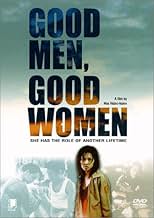


- Director
- Writers
- All cast & crew
- Production, box office & more at IMDbPro
Featured reviews
Puzzling multi-layered picture of Taiwan's past and present
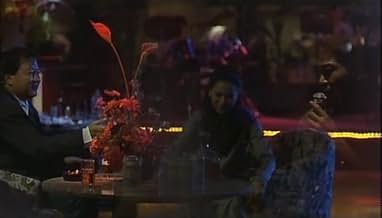
What is also clear (though the Fox Lorber DVD tonal quality is mediocre, particularly in the black and while segments) is the idealism of the Taiwanese nationalist fighters, who go to China to fight the Japanese who have been oppressing them but then after the war is over, are systematically exterminated (in a policy designed to please America, by the way). Some of these scenes, such as one where one person after another is briefly interrogated, have an arresting and somehow heartrendingly tender vérité quality, as does the scene where female fighters are taken from a prison room to be executed. There is a wealth of beauty in the film, even when the present-day sequences seem most contrived and boring, like a gangster dinner with city contractors just before Ah Wei's shot.
It is also true as Acquerello says that, "As Liang becomes the entrusted emissary for the story of Chiang Bi-Yu's struggle, she gradually becomes the generational conduit between Taiwan's turbulent past, and the decadent, uncertain future." That's about all we can say; what Hou means by this linkage is hard to guess, and perhaps only meant to be pondered, without any conclusions being drawn.
Howard Shumann has written a typically clear and informative review of "Good Men, Good Women" for Cinescene that clarifies the general structure and historical references of the film. My own reactions are quite different, however. I wouldn't be as extreme as the IMDb commenter who has called Hou's film-making "cinematic masturbation," or use the language of Sam Adams of the Philadelphia City Paper (2002) who calls "Good Men, Good Women" "a confused exercise" and suggests it's self-indulgent. But I have to agree with Adams that, "Good Men feels so arbitrary that its closing-title dedication to the victims of the anti-Communist purges of the 1950s is almost shocking; it's hard to believe the director could take a subject that seriously and make a film this self-indulgent." The shifts from the present-day actress's discomfort and her flashbacks to life with Ah Wei to the historical film-making never seem predictable. Some might find that intriguing; to me is merely seems arbitrary and random.
"Good Men, Good Women" is far more multi-layered and ambitious than a purely present-day musing like "Millennium Mambo" (despite the latter's tacked-on comment that the voice-over occurs ten years later). But the randomness of the splicings makes the implied relationship questionable, even frivolous. Hou may be better off separating his historical treatments from his modern ones, as he does quite simply with three segments in his recent "Three Times."
I think I've come up with a useful description of Hou's style
Take Good Men, Good Women. It's not a bad movie, really. Certainly not Hou's worst. Its main claim to greatness is its excellent cinematography, with some sections in a high-contrast black and white and others in brilliant color. Hou also decides to move his camera a bit and film from different angles. He's finally caught up with D.W. Griffith, although he still falls back on his favorite compositions again and again. The narrative is often great - there are several great individual scenes - but it's ultimately too difficult to follow, which is the exact same complaint I had of my (currently) favorite Hou film, City of Sadness. The plot of Good Men, Good Women revolves around the life of a famous Taiwanese actress (a real person; the film is dedicated to her) and, in the more modern section of the film, an actress who is apparently going to play this former actress in a film about her life (her story is broken into two different time periods). This made sense after I read up on it, but it was really confusing when I was watching it. I assume the same actress played both parts. It's confusing because Hou doesn't want to stress anything: characters are introduced with their backs to us or when they're in shadows. How does he really expect us to recognize and latch onto his characters? He just doesn't care. No, that's not it. It's that he doesn't want us to do so: some pretentious notion that a confusing movie is an artistic one.
If I were to see this film again, I might find it better. It's still cinematic masturbation. If the audience, after reading up on it or seeing it several times, then understands it, well, it only becomes mutual masturbation. Satisfying, but wouldn't you much rather be f*cking?
Hou's critique of old and new Taiwan.
This is a movie that bravely confronts issues in a country that is too preoccupied with trying to juggle for positions in the global market. A reminder to everyone that a country's history does not consist of only the valiant highlights, but also of shameful past that should not be discarded.
A masterpiece of personal and social tragedy
nope
It takes the viewer some time to realize that during the scenes depicting Bi-Ya's life, we are not, in fact, watching a film- within-a- film, but rather Ching's fantasies of Bi-Ya as she prepares for the role. Ching imagines Bi-Ya's life and struggle, a young idealist who joins the initially Nationalist-led resistance to the Japanese only to later be attacked by those same nationalists, in ways that both reflect and contrast with her own experiences. Consciously or not, Ching constructs a narrative of the founding of modern Taiwan as a US garrison state that forgrounds and to a degree excuses her own moral and emotional compromise to the modern Taiwanese mafia, who buy and sell human lives and loyalties.
It is of course a truism that one cannot understand the present without understanding the past. But, Hou Hsiao-hsien's film suggests, neither can we look to the past without trying to understand it through the lens of the present and the personal. We never see any of the scenes from the "objective biopic" that Ching will star in, and the film suggests that such a work cannot be put on screen. It cannot exist. History and memory are inextricably intertwined. The personal and the universal cannot ultimately be distinguished.
Good Men, Good Women displays the painterly beauty characteristic of Hou's films. The point of its narrative is much less allusive than in many of his movies, making it easier to digest, yet also less seductively enigmatic than Hou's very best work. Still, a very worthwhile piece of filmmaking.


Did you know
- ConnectionsFeatures Late Spring (1949)
Details
- Runtime
- 1h 48m(108 min)
- Color
- Sound mix
- Aspect ratio
- 1.78 : 1