IMDb RATING
6.3/10
1.2K
YOUR RATING

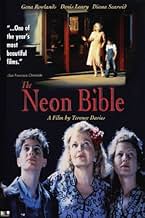
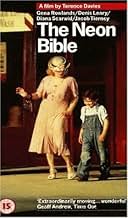
In pre-WWII rural Georgia, shy 15-year-old David's life changes when his free-spirited Aunt Mae arrives, defying the town's strict morals.In pre-WWII rural Georgia, shy 15-year-old David's life changes when his free-spirited Aunt Mae arrives, defying the town's strict morals.In pre-WWII rural Georgia, shy 15-year-old David's life changes when his free-spirited Aunt Mae arrives, defying the town's strict morals.
- Director
- Writers
- Stars
- Awards
- 1 win & 2 nominations total



- Director
- Writers
- All cast & crew
- Production, box office & more at IMDbPro
6.31.1K
1
2
3
4
5
6
7
8
9
10
Featured reviews
An arty disaster
Other reviewers have veered either for one star, or ten. I'm going down the middle; four.
It is dreamy, corny, beautifully set-staged, almost, but its subject matter isn't. It traipses along as if in a trance, we are either taken in by its beauty or it just passes by, languidly, slowly, and yes, boringly.
I can't remember if anyone swore. There was blood, otherwise what happened? People sang quite a lot, embarrassingly, at times, otherwise one contrived scene floated into the next. True, I've not read the book, so cannot compare.
I think it could work if perhaps if it was written by Harold Pinter and directed like a Dennis Potter - jet black, violent and maybe then, memorable.
As it is, it's soppy, attempting to be different, where being different is like being different in the school playground; it looks odd, that oddness showing up over any potential good and thus making the film simply not work.
It is dreamy, corny, beautifully set-staged, almost, but its subject matter isn't. It traipses along as if in a trance, we are either taken in by its beauty or it just passes by, languidly, slowly, and yes, boringly.
I can't remember if anyone swore. There was blood, otherwise what happened? People sang quite a lot, embarrassingly, at times, otherwise one contrived scene floated into the next. True, I've not read the book, so cannot compare.
I think it could work if perhaps if it was written by Harold Pinter and directed like a Dennis Potter - jet black, violent and maybe then, memorable.
As it is, it's soppy, attempting to be different, where being different is like being different in the school playground; it looks odd, that oddness showing up over any potential good and thus making the film simply not work.
10cwitt
A Beautiful, Astounding Masterpiece from Terence Davies
As Davies has said many times, one of the single most important things to remember about his work is that his biggest influence is the Hollywood musicals of the 30s, 40s and 50s. This influence comes across in all of his films and especially with The Neon Bible.
Davies is also, in my opinion, one of the few directors who accurately depicts the act of remembering. Without giving anything away, it's always important to keep in mind that David is on a train, thinking and remembering. No one remembers something from the past totally, memory functions like fragments and it's up to us to flesh them out. Sometimes we think of something one way, later another away; forget, remember or distort. David is fleshing out the events of his life and that's th most important thing about the film. Sometimes we remember minute, isolated events... Davies puts those in the film as well. Just sit back and enjoy the pace of this remarkable film from an equally remarkable and brilliant director.
A sheet blowing - music from Gone With the Wind - he turns into high drama; Stephen Foster's 'Hard Times' as David begins to hit bottom. It IS a musical - Davies has always used music for forward his narrative and uses it in this film in a more sophisticated way than in his earlier films to even more startling effect.
Everyone turns in remarkable performances - the entire cast and the photography is beyond amazing. Davies is the master of the tracking shot.
Please, be patient with the pace of the film - sit back and enjoy the ride. Get used to the rhythms and then give all of yourself to the film, jump in. It's beautiful, melancholy and sad. Davies' films are always so full of life and this is no exception. No idea why this film gets a bad rap - hands down, one of the greatest films of the 1990s. It's totally unique - it comes from nowhere. Shots, colors, textures - all perfect. Everything. Enjoy the ride.
Davies is also, in my opinion, one of the few directors who accurately depicts the act of remembering. Without giving anything away, it's always important to keep in mind that David is on a train, thinking and remembering. No one remembers something from the past totally, memory functions like fragments and it's up to us to flesh them out. Sometimes we think of something one way, later another away; forget, remember or distort. David is fleshing out the events of his life and that's th most important thing about the film. Sometimes we remember minute, isolated events... Davies puts those in the film as well. Just sit back and enjoy the pace of this remarkable film from an equally remarkable and brilliant director.
A sheet blowing - music from Gone With the Wind - he turns into high drama; Stephen Foster's 'Hard Times' as David begins to hit bottom. It IS a musical - Davies has always used music for forward his narrative and uses it in this film in a more sophisticated way than in his earlier films to even more startling effect.
Everyone turns in remarkable performances - the entire cast and the photography is beyond amazing. Davies is the master of the tracking shot.
Please, be patient with the pace of the film - sit back and enjoy the ride. Get used to the rhythms and then give all of yourself to the film, jump in. It's beautiful, melancholy and sad. Davies' films are always so full of life and this is no exception. No idea why this film gets a bad rap - hands down, one of the greatest films of the 1990s. It's totally unique - it comes from nowhere. Shots, colors, textures - all perfect. Everything. Enjoy the ride.
It is like the book but that isn't necessarily a good thing
The Neon Bible is the more obscure work by John Kennedy Toole (of Confederacy of Dunces fame). The book is a 1st person narrative of the main character's-David-10 or so most important memories of when he was growing up. I have read the book several times and think it is a wonderful book. I also think it wasn't particularly suited for cinema. This film more or less confirms that notion.
The resulting film is disjointed, episodic and because of how internalized David is the plotting is hard to fully grasp. I am not sure if the plot is understandable if you *haven't* read the book. The material is about the oppressive nature of small town life for different people-especially fire and brimstone religion-builds up anger and resentment that comes out in violence. That comes across in the film if you know you are looking for it. If you not I think much of the film will be esoteric.
I ultimately ended up liking the film on the level of the companion to the novel. It helps a lot that I rather like the book and there's not much different in the works. The cinematic qualities are fairly good-if a little TV production. The melancholy of the novel comes through loud and clear.
Overall I am glad this film exists but it could have been better.
The resulting film is disjointed, episodic and because of how internalized David is the plotting is hard to fully grasp. I am not sure if the plot is understandable if you *haven't* read the book. The material is about the oppressive nature of small town life for different people-especially fire and brimstone religion-builds up anger and resentment that comes out in violence. That comes across in the film if you know you are looking for it. If you not I think much of the film will be esoteric.
I ultimately ended up liking the film on the level of the companion to the novel. It helps a lot that I rather like the book and there's not much different in the works. The cinematic qualities are fairly good-if a little TV production. The melancholy of the novel comes through loud and clear.
Overall I am glad this film exists but it could have been better.
The Bizarre Framing Sinks The Film
This is a film that should appeal greatly to me . It's set against the background of a teenage boy growing up in a small insular town . This mirrors my own earlier life . " No one is allowed an opinion of their own " proclaims protagonist David and it's something I can bitterly relate to . Growing up in a small town is a painful experience especially for an existentialist who is an outsider . You're conditioned to be a nobody . Think of a combination of Lysenkoism and the antithesis of ambition . That's what life is like in a small town the world over . In short this should be a film that takes people in to themselves creating a strong and instant sense of empathy . Alas it;s something of a cinematic disaster
The problem lies entirely at the feet of director Terence Davies . He directs in a poetic style or at least attempts to but where as a poetic film by Terewnce Malik or Sam Mendes works here it spectacular fails . . What sinks the film is the unnatural framing where a character is smack bang in the middle of the screen facing the camera . A lot of critics complain that a director like Danny Boyle shoots , frames and edits films in a similar manner but at least he brings a sense of variety to his movies . Here however Davies relies on the exact same framing technique throughout the entire film which sinks it as a cinematic presentation and feels more like a filmed theater play
The problem lies entirely at the feet of director Terence Davies . He directs in a poetic style or at least attempts to but where as a poetic film by Terewnce Malik or Sam Mendes works here it spectacular fails . . What sinks the film is the unnatural framing where a character is smack bang in the middle of the screen facing the camera . A lot of critics complain that a director like Danny Boyle shoots , frames and edits films in a similar manner but at least he brings a sense of variety to his movies . Here however Davies relies on the exact same framing technique throughout the entire film which sinks it as a cinematic presentation and feels more like a filmed theater play
a seed
Loving the novel by John Kennedy Toole, I saw this adaptation with indulgence. First, for its beautiful crumbs reminding the lines of book. First, Gena Rowlands as Mae. Second, the atmosphere. Not the last, that America, dreamed using the images of Kennedy Toole, sustained by music and images by Terence Davies. Obvious, not the most faithfull adaptation but good seed for fair memorz, real subjective one.


Did you know
- TriviaIn an interview with "Time Out Film", Terence Davies said about this film, "[It] doesn't work, and that's entirely my fault. The only thing I can say is that it's a transition work. And I couldn't have done The House of Mirth (2000) without it."
- Quotes
David, aged 15: If you were different from anybody else in town, you had to get out. They used to say in school, "you have to think for yourself," but you couldn't do that in town. You have to think what your father thought and that was what everybody thought.
- ConnectionsFeatured in Fandor: Cannes You Dig It? | Fandor Spotlight (2022)
- SoundtracksOh Lord, How Long?
Traditional
- How long is The Neon Bible?Powered by Alexa
Details
Box office
- Gross US & Canada
- $78,072
- Opening weekend US & Canada
- $5,045
- Mar 3, 1996
- Gross worldwide
- $78,072
- Runtime
- 1h 31m(91 min)
- Color
- Sound mix
- Aspect ratio
- 2.35 : 1
Contribute to this page
Suggest an edit or add missing content