IMDb RATING
5.9/10
1.4K
YOUR RATING

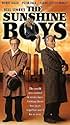
Two aging comedians who acrimoniously dissolved their act eight years earlier must overcome their differences when they have the chance for a lucrative movie comeback.Two aging comedians who acrimoniously dissolved their act eight years earlier must overcome their differences when they have the chance for a lucrative movie comeback.Two aging comedians who acrimoniously dissolved their act eight years earlier must overcome their differences when they have the chance for a lucrative movie comeback.



Raymond Anthony Thomas
- Limo Driver
- (as Ray Anthony Thomas)


- Director
- Writer
- All cast & crew
- Production, box office & more at IMDbPro
5.91.4K
1
2
3
4
5
6
7
8
9
10
Featured reviews
virtually unwatchable
This is a made-for -TV film of the Neil Simon comedy, better known in the Walter Matthau and George Burns version. Peter Falk and Woody Allen play two grumpy old comedians who get back together after many years of mutual hatred.
Woody Allen understates his performance in the George Burns role and his character is pleasingly different from his normal screen persona. Unfortunately Peter Falk's performance is so mannered that it renders the film virtually unwatchable
Woody Allen understates his performance in the George Burns role and his character is pleasingly different from his normal screen persona. Unfortunately Peter Falk's performance is so mannered that it renders the film virtually unwatchable
Disappointed
I was so looking forward to seeing this remake/rewrite having missed it when it was originally broadcast. I so enjoyed the original with Burns and Matthau, and always wondered what the pairing of Falk and Allen would bring to the story. Alas, very little. Allen was better than OK, but Falk seemed totally miscast. This is strange as I find his work in comedies is usually very good. But as has been mentioned in other comments here, there was absolutely no chemistry between the two actors. I think the reason was Allen took his role to a newer place while keeping the basis of the relationship between his character and Falk's true to the story. He didn't play George Burns playing Lewis. He let his personality and comic delivery take over the role. Falk, on the other hand, didn't seem to rise above the Willy Clark as done by Walter Matthau. He didn't even seem to me to have ever been Allen's comic partner. Just not his role. Unfair to compare the two versions? Perhaps, but if one is going to try and redo what was done so well before, one has to expect the yardstick to be what it is.
The Sunstroke Boys
This is awful.. I couldn't finish it. Falk is so annoying- he ruins any fun you might have convinced yourself you had- he reads his lines like a pitbull with a kid in it's mouth- and it's about as funny. Allen comes off better but is lit from behind like a traveling mummy exhibit. Michael Jackson has less chalk on his face than Allen. What would possess Woody to do reworked Neil Simon material? SKIP IT!
Not horrible, just not good
The Sunshine Boys always struck me as a lesser Neil Simon comedy, amusing and likable but neither as funny nor as insightful as his best work. The original movie worked mainly because of a terrific cast. But this less well-cast and less well-directed TV remake exhibits all the flaws and none of the strengths of Simon's light work.
There are so many problems with this movie. Falk and Allen are too mismatched, with Falk overplaying to the point of annoyance and Woody underplaying to the point of putting me to sleep. They are both talented people, but they exhibit zero chemistry, and thus make no sense as an ex comedy duo. Walter Matthau and George Burns hated each other, but they also riffed off of each other. Falk and Allen feel not like people who worked together for decades but like people who met a week ago.
Sarah Jessica Parker isn't especially bad as Falk's niece/agent, but without the nervous energy of Richard Benjamin, her part just lays there, and she feels wildly unnecessary.
While many people here complain of Simon's rewrites, the truth is, the jokes from the first movie are mainly intact, and it's not Simon's fault that most of them fall flat the second time around. It is the listless direction and mismatched performances that sink this movie.
With the right cast, this movie could still work. But what's the point?
There are so many problems with this movie. Falk and Allen are too mismatched, with Falk overplaying to the point of annoyance and Woody underplaying to the point of putting me to sleep. They are both talented people, but they exhibit zero chemistry, and thus make no sense as an ex comedy duo. Walter Matthau and George Burns hated each other, but they also riffed off of each other. Falk and Allen feel not like people who worked together for decades but like people who met a week ago.
Sarah Jessica Parker isn't especially bad as Falk's niece/agent, but without the nervous energy of Richard Benjamin, her part just lays there, and she feels wildly unnecessary.
While many people here complain of Simon's rewrites, the truth is, the jokes from the first movie are mainly intact, and it's not Simon's fault that most of them fall flat the second time around. It is the listless direction and mismatched performances that sink this movie.
With the right cast, this movie could still work. But what's the point?
Nothing to laugh about...
Less a remake than a rewrite, this updating of Neil Simon's famed stage comedy is good news/bad news. The bad news is that Simon rewrote the play to make it more contemporary, making the two battling comics relics of the 1950's comedy heyday of live television, rather than an almost forgotten vaudeville team. A logical change, I suppose given the passage of time, but one that Simon did not think out completely.
The good news is that Simon redefined one of the characters to suit the style and the humor of Woody Allen. It's even possible that Woody did a bit of re-writing himself. As such, Woody comes off relatively unscathed. Even so, this made-for-TV movie is itself awkwardly and remarkably unfunny and doesn't really make much sense.
The gist of the material remains the same: A famed comedy duo, Al Lewis and Willie Clark, split up with great animosity, but agree to re-team many years later for a special performance, just for the money. For this premise to work, there has to be a sense that the two worked together as a team and were, indeed, once a great act. It also has to be apparent that the two at least respect each other as talents, even if they hate each other as individuals. None of that is apparent in this film. Indeed, there is absolutely no chemistry whatsoever between Allen and costar Peter Falk. Plus their little bits of comic business fall flat.
Comparisons to the 1976 film version with Walter Matthau and George Burns are inevitable and justified. The Matthau/Burns film, while hardly a great effort, still manages to be an enduring and enjoyable piece of fluff. It plays like a "classic" comedy routine, in that it gets better on repeated viewings, where each gag and joke are anticipated. The bombastic Matthau and the dour, unassuming Burns work well as a team, even as they perform together with conflicting styles. In neither film is it obvious that their so-called legendary comedy skits were at all funny -- which may be intentional -- but at least in the 1976 version the off-stage theatrics click.
In updating the story, the characters are supposedly veterans of fifties television, a style of comedy that is broad by today's standards, but subdued compared to the farce of vaudeville. Nobody seems to have told Falk of the change, as he overplays his role with a fierce, almost reckless hamminess (and a totally out of place Borscht Belt accent) that makes Matthau's bombast look like sleep walking. There is nothing lovable, likable or even amusing about Falk's performance: It is just plain bad. Indeed, instead of playing him as a crotchety old coot, Falk makes Willie Clark seem frighteningly mentally unstable.
This stands in sharp contrast to Allen, who plays his role with a degree of realism, or at least the type of realism that is the trademark of his other films. Gone is the slow, doddering, benign frustration of Burns' Oscar-winning interpretation, replaced by a character who, at sixty-something, is still quick-witted and energetic -- a character not unlike Woody Allen. Though he plays the part with a bit more snideness and exasperation, Allen doesn't fall back on an old-folks stereotype. Indeed, by the end of the film, his Al Lewis is not planning to head for a retirement home, but has his sites set on a show business comeback.
But despite a thoughtful performance, Allen doesn't get many laughs either, largely because he is cast as the straight man. Allen's straight-faced, disbelieving reactions to Falk's asinine behavior seems all too real. Falk and Allen seem to be in two different movies, if not two different universes; Falk is doing vaudeville schlock, while Allen is into modern irony. The play is about two comics who can't communicate in any way but through their humor, but Falk and Allen aren't even using the same comic language, or for that matter telling the same jokes.
The good news is that Simon redefined one of the characters to suit the style and the humor of Woody Allen. It's even possible that Woody did a bit of re-writing himself. As such, Woody comes off relatively unscathed. Even so, this made-for-TV movie is itself awkwardly and remarkably unfunny and doesn't really make much sense.
The gist of the material remains the same: A famed comedy duo, Al Lewis and Willie Clark, split up with great animosity, but agree to re-team many years later for a special performance, just for the money. For this premise to work, there has to be a sense that the two worked together as a team and were, indeed, once a great act. It also has to be apparent that the two at least respect each other as talents, even if they hate each other as individuals. None of that is apparent in this film. Indeed, there is absolutely no chemistry whatsoever between Allen and costar Peter Falk. Plus their little bits of comic business fall flat.
Comparisons to the 1976 film version with Walter Matthau and George Burns are inevitable and justified. The Matthau/Burns film, while hardly a great effort, still manages to be an enduring and enjoyable piece of fluff. It plays like a "classic" comedy routine, in that it gets better on repeated viewings, where each gag and joke are anticipated. The bombastic Matthau and the dour, unassuming Burns work well as a team, even as they perform together with conflicting styles. In neither film is it obvious that their so-called legendary comedy skits were at all funny -- which may be intentional -- but at least in the 1976 version the off-stage theatrics click.
In updating the story, the characters are supposedly veterans of fifties television, a style of comedy that is broad by today's standards, but subdued compared to the farce of vaudeville. Nobody seems to have told Falk of the change, as he overplays his role with a fierce, almost reckless hamminess (and a totally out of place Borscht Belt accent) that makes Matthau's bombast look like sleep walking. There is nothing lovable, likable or even amusing about Falk's performance: It is just plain bad. Indeed, instead of playing him as a crotchety old coot, Falk makes Willie Clark seem frighteningly mentally unstable.
This stands in sharp contrast to Allen, who plays his role with a degree of realism, or at least the type of realism that is the trademark of his other films. Gone is the slow, doddering, benign frustration of Burns' Oscar-winning interpretation, replaced by a character who, at sixty-something, is still quick-witted and energetic -- a character not unlike Woody Allen. Though he plays the part with a bit more snideness and exasperation, Allen doesn't fall back on an old-folks stereotype. Indeed, by the end of the film, his Al Lewis is not planning to head for a retirement home, but has his sites set on a show business comeback.
But despite a thoughtful performance, Allen doesn't get many laughs either, largely because he is cast as the straight man. Allen's straight-faced, disbelieving reactions to Falk's asinine behavior seems all too real. Falk and Allen seem to be in two different movies, if not two different universes; Falk is doing vaudeville schlock, while Allen is into modern irony. The play is about two comics who can't communicate in any way but through their humor, but Falk and Allen aren't even using the same comic language, or for that matter telling the same jokes.


Did you know
- TriviaThe original Broadway production of "The Sunshine Boys" by Neil Simon opened at the Broadhurst Theater in New York on December 20, 1972, ran for 538 performances and was nominated for the 1973 Tony Award (New York City) for the Best Play.
- Quotes
Willie Clark: I invented comedy!
Al Lewis: The same night you designed the Titanic.
- ConnectionsFeatures Planes, Trains & Automobiles (1987)
Details
Contribute to this page
Suggest an edit or add missing content