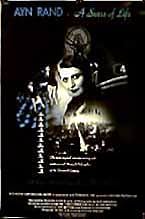
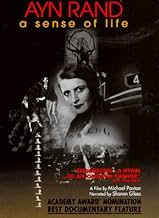
A documentary focusing on the life of novelist and philosopher Ayn Rand, the author of the bestselling novels The Fountainhead and Atlas Shrugged and originator of the Objectivist philosophy... Read allA documentary focusing on the life of novelist and philosopher Ayn Rand, the author of the bestselling novels The Fountainhead and Atlas Shrugged and originator of the Objectivist philosophy.A documentary focusing on the life of novelist and philosopher Ayn Rand, the author of the bestselling novels The Fountainhead and Atlas Shrugged and originator of the Objectivist philosophy.
- Nominated for 1 Oscar
- 1 win & 2 nominations total
Sharon Gless
- Self - Narrator
- (voice)
Michael S. Berliner
- Self - Editor of Rand's Letters
- (as Dr. Michael S. Berliner)
Harry Binswanger
- Self - Professor and Friend
- (as Dr. Harry Binswanger)
Leonard Peikoff
- Self - Intellectual Heir and Friend
- (as Dr. Leonard Peikoff)
John Ridpath
- Self - Professor: York University
- (as Dr. John Ridpath)
Buzz Aldrin
- Self - Astronaut on Moon
- (archive footage)
- (uncredited)
Neil Armstrong
- Self - Astronaut on Moon
- (archive footage)
- (uncredited)
Cecil B. DeMille
- Self - Addresses Extras
- (archive footage)
- (uncredited)
Phil Donahue
- Self - Interviews Ayn Rand
- (archive footage)
- (uncredited)
Grand Duke Nicholas
- Self - Accompanies Tsar Nicholas
- (archive footage)
- (uncredited)
Edith Head
- Self - Pins Costume
- (archive footage)
- (uncredited)
- Director
- Writer
- All cast & crew
- Production, box office & more at IMDbPro
6.5675
1
2
3
4
5
6
7
8
9
10
Featured reviews
The problem isn't bias, it's shallowness.
Let's face it. Every documentary is biased. No matter how objective (forgive the situational wordplay) a documentary filmmaker wants to be in presenting his/her subject, he/she has a point of view, or else why bother making the film at all?
The problem here is not Michael Paxton's bias, although he is clearly an adoring fan of the writer/philosopher. The problem is that in painting a portrait of this equally celebrated and vilified woman, he never shows, and only barely tells of, the vilification. As a result, he doesn't give viewers, not even her most ardent admirers, reason to celebrate her.
The film mentions in passing some of her flaws as a person, and repeatedly talks of the criticism surrounding her ideas. But we never hear any of the criticism, any of the arguments against, anything at all to cast her in the light of "defender of the faith," or defender of anything at all, for that matter. She states her case time and again, in interviews, in excerpts from her novels and philosophical works, etc. But we're left with a feeling of "Great. Why should I care?"
Not many people will see this film -- 2 1/2 hour docs rarely draw the masses in theater, on video or anywhere else -- so I'll make a rather simplistic analogy. Think of "Star Wars". How compelled would we be to root for the good of the force if we hadn't heard Darth Vader expound on the power of evil (the Dark Side)? How can you convince anyone of any point, positive or negative, without at least presenting the counterpoint?
Viewers who already adore Rand will no doubt cheer this film. For them, it's very palatable candy. Her detractors shouldn't waste their time. But a documentary is supposed to educate viewers in some way, and the uneducated will get nothing more than a biography and an unquestioned statement of philosophy. That's not much for any doc, but especially for one this long.
The problem here is not Michael Paxton's bias, although he is clearly an adoring fan of the writer/philosopher. The problem is that in painting a portrait of this equally celebrated and vilified woman, he never shows, and only barely tells of, the vilification. As a result, he doesn't give viewers, not even her most ardent admirers, reason to celebrate her.
The film mentions in passing some of her flaws as a person, and repeatedly talks of the criticism surrounding her ideas. But we never hear any of the criticism, any of the arguments against, anything at all to cast her in the light of "defender of the faith," or defender of anything at all, for that matter. She states her case time and again, in interviews, in excerpts from her novels and philosophical works, etc. But we're left with a feeling of "Great. Why should I care?"
Not many people will see this film -- 2 1/2 hour docs rarely draw the masses in theater, on video or anywhere else -- so I'll make a rather simplistic analogy. Think of "Star Wars". How compelled would we be to root for the good of the force if we hadn't heard Darth Vader expound on the power of evil (the Dark Side)? How can you convince anyone of any point, positive or negative, without at least presenting the counterpoint?
Viewers who already adore Rand will no doubt cheer this film. For them, it's very palatable candy. Her detractors shouldn't waste their time. But a documentary is supposed to educate viewers in some way, and the uneducated will get nothing more than a biography and an unquestioned statement of philosophy. That's not much for any doc, but especially for one this long.
A quality documentary
This documentary presents a well organized and concise picture of one of the most important thinkers of our time. If you don't know much about Ayn Rand, this film is worth watching, if only to be introduced to her ideas. Even though her philosophy is more aligned with the founding principles of America than that of any other 20th century thinker, she is all but discarded in American public schools. The popularity of twentieth century anti-mind/anti-humanism philosophies, amongst the Ivory Tower, has muted the voice of Ayn Rand in the classroom. If you grew up in the United States, you probably missed out on her side of the debate altogether. Rand's ideas are worthy of your consideration, and they're highly worthy of serious critical review.
I hope you will take the review of this film written by ChrisWN with an entire shaker of salt. The size of the shaker is up to you, but you should know that the immature ranting of ChrisWN is typical of those who despise Ayn Rand. Let the fatuous nature of his writing be the measure by which he should be taken seriously as a film critic or as a critical thinker. And, further, let his ramblings be recorded as representative of the opposite of Ayn Rand's devotion to reason.
A love letter to Ayn
As someone who spent a lot of time reading and thinking about Rand's ideas many years ago, I found this film very informative and entertaining. It presents Rand with just the right breath of grandeur. It shows her the way I like to think of her.
Like Thomas Jefferson, flaws in Rand's personal life throw a bit of shadow on her intellectual triumphs. This is not to suggest that Rand's achievements come close to Jefferson's. But, like Rand, his lifestyle contradicted his life's major achievement: the Author of The Declaration of Independence was a slaveholder.
In Rand's case, the champion of individualism surrounded herself with a "Collective" of yes-men (and -women) that systematically excluded anyone who didn't toe the line on matters of philosophy, religion, aesthetics, and even cigarette smoking. Incredibly, this champion of "independent judgement based on facts" would actually forbid her followers from reading things written by people she deemed "evil."
But, just as a tribute to Jefferson might not dwell on slavery at Monticello or mention Sally Hemmings, this love letter to Ayn doesn't explore her problematic social life or her peculiar band of followers. But I still think this documentary earned its accolades from the film industry. Ayn Rand probably would have approved of the film herself.
Like Thomas Jefferson, flaws in Rand's personal life throw a bit of shadow on her intellectual triumphs. This is not to suggest that Rand's achievements come close to Jefferson's. But, like Rand, his lifestyle contradicted his life's major achievement: the Author of The Declaration of Independence was a slaveholder.
In Rand's case, the champion of individualism surrounded herself with a "Collective" of yes-men (and -women) that systematically excluded anyone who didn't toe the line on matters of philosophy, religion, aesthetics, and even cigarette smoking. Incredibly, this champion of "independent judgement based on facts" would actually forbid her followers from reading things written by people she deemed "evil."
But, just as a tribute to Jefferson might not dwell on slavery at Monticello or mention Sally Hemmings, this love letter to Ayn doesn't explore her problematic social life or her peculiar band of followers. But I still think this documentary earned its accolades from the film industry. Ayn Rand probably would have approved of the film herself.
Ayn Rand is my most favourite Philosopher!!!
Ayn Rand has helped me to have an integrated view of life.
She teaches for reason and trade, instead of faith and force.
She is against mysticism, which rules by means of guilt, by keeping men convinced of their insignificance on earth. She is against the dogma of man's poverty and misery on earth.
She teaches you to face the universe, free to declare your mind is competent to deal with all the problems of existence and that reason is the only means of knowledge.
Ayn Rand states that intellect is a practical faculty, a guide to man's successful existence on earth, and that its task is the study of reality (as well as the production of wealth), not contemplation of unintelligible feelings nor a special monopoly on the "unknowable".
She is for that productive person who is confident of his ability to earn his living - who takes pride in his work and in the value of his product - who drives himself with inexhaustible energy and limitless ambition to do better and still better and even better - who is willing to bear penalties for his mistakes and expects rewards for his achievements - who looks at the universe with the fearless eagerness of a child, knowing it to be intelligible - who demands straight lines, clear terms, precise definitions - who stands in full sun light and has no use for the murky fog of the hidden, the secret, the unnamed, or for any code from psycho-epistemology of guilt.
Her words will help people to free themselves from fear and force forever.
Thanks Ayn for you direction. She has given me an integrated view of life. I hope, by reading her books, you get it too.
She teaches for reason and trade, instead of faith and force.
She is against mysticism, which rules by means of guilt, by keeping men convinced of their insignificance on earth. She is against the dogma of man's poverty and misery on earth.
She teaches you to face the universe, free to declare your mind is competent to deal with all the problems of existence and that reason is the only means of knowledge.
Ayn Rand states that intellect is a practical faculty, a guide to man's successful existence on earth, and that its task is the study of reality (as well as the production of wealth), not contemplation of unintelligible feelings nor a special monopoly on the "unknowable".
She is for that productive person who is confident of his ability to earn his living - who takes pride in his work and in the value of his product - who drives himself with inexhaustible energy and limitless ambition to do better and still better and even better - who is willing to bear penalties for his mistakes and expects rewards for his achievements - who looks at the universe with the fearless eagerness of a child, knowing it to be intelligible - who demands straight lines, clear terms, precise definitions - who stands in full sun light and has no use for the murky fog of the hidden, the secret, the unnamed, or for any code from psycho-epistemology of guilt.
Her words will help people to free themselves from fear and force forever.
Thanks Ayn for you direction. She has given me an integrated view of life. I hope, by reading her books, you get it too.
Advertising Selfishness
I find this film to be little more than veneration for a woman who claimed she had no time for veneration but was more than willing to have people worship her. Rand was a hypocrite. At the end of her life she took Medicare for her lung cancer which was due to her lifetime of smoking. Thats not even mentioned in the film. I gave Rand's ideas my full attention for some 3 months a few years ago and was intrigued by them before coming to the conclusion her ideas are badly flawed. I read the Fountainhead and a number of her essays but didn't get far with Atlas Shrugged, by then I'd had enough. I'm a geriatric nurse, and I meet many people near the end of their lives and I meet their families, and see the quality of their relationships (or lack there of) and I can tell you, consistently, its those who live and care for others and open themselves and receive the care of others who have the happiest lives. I see it again and again and again. There's a name for it, its called love. Rands "individualism" is suicidal for the individual, the family and society. I'm rating this film so low because it does little more than promote these ill gotten ideas.
Did you know
- ConnectionsFeatures The Mark of Zorro (1920)
Details
- Release date
- Country of origin
- Official site
- Language
- Also known as
- Ayn Rand: Un sentido de la vida
- Filming locations
- Production companies
- See more company credits at IMDbPro
Box office
- Budget
- $1,000,000 (estimated)
- Gross US & Canada
- $205,246
- Opening weekend US & Canada
- $26,101
- Feb 16, 1998
- Gross worldwide
- $205,246
- Runtime
- 2h 25m(145 min)
- Color
- Sound mix
- Aspect ratio
- 1.85 : 1
Contribute to this page
Suggest an edit or add missing content