IMDb RATING
6.3/10
6.4K
YOUR RATING


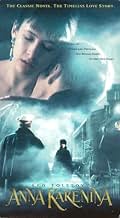
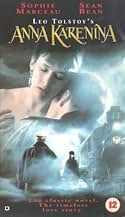
Anna (Marceau) is a wife and mother who has an affair with the handsome Count Vronsky (Bean). Based on the novel by Tolstoy.Anna (Marceau) is a wife and mother who has an affair with the handsome Count Vronsky (Bean). Based on the novel by Tolstoy.Anna (Marceau) is a wife and mother who has an affair with the handsome Count Vronsky (Bean). Based on the novel by Tolstoy.
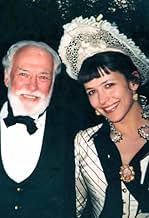
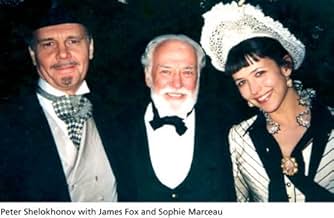
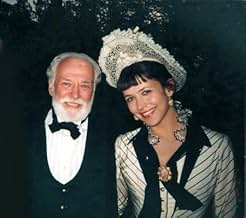



Pyotr Shelokhonov
- Kapitonich, Chief Butler
- (as Pyotr Sholokhov)


- Director
- Writers
- All cast & crew
- Production, box office & more at IMDbPro
6.36.4K
1
2
3
4
5
6
7
8
9
10
Featured reviews
Eye candy which barely misses the mark!
I'm not sure how this movie slipped past me, as I try to stay on top of the period movies that come out. Nonetheless I caught it on one of the Encore channels last night, and I'm glad I did. Visually this movie is incredible! The cinematography could not have been much better, down to small details such as Levin "mowing" in the fields with the scythe in perfect rhythm with the workers.
As much as I like the film, however, I'm disappointed that Sophie Marceau's portrayal of Anna was not more passionate. On the whole I thought her performance was pretty good, but I agree with the comments above that she could have exhibited a much more involved and emotional presence in the face of a love that she could not resist. Ditto for Sean Bean, although he was somewhat better at it than Sophie. It's a situation where one fervently wishes that the actors were better than they were, because you know that it would have made the movie a "10." Both Bean and Marceau did provide some excellent glimpses into the souls of their characters, but only glimpses. One would wish for more intimate looks into their motivations and their respective desolations. I was not at all put off by accents of the actors. So Marceau has a mild French accent...French was the dominant language of the Russian court up to the Revolution, so it would not have been out of place at all.
The story of Levin and Kitty fares better, if only because of the stellar performance of Alfred Molina. Offhand I can't think of a more underrated actor (save perhaps Ron Perlman). Ms. Kirshner was fine as Kitty, although her journey from infatuation with Vronsky to love for Levin was given short shrift.
Overall I loved this movie, but I just wish it had been two marks better.
As much as I like the film, however, I'm disappointed that Sophie Marceau's portrayal of Anna was not more passionate. On the whole I thought her performance was pretty good, but I agree with the comments above that she could have exhibited a much more involved and emotional presence in the face of a love that she could not resist. Ditto for Sean Bean, although he was somewhat better at it than Sophie. It's a situation where one fervently wishes that the actors were better than they were, because you know that it would have made the movie a "10." Both Bean and Marceau did provide some excellent glimpses into the souls of their characters, but only glimpses. One would wish for more intimate looks into their motivations and their respective desolations. I was not at all put off by accents of the actors. So Marceau has a mild French accent...French was the dominant language of the Russian court up to the Revolution, so it would not have been out of place at all.
The story of Levin and Kitty fares better, if only because of the stellar performance of Alfred Molina. Offhand I can't think of a more underrated actor (save perhaps Ron Perlman). Ms. Kirshner was fine as Kitty, although her journey from infatuation with Vronsky to love for Levin was given short shrift.
Overall I loved this movie, but I just wish it had been two marks better.
Visually and audibly stunning, but overall one of the weaker adaptations
Along with War and Peace, Anna Karenina is one of the greatest Russian novels and one of the greats of 19th century literature, the story is heart-breaking and intense and the characters compelling. Anna Karenina has often been filmed, and of the film versions the 1967 Russian and 1935 Greta Garbo films fare the best and the 2012 Joe Wright-directed version the weakest. This 1997 adaptation from Bernard Rose (Paperhouse, Immortal Beloved, Candyman) has a good amount to like but is one of the weaker adaptations.
Visually, the film looks absolutely stunning and along with the 1967 Russian film it is one of the most evocative adaptations period detail-wise. Although some of the editing is choppy, the cinematography is ravishing and the costumes and sets are some of the most beautiful and evocative of any adaptation of Anna Karenina, especially in the opulent ballroom scene and the gorgeous wintry landscapes. The Tchaikovsky-laden music score makes for an aural feast and couldn't have fitted more perfectly.
Three performances are good. Coming off best is Alfred Molina, who brings authority and many layers to Levin, wish more was done with developing the character more in terms of writing but at least the film included the character and his subplot with Kitty. James Fox is a ruthlessly cold and haunting Karenin, the character played consistently well in all the Anna Karenina adaptations even in the not-so-good ones. Sean Bean is a handsome Vronsky, but brings a steely intensity to the role that stops the character from being wooden or tragic, rightfully avoiding the dashing heroic figure stereotype.
Sophie Marceau however I found miscast as Anna, she looks splendid but is pretty vacuous and lacking in passion. Her chemistry with Bean convinces in the latter and more turbulent parts of the relationship but dull in the early parts. Mia Kirschner is also rather too modern and lightweight for Kitty. This version of Anna Karenina is a visual and aural stunner with a few impressive performances, but is one of the least successful and interesting versions in terms of script and how the story is told.
The dialogue doesn't always flow naturally, and feels very dry in tone and with little depth and substance, and the narration was rather unnecessary. Rose's direction shows terrific technical assurance but lacks the same kind of momentum in telling the story. It's the story where the film most falls down, feeling far too short and far too rushed, with about half of the story (or so it feels) being told but all in Cliff Notes version, and it even feels like more of the film was filmed but cut due to studio interference. Neither of the romances are dealt with well, Anna and Vronsky's is too rushed and the very incomplete-feeling one between Levin and Kitty sometimes really slows down the film.
Overall, not a bad version but a less than ideal one, as an adaptation and as a film on its own. 5/10 Bethany Cox
Visually, the film looks absolutely stunning and along with the 1967 Russian film it is one of the most evocative adaptations period detail-wise. Although some of the editing is choppy, the cinematography is ravishing and the costumes and sets are some of the most beautiful and evocative of any adaptation of Anna Karenina, especially in the opulent ballroom scene and the gorgeous wintry landscapes. The Tchaikovsky-laden music score makes for an aural feast and couldn't have fitted more perfectly.
Three performances are good. Coming off best is Alfred Molina, who brings authority and many layers to Levin, wish more was done with developing the character more in terms of writing but at least the film included the character and his subplot with Kitty. James Fox is a ruthlessly cold and haunting Karenin, the character played consistently well in all the Anna Karenina adaptations even in the not-so-good ones. Sean Bean is a handsome Vronsky, but brings a steely intensity to the role that stops the character from being wooden or tragic, rightfully avoiding the dashing heroic figure stereotype.
Sophie Marceau however I found miscast as Anna, she looks splendid but is pretty vacuous and lacking in passion. Her chemistry with Bean convinces in the latter and more turbulent parts of the relationship but dull in the early parts. Mia Kirschner is also rather too modern and lightweight for Kitty. This version of Anna Karenina is a visual and aural stunner with a few impressive performances, but is one of the least successful and interesting versions in terms of script and how the story is told.
The dialogue doesn't always flow naturally, and feels very dry in tone and with little depth and substance, and the narration was rather unnecessary. Rose's direction shows terrific technical assurance but lacks the same kind of momentum in telling the story. It's the story where the film most falls down, feeling far too short and far too rushed, with about half of the story (or so it feels) being told but all in Cliff Notes version, and it even feels like more of the film was filmed but cut due to studio interference. Neither of the romances are dealt with well, Anna and Vronsky's is too rushed and the very incomplete-feeling one between Levin and Kitty sometimes really slows down the film.
Overall, not a bad version but a less than ideal one, as an adaptation and as a film on its own. 5/10 Bethany Cox
Imperfect, but beautiful nonetheless
Now, perhaps I'm out of my element writing a review for "Anna Karenina" without having read the book, but I shall do so regardless. Many criticised this film because it did not follow the book, or omitted one thing or another. That is all well and good, but what feature-length film *can* capture the entire scope of a novel the size of "Anna Karenina"? I watched the older version with Greta Garbo and--though I cannot imagine why--it never truly caught my attention. This version, however, captured me from the start. And I am usually the first one to complain about what is wrong with a remake in comparison to the old version. A paradox, indeed.
This film first caught my eye because of Sophie Marceau. I admire her immensely as an actress, having seen her in several films, both French and English. Then, I recognised Bernard Rose as the director of "Immortal Beloved", a film I had enjoyed some months before, mostly due to a magnificent performance by Gary Oldman, some of the most glorious music caught on film.
The music, I can probably cite as one of the main reasons I loved this film. I can think of no better love theme for a doomed romance like that of Anna and Vronsky, than the first movement of Tchaikovsky's Sixth Symphony. The use of "Swan Lake" at various points was also wonderful, and the interplay during the scene at the ballet held me mesmerised. Vronsky speaks of Anna being trapped in her marriage as the Prince seeks to capture the Swan Queen. Perhaps I'm just rambling, but somehow that connected.
On the whole, the performances were good. Sophie Marceau was perfectly believable as Anna, and some of her scenes sent chills down my spine, though my favourite performance of hers still has to be "Firelight". Sean Bean had me worried for a few seconds, with a mannered reading or two, but improved quickly as the film progressed. Another reviewer pointed out that Vronsky was meant to be a shallower character than Anna, and now that I think back on it, I believe that is very true, and that Sean Bean's performance reflected this superficiality. Mia Kirshner was adequate--I didn't particularly care for her--but Alfred Molina and James Fox both gave fine performances (a standout for me was when Anna wrote Karenin from Italy and Karenin wavered before refusing to let her see Sergei).
However, equally on par with the actors, was the setting. Very few films, I have to admit, can look *so* beautiful. Especially the ballroom scene, with the seemingly neverending hallway of gilded doors, the location photography was spectacular. The costumes were stunning, and the cinematography made even snow seem alive. Even if you do not care for the story or the acting, this is a film to watch for visuals.
Thus, I believe that this film deserves far more credit than it received. I, personally, loved it for varied reasons, but I have to admit that what truly captured me was the way Bernard Rose can take an average script and transform it into a beautiful film using visuals and music. Very few directors take the time to put music and image together if they use classical scores (my favourites would be David Lean and John Boorman), and I believe Bernard Rose should be watched in the future. I should love to see what he would do with a film set in late 19th century Italy, when opera was at its height!
***1/2 out of ****
This film first caught my eye because of Sophie Marceau. I admire her immensely as an actress, having seen her in several films, both French and English. Then, I recognised Bernard Rose as the director of "Immortal Beloved", a film I had enjoyed some months before, mostly due to a magnificent performance by Gary Oldman, some of the most glorious music caught on film.
The music, I can probably cite as one of the main reasons I loved this film. I can think of no better love theme for a doomed romance like that of Anna and Vronsky, than the first movement of Tchaikovsky's Sixth Symphony. The use of "Swan Lake" at various points was also wonderful, and the interplay during the scene at the ballet held me mesmerised. Vronsky speaks of Anna being trapped in her marriage as the Prince seeks to capture the Swan Queen. Perhaps I'm just rambling, but somehow that connected.
On the whole, the performances were good. Sophie Marceau was perfectly believable as Anna, and some of her scenes sent chills down my spine, though my favourite performance of hers still has to be "Firelight". Sean Bean had me worried for a few seconds, with a mannered reading or two, but improved quickly as the film progressed. Another reviewer pointed out that Vronsky was meant to be a shallower character than Anna, and now that I think back on it, I believe that is very true, and that Sean Bean's performance reflected this superficiality. Mia Kirshner was adequate--I didn't particularly care for her--but Alfred Molina and James Fox both gave fine performances (a standout for me was when Anna wrote Karenin from Italy and Karenin wavered before refusing to let her see Sergei).
However, equally on par with the actors, was the setting. Very few films, I have to admit, can look *so* beautiful. Especially the ballroom scene, with the seemingly neverending hallway of gilded doors, the location photography was spectacular. The costumes were stunning, and the cinematography made even snow seem alive. Even if you do not care for the story or the acting, this is a film to watch for visuals.
Thus, I believe that this film deserves far more credit than it received. I, personally, loved it for varied reasons, but I have to admit that what truly captured me was the way Bernard Rose can take an average script and transform it into a beautiful film using visuals and music. Very few directors take the time to put music and image together if they use classical scores (my favourites would be David Lean and John Boorman), and I believe Bernard Rose should be watched in the future. I should love to see what he would do with a film set in late 19th century Italy, when opera was at its height!
***1/2 out of ****
Lovely.... absolutely lovely.
This was surprisingly good. I'm not that much a fan of the Romance genre, if truth be told, but I'll make an exception for this one. The film is carefully crafted. Every emotion, every dialogue enhanced the overall tone of the film, slowly but surely escalating in its momentum up to its tragic climax.
Sophie Marceau was brilliant. As was Sean Bean. I wasn't quite sure if they would be able to possess the kind of chemistry needed to pull this off, if truth be told, considering how they (in my opinion) seem to be of different temperament artistically (Sophie being more sensitive as seen in Braveheart and Marquis, while Bean is more explosive). Nevertheless, it worked out fine although, ironically, their relationship seem to be more believable whenever they fell out of odds with each other. :)
Sophie Marceau was brilliant. As was Sean Bean. I wasn't quite sure if they would be able to possess the kind of chemistry needed to pull this off, if truth be told, considering how they (in my opinion) seem to be of different temperament artistically (Sophie being more sensitive as seen in Braveheart and Marquis, while Bean is more explosive). Nevertheless, it worked out fine although, ironically, their relationship seem to be more believable whenever they fell out of odds with each other. :)
Visually gorgeous, sympahetic characters and lovely music. Liked it better than the book..
Visually, this film is gorgeous. Sophie Marceau is perfect as Anna and Alfred Molina also shines. Sean Bean, known for finding the humanity in the worst of characters, is the most likeable, sympathetic and attractive Vronsky I have seen. He does not portray the transformation of the selfish, spoilt, wealthy and aristocratic mother's darling into a deeply remorseful, more mature individual who learns that there is a price to pay for taking whatever you want and you had better consider the price worth it. A pity as the contrasting story of Levin (Alfred Molina) and his unselfish devotion to Princess Kitty requires that the point be made. You reap what you sow. Similarly, James Fox is too tolerant and long-suffering as Karenin. Tostoy's Karenin is a self-important bureaucrat who disguises his revenge on Anna as piety. HOWEVER...maybe not be accurate Tolstoy but the sheer niceness of all the characters makes one care far more when tragedy strikes than I ever did when I read the book. Gorgeous music also.


Did you know
- TriviaThis was the first western production of "Anna Karenina" to be filmed in Russia (St. Petersburg).
- GoofsDuring the movie, title cards inform the viewer that the story arch unfolds in the years 1880 to 1882 - yet at the end of the movie Vronsky leaves to fight in the Russo-Turkish war of 1877- 1878.
- Quotes
Anna Karenina: What are you doing here?
Vronsky: You know that I have come to be where you are. I cannot help myself.
- ConnectionsReferenced in 13 posterunek: Kalambury filmowe (1998)
- SoundtracksSymphony No. 6 in B Minor, op. 74 (Pathetique)
Written by Pyotr Ilyich Tchaikovsky (as Peter Ilyich Tchaikovsky)
Performed by The St. Petersburg Philharmonic Orchestra
Conducted by Georg Solti (as Sir Georg Solti)
Courtesy of Icon Records and London Records
- How long is Anna Karenina?Powered by Alexa
Details
- Release date
- Countries of origin
- Official sites
- Languages
- Also known as
- Leo Tolstoy's Anna Karenina
- Filming locations
- Production companies
- See more company credits at IMDbPro
Box office
- Budget
- $35,000,000 (estimated)
- Gross US & Canada
- $858,553
- Opening weekend US & Canada
- $75,268
- Apr 6, 1997
- Gross worldwide
- $858,553
- Runtime
- 1h 48m(108 min)
- Color
- Sound mix
- Aspect ratio
- 2.35 : 1
Contribute to this page
Suggest an edit or add missing content