

After attacking another player with a bat during baseball at school, Lyle's sent to the psych ward. He meets other teenagers with problems. Will group therapy help?After attacking another player with a bat during baseball at school, Lyle's sent to the psych ward. He meets other teenagers with problems. Will group therapy help?After attacking another player with a bat during baseball at school, Lyle's sent to the psych ward. He meets other teenagers with problems. Will group therapy help?
- Director
- Writers
- Stars
- Awards
- 1 nomination total





- Director
- Writers
- All cast & crew
- Production, box office & more at IMDbPro
7.110.6K
1
2
3
4
5
6
7
8
9
10
Featured reviews
Manic Depression
"Manic" follows teenager Lyle (Joseph Gorden-Levitt) as he is sent into therapy to work on his serious anger management problem, having nearly killed a boy at his school with a baseball bat. The film follows his relationships within the small group, comprising of teenagers suffering mostly from depression or similar anger issues.
Similar to "thirteen" released a few years after this film, "Manic" was co-written by one of the teenagers (Michael Bacall) in the film (although presumably not from his own direct experiences) and this does give the script an authentic ring in terms of dialogue, subjects of discussion and a feel for contemporary American adolescence. Several genuine patients of similar therapy institutions play small roles here and the moments when they tell, presumably true stories, do lend an authentic feel. Unfortunately, the film never quite takes off dramatically. It's too stuck in 'realism' to turn into an outright escape narrative such as "One Flew..." or "Girl, interrupted".
Lyle makes plans to escape and dreams of travelling to Europe but it never forms a central plot to the film. Similarly a tentative romance with a girl in the group, Tracey (the marvellous Zooey Deschanel) is downplayed. There are strong sub-plots, such as an ongoing feud with gangster wannabee Michael (a very good Elden Henson) but the film doesn't address the fundamental issues in these kids lives preferring to just address the direct group dymanics rather than digging deeper. In fact the most distressing story is of Kenny, Lyle's quiet room-mate, who it turns out was abused by his apparently normal, caring father. Holding the film together is a fantastic Don Cheadle, as Dr Monroe, the compassionate yet strict group leader. Cheadle manages to give a layered performance that shows an obvious connection to the kids in his care, professional skill at helping them, a mild touch of cynicism as to the extent people really can change and hints of battling problems of his own.
It's an understandable decision not to over-dramatise events but by playing straight the film risks drifting into banality. The decision not to investigate in more depth the way the US, and Western world, relies on medication to control such teenagers is also a missed opportunity.
The intrusive, mostly close-up DV filming does give that documentary feel to some extent, otherwise it's a little excessively jittery and some may find it distracting from the story and characters, rather than adding an emotional subjectivity.
I would give this film a lower score but the performances by the majority of the cast are first class and there are some very emotional moments and scenarios. Gordon Levitt seems to be favouring these kind of messed up teenager roles and his performance is convincing. Zooey Descchanel yet again proves herself the best young actress around in a demanding role and as mentioned, Don Cheadle near steals the film and provides a much needed strong central foundation in an otherwise dramatically and thematically uncertain script.
Similar to "thirteen" released a few years after this film, "Manic" was co-written by one of the teenagers (Michael Bacall) in the film (although presumably not from his own direct experiences) and this does give the script an authentic ring in terms of dialogue, subjects of discussion and a feel for contemporary American adolescence. Several genuine patients of similar therapy institutions play small roles here and the moments when they tell, presumably true stories, do lend an authentic feel. Unfortunately, the film never quite takes off dramatically. It's too stuck in 'realism' to turn into an outright escape narrative such as "One Flew..." or "Girl, interrupted".
Lyle makes plans to escape and dreams of travelling to Europe but it never forms a central plot to the film. Similarly a tentative romance with a girl in the group, Tracey (the marvellous Zooey Deschanel) is downplayed. There are strong sub-plots, such as an ongoing feud with gangster wannabee Michael (a very good Elden Henson) but the film doesn't address the fundamental issues in these kids lives preferring to just address the direct group dymanics rather than digging deeper. In fact the most distressing story is of Kenny, Lyle's quiet room-mate, who it turns out was abused by his apparently normal, caring father. Holding the film together is a fantastic Don Cheadle, as Dr Monroe, the compassionate yet strict group leader. Cheadle manages to give a layered performance that shows an obvious connection to the kids in his care, professional skill at helping them, a mild touch of cynicism as to the extent people really can change and hints of battling problems of his own.
It's an understandable decision not to over-dramatise events but by playing straight the film risks drifting into banality. The decision not to investigate in more depth the way the US, and Western world, relies on medication to control such teenagers is also a missed opportunity.
The intrusive, mostly close-up DV filming does give that documentary feel to some extent, otherwise it's a little excessively jittery and some may find it distracting from the story and characters, rather than adding an emotional subjectivity.
I would give this film a lower score but the performances by the majority of the cast are first class and there are some very emotional moments and scenarios. Gordon Levitt seems to be favouring these kind of messed up teenager roles and his performance is convincing. Zooey Descchanel yet again proves herself the best young actress around in a demanding role and as mentioned, Don Cheadle near steals the film and provides a much needed strong central foundation in an otherwise dramatically and thematically uncertain script.
9
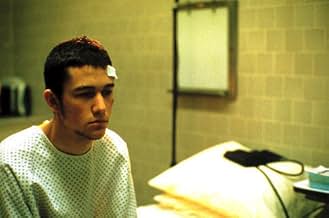
Following a fight which left his classmate with 50 stitches to the head, Lyle (Levitt) finds himself admitted to a juvenile ward of a private psychiatric facility.
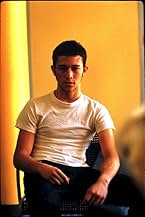
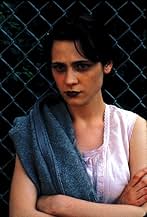
The new admission's fellow patients are being treated for a variety of conditions: Chad (played by co-screenwriter Michael Bacall) suffers from an acute manic-depressive disorder; the self-mutilating Tracy (Deschanel) wakes up screaming in the night; tough-guy Mike (Henson) asserts himself through violence; and the shy, diminutive Kenny (Lightning) has been sexually abused by a family member.
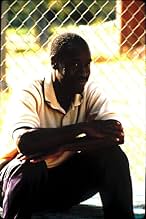
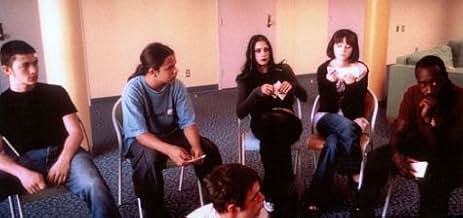
The clinic's psychologist Dr Monroe (Cheadle) attempts to get these troubled individuals to explore their feelings and to take responsibility for their actions in group therapy sessions.
Is it ever going to be possible for them to find real meaning in their chaotic existences?
Shot with a powerful immediacy on handheld digital video, the debut feature of director Jordan Melamed is a US indie which borrows from the spirit of the best Dogme films.
There's little in the way of a conventional story here - just a powerful concentration on character and atmosphere.
Set almost entirely within the confines of a psychiatric ward (where shoelaces are removed in case of attempted suicides), the film steers clear of the phony redemption offered by the likes of "Girl, Interrupted" and "Good Will Hunting".
Partly through some astute editing, Melamed conveys the strange rhythms of institutional life for these adolescents: the sense of boredom and frustration is mixed with frenetic bursts of energy, whether on the basketball court or in a slamdance trashing of the recreational room.
The dialogue is often biting - "Do you think being black is talking **** and wearing baggy clothes?" Monroe asks white B-Boy Mike.
The performances are also impressively convincing, while the ambiguous ending is in keeping with the rest of this edgy, sincere drama.
The new admission's fellow patients are being treated for a variety of conditions: Chad (played by co-screenwriter Michael Bacall) suffers from an acute manic-depressive disorder; the self-mutilating Tracy (Deschanel) wakes up screaming in the night; tough-guy Mike (Henson) asserts himself through violence; and the shy, diminutive Kenny (Lightning) has been sexually abused by a family member.
The clinic's psychologist Dr Monroe (Cheadle) attempts to get these troubled individuals to explore their feelings and to take responsibility for their actions in group therapy sessions.
Is it ever going to be possible for them to find real meaning in their chaotic existences?
Shot with a powerful immediacy on handheld digital video, the debut feature of director Jordan Melamed is a US indie which borrows from the spirit of the best Dogme films.
There's little in the way of a conventional story here - just a powerful concentration on character and atmosphere.
Set almost entirely within the confines of a psychiatric ward (where shoelaces are removed in case of attempted suicides), the film steers clear of the phony redemption offered by the likes of "Girl, Interrupted" and "Good Will Hunting".
Partly through some astute editing, Melamed conveys the strange rhythms of institutional life for these adolescents: the sense of boredom and frustration is mixed with frenetic bursts of energy, whether on the basketball court or in a slamdance trashing of the recreational room.
The dialogue is often biting - "Do you think being black is talking **** and wearing baggy clothes?" Monroe asks white B-Boy Mike.
The performances are also impressively convincing, while the ambiguous ending is in keeping with the rest of this edgy, sincere drama.
Interesting film with the raw edges of reality exposed
This movie is shot like a documentary, which adds to the raw edges of this film. If you are looking a feel good movie with all the answers, this film is not for you. If you are looking for a tiny glimpse of what it is like to have a mental illness and how difficult it is for professionals to help those, then sit back and watch. I was drawn into the characters, both the staff and the patience. The film ensured we never forgot that Psychologists and therapists are human as are the people with the illnesses. Although this film centered on teenagers with problems, the situations can apply to any age range. This is a must see film for any one interested in mental illness issues or those involved with dealing with mental illness. It is a shame this film did not get the positive press it deserves.
An honest and touching film about the conflicts of life
Put in the cinematic dustbin since its screening at Sundance in 2001, Jordan Melamed's Manic is deserving of an audience. It is an honest and touching film about the conflicts of life as seen by patients in Northwoods Mental Institution in California, a psychiatric hospital for adolescents. Brought to life by a brooding and intense performance by former Third Rock from the Sun star Joseph Gordon-Levitt as Lyle, a volatile teen ready to explode, Manic addresses important questions about violence and alienation among young people. Inspired by Albert Camus' "The Myth of Sisyphus," in which a Greek mythological figure is condemned forever to roll a boulder up an incline, only to watch it slide back down, the film questions whether people can find meaning in a seemingly absurd existence without melodrama or unconvincing epiphanies.
Lyle has been brought to the facility after brutally assaulting a boy with a baseball bat and the film is about his slow discovery of the reason he is there. Most of the film takes place within the psychiatric ward run by the life-affirming staff psychiatrist, Dr, David Monroe (Don Cheadle). Monroe wrestles with his own demons but treats the teens not as patients with labels but as human beings whose lives have meaning and value. The adolescents are hospitalized for assorted behavior problems and many have endured abuse and neglect at home. In addition to Lyle, the ward contains his bunkmate, 12-year old Kenny (Cody Lightning) a sullen Native American who is alleged to have molested younger children; Mike (Elden Henson), a volatile White rapper who pretends that he is black; Chad (co-writer Michael Bacall), a teen diagnosed with Bipolar illness; and rape victim Tracey (Zooey Deschanel), who wakes up screaming each night.
The teens have the same problems as many of their peers, only magnified beyond their endurance to cope. In researching the role Gordon-Levitt concluded that, "the patients are not some strange, alien beings. They are dealing with the same conflicts, struggles, and resolutions that we all have to deal with in life". Some of the acting is improvised but even when scripted, the film has a documentary feel to it. Shot in digital video, the hand held camera ratchets up the tension, capturing the pent-up emotions that are ready to explode at any moment -- in a basketball match, a pillow fight, or a fist-swinging free-for-all. While the camerawork increases the immediacy, its excessive use detracts from the power of the film, becoming intrusive and distracting.
Although our understanding of "mental illness" has changed in recent years, the treatment shown does not go much beyond pills or group therapy sessions. There is also no acknowledgment of alternative therapies such as Gestalt or Psychodrama that are geared to deal with this type of anger. David asks the patients to talk about why they are there but he cannot get them to go beyond victimization and have them feel responsible for themselves or each other. Indeed, most cannot articulate their pain or come to terms even with the fact that they need help. It is only when they see the sadness and extreme solitude of Van Gogh's last painting "Wheatfields With Crows" that the first awareness of mutual need begins to emerge.
Lyle has been brought to the facility after brutally assaulting a boy with a baseball bat and the film is about his slow discovery of the reason he is there. Most of the film takes place within the psychiatric ward run by the life-affirming staff psychiatrist, Dr, David Monroe (Don Cheadle). Monroe wrestles with his own demons but treats the teens not as patients with labels but as human beings whose lives have meaning and value. The adolescents are hospitalized for assorted behavior problems and many have endured abuse and neglect at home. In addition to Lyle, the ward contains his bunkmate, 12-year old Kenny (Cody Lightning) a sullen Native American who is alleged to have molested younger children; Mike (Elden Henson), a volatile White rapper who pretends that he is black; Chad (co-writer Michael Bacall), a teen diagnosed with Bipolar illness; and rape victim Tracey (Zooey Deschanel), who wakes up screaming each night.
The teens have the same problems as many of their peers, only magnified beyond their endurance to cope. In researching the role Gordon-Levitt concluded that, "the patients are not some strange, alien beings. They are dealing with the same conflicts, struggles, and resolutions that we all have to deal with in life". Some of the acting is improvised but even when scripted, the film has a documentary feel to it. Shot in digital video, the hand held camera ratchets up the tension, capturing the pent-up emotions that are ready to explode at any moment -- in a basketball match, a pillow fight, or a fist-swinging free-for-all. While the camerawork increases the immediacy, its excessive use detracts from the power of the film, becoming intrusive and distracting.
Although our understanding of "mental illness" has changed in recent years, the treatment shown does not go much beyond pills or group therapy sessions. There is also no acknowledgment of alternative therapies such as Gestalt or Psychodrama that are geared to deal with this type of anger. David asks the patients to talk about why they are there but he cannot get them to go beyond victimization and have them feel responsible for themselves or each other. Indeed, most cannot articulate their pain or come to terms even with the fact that they need help. It is only when they see the sadness and extreme solitude of Van Gogh's last painting "Wheatfields With Crows" that the first awareness of mutual need begins to emerge.
A teenaged One Flew Over the Cuckoo's Nest
This is a great movie, by a VERY talented first time director, which grabs you from the brilliant opening credit sequence and never lets go. This film works on so many different levels, I don't understand how it was so overlooked by the arthouse crowd.
The performances, the miniDV cinematography, the score( by Thurston Moore of Sonic Youth)...the script, about troubled teens, mostly with anger management and/or home abuse issues...it's all right on the money.
Kudos especially to Don Cheadle who's proved himself to be one of our greatest and most underappreciated actors. This one section of jump cuts where he's questioning the kids and finally questioning himself is as good a piece of acting as I've seen in a while.
Buy it or rent it...JUST WATCH IT. You won't be sorry.
The performances, the miniDV cinematography, the score( by Thurston Moore of Sonic Youth)...the script, about troubled teens, mostly with anger management and/or home abuse issues...it's all right on the money.
Kudos especially to Don Cheadle who's proved himself to be one of our greatest and most underappreciated actors. This one section of jump cuts where he's questioning the kids and finally questioning himself is as good a piece of acting as I've seen in a while.
Buy it or rent it...JUST WATCH IT. You won't be sorry.


Did you know
- TriviaMost of the extras in the movie were teenagers that had actually been in hospitals to treat depression.
- Quotes
Dr. David Monroe: Uh, I'm not gonna give you some bullshit hokey speech and tell you that if you come to some epiphany about your dad you're gonna make a break through and everything's gonna be pizza and blowjobs.
- ConnectionsFeatured in WatchMojo: Top 10 Joseph Gordon-Levitt Performances (2015)
- How long is Manic?Powered by Alexa
Details
Box office
- Gross US & Canada
- $69,958
- Opening weekend US & Canada
- $7,628
- Apr 27, 2003
- Gross worldwide
- $69,958
- Runtime
- 1h 40m(100 min)
- Color
- Sound mix
- Aspect ratio
- 1.85 : 1
Contribute to this page
Suggest an edit or add missing content