IMDb RATING
7.3/10
5.2K
YOUR RATING


An unemployed man finds his life sinking more and more into trouble as he hides his situation from his family and friends.An unemployed man finds his life sinking more and more into trouble as he hides his situation from his family and friends.An unemployed man finds his life sinking more and more into trouble as he hides his situation from his family and friends.
- Director
- Writers
- Stars
- Awards
- 3 wins & 8 nominations total







Didier Reyes
- Philippe
- (as Didier Perez)
- Director
- Writers
- All cast & crew
- Production, box office & more at IMDbPro
7.35.2K
1
2
3
4
5
6
7
8
9
10
Featured reviews
The Price of Success
Ironically, I just saw this a day after viewing Abbas Kiarostami's brilliant "Close Up", a story of a man who could no longer accept the endless banalities of his life and decided to become someone else (a film director!). That man had no sense of identity about himself but he knew what he cared about and what he believed in (the power of art and cinema). That brings him one up on the hero of this story. Vincent is a man who also cannot accept the banalities of his life, but he hasn't the foggiest idea of who he is or what he really cares about. It's as if he was born out of a computer software program. He knows what he's supposed to care about: nice home, nice car, nice bank account... But his work as an investor is so deprived of any human value that he loses all sense of values. His environment; a sterile, generic, upper middle-class vacuum that could make one believe that all of France has turned into Silicon Valley with a touch of the Scandinavian, has none of the passion or warmth that one identifies with being human. He has a loving wife, but according to his 'program', he believes that he would lose her if she knew that he was no longer able to function as a cog in the machine, and provide her with the lifestyle that she has grown accustomed to.
That is the first tragedy of Vincent, because his wife really does love him. The second tragedy of Vincent, is that even though he recognizes his need for freedom, he doesn't know how to use it. He's like a man who has been released from a lifetime of imprisonment, but still hangs around the prison yard because he is unable to comprehend what might be available to him. He'd lost his job because his love for being free was more important to him than keeping his appointments, but most of his time spent in his new-found freedom is in doing the same job he'd done before: investments. The only difference now is that he likes to believe that the investments are helping developing Third World countries. He knows that there really are no investments (he keeps the money that people give him and spends it on a nifty Range Rover, among other things), but momentarily, he can feel as if he is 'somebody' to his family and friends when he tells them of this meaningful new job he (allegedly) has.
Vincent has been described by many as 'everyman', but I think of him more as 'everyman who has just stepped through the looking glass'. Instead of taking a good, hard look at himself, he somehow ended up taking a look beyond himself because he could not find a reflection. He can't even recognize how much he's patterned his children to follow the same program he did. We see him teaching his kindergarten-age son how to 'hard sell' his toys at a school fair. Later, in a fascinating scene, we see him and his family doing what most people of his class do in their free time. They go shopping in an upscale, overpriced store to buy clothing that they know they don't really need. Vincent has it all, but it fills nothing in him. His family has it all, yet they don't seem to question the fact that they rarely spend any time together.
Laurent Candet has created a beautifully somber and sober look at the price of 'success'. The film is practically drained of all color, save for blues and grays, to illustrate the life force that has been systematically drained from Vincent throughout his life. And the score, a somber cello piece, refreshingly accentuates Vincent's mind instead of his actions (like most scores do). It is like a slow-moving merry-go-round that brings on a sense of familiarity that is simultaneously comfortable and unnerving. Because what the gist of it all is: is that no one wants to spend their life on a merry-go-round. Even a comfortable one.
That is the first tragedy of Vincent, because his wife really does love him. The second tragedy of Vincent, is that even though he recognizes his need for freedom, he doesn't know how to use it. He's like a man who has been released from a lifetime of imprisonment, but still hangs around the prison yard because he is unable to comprehend what might be available to him. He'd lost his job because his love for being free was more important to him than keeping his appointments, but most of his time spent in his new-found freedom is in doing the same job he'd done before: investments. The only difference now is that he likes to believe that the investments are helping developing Third World countries. He knows that there really are no investments (he keeps the money that people give him and spends it on a nifty Range Rover, among other things), but momentarily, he can feel as if he is 'somebody' to his family and friends when he tells them of this meaningful new job he (allegedly) has.
Vincent has been described by many as 'everyman', but I think of him more as 'everyman who has just stepped through the looking glass'. Instead of taking a good, hard look at himself, he somehow ended up taking a look beyond himself because he could not find a reflection. He can't even recognize how much he's patterned his children to follow the same program he did. We see him teaching his kindergarten-age son how to 'hard sell' his toys at a school fair. Later, in a fascinating scene, we see him and his family doing what most people of his class do in their free time. They go shopping in an upscale, overpriced store to buy clothing that they know they don't really need. Vincent has it all, but it fills nothing in him. His family has it all, yet they don't seem to question the fact that they rarely spend any time together.
Laurent Candet has created a beautifully somber and sober look at the price of 'success'. The film is practically drained of all color, save for blues and grays, to illustrate the life force that has been systematically drained from Vincent throughout his life. And the score, a somber cello piece, refreshingly accentuates Vincent's mind instead of his actions (like most scores do). It is like a slow-moving merry-go-round that brings on a sense of familiarity that is simultaneously comfortable and unnerving. Because what the gist of it all is: is that no one wants to spend their life on a merry-go-round. Even a comfortable one.
Vinny Liar
People may lie for the thrill of being appreciated, or out of the fear of not being so; but while a fantasy world may initially seem liberating, it can become a prison as well. These themes are explored in 'Time Out', the story of Vincent, a man who loses his job and pretends he hasn't, rather than face up to the truth. There's a nice absence of didacticism in the way this film is assembled, a rich picture is assembled but without any attempt to ram a single interpretation down the audience's throat; it adds up to a fine portrait of depression, and a loneliness that oddly can exist only within a relationship. But there's also a creativeness in Vincent's behaviour which is necessary to generate the plot but which doesn't quite square with the rest of the movie: the film is more convincing once Vincent is deeply trapped in the web of his own lies, rather than when he is spinning it. At the heart of 'Time Out', Vincent remains an enigma unclarified: it is this that is both the film's strength and weakness. It's not a perfect film, and the start is quite dull, but the longer it lasts, the deeper it feels.
10cestmoi
What it means to be human...or more specifically, a man
Has anybody ever set up a truck stop shot more magnificently?
This film is the full ten thing. Cast is spectacular, the photography superb, the unobtrusive music on the money, the story and its effects on the life of a family, affecting. Subtlety is a hallmark here. If you don't know the story line it must be even more powerful in a first viewing. As Fellini made at least two films that can be seen as defining the male of the Catholic/Italian species (8 1/2 & Amarcord) this magnificent film from France from a director I am not familiar with, defines "the problem of being male." I was fully involved and unable to complete a sentence for twenty minutes after the lights went up. But it is just not male identification at work here. It is the anguish and plight of the wife, magnificently played by Karen Viard, or the children who are as confused and anxious as any of us. The father, a very French man with a franc or euro, even redeems himself with love and compassion. And the "unsavory" seller of bogus goods who rescues our Vincent by offering employment, comes through swimmingly with compassion and understanding. I can not recommend this film enough. Please see it.
This film is the full ten thing. Cast is spectacular, the photography superb, the unobtrusive music on the money, the story and its effects on the life of a family, affecting. Subtlety is a hallmark here. If you don't know the story line it must be even more powerful in a first viewing. As Fellini made at least two films that can be seen as defining the male of the Catholic/Italian species (8 1/2 & Amarcord) this magnificent film from France from a director I am not familiar with, defines "the problem of being male." I was fully involved and unable to complete a sentence for twenty minutes after the lights went up. But it is just not male identification at work here. It is the anguish and plight of the wife, magnificently played by Karen Viard, or the children who are as confused and anxious as any of us. The father, a very French man with a franc or euro, even redeems himself with love and compassion. And the "unsavory" seller of bogus goods who rescues our Vincent by offering employment, comes through swimmingly with compassion and understanding. I can not recommend this film enough. Please see it.
To be my own person, who sets the rules?
Shakespeare spoke of the tangled web of deceit suggesting it was a terrible trap. Laurent Cantet presents us with another view. His hero in this film, Vincent (played to perfection by Aurelien Recoing) appears to revel in the freedom his dissembling brings...at least for a time. A middle-aged, middle class man who has lost his job keeps this information from his family and sets out on a complex journey of survival, both existentially and financially, involving schemes that he eventually has ambivalent feelings about. We also see another side to this complex man...the loving husband, father and son. Are we to judge and dislike this man? Should we cast the first stone?
I was particularly impressed by the subtle way Cantet depicted Muriel, Vincent's wife (performed with sensitivity and grace by Karin Viard). Her suspicions and uncertainties are written only on her lovely face...very little is ever said. And yet she's not seen as the long-suffering little woman...not at all. She appears independent and strong.
And then there's the affecting scenes in the snow-filled mountains... in that place of isolation (so representative of...well...of us all). There's majestic beauty and danger.
The mystery, the thought=provoking qualities of this film have made it for me a haunting and moving experience...One that I'd certainly recommend!
I was particularly impressed by the subtle way Cantet depicted Muriel, Vincent's wife (performed with sensitivity and grace by Karin Viard). Her suspicions and uncertainties are written only on her lovely face...very little is ever said. And yet she's not seen as the long-suffering little woman...not at all. She appears independent and strong.
And then there's the affecting scenes in the snow-filled mountains... in that place of isolation (so representative of...well...of us all). There's majestic beauty and danger.
The mystery, the thought=provoking qualities of this film have made it for me a haunting and moving experience...One that I'd certainly recommend!
Highly nuanced psychological thriller
TIME OUT (Laurent Cantet - France 2001).
The English language title Time Out is not entirely fitting. Perhaps Time Running Out would be a more appropriate title, since this is exactly what Vincent, the main character, is going through.
Vincent (Aurélien Recoing) is a highly motivated financial consultant. Or, at least, that's what he used to be. Fact of the matter is, he lost his job three months ago and now concocts an elaborate facade to cover up the fact he is now unemployed. While his wife, Muriel (Karin Viard), thinks he's at work, Vincent is aimlessly roaming the highways, hanging out at rest stops, and sleeping in his car, regularly calling his wife to give her an update about his next meeting and apologizing for coming home late, before turning in for his overnight stay in his car. Vincent lives like a ghost, increasingly detached from his wife, children and former colleagues, he doesn't seem to realize the truth is closing in. One day, they will find out. But Vincent has gotten to a point where he's constructed his own dream world. He resorts to reading all kinds of economic pamphlets about his apparent line of business, studying and memorizing them like he really is active in this line of work. As Vincent needs money, he makes up a plan to defraud old friends and his parents out of their savings by letting them in on some bogus investment scheme. He conducts his business out of a hotel lounge, where he catches the eye of Jean-Michel (Serge Livrozet, a brilliant role), a "real" , experienced operator who immediately recognizes Vincent is a fraud. He offers Vincent a job in his own operation, meaning some extra pocket money and perhaps even a way out of his increasingly sticky situation.
Director Cantet's style is distinctly unflashy. Set against the wintry landscapes of Rhône-Alpes around Grenoble and Annecy, the film makes very good use of its locations. Whether it's the bland office complexes in the "zones commerciales" at the outskirts of anonymous towns, or the snow-clad mountains surrounding them, it seems to blend perfectly with the film's tone. Accompanied by a beautiful classical score, Cantet shows himself a remarkably sharp and observant storyteller. Although the film maintains interest throughout, the running time of 132 minutes did seem a tad long, and Vincent's lengthy economic arguments when conning his friends and relatives (some of them business men themselves) out of their money weren't terribly convincing. His arguments range from unconvincing to downright nonsense. At least he would'n have convinced me, but even my 91 year old grandmother wouldn't have bought any of this for a moment. But, some of these inconsistencies aside, this is a skilfully constructed film and an engrossing psychological drama that slowly unfolds like a thriller with a brilliant performance by Aurélien Recoing to top it off.
Camera Obscura --- 8/10
The English language title Time Out is not entirely fitting. Perhaps Time Running Out would be a more appropriate title, since this is exactly what Vincent, the main character, is going through.
Vincent (Aurélien Recoing) is a highly motivated financial consultant. Or, at least, that's what he used to be. Fact of the matter is, he lost his job three months ago and now concocts an elaborate facade to cover up the fact he is now unemployed. While his wife, Muriel (Karin Viard), thinks he's at work, Vincent is aimlessly roaming the highways, hanging out at rest stops, and sleeping in his car, regularly calling his wife to give her an update about his next meeting and apologizing for coming home late, before turning in for his overnight stay in his car. Vincent lives like a ghost, increasingly detached from his wife, children and former colleagues, he doesn't seem to realize the truth is closing in. One day, they will find out. But Vincent has gotten to a point where he's constructed his own dream world. He resorts to reading all kinds of economic pamphlets about his apparent line of business, studying and memorizing them like he really is active in this line of work. As Vincent needs money, he makes up a plan to defraud old friends and his parents out of their savings by letting them in on some bogus investment scheme. He conducts his business out of a hotel lounge, where he catches the eye of Jean-Michel (Serge Livrozet, a brilliant role), a "real" , experienced operator who immediately recognizes Vincent is a fraud. He offers Vincent a job in his own operation, meaning some extra pocket money and perhaps even a way out of his increasingly sticky situation.
Director Cantet's style is distinctly unflashy. Set against the wintry landscapes of Rhône-Alpes around Grenoble and Annecy, the film makes very good use of its locations. Whether it's the bland office complexes in the "zones commerciales" at the outskirts of anonymous towns, or the snow-clad mountains surrounding them, it seems to blend perfectly with the film's tone. Accompanied by a beautiful classical score, Cantet shows himself a remarkably sharp and observant storyteller. Although the film maintains interest throughout, the running time of 132 minutes did seem a tad long, and Vincent's lengthy economic arguments when conning his friends and relatives (some of them business men themselves) out of their money weren't terribly convincing. His arguments range from unconvincing to downright nonsense. At least he would'n have convinced me, but even my 91 year old grandmother wouldn't have bought any of this for a moment. But, some of these inconsistencies aside, this is a skilfully constructed film and an engrossing psychological drama that slowly unfolds like a thriller with a brilliant performance by Aurélien Recoing to top it off.
Camera Obscura --- 8/10


Did you know
- TriviaInspired by a true story, that of Jean-Claude Romand. In reality, Romand went on to kill, on January 9, 1993, his wife, two children and both his parents. It is the first of three films in two years inspired by the case, followed by The Adversary (2002) and La vida de nadie (2002), of which the former is the closest to the real events. Phantom (2002) was also inspired by the same incident.
- ConnectionsFeatured in The 2003 IFP Independent Spirit Awards (2003)
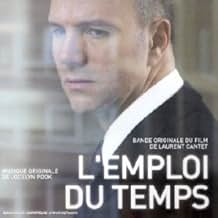
- SoundtracksL'Emploi Du Temps - Musique Originale
Composed by/ Arranged By Jocelyn Pook
Performed by 'Electra Strings' Ensemble
Cello Solo performed by Sophie Harris
Viola Solo performed by Clive Howard
Violin solo performed by Jacqueline Norrie
Phonographic Copyright (p) Jocelyn Pook / Haut et Court
Under Exclusive License To Virgin France
Published By Chester Music Ltd.
© 2001 Virgin France
- How long is Time Out?Powered by Alexa
Details
- Release date
- Country of origin
- Official sites
- Language
- Also known as
- El empleo del tiempo
- Filming locations
- Production companies
- See more company credits at IMDbPro
Box office
- Gross US & Canada
- $448,542
- Gross worldwide
- $1,213,913
- Runtime
- 2h 14m(134 min)
- Color
- Sound mix
- Aspect ratio
- 1.85 : 1
Contribute to this page
Suggest an edit or add missing content