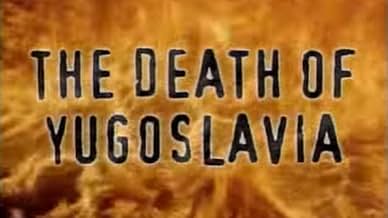
The Death of Yugoslavia
- TV Mini Series
- 1995–1996
- 50m
IMDb RATING
8.6/10
1.5K
YOUR RATING
This documentary series covers the struggles of the Yugoslavian people during the collapse of their country, and the subsequent wars to finally find hope with the signing of the Final Peace ... Read allThis documentary series covers the struggles of the Yugoslavian people during the collapse of their country, and the subsequent wars to finally find hope with the signing of the Final Peace Accords.This documentary series covers the struggles of the Yugoslavian people during the collapse of their country, and the subsequent wars to finally find hope with the signing of the Final Peace Accords.
- Won 1 BAFTA Award
- 1 win & 1 nomination total
Browse episodes
8.61.4K
1
2
3
4
5
6
7
8
9
10
Featured reviews
lost in translation
Whoever translated the Bosnian, Croatian, and Serbian portions of this program into English ought to be ashamed of themselves. There are so many instances where the meaning of the speakers' words is obscured or distorted. Here are just a few examples:
-------------
Speaker: "They simply could not believe their eyes, how it could all have been filmed in the offices in which they were conferring not conferring, in which they were talking about the heinous crimes that they want to commit."
Subtitles: "They could not believe their eyes! They had been filmed planning murder and treason."
-------------
Speaker: "They have an ethnically pure republic, they have no territorial disputes."
Subtitles: "It was an ethnically pure republic - no Serbs."
-------------
Speaker: "I asked him if they are aware that they chose war."
Subtitles: "I said: 'This means war'."
-------------
Speaker: "Until then, I never in my life saw a man who was as scared as him. I think that in a period of 30 minutes, he went to the toilet 10 times. Most likely he got, uh, diarrhea or something similar."
Subtitles: "I have never seen a man so scared. He went to the toilet ten times. Perhaps it was something he had for lunch."
-------------
Such shoddy translation might be acceptable for a Hollywood action film, but it completely ruined what could have been an excellent war documentary.
-------------
Speaker: "They simply could not believe their eyes, how it could all have been filmed in the offices in which they were conferring not conferring, in which they were talking about the heinous crimes that they want to commit."
Subtitles: "They could not believe their eyes! They had been filmed planning murder and treason."
-------------
Speaker: "They have an ethnically pure republic, they have no territorial disputes."
Subtitles: "It was an ethnically pure republic - no Serbs."
-------------
Speaker: "I asked him if they are aware that they chose war."
Subtitles: "I said: 'This means war'."
-------------
Speaker: "Until then, I never in my life saw a man who was as scared as him. I think that in a period of 30 minutes, he went to the toilet 10 times. Most likely he got, uh, diarrhea or something similar."
Subtitles: "I have never seen a man so scared. He went to the toilet ten times. Perhaps it was something he had for lunch."
-------------
Such shoddy translation might be acceptable for a Hollywood action film, but it completely ruined what could have been an excellent war documentary.
A fantastic documentary
If you are interested in the Balkan wars, then this documentary is a must. I still cannot believe that they actually managed to talk to the people who were the lead characters of these events. It is absolutely unique to hear every one of them speak about it, share their story and be filmed while doing it. Not many a documentary has managed this kind of scope and well spent effort.
Clearly, there will be truths hidden that the interviewees did not want to speak about, but one should not expect miracles. Even so, this is a genuinely fascinating documentary that anyone, who is interested in this region's history, should see.
A word of caution though, there appear to be a number of people on this board, disagreeing, denying and generally dissatisfied about any film that shows the conflict as it really was and, hence, shows Serbs in a less than a positive light.
Pay no attention, even to this day, there are people in Austria and Germany who deny the atrocities of WWII; most of these people can hardly be helped by a documentary.
Clearly, there will be truths hidden that the interviewees did not want to speak about, but one should not expect miracles. Even so, this is a genuinely fascinating documentary that anyone, who is interested in this region's history, should see.
A word of caution though, there appear to be a number of people on this board, disagreeing, denying and generally dissatisfied about any film that shows the conflict as it really was and, hence, shows Serbs in a less than a positive light.
Pay no attention, even to this day, there are people in Austria and Germany who deny the atrocities of WWII; most of these people can hardly be helped by a documentary.
Too Political !
Forgive my summary for being contradictory because it sums up what's wrong with this documentary series on the destruction of the Socialist Federation Of Yugoslavia . By trying to be bitingly ironic DEATH ends up contradicting itself
The format is to be blame . We see tedious talking head interviews from everybody like Slobodan Milosovic the leader of Serbia and Franjo Tudjman the leader of Croatia to leaders of the various paramilitary leaders organisations to UN soldiers to people who were kicked out their villages during the war . The irony comes in the form of Tudjman or Milisovic saying he had nothing to do with such and such an event then the interviewing cutting to a paramilitary leader saying " So the president said to me I want [ Rival ethnic group ] kicked out of the region and I will supply you with the men and guns to do it " and the interview cutting back to Milosovic or Tudjman bleating " So you see it was nothing to do with me . I was not responsible " . By trying to be ironic , if not out and out cynical , what are we audience to learn by all this ? Since the paramilitaries are very nasty people in the first place why should we entirely believe them ?
The format also makes tedious viewing . I tuned in to find out about the very human cost of war , of why socialist brothers turn against each other in an orgy of nationalism and what it was like for the combatants , mercenaries , UN personnel and innocent civilians on the front line but DEATH doesn't really concern itself with people , only politics with large chunks of running time dedicated to footage of political meetings and talking head interviews of people who attended them which leads to the detriment of other issues . The Muslim - Croat conflict of 1993 which killed thousands is relegated to a few seconds of the bridge over Mostar being shelled . I should also point out that interviewing the architects of the war in the former Yugoslavia means that we're hearing a subjective point of view , not an impartial objective one
So I'm afraid I've got to disagree with the other two reviewers ( one of whom may have got this confused with another documentary - The narrator is an English male not Christiane Amanpour ) in saying that despite - Or is it because ? - the leaders of the former Yugoslavia and international diplomats are interviewed this is a very flawed documentary series
The format is to be blame . We see tedious talking head interviews from everybody like Slobodan Milosovic the leader of Serbia and Franjo Tudjman the leader of Croatia to leaders of the various paramilitary leaders organisations to UN soldiers to people who were kicked out their villages during the war . The irony comes in the form of Tudjman or Milisovic saying he had nothing to do with such and such an event then the interviewing cutting to a paramilitary leader saying " So the president said to me I want [ Rival ethnic group ] kicked out of the region and I will supply you with the men and guns to do it " and the interview cutting back to Milosovic or Tudjman bleating " So you see it was nothing to do with me . I was not responsible " . By trying to be ironic , if not out and out cynical , what are we audience to learn by all this ? Since the paramilitaries are very nasty people in the first place why should we entirely believe them ?
The format also makes tedious viewing . I tuned in to find out about the very human cost of war , of why socialist brothers turn against each other in an orgy of nationalism and what it was like for the combatants , mercenaries , UN personnel and innocent civilians on the front line but DEATH doesn't really concern itself with people , only politics with large chunks of running time dedicated to footage of political meetings and talking head interviews of people who attended them which leads to the detriment of other issues . The Muslim - Croat conflict of 1993 which killed thousands is relegated to a few seconds of the bridge over Mostar being shelled . I should also point out that interviewing the architects of the war in the former Yugoslavia means that we're hearing a subjective point of view , not an impartial objective one
So I'm afraid I've got to disagree with the other two reviewers ( one of whom may have got this confused with another documentary - The narrator is an English male not Christiane Amanpour ) in saying that despite - Or is it because ? - the leaders of the former Yugoslavia and international diplomats are interviewed this is a very flawed documentary series
10Oldboy69
Most insightful documentary I have ever saw
This documentary is great. It gave me insight into things I never knew, even though I live in the region (Slovenia). I have seen the war and the first helicopter was shot down in front of my very eyes. I have participated in the war by working on the local radio station, informing the public on the events in real time around the clock, my grandfather and father were in the Yugoslav army, and my grandparents are Serbs from Belgrade. So I guess I can say I have some insight in the matter.
It is absolutely untrue and unfair to say that this documentary was "written by the winners". Calling the genocide at Srebrenica an error on the UN or NATO part is outright ridiculous. This sentiment of cutting some slack to Serbians (as well as Croatians) on account of UN and NATO not reacting is just the reflection of the anti-west mentality (all capitalists are bad, so they have to be responsible) ever present in these parts.
It is hard to say what constitutes a legitimate threat to the security of the region (trigger for NATO action). Should NATO attack England on account of having issues in Ireland or Turkey for its treatment of the Kurds? Or should UN secure the borders of Catalonia, Padania or Basque country? It's not something you just get into without a really serious reason. But growing new fascistic regime in the region is a legitimate threat and something Europeans remember bitterly. This is why Europeans were reluctant to act. Last thing we need is another wave of Red Brigades in Europe.
All original materials for the documentary (full transcripts and so on) are publicly available (for research purposes) at King's College London (http://www.kcl.ac.uk/lhcma/cats/yugoslavia/xd20-0.htm), so any implication that this was some western plot to rewrite history in ridiculous.
So, if you are interested in the matter, this documentary is as good as it gets. No Michael Moorish one-sided human interest stories with sad endings. I's about background and political games of the people that actually made it happen, and others that made it stop.
It is absolutely untrue and unfair to say that this documentary was "written by the winners". Calling the genocide at Srebrenica an error on the UN or NATO part is outright ridiculous. This sentiment of cutting some slack to Serbians (as well as Croatians) on account of UN and NATO not reacting is just the reflection of the anti-west mentality (all capitalists are bad, so they have to be responsible) ever present in these parts.
It is hard to say what constitutes a legitimate threat to the security of the region (trigger for NATO action). Should NATO attack England on account of having issues in Ireland or Turkey for its treatment of the Kurds? Or should UN secure the borders of Catalonia, Padania or Basque country? It's not something you just get into without a really serious reason. But growing new fascistic regime in the region is a legitimate threat and something Europeans remember bitterly. This is why Europeans were reluctant to act. Last thing we need is another wave of Red Brigades in Europe.
All original materials for the documentary (full transcripts and so on) are publicly available (for research purposes) at King's College London (http://www.kcl.ac.uk/lhcma/cats/yugoslavia/xd20-0.htm), so any implication that this was some western plot to rewrite history in ridiculous.
So, if you are interested in the matter, this documentary is as good as it gets. No Michael Moorish one-sided human interest stories with sad endings. I's about background and political games of the people that actually made it happen, and others that made it stop.
A better description couldn't have been made.
This documentary series (of five episodes) is a painstakingly compiled and researched account of the extended mass-bloodshed which marked the end of the old Federal Yugoslavia and spanned almost the entire first half of the 1990's. It includes a huge wealth of news footage and interviews with involved parties both "Yugoslav" and otherwise. The only real "improvement" which could be made to this amazing achievement would be the inclusion of later developments in the Balkans since the program was made. This was indeed done in the late 1990's for a repeat showing on BBC television, but the addition of some even more recent events would help to complete this admirably detailed and fulsome piece of work. Perhaps another whole episode might be warranted? The very succinct title of this documentary was made all the more appropriate by the eventual abandonment of the term "Yugoslavia" by the now-named Federal Republic of Serbia and Montenegro - a much belated and formal admission of that which occurred years before.
This program is required viewing for anyone who wishes to know about this horrible conflict, it's causes and it's many results.
Did you know
- TriviaInterviews from the series have been used by the International Criminal Tribunal for the former Yugoslavia in war crimes prosecutions.
- ConnectionsFeatured in Barend en Van Dorp: Episode dated 14 May 1999 (1999)
- How many seasons does The Death of Yugoslavia have?Powered by Alexa
Details
- Release date
- Country of origin
- Language
- Also known as
- Smrt Jugoslavije
- Production company
- See more company credits at IMDbPro
- Runtime
- 50m
- Color
- Aspect ratio
- 4:3
Contribute to this page
Suggest an edit or add missing content