Release calendarTop 250 moviesMost popular moviesBrowse movies by genreTop box officeShowtimes & ticketsMovie newsIndia movie spotlight
    What's on TV & streamingTop 250 TV showsMost popular TV showsBrowse TV shows by genreTV news
    What to watchLatest trailersIMDb OriginalsIMDb PicksIMDb SpotlightFamily entertainment guideIMDb Podcasts
    OscarsBest Of 2025Holiday Watch GuideGotham AwardsCelebrity PhotosSTARmeter AwardsAwards CentralFestival CentralAll events
    Born todayMost popular celebsCelebrity news
    Help centerContributor zonePolls
For industry professionals
  • Language
  • Fully supported
  • English (United States)
    Partially supported
  • Français (Canada)
  • Français (France)
  • Deutsch (Deutschland)
  • हिंदी (भारत)
  • Italiano (Italia)
  • Português (Brasil)
  • Español (España)
  • Español (México)
Watchlist
Sign in
  • Fully supported
  • English (United States)
    Partially supported
  • Français (Canada)
  • Français (France)
  • Deutsch (Deutschland)
  • हिंदी (भारत)
  • Italiano (Italia)
  • Português (Brasil)
  • Español (España)
  • Español (México)
Use app
  • Cast & crew
  • User reviews
IMDbPro

Life and Debt

  • 2001
  • Not Rated
  • 1h 20m
IMDb RATING
7.4/10
1.1K
YOUR RATING
Life and Debt (2001)
Documentary

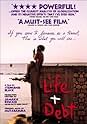
Documentary look at the effects of globalization on Jamaican industry and agriculture.Documentary look at the effects of globalization on Jamaican industry and agriculture.Documentary look at the effects of globalization on Jamaican industry and agriculture.

  • Director
    • Stephanie Black
  • Writer
    • Jamaica Kincaid
  • Stars
    • Belinda Becker
    • Buju Banton
    • Horst Köhler
  • See production info at IMDbPro
  • IMDb RATING
    7.4/10
    1.1K
    YOUR RATING
    • Director
      • Stephanie Black
    • Writer
      • Jamaica Kincaid
    • Stars
      • Belinda Becker
      • Buju Banton
      • Horst Köhler
    • 18User reviews
    • 26Critic reviews
    • 67Metascore
  • See production info at IMDbPro
  • See production info at IMDbPro
    • Awards
      • 2 wins total

    Photos4

    View Poster
    View Poster
    View Poster
    View Poster

    Top Cast14

    Edit
    Belinda Becker
    • Self - Narrator
    • (voice)
    Buju Banton
    Buju Banton
    • Self - Singer
    Horst Köhler
    • Self - Director, International Monetary Fund
    • (archive footage)
    • (as Horst Kohler)
    Michael Manley
    Michael Manley
    • Self - Former Prime Minister of Jamaica
    Stanley Fischer
    • Self - Deputy Director International Monetary Fund
    Michael Witter
    • Self - Professor of Economics, University of West Indies
    • (as Dr. Michael Witter)
    David Coore
    • Self - Former Minister of Finance, Jamaica
    Bill Clinton
    Bill Clinton
    • Self - President of the United States
    • (archive footage)
    Jean-Bertrand Aristide
    Jean-Bertrand Aristide
    • Self - President, Haiti
    Yami Bolo
    • Self - Singer
    Tom Lipetzky
    • Self - U.S. Potato Board
    • (archive footage)
    Kathy Owen
    Kathy Owen
    • Self - News Anchor
    Jerry J. Rawlings
    • Self - Former President, Ghana
    • (archive footage)
    • (as Jerry Rawlings)
    Jamaica Kincaid
    • Self - Narrator
    • (uncredited)
    • Director
      • Stephanie Black
    • Writer
      • Jamaica Kincaid
    • All cast & crew
    • Production, box office & more at IMDbPro

    User reviews18

    7.41K
    1
    2
    3
    4
    5
    6
    7
    8
    9
    10

    Featured reviews

    melliferous

    An eye-opening look into Third World economics.

    Life and Debt is an arresting, soul-stirring documentary with fantastic images and a story that will haunt you long after the movie is over. I hope that watching it makes you reconsider what you know about how the world works economically, and the role of the International Monetary Fund and World Bank.

    This film is an adaption of Jamaica Kincaid's novel "A Small Place," originally based on the story of Antigua (changed to Jamaica for the purposes of this film). If you enjoy the movie, be sure to read the book. In the film, as in the novel, Kincaid's voice-over narration is a powerful reminder of the complicated relationship between tourist and native, powerful and powerless, oppressors and oppressed. I would recommend this documentary to anyone interesting in how developed nations like the United States affect the development of Third World countries like Jamaica, even if you know nothing about it.
    howard.schumann

    Beyond the luxury hotels is the human impact

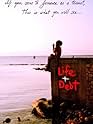
    This is the Jamaica the tourists see, says the narrator in Stephanie Black's documentary Life and Debt, a country of lush jungles, clear blue water, and sandy beaches. Beyond the luxury hotels, however, is a third world country fighting poverty, crime, and hopelessness. Based on the novel by Jamaica Kincaid A Small Place, Life and Debt, the film studies the effects of the policies of the International Monetary Fund (IMF) and the World Bank on the economy of Jamaica, focusing on the impact of economic globalization on the dairy farmers and factory workers. Backed by a soundtrack of native reggae music, Life and Debt is filled with economic facts that require some knowledge to fully understand. You don't need a master's degree in Economics, however, to understand the desperate faces of children in poverty, the agony of farmers who can't sell their crops, or the hopelessness of factory workers who earn the equivalent of thirty US dollars per week.

    Black interviews former Prime Minister Michael Manley who explains how the current situation came to be. When Jamaica achieved its independence in 1962 after being a colony of Great Britain for 400 years, help was needed to build its economy. The International Monetary Fund (IMF) and the World Bank gladly supplied this money in the form of short-term loans. These loans though came with strings attached. Subsidies to local farmers were prohibited and tariff barriers were lowered to allow cheap foreign goods to come into the country, inevitably driving local industries out of business. What's remains is tourism, sweatshops and fast-food chains. Manley blames the big Western powers that have used Jamaica for cheap labor and easy sales. For example, thanks to huge subsidies other countries including the United States exported powdered milk to Jamaica at an excessively low price, forcing the local dairy industry to shut down. He also points out that big American businesses like Chiquita, Dole, and Del Monte have worked to stifle exports of local Jamaican bananas. Manley asks of the IMF, "You ask, 'In who's interest? I ask, 'Who set it up?"

    Watching this documentary, it became clearer to me why thousands of people took to the streets in Seattle to protest the WTO Conference. It may not be widely known but the WTO has established ground rules that make it easier for the developed countries to market their products in third world countries. Under WTO rules,

    1. Governments are not allowed to pass laws that favor local firms and discriminate against foreign-owned corporations.

    2. Governments are not allowed to prevent foreign nationals from buying a controlling interest in local companies.

    3. Governments are not allowed to subsidize domestic companies.

    4. Governments are not allowed to pass laws that would provide favorable terms of trade to particular trading partners.

    Ralph Nader said it all when he described globalization as being the subordination of human rights, environmental rights, and consumer rights. The International Monetary Fund, the World Bank, and the Inter-American Development Bank now own almost every facet of the Jamaican economy and the only ones that are making money are franchises like McDonalds, Wendy's, and Burger King who contribute little more than unskilled low paying service jobs. If you are thinking about asking the IMF to change its policies, keep in mind that any change in IMF policy requires an 80% approval and the richest nations such as the United States, Western Europe, Japan make up more than 80% of the vote. Life and Debt, like the recent film Bowling for Columbine, is one-sided, in your face, and may appeal only to those already in agreement. However, its images are so vivid that, for the first time, you may experience the human impact of policies that can turn the world into "one big casino".
    10neoteny

    the foibles of globalization

    This documentary perfectly captures the largely-ignored downside to globalization and the subsequent domination of the world economy by the U.S. and Western Europe. Namely, that undeveloped and developing countries continue to get poorer at the expense of the rich. This documentary presents the human side for discussions about the impact of multinational corporations on human rights abuses, price fixing in order to drive local competition into failure, environmental destruction as the result of World Bank-mandated "structural adjustments," etc. This is a must see for anyone who thinks that globalization is the only way for developing countries to compete with the rest of the world, and for anyone wanting to know the reasons behind all of those protests.
    10James B.

    Read it and weep, globalization supporters.

    This is a really tragic and shattering film. I saw it a few days ago in New York at a lower East side cinema. It is a very honest and yet artistically distinguished portrait of the demise of a Caribbean nation - Jamaica. Interspersed with the cold, hard facts of how the international community has loaned the country money at predatory interest rates, and then dumped products on Jamaica's undeveloped markets, thus destroying native industries, are scenes of tourists enjoying Jamaica's bounties, oblivious to the nature of the natives' distress.

    The woman who made this film narrates it herself, and she wrote a book on the subject before she made this film. So her credentials for knowledge about the subject are very strong. She employs a few cinematic flourishes, such as the blurred-edge-of-screen effect when she shows poor Jamaicans digging about in a garbage dump. The soundtrack is replete with great reggae songs, including the potent and topical title track.

    Basically, this film is more important in its 90 minutes than about a hundred typically vapid Hollywood productions stacked back to back. This film teaches you something about the world - about the exploitation of the weak, about the myth of the "helping" nature of the IMF and the World Bank, and about the everyday lives of desperately poor third world people. All proponents of "globalization" should see this film, and then be required to defend their views to the people who have been victimized by globalization's cruel and relentless march. Similarly, everyone who works for the major media in the US should see this, and should be ashamed of themselves for defending the policies that have contributed to the downfall of a proud and beautiful people such as those of Jamaica. And silence is the major defense employed on behalf of such policies.
    deus491

    Exposes the dark side of globalization

    This film, though somewhat simplistic and emotional (for obvious reasons), does an excellent job of conveying to a broad audience some of the negative effects of globalization on a small, developing economy like that of Jamaica. One often hears critiques of international capitalism and the lending policies of the IMF and World Bank, but in most cases the criticism lacks pertinent examples of the direct impacts of globalization, or fails to make an effective case for why we should care. This film manages to do both, by providing relevant facts (increases in national debt over time, predatory interest rates tied to 'development' loans from the World Bank, critical industries undercut by international competition, etc.), and illustrating the ground-level effects on Jamaican citizens both visually and through numerous informative interviews. The film is interspersed with scenes of oblivious American tourists enjoying their vacations at expensive Jamaican resorts safely isolated from the surrounding poverty, to highlight the developed world's ignorance about the plight of Jamaica and similar underdeveloped countries.

    As a precondition for aid, the IMF and World Bank usually require that developing countries drop any significant barriers to trade. When the doors are opened to international trade, lower-priced goods from abroad undercut local goods, and eliminate the market for any industry that cannot compete with the mass production that larger economies are capable of. While opening barrier-free worldwide markets for goods and services benefits the large economies already in a position to compete on such a scale, the sudden and forced introduction of 'free' trade to underdeveloped economies often disrupts domestic industries, which are given no opportunity to transition. While the consumer market is suddenly flooded with relatively cheaper goods (cheap enough to undercut the local competition, not to benefit consumers in any way), globalization fails to provide domestic producers with the inputs and capital (fertilizer, machinery, etc.) necessary to compete with producers abroad. As a result, the economy is robbed of its traditional sources of income and capacity for self-sufficiency, instead becoming reliant on weak foreign aid and tourism as national poverty continues to increase.

    More like this

    Black Is King
    6.0
    Black Is King
    The Reflektor Tapes
    6.2
    The Reflektor Tapes
    The Corporation
    8.0
    The Corporation
    Concerning Violence
    7.5
    Concerning Violence
    Belly
    6.2
    Belly
    Clockers
    6.9
    Clockers
    The Players Club
    5.8
    The Players Club
    St. Vincent
    7.2
    St. Vincent
    Hotel Rwanda
    8.1
    Hotel Rwanda
    Wild at Heart
    7.2
    Wild at Heart
    Eyes Wide Shut
    7.5
    Eyes Wide Shut

    Related interests

    Dziga Vertov in Man with a Movie Camera (1929)
    Documentary

    Storyline

    Edit

    Did you know

    Edit
    • Quotes

      Narrator: "Jamaica was discovered by Christopher Columbus in 1493. Not too long after, it was settled by human rubbish from Europe, who used enslaved but noble and exalted human beings from Africa to satisfy their desire for wealth and power. Eventually the masters left, in a kind of way; eventually the salves were freed, in a kind of way. Of course, the whole thing is, once you cease to be master you're no longer human rubbish, you're just a human being and all the things that adds up to; so too with the slaves, once they are no longer slaves, once they're free they are no longer noble and exalted, they are just human beings." based on "A Small Place" copyright 1987 Jamaica Kincaid

    • Crazy credits
      Special heartfelt gratitude to the interviewees who share the truth with such eloquence.
    • Connections
      Referenced in The North Pole Deception (2010)
    • Soundtracks
      G-7
      Written by Ziggy Marley (as David Marley)

      Performed by Ziggy Marley and the Melody Makers

      Courtesy of Elektra Records

      By Arrangement with Warner Special Products

      Used by permission of Colgems-EMI Music Inc.

    Top picks

    Sign in to rate and Watchlist for personalized recommendations
    Sign in

    Details

    Edit
    • Release date
      • February 28, 2003 (United Kingdom)
    • Country of origin
      • United States
    • Official sites
      • lifeanddebt.org (United States)
      • PBS (United States)
    • Language
      • English
    • Also known as
      • Life + Debt
    • Filming locations
      • Jamaica
    • Production company
      • Tuff Gong Pictures
    • See more company credits at IMDbPro

    Box office

    Edit
    • Gross US & Canada
      • $263,107
    • Gross worldwide
      • $263,107
    See detailed box office info on IMDbPro

    Tech specs

    Edit
    • Runtime
      • 1h 20m(80 min)
    • Color
      • Color
      • Black and White
    • Sound mix
      • Dolby SR
    • Aspect ratio
      • 1.37 : 1

    Contribute to this page

    Suggest an edit or add missing content
    • Learn more about contributing
    Edit page

    More to explore

    Recently viewed

    Please enable browser cookies to use this feature. Learn more.
    Get the IMDb App
    Sign in for more accessSign in for more access
    Follow IMDb on social
    Get the IMDb App
    For Android and iOS
    Get the IMDb App
    • Help
    • Site Index
    • IMDbPro
    • Box Office Mojo
    • License IMDb Data
    • Press Room
    • Advertising
    • Jobs
    • Conditions of Use
    • Privacy Policy
    • Your Ads Privacy Choices
    IMDb, an Amazon company

    © 1990-2025 by IMDb.com, Inc.