IMDb RATING
7.8/10
13K
YOUR RATING


The love-hate relationship between Werner Herzog and Klaus Kinski, the deep trust between the director and the actor, and their independently and simultaneously hatched plans to murder one a... Read allThe love-hate relationship between Werner Herzog and Klaus Kinski, the deep trust between the director and the actor, and their independently and simultaneously hatched plans to murder one another.The love-hate relationship between Werner Herzog and Klaus Kinski, the deep trust between the director and the actor, and their independently and simultaneously hatched plans to murder one another.
- Awards
- 1 win & 2 nominations total


Klaus Kinski
- Self
- (archive footage)


Guillermo Ríos
- Self
- (archive footage)
Andrés Vicente
- Self
- (archive footage)
Paul Hittscher
- Self
- (archive footage)

Mick Jagger
- Self - Wilbur
- (archive footage)


Thomas Mauch
- Self
- (archive footage)

Jason Robards
- Self - Fitzcarraldo
- (archive footage)

Walter Saxer
- Self
- (archive footage)
- Director
- Writer
- All cast & crew
- Production, box office & more at IMDbPro
7.812.9K
1
2
3
4
5
6
7
8
9
10
Featured reviews
10sound-4
More compelling than a train wreck
I first caught this film midway through, when it was on IFC. Not only did it stop me in my tracks, but I looked up to see when it would next be on so I could set the VCR. Though Herzog attempts to portray himself as the cool and reasonable half of this dastardly duo, his own megalomania and ego shine through. This documentary catches on film the fine edge between brilliance and insanity, and the result is simply stunning. This is not a biography of Kinski but rather a kind of valentine to him that celebrates his (and Herzog's) mad genius.
Two madmen in the Forest
As a kid I saw "Aguirre La Colere de Dieu" on TV and was terrified by Kinski. But after all, what counts is only the film, and on movies you never see the director. Now if you watch "Mein liebster Feind - Klaus Kinski" at last you can see the other side - Werner Herzog. Or have glimpse of it.
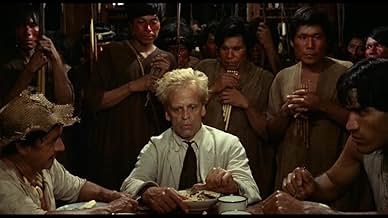
Because of course, everything is from Herzog's point of view, so in a way this documentary does not differ from the real movies themselves : you see Kinski acting like a madman in front of the camera or not. Shouting at people. One terrifying scene is an excerpt from Fitzcaraldo where Indians seem to complain about the character played by Kinski, while Herzog is commenting that those very Indians had offered to kill the actor...
Then you've got comments by other people, particularily actresses who witness about Kinski's other side, shy, caring. And the final scene with the butterfly - something Kinski the actor could do, but Aguirre could not. It seems as if Herzog, having showed only one side of Kinski all these years, tries to explain it was all for the movies. Even if he still portrays him as a mad genius (and coward at that), his selective memory tries only to remember the good times, a few rare footage of Kinski and himself having a good laugh.
What the documentary also stresses out is that the director and the actor could have been switched during the filming of Fitzcaraldo : Herzog explains how he was alone against everybody, believing the impossible, like the character in the movie. At this point only, Herzog seems to aknowledge the fact that he also was completely mad.
I recommend watching the documentary, and then watching Cobra Verde, Fitzcaraldo and Aguirre again.
Because of course, everything is from Herzog's point of view, so in a way this documentary does not differ from the real movies themselves : you see Kinski acting like a madman in front of the camera or not. Shouting at people. One terrifying scene is an excerpt from Fitzcaraldo where Indians seem to complain about the character played by Kinski, while Herzog is commenting that those very Indians had offered to kill the actor...
Then you've got comments by other people, particularily actresses who witness about Kinski's other side, shy, caring. And the final scene with the butterfly - something Kinski the actor could do, but Aguirre could not. It seems as if Herzog, having showed only one side of Kinski all these years, tries to explain it was all for the movies. Even if he still portrays him as a mad genius (and coward at that), his selective memory tries only to remember the good times, a few rare footage of Kinski and himself having a good laugh.
What the documentary also stresses out is that the director and the actor could have been switched during the filming of Fitzcaraldo : Herzog explains how he was alone against everybody, believing the impossible, like the character in the movie. At this point only, Herzog seems to aknowledge the fact that he also was completely mad.
I recommend watching the documentary, and then watching Cobra Verde, Fitzcaraldo and Aguirre again.
The pestilence
I can't help but like Klaus Kinski. Sure that's easy for me to say, having only encountered him on film, but despite (or probably because of) the madness, the anger and the raving, there's something magnetic about the man. He's like no other actor out there. No one else was so crazy, so passionate and so captivating. He was certainly one of a kind.
However, despite my regard for him as an actor, I can't say that I envy those who had to work with him. Raving fits, shootings and murder plots aren't par for the course when it comes to the majority of movie shoots. Hell, they're not normal by any standards. But then again, Klaus Kinski and Werner Herzog are far from ordinary people. Both had their madness one explicit and one masked and both went to extraordinary lengths to get what they wanted.
I think the piece in the film that best illustrated their shared madness was the story behind Kinski's 'autobiography'. Now to have biography that is largely fictional is nothing new, as people always rewrite their lives, but to have the person that you're insulting have you help insult them is rather extraordinary. It suggests a sadomasochism and a perversity in their relationship. But it also suggests a twisted affection. They hated each other and yet loved each other. No matter how hard they tried they couldn't stop gravitating towards one another.
And it seems that this strange attraction was there from the beginning. After the amazing 'Jesus' footage, the film opens with Herzog reliving his early childhood experiences with Kinski. Just listening to the stuff is amazing. Apparently, before he moved into the halfway house that Herzog used to live in, Kinski used to live naked in an apartment that was filled with leaves. But then once he did move, he proceeded to ruin bathrooms, knock doors down, assault theatre critics ("I was not excellent! I was not extraordinary! I was monumental! I was epochal!"), and my favourite thing of all, rave at the woman who gave him free board, free food, and who did his laundry, for not ironing his shirts neatly enough. The man was a maniac. Yet I can imagine the young Herzog watching these displays in awe. If only someone could harness this energy.
Well, as Herzog's films prove, he certainly harnessed it. But as you'd expect, it was never smooth sailing. Kinski continually caused havoc on set and the bizarre incidents piled up higher and higher. But although listening to Herzog recount these incidents is fascinating enough, the footage itself is amazing. We only get to see snippets of the 'Fitzcarraldo' documentary, but the 'mild' raving fit that is shown illustrates what Herzog was dealing with every day. Sheer madness! In the footage that is shown it's an argument over food, but it really could be anything. Indeed, Herzog often says that Kinski would erupt for the smallest of reasons. But to see Kinski in action is amazing. He's like an animal.
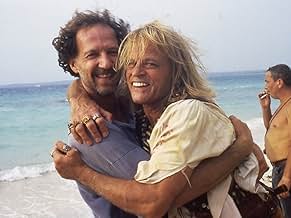
Yet despite the madness, the film also manages to convey Kinski's warmth. There's some wonderful footage at a film festival in America where Herzog and Kinski embrace and joke with one another. In light of what comes before it's really surprising, as it seems impossible to imagine such moments between the two. But when you see it you can't help but come to the conclusion that the two men really did have a deep affection for one another. As well as the hate, there was a lot of love between the two. I also loved the Pongo footage from the 'Fitzcarraldo' documentary. Again you get to see the kindness that Kinski possessed, as he bandages the camerman's hand.
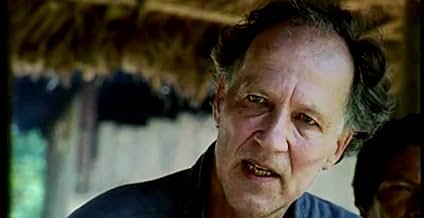
But although the film reveals a lot about Kinski, Herzog still remains something of an enigma. It's clear that he loved and hated Kinski there's one scene where Herzog is talking to a photographer and he suddenly looks overwhelmingly sad, almost like a widower but we're never really allowed to get into his head. In fact, there's one bit where he says that Kinski thought that he was mad but he assures us that he's 'clinically sane'. But as he stands there, holding onto a tree, he does look quite mad. And for all we know he may well be, or may well have had his madness, as what sane person could tolerate Kinski's pestilence?
But mad or not, it doesn't matter. The films that Herzog and Kinski made together are amongst the best in the world, and Herzog's documentary is a captivating, amusing, disturbing, and ultimately, moving tribute to his colleague and friend. The final minutes, in particular, I loved.
However, despite my regard for him as an actor, I can't say that I envy those who had to work with him. Raving fits, shootings and murder plots aren't par for the course when it comes to the majority of movie shoots. Hell, they're not normal by any standards. But then again, Klaus Kinski and Werner Herzog are far from ordinary people. Both had their madness one explicit and one masked and both went to extraordinary lengths to get what they wanted.
I think the piece in the film that best illustrated their shared madness was the story behind Kinski's 'autobiography'. Now to have biography that is largely fictional is nothing new, as people always rewrite their lives, but to have the person that you're insulting have you help insult them is rather extraordinary. It suggests a sadomasochism and a perversity in their relationship. But it also suggests a twisted affection. They hated each other and yet loved each other. No matter how hard they tried they couldn't stop gravitating towards one another.
And it seems that this strange attraction was there from the beginning. After the amazing 'Jesus' footage, the film opens with Herzog reliving his early childhood experiences with Kinski. Just listening to the stuff is amazing. Apparently, before he moved into the halfway house that Herzog used to live in, Kinski used to live naked in an apartment that was filled with leaves. But then once he did move, he proceeded to ruin bathrooms, knock doors down, assault theatre critics ("I was not excellent! I was not extraordinary! I was monumental! I was epochal!"), and my favourite thing of all, rave at the woman who gave him free board, free food, and who did his laundry, for not ironing his shirts neatly enough. The man was a maniac. Yet I can imagine the young Herzog watching these displays in awe. If only someone could harness this energy.
Well, as Herzog's films prove, he certainly harnessed it. But as you'd expect, it was never smooth sailing. Kinski continually caused havoc on set and the bizarre incidents piled up higher and higher. But although listening to Herzog recount these incidents is fascinating enough, the footage itself is amazing. We only get to see snippets of the 'Fitzcarraldo' documentary, but the 'mild' raving fit that is shown illustrates what Herzog was dealing with every day. Sheer madness! In the footage that is shown it's an argument over food, but it really could be anything. Indeed, Herzog often says that Kinski would erupt for the smallest of reasons. But to see Kinski in action is amazing. He's like an animal.
Yet despite the madness, the film also manages to convey Kinski's warmth. There's some wonderful footage at a film festival in America where Herzog and Kinski embrace and joke with one another. In light of what comes before it's really surprising, as it seems impossible to imagine such moments between the two. But when you see it you can't help but come to the conclusion that the two men really did have a deep affection for one another. As well as the hate, there was a lot of love between the two. I also loved the Pongo footage from the 'Fitzcarraldo' documentary. Again you get to see the kindness that Kinski possessed, as he bandages the camerman's hand.
But although the film reveals a lot about Kinski, Herzog still remains something of an enigma. It's clear that he loved and hated Kinski there's one scene where Herzog is talking to a photographer and he suddenly looks overwhelmingly sad, almost like a widower but we're never really allowed to get into his head. In fact, there's one bit where he says that Kinski thought that he was mad but he assures us that he's 'clinically sane'. But as he stands there, holding onto a tree, he does look quite mad. And for all we know he may well be, or may well have had his madness, as what sane person could tolerate Kinski's pestilence?
But mad or not, it doesn't matter. The films that Herzog and Kinski made together are amongst the best in the world, and Herzog's documentary is a captivating, amusing, disturbing, and ultimately, moving tribute to his colleague and friend. The final minutes, in particular, I loved.
Kinski mega-mix
I like this documentary and recommend owning it. There are so many scenes that one can jump to to find Kinski's leering face and saying something fantastic. I believe that he somehow opened up his third eye and could no longer see most of the world that we live in. ----Or am I being fooled--- either way, Kinski has left his mark or should I say scar across the face of theatre and film. My only wish is that someone somewhere compiles a volume set of his greatest scenes ranging from a star performance in a well considered artful Herzog film to all of his 'B' movie bombs.
I still enjoy hearing Herzog imitating Kinski and saying, "I was Monumental I was Epical!!!!" ---and his description in the beginning of the doc. when he throws a tantrum that lasts for several days, destroying everything in the bathroom to the point where you could pass every bit through a tennis racket.
That is power. Watch it and believe.
I still enjoy hearing Herzog imitating Kinski and saying, "I was Monumental I was Epical!!!!" ---and his description in the beginning of the doc. when he throws a tantrum that lasts for several days, destroying everything in the bathroom to the point where you could pass every bit through a tennis racket.
That is power. Watch it and believe.
Klaus Kinski - madman & genius
Fascinating portrait about a fascinating personality - filmed by one of the best and most important German directors. Werner Herzog and his star Klaus Kinski, who have been friends and foes all in one, were responsible for some of the greatest German movies ever made like "Aguirre", "Nosferatu" or "Cobra Verde", which got their brilliance in the first place from their inimitable main actor. In this documentary you see some scenes from their common films, but the best moments are the rare footages, like Kinski´s notorious cholerical outbursts of rage for example. Werner Herzog was one of the persons who knew this genius and madman best - an extreme relationship between love and hate, what´s also reflected on the whole film: a love letter as well as a requital!


Did you know
- TriviaIn some footage of one of his notorious on-set flare-ups, Klaus Kinski yells at Werner Herzog that he's "a dwarf director!" This apparently random insult is a specific reference to Herzog's movie Even Dwarfs Started Small (1970).
- Quotes
Werner Herzog: Every grey hair on my head, I call Kinski.
- ConnectionsFeatured in Siskel & Ebert: American Beauty/Blue Streak/For Love of the Game (1999)
- How long is My Best Fiend?Powered by Alexa
Details
Box office
- Gross US & Canada
- $95,612
- Opening weekend US & Canada
- $7,677
- Nov 7, 1999
Contribute to this page
Suggest an edit or add missing content