IMDb RATING
7.0/10
7.8K
YOUR RATING


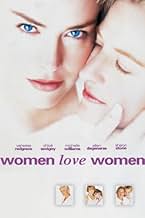
Trio of stories about lesbian couples in three different decades.Trio of stories about lesbian couples in three different decades.Trio of stories about lesbian couples in three different decades.
- Won 1 Primetime Emmy
- 7 wins & 10 nominations total


Vanessa Redgrave
- Edith Tree
- (segment "1961")

Marian Seldes
- Abby Hedley
- (segment "1961")

Paul Giamatti
- Ted Hedley
- (segment "1961")

Elizabeth Perkins
- Alice Hedley
- (segment "1961")

Jenny O'Hara
- Marge Carpenter
- (segment "1961")

Marley McClean
- Maggie Hedley
- (segment "1961")

Donald Elson
- Sam
- (segment "1961")
Susan Mosher
- Nurse June
- (segment "1961")
Lisa Welti
- Nurse Trish
- (segment "1961")
Jill Brennan
- Nurse Betty
- (segment "1961")
C.J. Bates
- Nurse Murphy
- (segment "1961")
- (as C J Bates)

Michelle Williams
- Linda
- (segment "1972")

Chloë Sevigny
- Amy
- (segment "1972")


Natasha Lyonne
- Jeanne
- (segment "1972")

Heather McComb
- Diane
- (segment "1972")

Amy Carlson
- Michelle
- (segment "1972")

Lee Garlington
- Georgette
- (segment "1972")
7.07.8K
1
2
3
4
5
6
7
8
9
10
Featured reviews
10primus21
These walls spoke to me...
This new HBO movie far exceeded my expectations. In the first of the three mini-movies, Vanessa Redgrave gives a stirring performance as the survivor of a lesbian couple in 1961. The message of this first movie serves well to remind people of the tragedy that ensued when one's life long partner passed on previous to the 70's.
The second movie, set in 1972, depicts an accurate portrayal of what lesbians faced during the rise of the feminist movement where even sisters were divided over who should be allowed to participate and promote the feminist cause. Chloe Sevigny's portrayal of a "butch" lesbian, comfortable with herself is phenomenal. Ms. Sevigny should be nominated for an Emmy for her fantastic acting.
The third and final movie, features a current day lesbian couple who are trying to have a child. Billed as a romantic comedy, this episode has an underlying message amid the laughter and tears which is common to all couples regardless of gender. Ellen Degeneres and Sharon Stone are funny, yet convincing as a couple. Their chemistry radiates throughout and both women deserve accolades for their performances.
Finally, a comment must be made about the fact that Anne Heche made her HBO directing debut with the third episode. Having written the story as well, it is clear to this viewer that Anne Heche has a brilliant future not only as an actress but as a writer and director.
"If These Walls Could Talk 2" is a cinematic achievement and may very well be the first movie of the new Millennium which accurately shows where there is love and truth, gender is nothing but an afterthought.
The second movie, set in 1972, depicts an accurate portrayal of what lesbians faced during the rise of the feminist movement where even sisters were divided over who should be allowed to participate and promote the feminist cause. Chloe Sevigny's portrayal of a "butch" lesbian, comfortable with herself is phenomenal. Ms. Sevigny should be nominated for an Emmy for her fantastic acting.
The third and final movie, features a current day lesbian couple who are trying to have a child. Billed as a romantic comedy, this episode has an underlying message amid the laughter and tears which is common to all couples regardless of gender. Ellen Degeneres and Sharon Stone are funny, yet convincing as a couple. Their chemistry radiates throughout and both women deserve accolades for their performances.
Finally, a comment must be made about the fact that Anne Heche made her HBO directing debut with the third episode. Having written the story as well, it is clear to this viewer that Anne Heche has a brilliant future not only as an actress but as a writer and director.
"If These Walls Could Talk 2" is a cinematic achievement and may very well be the first movie of the new Millennium which accurately shows where there is love and truth, gender is nothing but an afterthought.
Three Very Different Stories
I have to admit that I approached the viewing of this movie with some apprehension. But as it turned out, I enjoyed it very much.
The film consists of three separate stories dealing with lesbianism set at different times and featuring characters from three distinct age groups.
The first, set in 1961, and the best of the three, features an outstanding performance by the marvellous Vanessa Redgrave as a retired school teacher who suddenly loses her lifelong companion. She suddenly finds that all of the things she has taken for granted are suddenly gone, including the roof over her head. The vignette shows how lesbianism was never talked about in public in the 60s as evidenced in the hospital scenes where Redgrave attempts to find out what has happened to her "friend". Paul Giamatti plays the deceased's nephew who has to tell Redgrave that she no longer can remain in her home of 30 years. Elizabeth Perkins effectively plays his scavenging wife.
The second story, set in 1972, deals with the relationship between a college co-ed (Michelle Williams) and a girl who likes dress in macho male attire (Chloe Sevigny). I found myself actually hoping that they would live happily ever after.
The last story concerns the often humorous efforts of two mature companions (Ellen DeGeneres, Sharon Stone)to "have a baby".
Although not for everyone, I found that this movie was tastefully done and very well acted.
The film consists of three separate stories dealing with lesbianism set at different times and featuring characters from three distinct age groups.
The first, set in 1961, and the best of the three, features an outstanding performance by the marvellous Vanessa Redgrave as a retired school teacher who suddenly loses her lifelong companion. She suddenly finds that all of the things she has taken for granted are suddenly gone, including the roof over her head. The vignette shows how lesbianism was never talked about in public in the 60s as evidenced in the hospital scenes where Redgrave attempts to find out what has happened to her "friend". Paul Giamatti plays the deceased's nephew who has to tell Redgrave that she no longer can remain in her home of 30 years. Elizabeth Perkins effectively plays his scavenging wife.
The second story, set in 1972, deals with the relationship between a college co-ed (Michelle Williams) and a girl who likes dress in macho male attire (Chloe Sevigny). I found myself actually hoping that they would live happily ever after.
The last story concerns the often humorous efforts of two mature companions (Ellen DeGeneres, Sharon Stone)to "have a baby".
Although not for everyone, I found that this movie was tastefully done and very well acted.
Unequal
I see this movie as an attempt to help conservative people to see gay life (male or female) as something natural, or normal (which I think is very OK). The three segments represents three steps for that recognition : 1961 : Hide it! 1972 : It is shown as some kind of feminist fashion and shows intolerance between the lesbians. 2000 : acceptance. The problem is that the three segments are very unequal. We all accept that the first part is very moving, with a very very fine performance from the great Vanessa Redgrave. The second part is O.K. But the third is very weak. Despite these little defaults, this is a very fine movie, with honorable good intentions. I say bravo to everyone involved in it and also say bravo to every viewer who accepts it. But for a little superior movies on the same subject, I suggest two Canadian films : When the night is falling, and Revoir Julie. I wonder what would be the reaction if there was a similar film with men... You know the story : lesbians are more cute...
Different Times Different Issues
I absolutely loved this movie. I probably wouldn't have written a review, except I read the review that says unequal, and I completely disagree. I believe this movie was pretty accurate in each decade. The one that depicts 2000 was very moving and a lot different from the first decade. I think they were very brilliant to focus on the pregnancy issue. Lesbians and gay men these days want children and realize this can be a reality. I don't believe that was an issue until recent years. There is always a big focus on discrimination and unequal rights. This decade focused on the people and not only the huge issue of discrimination. It gave everyone just a little insight that lesbians and gays are people too with normal desires and needs.
I think it was a super movie and I highly recommend it.
I think it was a super movie and I highly recommend it.
It gets you thinking'
A trilogy wrapped into one movie that covers the difficulties of lesbianism over a space of three generations. It begins with an older couple in the 60's having to deal with loss and the pain of keeping a secret for too long. Then the story brings us to a group of lesbian feminists in the 70's who fight so hard for what they believe in that they forget the point of being themselves. Finally, we're led it a problem of the new millennium that can only be solved outside of nature.
I saw the film after someone recommended it. Now that I've seen it, I'll recommend it too. The movie was good based on the fact that homosexuality is often based on the idea of sex alone, and it's not true. It's who you love. And being homosexual does have its disadvantages that hetero-couples might have. This film portrayed this idea very well.
The most poignant of these was Edith, who (after her lover died) had no ownership over their house, had no lawful right to her late-lover's property, and was even treated as if she were a mere impersonal object of her late-lover's life.
The second was the hardest to get, especially since it's in the middle of the sexual-freedom revolution. Girl meets girl, girl is a feminist, other girl is butch, girl's friends make fun of the butch girl because she doesn't fit the form of their own personal society. It might be historically accurate, but it fits vaguely with what the world is today and how women treat each other as less of a battle of male vs. female attitude.
Three is definitely the most fun, showing a couple's struggle with trying to become pregnant. It's not sad in the least, but it's still an issue that has its prevalence in the world. Becoming a mom when you're a lesbian isn't easy.
Overall, this movie was entertaining, funny, and moving. Anyone who would rent this movie if they want to have a good time and kill an evening.
I saw the film after someone recommended it. Now that I've seen it, I'll recommend it too. The movie was good based on the fact that homosexuality is often based on the idea of sex alone, and it's not true. It's who you love. And being homosexual does have its disadvantages that hetero-couples might have. This film portrayed this idea very well.
The most poignant of these was Edith, who (after her lover died) had no ownership over their house, had no lawful right to her late-lover's property, and was even treated as if she were a mere impersonal object of her late-lover's life.
The second was the hardest to get, especially since it's in the middle of the sexual-freedom revolution. Girl meets girl, girl is a feminist, other girl is butch, girl's friends make fun of the butch girl because she doesn't fit the form of their own personal society. It might be historically accurate, but it fits vaguely with what the world is today and how women treat each other as less of a battle of male vs. female attitude.
Three is definitely the most fun, showing a couple's struggle with trying to become pregnant. It's not sad in the least, but it's still an issue that has its prevalence in the world. Becoming a mom when you're a lesbian isn't easy.
Overall, this movie was entertaining, funny, and moving. Anyone who would rent this movie if they want to have a good time and kill an evening.


Did you know
- TriviaWhen Jane Anderson saw Vanessa Redgrave's performance in the wordless scene where she's crying and the kid sees her, the director was so overwhelmed with the raw emotion Redgrave was displaying that after yelling cut she had to exit the set to get some air.
- Quotes
Edith Tree: [to Ted] If you knew your aunt at all. If you knew about all the marvelous things that she did, and how good she was, and funny. And tender. And brave. And smart. If you knew how hard she worked just to find a little peace in this life. If you knew her at all, then you'd know what she wanted. And this wasn't that. Oh my dear, it certainly wasn't that.
- ConnectionsFeatured in Saturday Night Live: Joshua Jackson/*NSYNC (2000)
Details
Contribute to this page
Suggest an edit or add missing content