

Stealth-mission expert Sam Fisher searches for two US agents in Georgia and soon uncovers a plot involving a nuclear device.Stealth-mission expert Sam Fisher searches for two US agents in Georgia and soon uncovers a plot involving a nuclear device.Stealth-mission expert Sam Fisher searches for two US agents in Georgia and soon uncovers a plot involving a nuclear device.
- Director
- Writers
- Stars
- Awards
- 2 wins & 1 nomination total


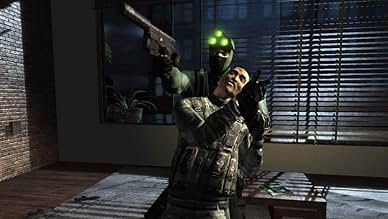

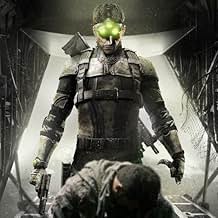


- Sam Fisher
- (voice)


- Irving Lambert
- (voice)


- Morris Odell
- (voice)

- John Baxter
- (voice)


- Additional Voices
- (as John Moore)

- Phillip Masse
- (voice)


- Director
- Writers
- All cast & crew
- Production, box office & more at IMDbPro
Featured reviews
Excellent, revolutionized the genre
Coolest Stealth Game I've played yet.
I'm familiar with his video games, but this one interested me the most.
Splinter Cell is taken place in an alternate late 2004. The story is similar to the real world. Including Terrisum, World in Crisis, and a war between the middle east and the USA.
You play Sam Fisher, a highly trained Agent for the NSA(National Security Agency). Your mission is to enter enemy territories and find out info and secrets on the terrorists. It's a challenging task including sneaking around in the dark, hacking into computers, disable security cameras, threaten terrorists to spill the beans, & killing off terrorists. Mission Failure is not an option in the NSA.
There are 9 missions in total with a very long game play. You can play this game for hours till you succeed in stopping the terrorism from rising.
The graphics in it are very well done. Photo realistic backgrounds, people, and objects. The light/shadow is top notch. A few cool gadgets to use, a few weapons and special Night/Thermal Vision goggles. The voice acting is great to. Plenty of catch phrases from Sam Fisher.
Those who like Tom Clancy, Stealth, or Shooting related games will like this title.
First game to let YOU play the spy!
A great game and a revolution in gaming in general
Games are not known for their plots but to be honest "Splinter Cell" has a pretty good one - it's a good starting place for a Tom Clancy novel and one can imagine that Clancy had the idea once, considered it unworthy compared to his other stuff and tossed it aside and later decided to use it as a game. It's never expanded upon fully as most of the time is actually spent on gameplay, not plot...but it does have one of the best video game stories of all time.
I liked the voicework by everyone's favorite villain from "Total Recall" (Michael Ironside) but the best part of this game was the beautiful rich textures and actual gameplay. In "Splinter Cell" you do stuff I've never seen in other games - stalking villains instead of shooting them. I do like shoot-'em-ups but it's come to a point now where new stuff is welcomed - and this is great! You can climb through windows, pick locks, open doors, stalk people, grab them, interrogate them, hold them at gunpoint (and use this as a neat defensive trick when surrounded by numerous villains), etc - and instead of just using a lockpick, for example, you really do pick the lock by pressing keys on the computer keyboard! And to open doors you don't just walk up to one, you have to manually push it open.
The graphics are great, fluid movements on characters...one of the best games of all-time!
Decent kickoff to a Great Triology
The original Splinter Cell wasn't just a stealth game. It was a statement. Released in 2002 during a time when action-heavy titles dominated, Ubisoft's Splinter Cell did something bolder: it made you slow down. It made you think. And it brought shadows to the forefront in a way gaming hadn't truly seen before.
The Birth of Sam Fisher
This was the world's introduction to Sam Fisher, voiced with grizzled perfection by Michael Ironside - a no-nonsense operative for the NSA's ultra-covert Third Echelon. Fisher wasn't a superhero. He was a ghost. No regenerating health, no bullet-sponge bravado. Just a man, some gadgets, and a grim mission to stop a geopolitical catastrophe.
Set during a fictional uprising in Georgia (the country, not the state), the story spirals into international espionage with cyberterrorism, military coups, and the threat of global destabilization. It was a political thriller delivered with grit and realism - and it set the tone for the series.
Gameplay: Light and Shadow Redefined
Splinter Cell's greatest innovation was how it weaponized light. You weren't sneaking in darkness just for style - you needed it to survive. The light meter became your gospel, and every flickering fluorescent bulb or exposed hallway became a puzzle.
You could shoot out lights, crawl through vents, use fiber-optic cameras under doors, and deploy non-lethal gadgets like sticky shockers and ring airfoil rounds. You weren't encouraged to kill - you were encouraged to evade, extract, and disappear without a trace.
It was challenging. Brutally so, at times. But when it worked, it felt incredible. You weren't just controlling a character - you became an operative.
Level Design: Industrial, Tight, Tactical
From CIA headquarters to oil refineries and foreign embassies, the environments were tight, cleanly designed, and built to support stealth. They weren't open-ended playgrounds like later entries - they were missions, with very little room for error.
It was linear, yes, but deliberately so. Every corridor had a purpose. Every guard had a patrol path. And it was your job to crack the code without ever being seen.
Presentation & Audio
For its time, Splinter Cell was visually stunning. The use of dynamic lighting and shadows on the original Xbox and PC was a generational leap. Ubisoft built an atmosphere of tension through minimalist music, ambient sounds, and Ironside's iconic voice work.
Every interaction had weight. The sound of a guard's footsteps, the hum of a nearby security camera - it all mattered. This was immersive stealth done right.
Why 8, Not 10?
Brutal Trial and Error: The game demanded perfection, sometimes to a frustrating degree.
Limited Save System: Some missions could be punishing due to sparse checkpoints.
Linear Paths: Unlike later games in the series, there was little freedom in how you approached objectives.
No Multiplayer: This was a solo affair - and while gripping, it lacked the innovation Pandora Tomorrow would later bring with Spies vs. Mercs.
Final Verdict
8 out of 10. A foundational stealth classic.
Splinter Cell (2002) wasn't perfect, but it didn't need to be. It invented the modern stealth blueprint for Ubisoft and introduced one of the most iconic operatives in gaming. Its atmosphere, challenge, and use of shadow-based stealth were years ahead of their time.
It's not the easiest game to revisit now, but it commands respect. Without it, we wouldn't have Chaos Theory, Conviction, or any of the greatness that followed.
It's not just where Sam Fisher began - it's where an entire genre evolved.


Did you know
- TriviaOriginally, 'Tom Clancy' rejected the idea of Sam Fisher having trifocal goggles, stating that goggles with both heat vision and night vision are impossible to make. The creators argued that having two separate sets of goggles would make for awkward gameplay and convinced Clancy to allow it.
- GoofsWhen Sam knocks grabs or knocks out a guard while he holds his weapon in his hands, the guard will never drop the weapon, not even after picking him up or dropping him.
- Quotes
Sam Fisher: You must be Ivan.
Ivan: You are police? You are American?
Sam Fisher: Yes and no. The police are on their way. Till they get here I'm the only friend you've got, and I'm not a very good one.
Ivan: We have to leave. We have to hurry. They'll find us soon.
Sam Fisher: Thats not my job. i'm here for your encryption key.
Ivan: That wasn't the deal.
Sam Fisher: The deal still stands. The feds will get you out of here alive but first you have to give me the key.
Ivan: That wasn't the deal I made with the woman on the phone.
Sam Fisher: Listen do I come to your job and tell you how to murder civilians?
Ivan: What?
Sam Fisher: No. So don't come to my job and tell me how to do it. The feds are on the way or here already. You're gonna be fine. Now you can give me the key or I can take it.
Ivan: That wasn't the deal.
Sam Fisher: You're working from a VERY limited phrase book. Listen, just give me the key. I'm tired and I hate making people scream. It gets me down.
Ivan: Here.
- Crazy creditsAfter the end credits, we see Sam Fisher's interview in a room with the crowd walking by.
- ConnectionsFeatured in Icons: Splinter Cell (2002)
Details
- Release date
- Countries of origin
- Languages
- Also known as
- Tom Clancy's Splinter Cell
- Production companies
- See more company credits at IMDbPro