
This documentary, aired on the Turner Classic Movies (TCM) cable network, looks at the life and career of John Garfield, whose career was cut short when he died at age 39. His difficult chil... Read allThis documentary, aired on the Turner Classic Movies (TCM) cable network, looks at the life and career of John Garfield, whose career was cut short when he died at age 39. His difficult childhood in the rough neighborhoods of New York City provided the perfect background for the ... Read allThis documentary, aired on the Turner Classic Movies (TCM) cable network, looks at the life and career of John Garfield, whose career was cut short when he died at age 39. His difficult childhood in the rough neighborhoods of New York City provided the perfect background for the tough-guy roles he would play on both stage and screen.




- Director
- Writers
- All cast & crew
- Production, box office & more at IMDbPro
Featured reviews
An Interesting Man And A Fine Actor
This one-hour bio put the man's life in sharper focus for me. I didn't know he played a variety of character types or that he studied method acting and spent much of his career affiliated with NYC's theater company. These factual details helped clarify my perception, though they also reinforced my image of him as a tough guy.
The bio includes interviews with current film VIPs, and is narrated by his daughter. Not unexpectedly these people gush with flowery compliments and adulation for Garfield. Has there ever been a film bio that featured interviewers critical of the deceased? In "The John Garfield Story" the interview responses thus seem overly eulogistic. However much the anticommunist HUAC may have wrongly hounded Garfield, the Committee didn't "kill" Garfield as one interviewer says flat out.
Even so, though the film may be a standard celebrity bio, it is still an interesting story, because Garfield himself was an interesting man and a fine actor.
interesting documentary about a Hollywood legend
The documentary covers Garfield's early days as Jacob Garfinkle, whom his family called Julie and who later billed himself as Jules, and how at a school for problem kids his dramatic and boxing skills were honed with the help of the head of the school. It goes into his early theater work, and how he took a contract at Warners after losing out to Luther Adler as "Golden Boy," a play specifically written for him by Clifford Odets. He was evidently considered too green for the role by the Group Theater and actually didn't play the lead until 1952, when his Hollywood career was over.
Garfield's star rose quickly - he was a handsome tough guy who gave honest performances and was rewarded with some major films, including "The Postman Always Rings Twice," "Gentlemen's Agreement," and "Humoresque." And his star fell just as fast when the Communist witch hunt began. A liberal in his views, and one who consorted with writers, actors, and directors deemed questionable, his major sin was going to Yugoslavia during the war. He was unable to enlist because of a bad heart, and instead helped to entertain the troops. (Lee Grant ended up on the blacklist, by the way, because she attended the funeral of someone who was blacklisted.) When he was subpoenaed for the hearings and refused to name names, the last nail went into his coffin. His last film was a B picture, "He Ran All the Way."
I can't agree totally with one of the posters, who claims that Garfield would have been washed up anyway. Yes, it's true, the '50s were filled with costume dramas and musicals; they were also filled with angry young men for whom he was the prototype - James Dean, Marlon Brando, Rod Steiger, and Paul Newman, to name a few - and surely Garfield could have successfully continued to work in and produce movies. The stage would have gotten him through the harder-to-cast middle-aged years until "The Godfather," and there's no doubt his later career as a character actor would have been very rich. But there's no use speculating.
If you don't know much about Garfield - and I didn't - you will find this a fascinating look at his career and life. But watch a little more closely, and you'll realize also that he was undoubtedly a lot more complicated than this documentary shows.
my favorite actor finally getting recognition
Garfield the Great
That's the way it was with Garfield: so natural and convincing was his rendering that the viewer completely forgot that it was a "performance," rather a real character being observed and experienced.
So successful were Garfield's "bad-boy" roles, that Warner Bros. kept him stuck there, to John's chagrin. On rare occasions he proved he could play other parts brilliantly, and the total body of his work is remarkable--particularly in so short at time.
To have died before the age of 40 was a serious loss to the profession, yet his legacy paved the way for the likes of Brando, DiNero, Pacino and Hoffman.
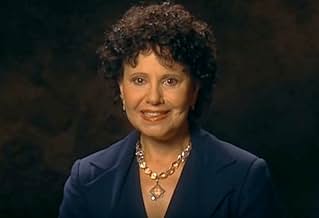
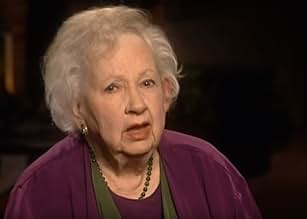
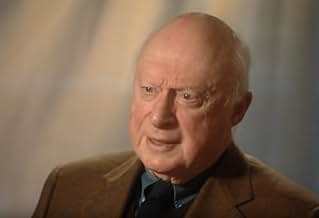
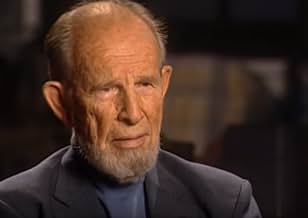
This original Turner Classic Movie production does justice to Garfield's work, and includes such thespian notables as Dreyfus, Woodward, Glover, and Cronyn paying tribute to one of their "heros."
Worthy of retelling


Did you know
- TriviaIncluded in Warner Home Video's 2004 DVD release of The Postman Always Rings Twice (1946).
- GoofsIn her opening narration of this documentary, Julie Garfield refers to "Senator Joseph McCarthy and his House Un-American Activities Committee". As a senator (and someone who had never been a member of the House of Representatives), McCarthy did not serve and could never have served on HUAC. Indeed, Ms. Garfield's very words make no sense, as senators cannot be members of House committees (or vice versa). Moreover, McCarthy had nothing whatsoever to do with the investigations into alleged Communist influence in Hollywood or the subsequent blacklist. McCarthy, in the Senate, concerned himself almost entirely with alleged subversives in government and related institutions, but he never got involved with Hollywood or the entertainment industry, which was the exclusive preserve of HUAC - 'though McCarthy certainly approved of what that committee was doing.
- Crazy creditsAs the credits roll on the right side of the screen, the left side shows unidentified film clips from Garfield's movies while the interviewees make additional comments. The final frame shows Garfield's star on the Hollywood Walk of Fame.
- ConnectionsFeatures Footlight Parade (1933)
Details
- Runtime
- 58m
- Color
- Sound mix
- Aspect ratio
- 1.33 : 1