IMDb RATING
7.2/10
2.6K
YOUR RATING

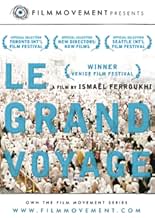
Reda, a young French-Moroccan guy and his old father drive from the south of France to Mecca in order for the father to do his pilgrimage. At first distant, they gradually learn to know each... Read allReda, a young French-Moroccan guy and his old father drive from the south of France to Mecca in order for the father to do his pilgrimage. At first distant, they gradually learn to know each other.Reda, a young French-Moroccan guy and his old father drive from the south of France to Mecca in order for the father to do his pilgrimage. At first distant, they gradually learn to know each other.
- Nominated for 1 BAFTA Award
- 4 wins & 3 nominations total


Diyan Machev
- L'homme bavard
- (as Dean Matchev)
Erol Atac
- Douanier turc 1
- (as Erol Ataç)
- Director
- Writer
- All cast & crew
- Production, box office & more at IMDbPro
7.22.6K
1
2
3
4
5
6
7
8
9
10
Featured reviews
A Nutshell Review: Le Grand Voyage
You'd think you're in for some serious sightseeing when the premise of the movie takes place primarily between two characters as they travel 3000 miles or so from France to Saudi Arabia, going through most of Europe - Italy, Bulgaria, Croatia, Slovenia, Turkey, before arriving in the Middle East. But this is not a tour, and there are no stopovers for soaking in the sights.
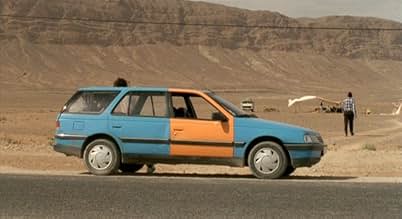
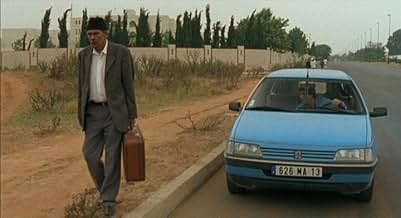
Reda's father is in his twilight years, and wishes to do the Haj. However, since walking and taking the mule is out of the question, he chooses to travel to Mecca by car. He can't drive, and therefore enlists the help of Reda, to his son's protest, to get him there in their broken down vehicle.
But Reda doesn't see the point of having him go along, when his dad could opt for the plane. He resents the idea of having put his personal life on hold for this pilgrimage he couldn't understand. And hence, we set off in this arduous journey with father and son, being not the best of pals.
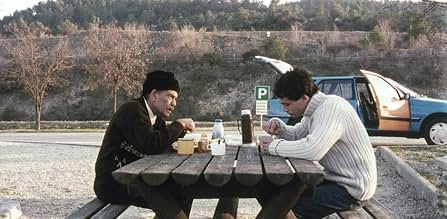
The beauty of this movie is to witness the development of the father and son pair, the challenges they face, the weird people they meet, having to duke it out in varied weather conditions, and alternating rest stops between motels and sleeping in the car. We see an obvious generation gap in them trying to communicate to each other, the father trying to impose on his son, and the son trying to assert himself as an adult, but circumstances we see, reveal that Reda is quite a fish out of water. Through the many encounters, they actually team up quite well despite their differences.
It's perhaps quite apt to have this film released here last week to coincide with Hari Raya Haji, and having the opportunity to watch our protagonists join the other pilgrims in their Haj. The final scene in Mecca is truly a sight to behold, and you too would feel the claustrophobia and fear as Reda tries to hunt down his dad amongst the thousands of people congregating. The sights of Europe were perhaps deliberately not dwelled upon, so as to build up the anticipation of and focus on the final destination.
It certainly rang home the thought of telling and showing loved ones how much you appreciate them for who they are. Don't miss this, and yes, book early - I was pleasantly surprised that this evening's session was still a full house.
Reda's father is in his twilight years, and wishes to do the Haj. However, since walking and taking the mule is out of the question, he chooses to travel to Mecca by car. He can't drive, and therefore enlists the help of Reda, to his son's protest, to get him there in their broken down vehicle.
But Reda doesn't see the point of having him go along, when his dad could opt for the plane. He resents the idea of having put his personal life on hold for this pilgrimage he couldn't understand. And hence, we set off in this arduous journey with father and son, being not the best of pals.
The beauty of this movie is to witness the development of the father and son pair, the challenges they face, the weird people they meet, having to duke it out in varied weather conditions, and alternating rest stops between motels and sleeping in the car. We see an obvious generation gap in them trying to communicate to each other, the father trying to impose on his son, and the son trying to assert himself as an adult, but circumstances we see, reveal that Reda is quite a fish out of water. Through the many encounters, they actually team up quite well despite their differences.
It's perhaps quite apt to have this film released here last week to coincide with Hari Raya Haji, and having the opportunity to watch our protagonists join the other pilgrims in their Haj. The final scene in Mecca is truly a sight to behold, and you too would feel the claustrophobia and fear as Reda tries to hunt down his dad amongst the thousands of people congregating. The sights of Europe were perhaps deliberately not dwelled upon, so as to build up the anticipation of and focus on the final destination.
It certainly rang home the thought of telling and showing loved ones how much you appreciate them for who they are. Don't miss this, and yes, book early - I was pleasantly surprised that this evening's session was still a full house.
Slow moving, but fascinating
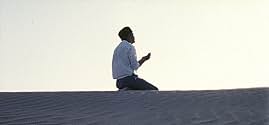
Reda is a young Frenchman of Moroccan descent. Despite his Muslim heritage, he is very French in attitudes and values. Out of the blue, his father announces that Reda will be driving him to the Hajj (pilgrimage) to Mecca--something that Reda has no interest in doing but agrees only out of obligation. As a result, from the start, Reda is angry but being a traditional Muslim man, his father is difficult to talk to or discuss his misgivings. Both father and son seem very rigid and inflexible--and it's very ironic when the Dad tells his son that he should not be so stubborn.
When I read the summary, it talks about how much the characters grew and began to know each other. However, I really don't think they did and that is the fascinating and sad aspect of the film. Sure, there were times of understanding, but so often there was an undercurrent of hostility and repression. I actually liked this and appreciated that there wasn't complete resolution of this--as it would have seemed phony.
Overall, the film is well acted and fascinating--giving Westerners an unusual insight into Islam and the Hajj. It also provides a fascinating juxtaposition of traditional Islam and the secular younger generation. While the slow pace and lack of clarity about the relationship throughout the film may annoy some, I think it gave the film intense realism and made it look like a film about people--not some formula. A nice and unusual film.
When I read the summary, it talks about how much the characters grew and began to know each other. However, I really don't think they did and that is the fascinating and sad aspect of the film. Sure, there were times of understanding, but so often there was an undercurrent of hostility and repression. I actually liked this and appreciated that there wasn't complete resolution of this--as it would have seemed phony.
Overall, the film is well acted and fascinating--giving Westerners an unusual insight into Islam and the Hajj. It also provides a fascinating juxtaposition of traditional Islam and the secular younger generation. While the slow pace and lack of clarity about the relationship throughout the film may annoy some, I think it gave the film intense realism and made it look like a film about people--not some formula. A nice and unusual film.
beautiful and moving alternative road movie
this isn't 'Bonnie and Clyde' or 'Thelma and Louise' but it is a fine road movie. it sets up its two main characters gently and easily. viewers learn the underlying tensions quickly, which is a tribute to the director. there is the young french (and English) speaking son who wants to do well in France, has a french girlfriend and who drinks alcohol, parties as young men do. And there is his moroccan arabic (and french) speaking father who devoutly follows his Muslim faith, with generosity and the wisdom of elders and who rejects the new culture surrounding him (like mobile phones). the film could explore very powerful politics - the odd couple drive thru the former Yugoslavia, thru Turkey and then thru the Middle East to get to Mecca. these are areas where the Muslim populations have been involved in wars, repression, ethnic cleansing; where dictators have pursued torture and summary executions to hold power and where religious communities are in constant deadly battle with each other. yet the film moves thru those places and possibilities with only hints of such agendas. the relationship between the two is key to this film, and faith, politics are the backdrop. it seems to be saying that we are all human, and need to understand and care for each other in order to manage well in this world. it certainly isn't 'Natural Born Killers' and is all the better for it.
Insha'Allah: The Durability of a Father/Son Relationship
LE GRAND VOYAGE is a gentle miracle of a film, a work made more profound because of its understated script by writer/director Ismaël Ferroukhi who allows the natural scenery of this 'road trip' story and the sophisticated acting of the stars Nicolas Cazalé and Mohamed Majd to carry the emotional impact of the film. Ferroukhi's vision is very capably enhanced by the cinematography of Katell Djian (a sensitive mixture of travelogue vistas of horizons and tightly photographed duets between characters) and the musical score by Fowzi Guerdjou who manages to maintain some beautiful themes throughout the film while paying homage to the many local musical variations from the numerous countries the film surveys.
Reda (Nicolas Cazalé) lives with his Muslim family in Southern France, a young student with a Western girlfriend who does not seem to be following the religious direction of his heritage. His elderly father (Mohamed Majd) has decided his time has come to make his Hadj to Mecca, and being unable to drive, requests the reluctant Reda to forsake his personal needs to drive him to his ultimate religious obligation. The two set out in a fragile automobile to travel through France, into Italy, and on through Bulgaria, Croatia, Slovenia, and Turkey to Saudi Arabia. Along the trip Reda pleads with his father to visit some of the interesting sights, but his father remains focused on the purpose of the journey and Reda is irritably left to struggle with his father's demands. On their pilgrimage they encounter an old woman (Ghina Ognianova) who attaches herself to the two men and must eventually be deserted by Reda, a Turkish man Mustapha (Jacky Nercessian) who promises to guide the father/son duo but instead brings about a schism by getting Reda drunk in a bar and disappearing, and countless border patrol guards and custom agents who delay their progress for various reasons. Tensions between father and son mount: Reda cannot understand the importance of this pilgrimage so fraught with trials and mishaps, and the father cannot comprehend Reda's insensitivity to the father's religious beliefs and needs. At last they reach Mecca where they are surrounded by hoards of pilgrims from all around the world and the sensation of trip's significance is overwhelming to Reda. The manner in which the story comes to a close is touching and rich with meaning. It has taken a religious pilgrimage to restore the gap between youth and old age, between son and father, and between defiance and acceptance of religious values.
The visual impact of this film is extraordinary - all the more so because it feels as though the camera just 'happens' to catch the beauty of the many stopping points along the way without the need to enhance them with special effects. Nicolas Cazalé is a superb actor (be sure to see his most recent and currently showing film 'The Grocer's Son') and it is his carefully nuanced role that brings the magic to this film. Another fine film from The Film Movement, this is a tender story brilliantly told. Highly recommended.
Grady Harp
Reda (Nicolas Cazalé) lives with his Muslim family in Southern France, a young student with a Western girlfriend who does not seem to be following the religious direction of his heritage. His elderly father (Mohamed Majd) has decided his time has come to make his Hadj to Mecca, and being unable to drive, requests the reluctant Reda to forsake his personal needs to drive him to his ultimate religious obligation. The two set out in a fragile automobile to travel through France, into Italy, and on through Bulgaria, Croatia, Slovenia, and Turkey to Saudi Arabia. Along the trip Reda pleads with his father to visit some of the interesting sights, but his father remains focused on the purpose of the journey and Reda is irritably left to struggle with his father's demands. On their pilgrimage they encounter an old woman (Ghina Ognianova) who attaches herself to the two men and must eventually be deserted by Reda, a Turkish man Mustapha (Jacky Nercessian) who promises to guide the father/son duo but instead brings about a schism by getting Reda drunk in a bar and disappearing, and countless border patrol guards and custom agents who delay their progress for various reasons. Tensions between father and son mount: Reda cannot understand the importance of this pilgrimage so fraught with trials and mishaps, and the father cannot comprehend Reda's insensitivity to the father's religious beliefs and needs. At last they reach Mecca where they are surrounded by hoards of pilgrims from all around the world and the sensation of trip's significance is overwhelming to Reda. The manner in which the story comes to a close is touching and rich with meaning. It has taken a religious pilgrimage to restore the gap between youth and old age, between son and father, and between defiance and acceptance of religious values.
The visual impact of this film is extraordinary - all the more so because it feels as though the camera just 'happens' to catch the beauty of the many stopping points along the way without the need to enhance them with special effects. Nicolas Cazalé is a superb actor (be sure to see his most recent and currently showing film 'The Grocer's Son') and it is his carefully nuanced role that brings the magic to this film. Another fine film from The Film Movement, this is a tender story brilliantly told. Highly recommended.
Grady Harp
The best generation gap spanning film I've ever seen
Father and son communicate very little. IN fact they speak different languages. BUt when the son drives his father 3000 miles for his pilgrimage's to Mecca, the conversations finally take place. they are difficult and growth is necessary on both parts.
This movie takes us into the hearts of these two travelers, and it is indeed a grand voyage for the audience as well as the two principals. The imagery throughout is impressive, especially the final scenes in Mecca. It underlines for me once again how much different the world can be, but also at the same time, how similar. The same was true for the father and son in this film.
See this movie. Tell your friends to see it. You'll be glad you did.
This movie takes us into the hearts of these two travelers, and it is indeed a grand voyage for the audience as well as the two principals. The imagery throughout is impressive, especially the final scenes in Mecca. It underlines for me once again how much different the world can be, but also at the same time, how similar. The same was true for the father and son in this film.
See this movie. Tell your friends to see it. You'll be glad you did.


Did you know
- Quotes
Reda: Where is my cell-phone?
The Father: It's in a garbage can 200 miles away.
- ConnectionsFeatured in Humbert Balsan, producteur rebelle (2006)
Details
- Release date
- Countries of origin
- Languages
- Also known as
- Le grand voyage
- Filming locations
- Production companies
- See more company credits at IMDbPro
Box office
- Gross worldwide
- $278,814
- Runtime
- 1h 48m(108 min)
- Color
- Sound mix
- Aspect ratio
- 1.85 : 1
Contribute to this page
Suggest an edit or add missing content