IMDb RATING
8.1/10
2.3K
YOUR RATING

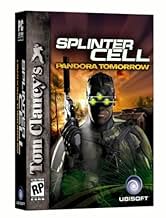
Stealth-mission expert Sam Fisher is sent after a terrorist, who leads an operation involving setting up bombs with the smallpox virus on US territory.Stealth-mission expert Sam Fisher is sent after a terrorist, who leads an operation involving setting up bombs with the smallpox virus on US territory.Stealth-mission expert Sam Fisher is sent after a terrorist, who leads an operation involving setting up bombs with the smallpox virus on US territory.
- Nominated for 1 BAFTA Award
- 3 nominations total

Michael Ironside
- Sam Fisher
- (voice)


Bill Dunn
- Additional Voices
- (as William Dunn)

Stephen Croce
- Additional Voices
- (as Steven Croce)
Christopher Mack
- Additional Voices
- (as Chris Mack)
Dana Burns Westburg
- Additional Voices
- (as Dana Burns Westberg)


Leslie Palanker
- Additional Voices
- (as Leslie Lanker)

- Director
- Writers
- All cast & crew
- Production, box office & more at IMDbPro
8.12.2K
1
2
3
4
5
6
7
8
9
10
Featured reviews
Alot better
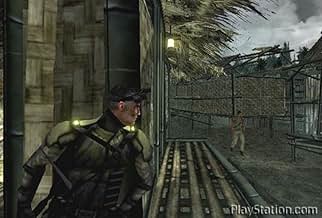
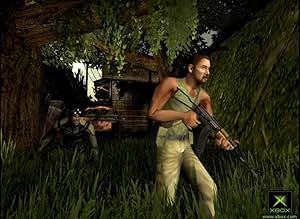
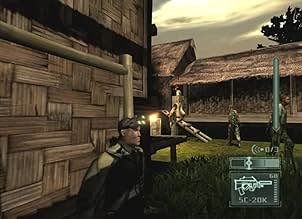
If you are thinking this is going to be the same as the original, you're wrong. Sure, you're still Sam Fisher, an expert spy who can infiltrate a factory without anyone know he's there. But there is one really big change. You're outdoors. Yep, you heard me. And boy do they make it look good. The environments are lush and beautiful. The bushes sway in the wind as you move past them. You still have to deal with industrial settings though. But even they can't match the beauty of the outdoors. Okay, enough of that. Lets go to gameplay. The AI is 100x approved over the original. Now enemies can grab a civilian and hold them hostage. Also, if they detect you, they don't have to run over to the alarm. Just one push of a button on their uniform, and that little baby will start sounding. And if you sound one alarm, every enemy will have a bullet proof vest on. Two alarms a helmet. Three alarms, I don't know, but it's not good. Which leads me to another thing. The game is hard. Really hard. It's impossible to beat a level on the first try. Even experts of the original will have a hard time getting through this. But even though it's hard, it's really short. There's only eight levels(the original had ten). But one thing will get you busy after you're done... The multiplayer. Here's how it is. A team of mercenaries try to get the spy. That's it. But it's fun trying to hunt down an almost invisible person. And it's fun killing unsuspecting mercenaries while you're almost invisible. So let me sum it up. The graphics are incredible, the AI is seamless, and the multiplayer is fun. Pandora Tomorrow gets a 5 out of 5.
Intense environments and AI...
I will agree that the environments and the AI were incredible and the graphics overall were second to none, but I feel that the single player mode was sacrificed in order to bring the multi-player mode to life. The game was far too short and I didn't feel the profile of Sadono was robust enough. In the original, you actually felt hate and anger towards Nickoladze because of the detail and time spent to develop that character. I am not saying that Pandora Tomorrow was bad, not at all. I am just hoping that they go back to formula with Chaos Theory and develop a new era for gaming, much like was done when Splinter Cell 1 was first released. I gave Pandora a 4 out of 5.
Another great series in Splinter Cell. This time, improvements has been made in the game. Here's my Review.
Part 2 of Sam Fisher in Splinter Cell: Pandora Tomorrow. This game makes you think and gives you a lot of options. This game is base on stealth and thinking before you make your move. Nothing has changed in this game and that's good because I like to take my time. Timing is the key in playing this game because one false move and it's mission over.
The levels has increased to 32 and each level has a certain feel to it. The storyline has changed also. This time your fighting a terrorist group called the Indonesian Guerrilla and the person in charge is Suhadi Sadono. The object of the game is to stop him at all cost if you want to survive.
What's in the game?
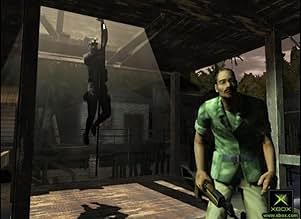
The game has a very good basic move system that allows you to move freely without being detected. But the only way you can do this is by playing the first game and practice to get the right feel because the controls are almost the same, but with more realism. Of course we know the basic moves like: climbing, manting, and zip line. The Advanced moves are important and very special to the game because with these moves, the terrorist group don't know what hit them. Just to name a few like: Drop Attack, when you can zip line and land on top of the person without setting the alarm, Rappelling while shooting, Hanging while shooting, and my favorite is Split Jump Shooting. Grabbing the person has been 50-50, to say the lease. This is why this game makes you think because you got to make the right decisions and if you make the right decision, good things will happen like: when you grab the person, you can do four things. 1. Knock him out, silently, 2. interrogating the person, 3. Forced cooperation on the person, and 4. uses him as a human shield. You will still take damage, but not as much. It has a new feature for the SC-20K (weapon). This weapon has a feature called a Multipurpose Lanucher were you can choose between 7 sub-weapons or gadgets. They are: Ring Airfoil Projectile, Sticky Camera, Sticky Shocker, Distraction Camera, Gas Grenade, Flashbang, and Chaff Grenade.
There's more in the game but I'm going to explain one weakness to the game and that's when you uses the SC-20K while using your binoculars to get a much better shot on the enemy, you get a sense of being mistreated. Let me explain.
If you go to any level in the game and you walk slowly to the next room, you spot a terrorist staring towards the front. In other words, the terrorist is looking right at you, but your not spotted yet. Here's the sad part. When you draw your SC-20K and your binoculars, the camera shakes and your accuracy decreases. If you try to shoot the terrorist, you'll miss every time and the mission will be over or you set off the first alert.
This is my review on this game and out of 0 to 10, My rating on this game is a 9 because it's a game that will keep you busy until Metal Gear 3 comes out and even if it has one weakness, it's still a great game.
If you have any questions, feel free to e-mail me.
Undertaker55 was spoken. Good Day.
The levels has increased to 32 and each level has a certain feel to it. The storyline has changed also. This time your fighting a terrorist group called the Indonesian Guerrilla and the person in charge is Suhadi Sadono. The object of the game is to stop him at all cost if you want to survive.
What's in the game?
The game has a very good basic move system that allows you to move freely without being detected. But the only way you can do this is by playing the first game and practice to get the right feel because the controls are almost the same, but with more realism. Of course we know the basic moves like: climbing, manting, and zip line. The Advanced moves are important and very special to the game because with these moves, the terrorist group don't know what hit them. Just to name a few like: Drop Attack, when you can zip line and land on top of the person without setting the alarm, Rappelling while shooting, Hanging while shooting, and my favorite is Split Jump Shooting. Grabbing the person has been 50-50, to say the lease. This is why this game makes you think because you got to make the right decisions and if you make the right decision, good things will happen like: when you grab the person, you can do four things. 1. Knock him out, silently, 2. interrogating the person, 3. Forced cooperation on the person, and 4. uses him as a human shield. You will still take damage, but not as much. It has a new feature for the SC-20K (weapon). This weapon has a feature called a Multipurpose Lanucher were you can choose between 7 sub-weapons or gadgets. They are: Ring Airfoil Projectile, Sticky Camera, Sticky Shocker, Distraction Camera, Gas Grenade, Flashbang, and Chaff Grenade.
There's more in the game but I'm going to explain one weakness to the game and that's when you uses the SC-20K while using your binoculars to get a much better shot on the enemy, you get a sense of being mistreated. Let me explain.
If you go to any level in the game and you walk slowly to the next room, you spot a terrorist staring towards the front. In other words, the terrorist is looking right at you, but your not spotted yet. Here's the sad part. When you draw your SC-20K and your binoculars, the camera shakes and your accuracy decreases. If you try to shoot the terrorist, you'll miss every time and the mission will be over or you set off the first alert.
This is my review on this game and out of 0 to 10, My rating on this game is a 9 because it's a game that will keep you busy until Metal Gear 3 comes out and even if it has one weakness, it's still a great game.
If you have any questions, feel free to e-mail me.
Undertaker55 was spoken. Good Day.
10zoskey
Great work keep it up
I have all 4 Splinter cell Playstation 2 games and everyone rates a 10. Michael Ironside is one of my favorite actors. He has a very recognizable voice. I hope that they will produce another Splinter cell episode. I also have seen a lot of his movies and Would like to see him play the hero in a movie. Pandora tomorrow is as great as the previous two. Double agent is another fine work of gaming. Keep up the great work. I will be looking forward to a new splinter cell game in the future. Also it would be great to know if there is a fan club in Alberta. If there is I would like to know where it is and how I can join. Yours Truly Recyled Teenager
Pandora Tomorrow not too bad
9 out of 10 - The Sequel That Elevated the Shadows
Pandora Tomorrow wasn't just a follow-up to the original Splinter Cell - it was a declaration that stealth had evolved. Released in 2004, this second chapter in Sam Fisher's saga didn't radically overhaul the formula but instead refined and polished it, delivering one of the most atmospherically rich, mechanically tight stealth games of its generation.
Gameplay: Evolution Over Revolution
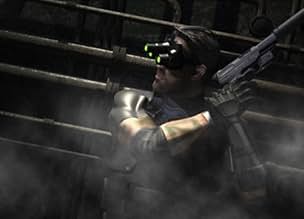
Mechanically, Pandora Tomorrow stayed true to the deliberate, tension-filled stealth of the original. But it tightened the experience in just the right places. Movement was more fluid, the AI was sharper, and the addition of mechanics like "SWAT turns" and the ability to whistle or knock to lure enemies added layers of tactical control. You felt like a true operative - not because of brute force, but because you could out-think everyone in the room.
The environments pushed variety too. From shadowy jungle encampments in East Timor to ultra-secure American embassies, every level demanded a different approach. Light and sound meters returned, reminding you constantly: the environment is a weapon... but it can also betray you.
Story: Global Stakes, Tightly Told
The story introduced Suhadi Sadono - a charismatic and ruthless insurgent leader who executes a chilling biological threat codenamed "Pandora Tomorrow." The concept? Sleeper cells across the U. S. will release a deadly virus if he's killed. It's a brilliant narrative device that gives every mission tension: the line between success and global catastrophe is razor-thin.
Sam's mission takes him from the U. S. to Indonesia, Jerusalem, and Paris - always grounded in real-world political tension. While Chaos Theory might have had more edge, Pandora Tomorrow brought a cinematic seriousness that made each mission feel critical.
Multiplayer: The Game-Changer
Where Pandora Tomorrow really flipped the script was with its Spies vs. Mercs multiplayer mode - one of the most groundbreaking additions to stealth gaming, period. Two stealthy spies vs. Two heavily armed mercenaries. Asymmetrical. Tense. Strategic. This wasn't just a side mode - it was a revolution.
Spies relied on agility and shadows. Mercs relied on vision, firepower, and traps. The cat-and-mouse gameplay created stories of its own - and inspired an entire subgenre of multiplayer.
Voice Work and Atmosphere
Michael Ironside once again anchors the experience as Sam Fisher - his calm, sardonic delivery giving weight to every moment. Lambert, Grim, and the rest of the team ground the story with CIA-style precision, and the environments - whether it's a mosque in Jerusalem or the thick undergrowth of Indonesia - are dripping with atmosphere.
The soundtrack, lighting, and sound design all combine to pull you into the shadows. You don't just play Pandora Tomorrow - you inhabit it.
Why 9, Not 10?
Difficulty Spikes: Some missions leaned into trial-and-error a bit too much.
Linear Design: Compared to Chaos Theory, some paths felt too restrictive.
Multiplayer Support: While revolutionary, early online issues hampered some players from experiencing the full depth of Spies vs. Mercs.
Still, these don't overshadow what the game accomplished.
Pandora Tomorrow wasn't just a follow-up to the original Splinter Cell - it was a declaration that stealth had evolved. Released in 2004, this second chapter in Sam Fisher's saga didn't radically overhaul the formula but instead refined and polished it, delivering one of the most atmospherically rich, mechanically tight stealth games of its generation.
Gameplay: Evolution Over Revolution
Mechanically, Pandora Tomorrow stayed true to the deliberate, tension-filled stealth of the original. But it tightened the experience in just the right places. Movement was more fluid, the AI was sharper, and the addition of mechanics like "SWAT turns" and the ability to whistle or knock to lure enemies added layers of tactical control. You felt like a true operative - not because of brute force, but because you could out-think everyone in the room.
The environments pushed variety too. From shadowy jungle encampments in East Timor to ultra-secure American embassies, every level demanded a different approach. Light and sound meters returned, reminding you constantly: the environment is a weapon... but it can also betray you.
Story: Global Stakes, Tightly Told
The story introduced Suhadi Sadono - a charismatic and ruthless insurgent leader who executes a chilling biological threat codenamed "Pandora Tomorrow." The concept? Sleeper cells across the U. S. will release a deadly virus if he's killed. It's a brilliant narrative device that gives every mission tension: the line between success and global catastrophe is razor-thin.
Sam's mission takes him from the U. S. to Indonesia, Jerusalem, and Paris - always grounded in real-world political tension. While Chaos Theory might have had more edge, Pandora Tomorrow brought a cinematic seriousness that made each mission feel critical.
Multiplayer: The Game-Changer
Where Pandora Tomorrow really flipped the script was with its Spies vs. Mercs multiplayer mode - one of the most groundbreaking additions to stealth gaming, period. Two stealthy spies vs. Two heavily armed mercenaries. Asymmetrical. Tense. Strategic. This wasn't just a side mode - it was a revolution.
Spies relied on agility and shadows. Mercs relied on vision, firepower, and traps. The cat-and-mouse gameplay created stories of its own - and inspired an entire subgenre of multiplayer.
Voice Work and Atmosphere
Michael Ironside once again anchors the experience as Sam Fisher - his calm, sardonic delivery giving weight to every moment. Lambert, Grim, and the rest of the team ground the story with CIA-style precision, and the environments - whether it's a mosque in Jerusalem or the thick undergrowth of Indonesia - are dripping with atmosphere.
The soundtrack, lighting, and sound design all combine to pull you into the shadows. You don't just play Pandora Tomorrow - you inhabit it.
Why 9, Not 10?
Difficulty Spikes: Some missions leaned into trial-and-error a bit too much.
Linear Design: Compared to Chaos Theory, some paths felt too restrictive.
Multiplayer Support: While revolutionary, early online issues hampered some players from experiencing the full depth of Spies vs. Mercs.
Still, these don't overshadow what the game accomplished.


Did you know
- TriviaWhen Sam meets Shetland in the first level, Shetland asks who Sam is now working for. He guesses at SEALS and CIA. Sam replies, "No, staying anonymous," the acronym of which is NSA for whom Sam actually works.
- GoofsLambert can be seen getting a vaccination for small pox between mission 4 and 5. Lambert was born in 1961, meaning he attended primary school in the mid 1960's and early 1970's. At that time school children were routinely given several vaccination, including small pox, making the vaccination unnecessary and wasteful. Nearly all Americans over about 30 in 2006 would be immune to that virus.
- Quotes
Coen: What do you think?
Sam Fisher: The world's small, nasty, and complicated. Everybody dies alone.
Coen: Hm. What do you think about Norman Soth?
Sam Fisher: Soth's small, nasty, and complicated. How he dies is up to him.
- ConnectionsFeatured in Icons: Splinter Cell (2002)
Details
- Release date
- Countries of origin
- Official site
- Languages
- Also known as
- Tom Clancy's Splinter Cell: Pandora Tomorrow
- Production company
- See more company credits at IMDbPro
- Color
- Sound mix
Contribute to this page
Suggest an edit or add missing content