IMDb RATING
7.1/10
4.2K
YOUR RATING

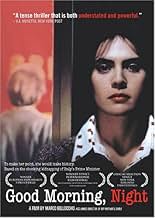
The 1978 kidnapping of politician Aldo Moro as seen from the perspective of one of his assailants: a conflicted young woman in the ranks of the Red Brigade.The 1978 kidnapping of politician Aldo Moro as seen from the perspective of one of his assailants: a conflicted young woman in the ranks of the Red Brigade.The 1978 kidnapping of politician Aldo Moro as seen from the perspective of one of his assailants: a conflicted young woman in the ranks of the Red Brigade.
- Awards
- 13 wins & 21 nominations total
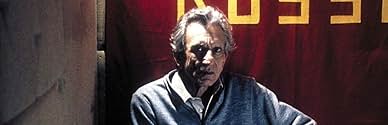


Giulio Bosetti
- Paolo VI
- (as Giulio Stefano Bosetti)


7.14.2K
1
2
3
4
5
6
7
8
9
10
Featured reviews
Alienation
The events bookending this movie are true, but the actual story is pure speculation...thus leaving the door wide open for the storytelling.
Communist Catholics are an oddity...the contradictions in that appellation alone are manifest. So what we have here is told somewhat in the manner of a Passion Play, cross-pollinated with a critique vs. defense of the Marx-Hegel "Holy Family"...the argument centers on the captive's immediate concern about execution, whereas the captors insist on demonstrating they are merciless.
The problem is, all of this seems to be going on as if there's no outside world of concern...oh, we get leakage in from TV and newspapers, but no sense that Rome is under lockdown. This ends up totally alienated from the central symbolism (Mora's body having been found precisely halfway between the respective Christian Democrats' and Italian Communist Party's headquarters). We're locked behind the writing (the stacks of books, and simultaneously, Chiara within the library), then left for dead with no spatial, political or symbolic context.
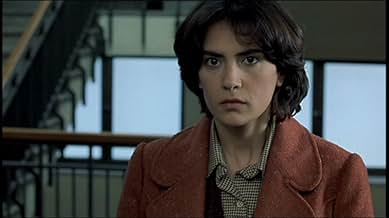
That said, there is some cleverness in the limitation placed on Chiara, who is the only one who can tell the story outside the apartment, but has a proximity barrier from the writer at the cubicle door and peephole. Upon reaching perigee, she is reduced to defiant tears. Note also how she dreams in Soviet-era propaganda films!
Communist Catholics are an oddity...the contradictions in that appellation alone are manifest. So what we have here is told somewhat in the manner of a Passion Play, cross-pollinated with a critique vs. defense of the Marx-Hegel "Holy Family"...the argument centers on the captive's immediate concern about execution, whereas the captors insist on demonstrating they are merciless.
The problem is, all of this seems to be going on as if there's no outside world of concern...oh, we get leakage in from TV and newspapers, but no sense that Rome is under lockdown. This ends up totally alienated from the central symbolism (Mora's body having been found precisely halfway between the respective Christian Democrats' and Italian Communist Party's headquarters). We're locked behind the writing (the stacks of books, and simultaneously, Chiara within the library), then left for dead with no spatial, political or symbolic context.
That said, there is some cleverness in the limitation placed on Chiara, who is the only one who can tell the story outside the apartment, but has a proximity barrier from the writer at the cubicle door and peephole. Upon reaching perigee, she is reduced to defiant tears. Note also how she dreams in Soviet-era propaganda films!
beautiful minor movie on a major event of the Italian history
Aldo Moro's kidnapping and murder was at its time a huge event for the Italian history and the world. With the recrudescence of terrorism at the beginning of the 70s, some of the extreme left movements in Europe - especially in Germany and Italy - embraced the path of the 'armed struggle', a deformation of the Marxist concept of class struggle in a try to stop the historical reconciliation between the traditional political parties and an Italian Comminist Party already feeling the winds of reform that will melt down the Iron Curtain 10-15 years later.
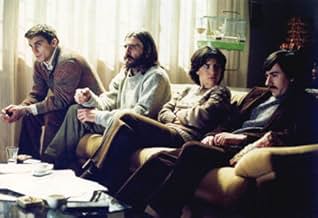
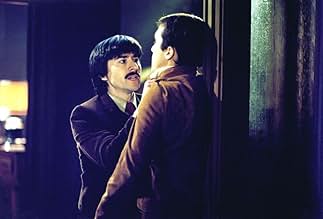
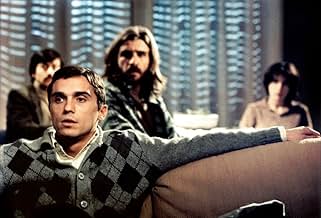
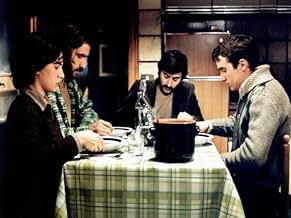
Marco Bellocchio's film tackles the story from the perspective of the day to day life of the kidnappers, and through the eyes and dreams of one of the kidnappers - the only female in the group. We do not see any of the bloody events of the kidnapping or the outcome, and most of the action happens in the rented flat where the captors kept Moro imprisoned. The director and the splendid main actress Maya Sansa succeed to re-create the political conditioning and the motivations that brought the young woman to join the terrorist fighting path, but also the human dimension that brings her back the feelings of compassion to the victim. It is Aldo Moro's portrait played by Roberto Herlitzka which seems surprinsigly more sketchy, and I had the feeling that a greater message about the relationship between kidnapper and victim was missed.
It is still an interesting movie to watch, minor in style but human, dealing from a different perspective with a theme that too often generated films that were spectacular, but deprived of any true emotion. 8 out of 10 on my personal scale.
Marco Bellocchio's film tackles the story from the perspective of the day to day life of the kidnappers, and through the eyes and dreams of one of the kidnappers - the only female in the group. We do not see any of the bloody events of the kidnapping or the outcome, and most of the action happens in the rented flat where the captors kept Moro imprisoned. The director and the splendid main actress Maya Sansa succeed to re-create the political conditioning and the motivations that brought the young woman to join the terrorist fighting path, but also the human dimension that brings her back the feelings of compassion to the victim. It is Aldo Moro's portrait played by Roberto Herlitzka which seems surprinsigly more sketchy, and I had the feeling that a greater message about the relationship between kidnapper and victim was missed.
It is still an interesting movie to watch, minor in style but human, dealing from a different perspective with a theme that too often generated films that were spectacular, but deprived of any true emotion. 8 out of 10 on my personal scale.
Just to clarify
I've read the other comments on this board and I would like to precise that Aldo Moro at the time was not the Italian President and that obviously the Red Brigades were out for his blood because he was working skilfully at a compromise between the Christian Democrats and the Communists and that meant for the extremists of the left to be cut out from any kind of power or hold they might have on the Government. The film itself does not seek to give political answers and is much more concerned with the human aspects of the drama. It's more lyrical than realistic... if you're looking for action or for a docudrama, you should probably go elsewhere.
Haunting, quietly powerful re-imagining of true events
The true story of the kidnap of Italian political leader Aldo Moro by the Red Brigades in 1978 is turned into a haunting, disturbing tone poem of s film.
Eschewing realism, or the obvious tense, linear approach, this focuses on the experience through the eyes of one the young kidnappers, and her ever growing doubts about the righteousness of the mission. But rather than express this literally, we see it emerge in dream sequences, and behind her eyes.
Beautifully shot, with a terrific use of classical and modern music (Pink Floyd shows up more than once) this quiet nightmare of a film is far more effecting and thought provoking than most political dramas. It does not miss the irony that Aldo was a humanist who was actually inviting the communist party to be part of the government.
A great cautionary truth based fable about the danger of giving yourself completely and unquestioningly to any ideology, left or right, religious or secular.
Eschewing realism, or the obvious tense, linear approach, this focuses on the experience through the eyes of one the young kidnappers, and her ever growing doubts about the righteousness of the mission. But rather than express this literally, we see it emerge in dream sequences, and behind her eyes.
Beautifully shot, with a terrific use of classical and modern music (Pink Floyd shows up more than once) this quiet nightmare of a film is far more effecting and thought provoking than most political dramas. It does not miss the irony that Aldo was a humanist who was actually inviting the communist party to be part of the government.
A great cautionary truth based fable about the danger of giving yourself completely and unquestioningly to any ideology, left or right, religious or secular.
A Remarkable Depiction of a Perplexing Coups
Marco Bellocchio takes a lot of chances in his films, examining human behavior in the face of dissension whether political, moral, or emotional. In 'Buongiorno, notte' ('Good Morning, Night') he studies the infamous 1978 kidnapping of Aldo Moro in what would be a situation that would raise as many questions as it gave answers - and it is that quality that Bellocchio has captured in his film.
The facts of the Italian political current in 1978 may not be understood by the general viewer, but suffice it to say that the ruling political party Democrazia Cristiana was challenged by the Red Brigade, the underground terrorists who kidnapped and killed President Aldo Moro in a coups that was eventually destroyed by the reigning powers. That much of a plot is all that is necessary to know. The bulk of the film revolves around the lives of the kidnappers, especially the sole woman Chiara (Maya Sansa) who with her compatriots hid the President in a tiny room with the threat of death, but also were influenced by the writings and conversations with Moro. The whole question of revolution is under close inspection. The story mixes documentary shots with the cinematography in a tasteful way of showing us the elements of the kidnapping and the aftermath. It is the reaction of Chiara to these events and the questioning that can disrupt the political leanings of revolutionaries that makes this story so very meaningful.
The cast is superb: Maya Sansa, Pier Giorgio Bellocchio, Giovanni Calcagno, Luigi Lo Cascio and Paolo Briguglia as the kidnappers, and Roberto Herlitzka as Aldo Moro are convincing and human. The script does have holes in it where formation of ideas and acts and incidents are vague, but it almost seems as though that is the intention of Bellocchio. In political upheaval nothing is black and white if the events are related through individual's eyes rather that through the reaction of the mobs. And this is what makes the film so fine, if a bit hard to follow.
The facts of the Italian political current in 1978 may not be understood by the general viewer, but suffice it to say that the ruling political party Democrazia Cristiana was challenged by the Red Brigade, the underground terrorists who kidnapped and killed President Aldo Moro in a coups that was eventually destroyed by the reigning powers. That much of a plot is all that is necessary to know. The bulk of the film revolves around the lives of the kidnappers, especially the sole woman Chiara (Maya Sansa) who with her compatriots hid the President in a tiny room with the threat of death, but also were influenced by the writings and conversations with Moro. The whole question of revolution is under close inspection. The story mixes documentary shots with the cinematography in a tasteful way of showing us the elements of the kidnapping and the aftermath. It is the reaction of Chiara to these events and the questioning that can disrupt the political leanings of revolutionaries that makes this story so very meaningful.
The cast is superb: Maya Sansa, Pier Giorgio Bellocchio, Giovanni Calcagno, Luigi Lo Cascio and Paolo Briguglia as the kidnappers, and Roberto Herlitzka as Aldo Moro are convincing and human. The script does have holes in it where formation of ideas and acts and incidents are vague, but it almost seems as though that is the intention of Bellocchio. In political upheaval nothing is black and white if the events are related through individual's eyes rather that through the reaction of the mobs. And this is what makes the film so fine, if a bit hard to follow.


Did you know
- TriviaWas appreciated by the relatives of Aldo Moro.
- GoofsNear the end, when Aldo Moro walks away in the deserted street, you can see a multicolored Peace flag in the background. Those flags would decorate Italian streets only in 2003, to oppose the invasion of Iraq.
- ConnectionsEdited from Paisan (1946)
- SoundtracksMarcia trionfale
(from "Aida")
Composed by Giuseppe Verdi
Performed by Orchestra e Coro del Teatro dell'Opera di Roma
Conducted by Georg Solti
Decca Records, 1962
- How long is Good Morning, Night?Powered by Alexa
Details
- Release date
- Country of origin
- Language
- Also known as
- Buenos días, noche
- Production companies
- See more company credits at IMDbPro
Box office
- Gross US & Canada
- $10,093
- Opening weekend US & Canada
- $2,769
- Nov 13, 2005
- Gross worldwide
- $4,240,918
- Runtime
- 1h 46m(106 min)
- Color
- Sound mix
- Aspect ratio
- 1.66 : 1
Contribute to this page
Suggest an edit or add missing content