IMDb RATING
5.8/10
3.1K
YOUR RATING

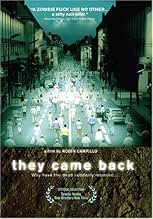
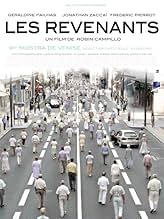
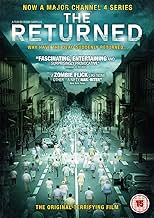
The lives of the residents of a small French town are changed when thousands of the recently dead inexplicably come back to life and try to integrate themselves into society that has changed... Read allThe lives of the residents of a small French town are changed when thousands of the recently dead inexplicably come back to life and try to integrate themselves into society that has changed for them.The lives of the residents of a small French town are changed when thousands of the recently dead inexplicably come back to life and try to integrate themselves into society that has changed for them.
- Director
- Writers
- Stars
- Awards
- 2 wins & 5 nominations total



- Director
- Writers
- All cast & crew
- Production, box office & more at IMDbPro
5.83K
1
2
3
4
5
6
7
8
9
10
Featured reviews
A thoughtful treatment of an ancient fear
Four and a half thousand years ago, the Sumerian civilization existed in the land we now call Iraq. In a surviving work of their literature, deciphered from a baked clay tablet, we learn that their goddess of love, named Inanna (who was called Ishtar by the later Babylonians), threatened to go down to the Underworld and smash the doors, saying: 'And all the dead will get out, and they will outnumber the living.' This ancient fear of our species, explicitly documented circa 2500 BC but really extending throughout the entire history of mankind, is explored in this strange and eerie French film, which has now inspired a popular French television series of the same original title and theme. This film is entitled in French LES REVENANTS, which means THE RETURNED, and that is the title used now on the DVD release with English subtitles, though the cinema release with subtitles a few years ago was as THEY CAME BACK, a title which has now been abandoned, so that the continuity may be clear to purchasers that this is the basis of the TV series, which is making a hit. Essentially, this is a film about zombies, but it is not at all a horror film, and none of them stagger around making gormless noises and bashing people. Nor are they comical, in the hysterically funny mode of SHAUN OF THE DEAD with Simon Pegg (2004, see my review), which by strange coincidence came out in the same year as this film, for this film portrays zombies very seriously and thoughtfully, and is as far from being a comedy as you can get. The study of the 'returned dead' is extremely sophisticated. One day, without explanation, large numbers of recently dead people are seen walking from the cemetery back into a provincial French town. They are all physically fit but rather dazed and uncommunicative. In this town alone, 13,000 of them suddenly appear, having left their graves. They are not at all threatening, but are quiet and reserved and, somewhat ominously, all seem to have an understanding with one another. We are told that millions of 'returned dead' have appeared all over France, and some satire creeps into the film here, because meetings are held in which various politically correct people insist that the human rights of these dead people must be respected, they must all have their old jobs back, and their pensions must be reinstated. Most of them are elderly, but there are a few younger ones and children. Extensive bureaucracy then grinds into slow motion, as the returnees are identified and kept in a compound, sleeping on bunks before being reunited with their families. But then it is noticed that they are not sleeping, but merely pretending to sleep. It is also noticed that their body temperatures are all five degrees lower than normal. They are hyper-active and begin to have secret meetings at night while 'living humans' are asleep. They become increasingly restless and seem continually to want to flee, but it is not clear to where they wish to flee. They have mostly lost their memories, which come back to them slowly, although they are perfectly capable of speaking fluently when they need to, and of carrying out any daily tasks. They remember where they used to live and recognise their family members. But they appear to be incapable of relating to any living person emotionally, or having any feelings. Hence, there are no tearful reunions and desperate huggings. They are distant, and the living humans are made very uncomfortable by their presence, so that many people refuse to see the returned dead whom they had once loved. This is a very strange film indeed, very much under-stated, and hence all the more effective for that reason. This wonderfully evocative and mysterious film was the first film directed by Robin Campillo, and it was an impressive debut, done with great skill. He has just completed his second film, EASTERN BOYS (2013), which is apparently not yet released. Campillo also wrote this film, jointly with Brigitte Tijou. It is no wonder that this provocative and disturbing examination of one of our deepest fears has inspired a television series, for it is easy to think of endless episodes in which further and further layers of mystery are peeled away from this nearly inexhaustible subject. After all, the subject of zombies is never really dead, even though they themselves are.
If Tarkovsky Returned As A Zombie, He'd Go See This Film
I'll admit, Campillo's "Les Revenants" is several artistic steps below (and two hours shorter than) any Tarkovsky epic. But as I watched the film, I couldn't get Tarkovsky's original "Solaris" out of my mind. The two films share a kind of somnambulist's sadness, a lumbering quality of going nowhere slowly, a dreaminess that falls somewhere between irritating nightmare and ho-hum sexdream. Oh, and both movies are populated with previously dead people, of course.
"Solaris" and "Les Revenants" pose similar questions as well: Are we dealing with actual "returnees," or are we simply struggling with the very palpable memories of those who have passed on? (Think about how "empty" the zombies are in both films and how they just sort of fade away--physically or spiritually--in both films.) Are these returnees dangerous to us? Or are we simply harming ourselves? More poignant, are WE the actual zombies? Hmmmm, hard to say. The film doesn't offer up any easy answers either as we see the crypt-dwellers attempting to return to their lives in the little French village as if things were...just fine.
And regarding the lack of answers, we also never find out what it was like to actually be dead either. If anything annoyed me about Campillo's "avant zombie flick," it's that. I kept waiting, wondering, would someone finally ask their deceased relative or returnee-loved-one lounging in bed next to them: "So, what's the afterlife like exactly? I mean, did that coffin get cramped? Did lying in the ground for ten years get irritating? Did you ever get the urge to roll over but didn't have enough room to maneuver? Would you choose cremation next time around, or would you just take a battery-powered TV with you into your grave next time?" But none of those topics ever came up. Of course, such a conversation really wouldn't have fit the arty tenor of the movie anyway.
But COME ON! ADMIT IT! These are precisely the weighty issues we want to hear about from experienced dead folks, right? I mean if you are having a picnic with a zombie (and YOU aren't the picnic, that is) you're gonna ask. You know you would.
I realize it is unlikely this movie would exist if it weren't for the wonderful Romero and his ilk. But overall, I offer a hearty kudos to Campillo for breathing life into the long-dead zombie subgenre. There are SO MANY zombie films out there (they seem to appear weekly), and I admit that I grew up digesting many of those Italian, German, and English delights. But with age and experience, you eventually tire of fast food, and you realize that the next "Zombie Intestine Massacre" flick is simply and mindlessly repeating itself so that every SPFX guy on the studio lot can keep his or her job. That's fine. But kiddies looking for gut-munching scenes will find none here--let them go elsewhere and leave the adults in peace.
"Solaris" and "Les Revenants" pose similar questions as well: Are we dealing with actual "returnees," or are we simply struggling with the very palpable memories of those who have passed on? (Think about how "empty" the zombies are in both films and how they just sort of fade away--physically or spiritually--in both films.) Are these returnees dangerous to us? Or are we simply harming ourselves? More poignant, are WE the actual zombies? Hmmmm, hard to say. The film doesn't offer up any easy answers either as we see the crypt-dwellers attempting to return to their lives in the little French village as if things were...just fine.
And regarding the lack of answers, we also never find out what it was like to actually be dead either. If anything annoyed me about Campillo's "avant zombie flick," it's that. I kept waiting, wondering, would someone finally ask their deceased relative or returnee-loved-one lounging in bed next to them: "So, what's the afterlife like exactly? I mean, did that coffin get cramped? Did lying in the ground for ten years get irritating? Did you ever get the urge to roll over but didn't have enough room to maneuver? Would you choose cremation next time around, or would you just take a battery-powered TV with you into your grave next time?" But none of those topics ever came up. Of course, such a conversation really wouldn't have fit the arty tenor of the movie anyway.
But COME ON! ADMIT IT! These are precisely the weighty issues we want to hear about from experienced dead folks, right? I mean if you are having a picnic with a zombie (and YOU aren't the picnic, that is) you're gonna ask. You know you would.
I realize it is unlikely this movie would exist if it weren't for the wonderful Romero and his ilk. But overall, I offer a hearty kudos to Campillo for breathing life into the long-dead zombie subgenre. There are SO MANY zombie films out there (they seem to appear weekly), and I admit that I grew up digesting many of those Italian, German, and English delights. But with age and experience, you eventually tire of fast food, and you realize that the next "Zombie Intestine Massacre" flick is simply and mindlessly repeating itself so that every SPFX guy on the studio lot can keep his or her job. That's fine. But kiddies looking for gut-munching scenes will find none here--let them go elsewhere and leave the adults in peace.
The ghostly theme
The dead have inexplicably returned to life en masse across the world; it's the resurrection of the million recently deceased, who have left the cemeteries to invade the cities. But no crucifixes, no shotguns, useless, they don't eat. The brain, the heart, the liver, the intestines-no need, no taste without pleasure.
They fix you with one of those icy stares from another world, unknown even beyond the unimaginable to our spiritual understanding of the nature of creation. A description of inert, wandering bodies, without strength or feeling, just human beings, all restrained, serving as a vestige of a previous life.
And since the phenomenon stopped suddenly, as if the doors of the ambiguous, ambivalent world of psychological shock, full of doubt and mystery of life on Earth, had closed again, a real hole, black, dark, obscure, and abyssal, of terrestrial organic matter awaits us, a down-to-earth return to this. We have now entered a new and particularly delicate phase:
The reintegration of the dead into their families. Mourning for the registered inhabitants of a small French town, with this unexpected miracle: thousands try to integrate into a society that has changed for them, the society in which they live or in which they lived, living things in their lifetime, even death knows no more in this point of no return, the void, the absolute of cinema, 4-5.
They fix you with one of those icy stares from another world, unknown even beyond the unimaginable to our spiritual understanding of the nature of creation. A description of inert, wandering bodies, without strength or feeling, just human beings, all restrained, serving as a vestige of a previous life.
And since the phenomenon stopped suddenly, as if the doors of the ambiguous, ambivalent world of psychological shock, full of doubt and mystery of life on Earth, had closed again, a real hole, black, dark, obscure, and abyssal, of terrestrial organic matter awaits us, a down-to-earth return to this. We have now entered a new and particularly delicate phase:
The reintegration of the dead into their families. Mourning for the registered inhabitants of a small French town, with this unexpected miracle: thousands try to integrate into a society that has changed for them, the society in which they live or in which they lived, living things in their lifetime, even death knows no more in this point of no return, the void, the absolute of cinema, 4-5.
Intense
I was stunned by this one - from the opening sequence on I was completed transfixed. The slow and melancholy pacing, the morose blue filters, the long silences and the fixed stares, all combined to create a spacious and powerfully - almost painfully - introspective viewing experience.
This is a remarkable meditation on the Zombie sub-genre as well, although clearly partaking of something quite well beyond that more limited scope. No corpse-eating ghouls here: just a fascinating "what if" that raises painful questions about what we do with death and the dead in our own collective imagination. In this particular return of the repressed, being forced to mull over the tedious, bureaucratic details of what would have to happen if hundreds of millions of dead people suddenly reappeared in our midst actually serves to engage the viewer in a very personal way. I found myself interrogating myself over and over about what kind of response I would have in a similar situation, and identifying with the film's protagonists on all sorts levels, and the experience was quite moving.
All the nuances of grief and mourning were shockingly subtle and well-conceived, as well as superbly acted.
The whole time I was watching I kept thinking: "Thank god for the French!" Such a movie could simply never arise from Hollywood.
This is a remarkable meditation on the Zombie sub-genre as well, although clearly partaking of something quite well beyond that more limited scope. No corpse-eating ghouls here: just a fascinating "what if" that raises painful questions about what we do with death and the dead in our own collective imagination. In this particular return of the repressed, being forced to mull over the tedious, bureaucratic details of what would have to happen if hundreds of millions of dead people suddenly reappeared in our midst actually serves to engage the viewer in a very personal way. I found myself interrogating myself over and over about what kind of response I would have in a similar situation, and identifying with the film's protagonists on all sorts levels, and the experience was quite moving.
All the nuances of grief and mourning were shockingly subtle and well-conceived, as well as superbly acted.
The whole time I was watching I kept thinking: "Thank god for the French!" Such a movie could simply never arise from Hollywood.
The day of the living dead
It was the first time a director had tackled the "living dead" subject in a realistic way,without falling into the routine of the fantasy and horror treatment.One has never got the feeling of watching another "night of the living dead" rip off.
The problem of this ambitious movie is that it is too ambitious.Instead of focusing on ONE character ,it tries to tell us the story of several characters who rose from the dead and the treatment is too superficial and too diffuse to involve us.Who ,after all ,has never dreamed he meets again one of his faithful departed alive as you or me?I had never asked myself this question when I saw all those story like movies involving people risen from the dead.
The writers often boils down such an extraordinary thing to problems of employment or of temperature (about 32°C,if we believe them).
Absorbing subject but the movie is not up to scratch.Too bad.Worth a look ,if only for its originality.
The problem of this ambitious movie is that it is too ambitious.Instead of focusing on ONE character ,it tries to tell us the story of several characters who rose from the dead and the treatment is too superficial and too diffuse to involve us.Who ,after all ,has never dreamed he meets again one of his faithful departed alive as you or me?I had never asked myself this question when I saw all those story like movies involving people risen from the dead.
The writers often boils down such an extraordinary thing to problems of employment or of temperature (about 32°C,if we believe them).
Absorbing subject but the movie is not up to scratch.Too bad.Worth a look ,if only for its originality.


Did you know
- TriviaThe plot is very similar to the Brazilian novel "Incidente em Antares" (Incident in Antares) by Erico Verissimo, which was published in 1971. A mini-series based on the book, Antares Incident (1994), was released in Brazil in 1994.
- ConnectionsRemade as The Returned (2012)
- How long is They Came Back?Powered by Alexa
Details
Contribute to this page
Suggest an edit or add missing content