

Two documentary filmmakers chronicle their time in Sonagchi, Calcutta and the relationships they developed with children of prostitutes who work the city's notorious red light district.Two documentary filmmakers chronicle their time in Sonagchi, Calcutta and the relationships they developed with children of prostitutes who work the city's notorious red light district.Two documentary filmmakers chronicle their time in Sonagchi, Calcutta and the relationships they developed with children of prostitutes who work the city's notorious red light district.
- Won 1 Oscar
- 21 wins & 5 nominations total
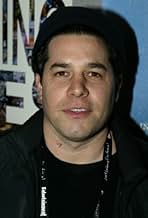
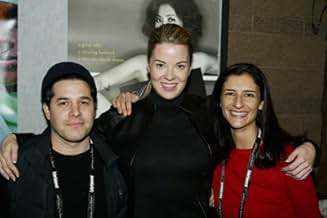
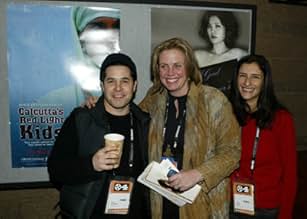
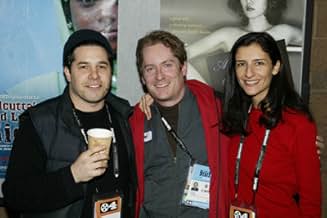


Avijit Halder
- Self
- (as Avijit)
Shanti Das
- Self
- (as Shanti)
Puja Mukerjee
- Self
- (as Puja)

Zana Briski
- Herself "Zana Auntie"
- (uncredited)
Sunil Halder
- Self
- (uncredited)
- …
- Directors
- Writers
- All cast & crew
- Production, box office & more at IMDbPro
7.218.6K
1
2
3
4
5
6
7
8
9
10
Featured reviews
An incredible and meaningful experience
This film should be seen by everyone who has any sense of what the world is and can be if we give our attention and empathy to make it a better place --in the background I hear the greed and anger of Donald Trump and it is so jarring (and sad) and disturbing ....it is absolutely amazing the dedication and caring of Zana Briski an Ross Kauffman and their attempt to support and change the destinies of these poor unfortunate children who are doomed to a life of humiliation, poverty and human degradation. It is uplifting to know that there are people who care --who are not driven by greed and avarice-- who will try , no matter what the odds are, no matter what are the bureaucratic difficulties to help and support these poor unfortunate children .. I know that I have been immensely moved by this film and what is going on in a place like the red light district of Calcutta and will do what I can to make some impact with these unfortunate children in all of the various venues that these people have chosen to work in and do these miraculous things that are they are doing.
Problems with Born into Brothels
I saw BIB last night. I expected to love it, since it had won the Oscar and I am a documentary filmmaker. I thought it was a well-crafted documentary, but there was a surprising "ick" factor to the film for me. First, I was turned off by Zana Briski's personality...the way she was talking to the school officials. She seemed self-conscious in her role as the kids' advocate...she sounded stilted, preachy and thus, ineffective. I also didn't like the way she imposed a solution on the kids, a solution that worked for her but not for them. The photography class sounded like a "cool" thing that she could tell her liberal artsy friends about back in England, but was probably less helpful to the kids than social work, a free lunch program or academic tutoring. Also her solution was for the girls to go to a boarding school "to get them away from all this." I thought that showed a lack of understanding about the situation the girls were in. How could they succeed in a boarding school when they probably weren't academically ready? How could they succeed without emotional support, separated from their families? How could their mothers be expected to accept being separated from their daughters? It bothered me the way that the school officials kept telling Avyjit, the brightest and most talented boy, that he would have to work hard and improve his grades. No wonder Avyjit was turned off. How is he supposed to improve his grades when he hasn't had enough structure in his life to develop good study habits? The whole photography project smacked of some well-intended idea by some liberals who thought, "wouldn't it be cool if we gave cameras to a bunch of street urchins and they came up with cool photos? We could do an art show and other do-gooders would think we were cool!" I'm sure Zana Briski intended to help the children and she did help a few, but why did she set out to help so few to begin with? I keep trying to say nice things about the film and end up criticizing it again. It seemed almost like a reality show...pick seven street urchins and shower them with amazing opportunities. Pour tons and tons of resources into a few kids, then make a film about it. Despite dangling the opportunities in the kids faces, more than half of them did not see their lives improve. It was a well-crafted film which educated many people about the plight of these children. I just hope that other people who know more about social work than these filmmakers do, will be able to really help these children. Maybe I will since I have seen this movie.
A testimony to the transforming power of art
In India, red light districts are booming in cities like Mumbai, Delhi, and Calcutta where millions of transient men live and work far away from their homes and wives. The oldest and the largest of these is Sonagachi in Calcutta where the women have organized into a sex trade union of more than 5,000 active workers and have spread awareness about AIDS and HIV, making Sonagachi one of the few red light districts in the country that does not accept clients without condoms. Subject to a class system that puts them on the lowest rung of Indian society, the mostly illegitimate children of the sex workers are also expected to "join the line" when they reach a certain age. Minor girls are the most sought after in the brothels and secure the highest price, making it very difficult for the parents to let them leave, especially when the only other alternative may be the starvation of their entire family.
In 1997, photographer Zana Briski was assigned to capture images of Sonagachi. While the women were reluctant to let her into their lives, the children quickly responded and Briski became a resident of the brothel for five years. During that time, she provided the children with point and shoot cameras, set up classes in photography, and trained them to document the harsh reality of their daily lives. The result is the Oscar nominated documentary Born Into Brothels, a film that takes us inside the squalid brothels and allows us to see the world through the eyes of some of its most vulnerable residents, five girls and three boys, ages ten to fourteen. Shot in dazzling color using a digital camera, we get to know the children through their photos.
There is Kochi, age 10, who is strong, resilient, tough, and sensitive. Avijit, age 12, seems to be the most talented of the group. He draws, paints, takes pictures and, through Briski's patient efforts, was able to obtain a passport to be a part of a photo-editing panel in Amsterdam. Shanti, age 11, is most eager to learn but is troubled and often feuds with her brother Manik. The others: Gour, Puja, Tapasi, and Suchitra all show a unique ability to find beauty in their ugly environment. The film documents Briski's uphill efforts to place the children in boarding schools to escape the cycle of poverty and exploitation. Some manage to find places in the schools but the biggest obstacle is shown to be the children's own mothers and guardians, often protective out of the sheer necessity for survival.
Born Into Brothels is a testimony to the transforming power of art and of one individual's ability to make a difference. Showing the children's art to Western audiences has helped to raise money for the Sonagachi children's education. It may also serve to make people more aware of the potential talent of millions of other third world children who struggle daily for existence on the streets, the orphanages, and the refugee camps of our teeming world.
In 1997, photographer Zana Briski was assigned to capture images of Sonagachi. While the women were reluctant to let her into their lives, the children quickly responded and Briski became a resident of the brothel for five years. During that time, she provided the children with point and shoot cameras, set up classes in photography, and trained them to document the harsh reality of their daily lives. The result is the Oscar nominated documentary Born Into Brothels, a film that takes us inside the squalid brothels and allows us to see the world through the eyes of some of its most vulnerable residents, five girls and three boys, ages ten to fourteen. Shot in dazzling color using a digital camera, we get to know the children through their photos.
There is Kochi, age 10, who is strong, resilient, tough, and sensitive. Avijit, age 12, seems to be the most talented of the group. He draws, paints, takes pictures and, through Briski's patient efforts, was able to obtain a passport to be a part of a photo-editing panel in Amsterdam. Shanti, age 11, is most eager to learn but is troubled and often feuds with her brother Manik. The others: Gour, Puja, Tapasi, and Suchitra all show a unique ability to find beauty in their ugly environment. The film documents Briski's uphill efforts to place the children in boarding schools to escape the cycle of poverty and exploitation. Some manage to find places in the schools but the biggest obstacle is shown to be the children's own mothers and guardians, often protective out of the sheer necessity for survival.
Born Into Brothels is a testimony to the transforming power of art and of one individual's ability to make a difference. Showing the children's art to Western audiences has helped to raise money for the Sonagachi children's education. It may also serve to make people more aware of the potential talent of millions of other third world children who struggle daily for existence on the streets, the orphanages, and the refugee camps of our teeming world.
The difference of One
Greetings again from the darkness. Rarely does a documentary attract much of an audience ... that is unless it is one of the slanted visions of Michael Moore. Realizing not many will see "Brothels" leaves me feeling both saddened and anxious. What a remarkable story that Zana Briski and Ross Kauffman have brought to our world. The kids will capture your heart within the first few moments of the film. Although the story is definitely the kids, the hero is Ms. Briski. Her tireless efforts to give them hope and a way out should be enough motivation for each of us to realize we can make a difference in the world. This film pulls no punches in showing us the underbelly of one of Calcutta's red light districts and how it so impacts these families. The girls are resigned to the fact that it is their future. The boys are helpless to save their friends. Enter Ms. Briski with cameras in tow. You will feel so energized watching the children explore and capture their world through a lens. The photos are nothing short of stunning and were a hit at the World Festival a couple of years ago. Although not successful in saving them all, Ms. Briski did make a difference and provides a guiding light to us all.
A sad story
A great documentary, which reveals a sad Indian reality, it makes us think about human rights, especially children. The documentary carries shocking phrases especially because they are spoken by children. At last a great movie even being a sad story.


Did you know
- SoundtracksSankarabaranam pancha nadai pallavi
Performed by Shenkar and The Epidemics
Details
- Release date
- Country of origin
- Official site
- Languages
- Also known as
- Born Into Brothels
- Filming locations
- Production companies
- See more company credits at IMDbPro
Box office
- Gross US & Canada
- $3,515,061
- Opening weekend US & Canada
- $14,605
- Dec 12, 2004
- Gross worldwide
- $3,529,201
- Runtime
- 1h 25m(85 min)
- Color
- Sound mix
- Aspect ratio
- 1.37 : 1(original negative)
- 1.85 : 1
Contribute to this page
Suggest an edit or add missing content