
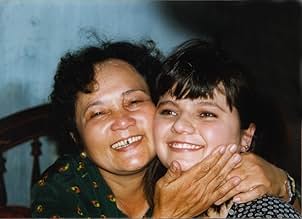
Separated at the end of the Vietnam war, an "Americanized" woman and her Vietnamese mother are reunited after 22 years.Separated at the end of the Vietnam war, an "Americanized" woman and her Vietnamese mother are reunited after 22 years.Separated at the end of the Vietnam war, an "Americanized" woman and her Vietnamese mother are reunited after 22 years.
- Nominated for 1 Oscar
- 2 wins & 2 nominations total


Gerald Ford
- Self
- (archive footage)
7.5637
1
2
3
4
5
6
7
8
9
10
Featured reviews
Emotionally powerful and compelling
This documentary film, Daughter From Danang (DFD), is absolutely incredible.
Not that the film-making is anything spectacular, it is the content that is so emotionally powerful and compelling. I would suggest or request that you see DFD first, then come back and read the reviews, because the only way to give a good review is to give away what makes it so good.
There have many reviews that are very harsh saying Heidi is selfish or did not understand Vietnamese culture and so acted atrociously. I would say that these reviewers have only skimmed the surface of the DFD and not realized or thought about the root causes of Heidi's actions and thoughts. And that would be my only criticism about DFD is that that there was additional information that could have been given to the viewer to understand Heidi and then make a better informed judgment concerning her choices. The producers have a website
that gives more insight into Heidi's whole story and more of her thoughts about the reunion with her mother. But I think DFD does give enough clues for the viewer to understand Heidi's reactions.
After 22 years of separation she learns that her mother is alive and wants to meet her. Four months later and only one month after finalizing plans, she goes to Vietnam. In hindsight she says that she should have probably waited longer to let everything settle in emotionally and do some research about Vietnamese culture and society. But after not knowing about her past for so long she is too excited to wait and wants to be reunited with her mother as soon as possible. The first few days seem to go well as she gets to know her family and extended family and where she grew up. But she then starts to get homesick and misses her two daughters. Her mother wants to be with her 24 hours a day, even sleeping in the same room with her, which starts to suffocate Heidi. She thinks about going home a few days early. I think this would be a normal reaction for any American with our tradition of personal space and privacy. Also with the incredible emotions of reuniting with her family she needed some time relax and reflect on everything that had happened. She is persuaded to stay the last few days by her companion T.T. Nhu even though she was leaving to visit relatives in Hanoi. The last few days are hard for Heidi from the effect of culture shock and being overwhelmed by all the emotions. Which leads to her breakdown.
The most telling thing about Heidi is her saying before she left for Vietnam, 'I have always wanted to have somebody love me unconditionally.' Because of the way she grew up I think that is her main reason for going to see her mother and family. She wants to reconnect with her past that has been missing for so long. Her mother undoubtedly wants to reconnect with her also, but not just because she is her daughter, she sees Heidi as her daughter and the family's savoir. Heidi is going to help them from the poverty that they have endured for so long. After the many requests for money and the formal request from her brother to take on the responsibility of taking care of her mother, it all hits her at once. She only came to meet and get know her family. And now after finding out her mother was alive only four months previously, having met her and her family a few days before, still reeling from all of events and emotions of the last few days, being alone, isolated and homesick, she can't articulate and express her feelings to her family so she just shuts down. Her dream of unconditional love from her mother has been compromised by the requests for money and filial responsibility.
Months after the trip she still cannot come to terms with all of her feelings. I think she wants to tell her husband and for him to understand what she went through, but is unable to open up and relive the pain all over again so soon after it happened. Even two years later she is still having problems and has not written her mother. The continued requests for money from her family do not help also. I think the pain is so deep from the perceived abandonment of her birth mother, real abandonment from her adopted mother, and the 22 years of separation, it has made the pain deeply imbedded and it cannot be put aside in a matter of days, weeks or even years, it has to be worked through. I think time is the only thing that will heal Heidi's pain and it will heal as Heidi comes to terms with her life and if she gets to know her family in Danang.
How could all of this been avoided? I think that both Heidi and her family in Danang needed to learn about each other's culture. Heidi needed to know that her family would love her, but would also see her a benefactor and would not be shy about asking for help. The family in Danang should have been told that first Heidi wanted to meet her family, get to know them and establish a relationship before going to the next level. I hope the damage is not too great that this can be achieved.
I wish Heidi and her family the best, and her family in Danang also.
Not that the film-making is anything spectacular, it is the content that is so emotionally powerful and compelling. I would suggest or request that you see DFD first, then come back and read the reviews, because the only way to give a good review is to give away what makes it so good.
There have many reviews that are very harsh saying Heidi is selfish or did not understand Vietnamese culture and so acted atrociously. I would say that these reviewers have only skimmed the surface of the DFD and not realized or thought about the root causes of Heidi's actions and thoughts. And that would be my only criticism about DFD is that that there was additional information that could have been given to the viewer to understand Heidi and then make a better informed judgment concerning her choices. The producers have a website
that gives more insight into Heidi's whole story and more of her thoughts about the reunion with her mother. But I think DFD does give enough clues for the viewer to understand Heidi's reactions.
After 22 years of separation she learns that her mother is alive and wants to meet her. Four months later and only one month after finalizing plans, she goes to Vietnam. In hindsight she says that she should have probably waited longer to let everything settle in emotionally and do some research about Vietnamese culture and society. But after not knowing about her past for so long she is too excited to wait and wants to be reunited with her mother as soon as possible. The first few days seem to go well as she gets to know her family and extended family and where she grew up. But she then starts to get homesick and misses her two daughters. Her mother wants to be with her 24 hours a day, even sleeping in the same room with her, which starts to suffocate Heidi. She thinks about going home a few days early. I think this would be a normal reaction for any American with our tradition of personal space and privacy. Also with the incredible emotions of reuniting with her family she needed some time relax and reflect on everything that had happened. She is persuaded to stay the last few days by her companion T.T. Nhu even though she was leaving to visit relatives in Hanoi. The last few days are hard for Heidi from the effect of culture shock and being overwhelmed by all the emotions. Which leads to her breakdown.
The most telling thing about Heidi is her saying before she left for Vietnam, 'I have always wanted to have somebody love me unconditionally.' Because of the way she grew up I think that is her main reason for going to see her mother and family. She wants to reconnect with her past that has been missing for so long. Her mother undoubtedly wants to reconnect with her also, but not just because she is her daughter, she sees Heidi as her daughter and the family's savoir. Heidi is going to help them from the poverty that they have endured for so long. After the many requests for money and the formal request from her brother to take on the responsibility of taking care of her mother, it all hits her at once. She only came to meet and get know her family. And now after finding out her mother was alive only four months previously, having met her and her family a few days before, still reeling from all of events and emotions of the last few days, being alone, isolated and homesick, she can't articulate and express her feelings to her family so she just shuts down. Her dream of unconditional love from her mother has been compromised by the requests for money and filial responsibility.
Months after the trip she still cannot come to terms with all of her feelings. I think she wants to tell her husband and for him to understand what she went through, but is unable to open up and relive the pain all over again so soon after it happened. Even two years later she is still having problems and has not written her mother. The continued requests for money from her family do not help also. I think the pain is so deep from the perceived abandonment of her birth mother, real abandonment from her adopted mother, and the 22 years of separation, it has made the pain deeply imbedded and it cannot be put aside in a matter of days, weeks or even years, it has to be worked through. I think time is the only thing that will heal Heidi's pain and it will heal as Heidi comes to terms with her life and if she gets to know her family in Danang.
How could all of this been avoided? I think that both Heidi and her family in Danang needed to learn about each other's culture. Heidi needed to know that her family would love her, but would also see her a benefactor and would not be shy about asking for help. The family in Danang should have been told that first Heidi wanted to meet her family, get to know them and establish a relationship before going to the next level. I hope the damage is not too great that this can be achieved.
I wish Heidi and her family the best, and her family in Danang also.
Sad and interesting
I just saw this movie, it was so difficult and emotional. I was so dismayed and touched by the footage of these children being separated from their Vietnamese mothers. How heart-wrenching it was to watch and I just thank God most of us will never be in that situation.
The warmth and affection Heidi received from her Vietnamese family was very endearing. I have to wonder if she was not at all coached that she would be hit up for money, she seemed so shocked. I also don't want to judge her because I will never be in her situation. Such little monetary support would mean so much to her family. 100 bucks here and there would really improve their comfort. I realize she is not a wealthy woman and is trying to raise her own family and she has a lifestyle to maintain.
I wish she would reach out with clear boundaries to her Vietnamese family. I just think she got overwhelmed and instead of trying to figure out how to work through it she just decided to ignore it.
The warmth and affection Heidi received from her Vietnamese family was very endearing. I have to wonder if she was not at all coached that she would be hit up for money, she seemed so shocked. I also don't want to judge her because I will never be in her situation. Such little monetary support would mean so much to her family. 100 bucks here and there would really improve their comfort. I realize she is not a wealthy woman and is trying to raise her own family and she has a lifestyle to maintain.
I wish she would reach out with clear boundaries to her Vietnamese family. I just think she got overwhelmed and instead of trying to figure out how to work through it she just decided to ignore it.
Heartbreaking...
The way Heidi treated her Vietnamese family was a travesty. Maybe it's because I come from a culturally diverse background and was raised to understand and accept cultural differences, but I thought it was common knowledge that in many cultures throughout the world a way to show love for your family is to help care for them financially if you are able. The fact that she took offense to her sister, who has a hole in the floor for a toilet, asking her for money was unbelievable. Instead of showing compassion for her family's situation, she showed nothing but contempt. She said, in effect, "I can't believe they live like this, but how dare they ask me for money to improve their lives?" I'm sure if she would have sent only $10 a month, it would have helped them considerably, but because her Vietnamese family didn't live up to her expectations, she wants nothing to do with them? I have never seen such coldheartedness. And to wipe off her mother's kisses! She had supposedly been starved for affection for 22 years from her adoptive mother, but after only 7 days with her real mother she was tired of her affection? She should have felt ashamed when she sat down to watch the finished documentary and saw her mother still in tears two years after her visit. I feel the utmost sympathy for Heidi's mother and the rest of her family, but I couldn't muster up any sympathy for Heidi... Actually, that's not true. I do feel sorry for Heidi that it wasn't part of her nature to love and accept her family no matter what. I know she was raised by a less- than- affectionate adoptive mother, but she is no longer an innocent 7-year-old. She is an adult who needs to understand and accept that her monetary and, much, much, more importantly, her emotional selfishness will have a lasting effect on many people.
a new image of the Ugly American
I particularly liked John Petrakis's Tribune review where he writes in bold print: "not recommended for young children." There is no blood, no violence, no profanity, but this rating is due to the high emotional content. You have to search through your vocabulary for superlatives here, featured throughout are extraordinary glimpses of faces framed in their own natural environment, the underlying original music is superb and perfectly balanced, there is a wonderful golden-orange sunrise on a quiet riverbank following her first night in Vietnam where the camera finds a dragonfly resting atop the highest leaf, when her Vietnamese childhood memories return they appear to be almost sketched onto a canvas in an impressionistic blur, all beautifully layered together.
This film begins in 1975 as the Vietnam War was ending with Operation Babylift, (an event which, on it's own, is worthy of it's own documentary, particularly the newsreel footage seen here of an American social worker attempting to convince Vietnamese women to send their children to the USA under the guise of an airlift for war orphans), when a 7 year old Amerasian girl is separated from her family and sent to the USA for adoption, supposedly for her betterment, and she becomes `101% Americanized.' Yet in her 20's, when she yearns to meet her real mother, she discovers her mother feels the same way about missing her, so after 22 years of separation, she travels back to Vietnam in what turns out to be one incredible re-unification, beautifully capturing unanticipated depths of an experience that even the filmmakers could never have imagined. Both the mother and daughter are immensely appealing and couldn't express more genuine affection, but both are overwhelmed and completely flabbergasted by the personal and historical abyss that exists between them, leaving them both reeling, as if stepping on a land mine, from the unseen, misunderstood emotional scars left behind from the aftermath of the war. What starts out as a well-meaning attempt to wipe away bad childhood memories only ends up compounded with still more complicated, bad adult memories. One irony here is that her Vietnamese name means `united.' Sometimes in a documentary, the most difficult decision is to let the cameras continue to roll when you know you are intruding into the personal regions of someone's private anguish. But here, it is the best part of the film a heart-wrenching, emotional jolt for the whole world to see that is simply unforgettable. What this film has to say about love, that it is so much more than just saying words, that sometimes you are called upon to demonstrate your love with deeds, is indescribable.
There may be an inclination to consider the girl too naive and spoiled and to disregard her out of hand. But I would urge people to reconsider this view, as she was unexplainably (to her) separated from her own family, raised instead by a single mother who eventually had no use for her at all, was also raised in one of the more racially intolerant communities in America, which might explain why she was so unprepared emotionally to handle something as simple as affection, a family notion completely alien to her, and which she found, at the time, completely suffocating. ("Get away from me!") Is it any wonder that she might prefer the more emotionally distant relationship with her adopted American family, as that's all she really knows? It should also be viewed in another perspective, as the translator reminded her, that the family pressure and the cultural differences would diminish the longer she stayed. Contrarily, by shortening her visit, which she herself chose, she put even more pressure on herself and her Vietnamese family to finalize what was missing for 22 years into one final day - a sheer impossibility. From a Vietnamese perspective, they were simply trying to include her, permanently, as a member of the family, not just in words, but in deeds.
But what I found so compelling in this girl, who was born in Vietnam, was that she really had no more sensitivity or understanding of Vietnam than the US government, namely none, which certainly demonstrates how easily we can learn to drop bombs on one another, and how inadvertently, by being so Americanized, besides living in material comfort, she was also taught the arrogance and narrow-mindedness of our American values when it comes to understanding the importance or significance of cultures from other nations. What have we learned since Vietnam? Look at our Government in action today, and the contempt we show to other nations unless they agree with us in lock step. What I found so compelling about this girl is how she represents, through no fault of her own, a new image of the ugly American, that looks different but thinks so much like the old image, how little progress we've made on that front, and how far we have to go.
This film begins in 1975 as the Vietnam War was ending with Operation Babylift, (an event which, on it's own, is worthy of it's own documentary, particularly the newsreel footage seen here of an American social worker attempting to convince Vietnamese women to send their children to the USA under the guise of an airlift for war orphans), when a 7 year old Amerasian girl is separated from her family and sent to the USA for adoption, supposedly for her betterment, and she becomes `101% Americanized.' Yet in her 20's, when she yearns to meet her real mother, she discovers her mother feels the same way about missing her, so after 22 years of separation, she travels back to Vietnam in what turns out to be one incredible re-unification, beautifully capturing unanticipated depths of an experience that even the filmmakers could never have imagined. Both the mother and daughter are immensely appealing and couldn't express more genuine affection, but both are overwhelmed and completely flabbergasted by the personal and historical abyss that exists between them, leaving them both reeling, as if stepping on a land mine, from the unseen, misunderstood emotional scars left behind from the aftermath of the war. What starts out as a well-meaning attempt to wipe away bad childhood memories only ends up compounded with still more complicated, bad adult memories. One irony here is that her Vietnamese name means `united.' Sometimes in a documentary, the most difficult decision is to let the cameras continue to roll when you know you are intruding into the personal regions of someone's private anguish. But here, it is the best part of the film a heart-wrenching, emotional jolt for the whole world to see that is simply unforgettable. What this film has to say about love, that it is so much more than just saying words, that sometimes you are called upon to demonstrate your love with deeds, is indescribable.
There may be an inclination to consider the girl too naive and spoiled and to disregard her out of hand. But I would urge people to reconsider this view, as she was unexplainably (to her) separated from her own family, raised instead by a single mother who eventually had no use for her at all, was also raised in one of the more racially intolerant communities in America, which might explain why she was so unprepared emotionally to handle something as simple as affection, a family notion completely alien to her, and which she found, at the time, completely suffocating. ("Get away from me!") Is it any wonder that she might prefer the more emotionally distant relationship with her adopted American family, as that's all she really knows? It should also be viewed in another perspective, as the translator reminded her, that the family pressure and the cultural differences would diminish the longer she stayed. Contrarily, by shortening her visit, which she herself chose, she put even more pressure on herself and her Vietnamese family to finalize what was missing for 22 years into one final day - a sheer impossibility. From a Vietnamese perspective, they were simply trying to include her, permanently, as a member of the family, not just in words, but in deeds.
But what I found so compelling in this girl, who was born in Vietnam, was that she really had no more sensitivity or understanding of Vietnam than the US government, namely none, which certainly demonstrates how easily we can learn to drop bombs on one another, and how inadvertently, by being so Americanized, besides living in material comfort, she was also taught the arrogance and narrow-mindedness of our American values when it comes to understanding the importance or significance of cultures from other nations. What have we learned since Vietnam? Look at our Government in action today, and the contempt we show to other nations unless they agree with us in lock step. What I found so compelling about this girl is how she represents, through no fault of her own, a new image of the ugly American, that looks different but thinks so much like the old image, how little progress we've made on that front, and how far we have to go.
A sad story of loss and cultural divide...
This is a beautifully shot but often difficult film to watch mostly because, as a previous reviewer has mentioned, the Amerasian daughter, Heidi, seems ignorant of her cultural heritage and unwilling to learn. We learn that she was raised by a cold woman who kept her Vietnamese heritage a secret, but even as an adult Heidi doesn't do anything to educate herself about her family or their culture. As she's leaving on the plan for Danang, we see her only just learning how speak the language in a cursory way.
The film beautifully communicates how traumatic the separation of half-American children from their Vietnamese mothers was on all sides. Heidi was denied a family, her mother was forced to sleep with an American soldier to save her other children during a war, and the family continues to live in poverty. It is very difficult to watch how shabbily Heidi treats the family after they open their lives and homes to her, but I suppose that highlights how ignorant many of the children who were brought here in "Operation Babydrop" were and are. It is particularly sad to see how judgmental she is of them she brings them useless American gifts, but gets angry when they ask for help in supporting her mother. It is especially sad when you realize that if she had only taken the time to understand Vietnamese culture, the misunderstanding may have never come up.
Overall, it's an often frustrating and difficult story to watch, but one that is well-told and forthright in its honesty.
The film beautifully communicates how traumatic the separation of half-American children from their Vietnamese mothers was on all sides. Heidi was denied a family, her mother was forced to sleep with an American soldier to save her other children during a war, and the family continues to live in poverty. It is very difficult to watch how shabbily Heidi treats the family after they open their lives and homes to her, but I suppose that highlights how ignorant many of the children who were brought here in "Operation Babydrop" were and are. It is particularly sad to see how judgmental she is of them she brings them useless American gifts, but gets angry when they ask for help in supporting her mother. It is especially sad when you realize that if she had only taken the time to understand Vietnamese culture, the misunderstanding may have never come up.
Overall, it's an often frustrating and difficult story to watch, but one that is well-told and forthright in its honesty.


Did you know
Details
- Release date
- Country of origin
- Languages
- Also known as
- Дочь из Дананги
- Filming locations
- See more company credits at IMDbPro
Contribute to this page
Suggest an edit or add missing content