
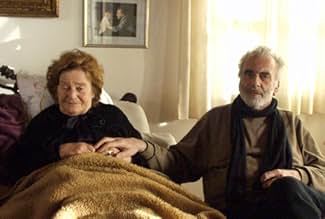
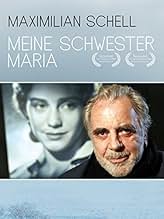
A gentle portrait by the famous German-Swiss-Austrian Hollywood actor Maximilian Schell about his no less famous sister Maria.A gentle portrait by the famous German-Swiss-Austrian Hollywood actor Maximilian Schell about his no less famous sister Maria.A gentle portrait by the famous German-Swiss-Austrian Hollywood actor Maximilian Schell about his no less famous sister Maria.
- Director
- Writers
- Stars
- Awards
- 1 win & 2 nominations total


Falko Skrabal
- Self
- (as Prof. Falko Skrabal)
Nastassja Schell
- Self
- (as Nasti Schell)

Natalya Andreychenko
- Self
- (as Natasha Schell)
- Director
- Writers
- All cast & crew
- Production, box office & more at IMDbPro
6.6208
1
2
3
4
5
6
7
8
9
10
Featured reviews
Maria Schell -- At the End
Maria Schell a famous Austrian actress is filmed at the age of 75 having suffered possibly a stroke living in her ancestral home.
This is a semi staged documentary highlighting problems in the last years of her life--her mental dementia foremost--but also her being broke and spending her time ordering expensive items advertised on television---she has 11 television sets on which at least according to the documentary she watches her old movies.
Her brother apparently wealthy and also a famous actor steps in and manages her life as creditors close in.
There are lots of film clips.
This is clearly a movie for fans of the actress. I had never heard of her and her very limited mental abilities allow nothing but the shallowest conversation. But it is still touching and sad.
Don't Recommend unless you know this actress
This is a semi staged documentary highlighting problems in the last years of her life--her mental dementia foremost--but also her being broke and spending her time ordering expensive items advertised on television---she has 11 television sets on which at least according to the documentary she watches her old movies.
Her brother apparently wealthy and also a famous actor steps in and manages her life as creditors close in.
There are lots of film clips.
This is clearly a movie for fans of the actress. I had never heard of her and her very limited mental abilities allow nothing but the shallowest conversation. But it is still touching and sad.
Don't Recommend unless you know this actress
Phony and creepy
This is a creepy movie.
It pretends to be a documentary, but it is totally scripted, totally staged, and feels totally false. It also pretends to be a tribute to Maria Schell by her younger brother Maximilian, and it is filled with so many clips from her old movies that it could make even a devoted fan pray for relief - but in actual interactions between the siblings he's so critical of her and so overbearing that it borders on abuse. Even the supposed ravages of her old age are faked and exploited for the camera, which is really infuriating.
This is a phony, cloying, suffocatingly obsessive movie that indulges Max Schell's obvious obsession with older German female movie stars. It's much like his equally creepy and equally phony "filmed" interview with Marlene Dietrich (only the audio is Dietrich; the video is faked with stand-ins), made practically against her will a couple of decades earlier, not long before she died.
After watching this supposed tribute, I cared less about Maria Schell than I did before, and I lost what little respect I still had for her brother. He was fabulous in Judgment at Nuremberg, but he's come a long way down in the five decades since then.
It pretends to be a documentary, but it is totally scripted, totally staged, and feels totally false. It also pretends to be a tribute to Maria Schell by her younger brother Maximilian, and it is filled with so many clips from her old movies that it could make even a devoted fan pray for relief - but in actual interactions between the siblings he's so critical of her and so overbearing that it borders on abuse. Even the supposed ravages of her old age are faked and exploited for the camera, which is really infuriating.
This is a phony, cloying, suffocatingly obsessive movie that indulges Max Schell's obvious obsession with older German female movie stars. It's much like his equally creepy and equally phony "filmed" interview with Marlene Dietrich (only the audio is Dietrich; the video is faked with stand-ins), made practically against her will a couple of decades earlier, not long before she died.
After watching this supposed tribute, I cared less about Maria Schell than I did before, and I lost what little respect I still had for her brother. He was fabulous in Judgment at Nuremberg, but he's come a long way down in the five decades since then.
A wonderful docmentary
A most affecting film by actor and director Maximilian Schell of his extremely talented and beautiful sister, Maria. Contains a large number of wonderful clips from her German and American films with actors such as Gary Cooper (her favorite leading man), Marlon Brando, Oscar Werner, and others. These excerpts clearly demonstrate why Maria Schell was such an internationally acclaimed actress, especially during the period from the 1940s to the 1960s. Interwoven throughout the film are scenes from her childhood including those from private home movies. Most revealing and perhaps of most interest are scenes of her in the last years of her life in which she comments on important influences on her life and the many struggles she endured.
Living in oblivion
When Maria Schell retired to her parental homestead in the Austrian alps, her once so glamorous internationally acclaimed movie star life changed from stardom to quiet oblivion. There she occasionally met her family - and the bailiff. Her mental health made it difficult for her to make the difference between fiction and reality. She ordered several expensive TV sets, chandeliers and so forth, not realizing that she was flat broke. Generous to herself and friends alike, she spent millions until the sale by court order of all her belongings including the family homestead was imminent. It was her famous brother Maximilian Schell who at least wanted to save the farm and the surrounding land for the family. The debts were so high and the compulsory auction so near that he had to sell his beloved art paintings in order to gather the astronomical amount of money needed to avoid the loss of his and Maria's childhood home.
Maximilian Schell portrays this sad and obviously final episode of his beloved sister Maria's life in a very special docu-drama filled with retrospectives of her movie work. These movie clips are the bright side of her life, contrasting the real life, which was not so real to her anymore. Or was it? Maximilian reflects about the meaning of life and if his sister may have retired in a sort of mental way station claiming the paradise as long as she was living and not only after she would die.
This movie actually is an insider movie, a very personal treatment of a family tragedy and full of love, very soft-spoken. The warm and close relationship between brother and sister, both famous actors, is touching without being kitschy. It is knowingly heart-moving, though. The movie's red line is the short distance Maria is forced to walk from the living house to the "hut" where it all began, where her mother gave birth to her and her siblings. Maximilian urges her to walk this way every day and when she would finally reach the hut, everything would be OK. Throughout the movie we observe Maria Schell advancing step by step until she finally stays in front of a stove trying to make fire. She does not notice that she loses control over the fire. All is burning down.
Viewers expecting star chitchat will be disappointed as much as those tabloid story hungry masses who played the shocked ones when it turned out that the story of Maria Schell in poverty and mentally demented was true. Maximilian Schell's movie does not show this. It is a documentary, cleverly combined with quite obviously acted scenes. A set up, maybe the last camera, light, action for his sister. The film ends with Oliver's Theme, composed by Oliver Schell. It is a merry melody instantly returning the thoughtful viewers back to the really real life.
Maximilian Schell portrays this sad and obviously final episode of his beloved sister Maria's life in a very special docu-drama filled with retrospectives of her movie work. These movie clips are the bright side of her life, contrasting the real life, which was not so real to her anymore. Or was it? Maximilian reflects about the meaning of life and if his sister may have retired in a sort of mental way station claiming the paradise as long as she was living and not only after she would die.
This movie actually is an insider movie, a very personal treatment of a family tragedy and full of love, very soft-spoken. The warm and close relationship between brother and sister, both famous actors, is touching without being kitschy. It is knowingly heart-moving, though. The movie's red line is the short distance Maria is forced to walk from the living house to the "hut" where it all began, where her mother gave birth to her and her siblings. Maximilian urges her to walk this way every day and when she would finally reach the hut, everything would be OK. Throughout the movie we observe Maria Schell advancing step by step until she finally stays in front of a stove trying to make fire. She does not notice that she loses control over the fire. All is burning down.
Viewers expecting star chitchat will be disappointed as much as those tabloid story hungry masses who played the shocked ones when it turned out that the story of Maria Schell in poverty and mentally demented was true. Maximilian Schell's movie does not show this. It is a documentary, cleverly combined with quite obviously acted scenes. A set up, maybe the last camera, light, action for his sister. The film ends with Oliver's Theme, composed by Oliver Schell. It is a merry melody instantly returning the thoughtful viewers back to the really real life.
Max sells his Rothko
This semi-staged documentary about the one time international movie star Maria Schell is mostly interesting for brother's Max Schell's gentle manipulation of his dementia challenged sister and his staged scenes using doubles. The long retired Maria living in the old family homestead amid the breathtaking Alps is in danger of losing it because of her diminished capacity which results in binge spending (eleven television sets) and gift giving (she buys someone a horse drawn hearse). Max attempts to get his sister physically if not mentally better. When he finds out about her dire financial straights he sells a Mark Rothko painting for millions and holds onto the house. As this unfolds Max documents and stages a biography on her life.
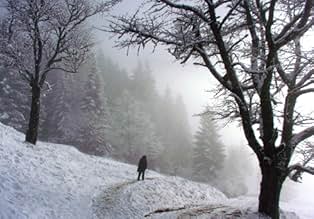
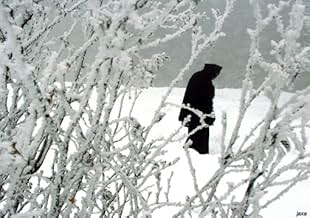
Whether it's her memory or her brother's inability to ask the tough questions this bio reveals little about Schell whose watery blue eyes remain youthful even in dotage. There's plenty of archival film clips but the addled Maria can only add so much to the conversation at the gentle urgings of her brother. The scenes involving her attempts to physically strengthen herself are mostly the work of stand ins with one exception that has "old trouper" Maria lying face down in the snow. With sleight of hand and Maria's diminished capacity Schell never really balances his documentary enough to make it revealing or coherent as a whole. He further obfuscates matters with an inexplicable conflagration staged at film's end, making things even murkier in this bio that says more about the ravages of age than Maria.
Whether it's her memory or her brother's inability to ask the tough questions this bio reveals little about Schell whose watery blue eyes remain youthful even in dotage. There's plenty of archival film clips but the addled Maria can only add so much to the conversation at the gentle urgings of her brother. The scenes involving her attempts to physically strengthen herself are mostly the work of stand ins with one exception that has "old trouper" Maria lying face down in the snow. With sleight of hand and Maria's diminished capacity Schell never really balances his documentary enough to make it revealing or coherent as a whole. He further obfuscates matters with an inexplicable conflagration staged at film's end, making things even murkier in this bio that says more about the ravages of age than Maria.


Did you know
- ConnectionsEdited from Steibruch (1942)
- SoundtracksOliver's Thema
Composed and Played by Oliver Schell
Details
- Runtime
- 1h 30m(90 min)
- Color
- Sound mix
- Aspect ratio
- 1.85 : 1
Contribute to this page
Suggest an edit or add missing content