IMDb RATING
6.9/10
3.9K
YOUR RATING

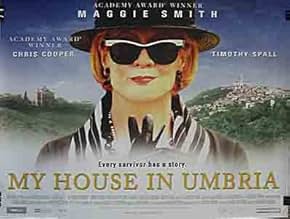
An unlikely group of people find solace and friendship after being thrown together in the wake of a terrorist attack.An unlikely group of people find solace and friendship after being thrown together in the wake of a terrorist attack.An unlikely group of people find solace and friendship after being thrown together in the wake of a terrorist attack.
- Director
- Writers
- Stars
- Won 1 Primetime Emmy
- 4 wins & 27 nominations total




Alison Cameron Adam
- General's Daughter
- (as Alison Adam)

Vittoria Colonna
- Young Woman
- (as Vittoria Colonna Di Stigliano)

- Director
- Writers
- All cast & crew
- Production, box office & more at IMDbPro
6.93.8K
1
2
3
4
5
6
7
8
9
10
Featured reviews
Gentle as the Umbrian countryside
This film would immediately appeal to anyone addicted to Maggie Smith and the idyllic Italian countryside of Umbria, but it has unexpected delights to offer in its unassuming, almost art-house, flavour, and the low-key, but affecting, performances of excellent actors Timothy Spall and Ronnie Barker. Chris Cooper is rather wooden, but his academic, unemotional character casts a strong contrast to the hapless vagaries of Maggie Smith's Emily Delahuntey, and therefore works well.
Suspension of disbelief is required for the over-imaginative plot, almost out of one of Emily's romance novels. But the pleasure of such a film is simple, and simple pleasures can entertain as much as the richer, more complex enjoyment of films it might be compared with such as 'Tea With Mussolini' (which, of course, is a much fuller film in terms of plot, characters, script, and drama). 'Enchanted April' also comes to mind as another film where the Italian countryside is almost a character of the film and much more than a backdrop.
A very pleasant interlude for a winter's afternoon, or Spring evening, and Maggie Smith is as mannered and original as ever. I especially loved her flowing clothes, which suited her and her character very well.
Suspension of disbelief is required for the over-imaginative plot, almost out of one of Emily's romance novels. But the pleasure of such a film is simple, and simple pleasures can entertain as much as the richer, more complex enjoyment of films it might be compared with such as 'Tea With Mussolini' (which, of course, is a much fuller film in terms of plot, characters, script, and drama). 'Enchanted April' also comes to mind as another film where the Italian countryside is almost a character of the film and much more than a backdrop.
A very pleasant interlude for a winter's afternoon, or Spring evening, and Maggie Smith is as mannered and original as ever. I especially loved her flowing clothes, which suited her and her character very well.
Dame Maggie will never ever put a foot wrong
I reserve 10 out of ten for "Tea With Mussolini". Dame Maggie gives another outstanding performance as a writer who encounters a bomb on a train. It was a way to introduce the 4 main characters (not including the fabulous Quinty) who we come to love. The clever voice overs weave a beautiful thread (by Maggie of course) tieing together a story of mutual care and affection. Mrs Delahunty loves a drink or 15 and her hospitality extends to anyone within her reach. Has she become a lonely old lady who just wants company in her secluded villa? Does it really matter that there may be a dark secret amongst her guests? No! The outside dinner scene the night before the girl Aimee was due to leave was stunning. I so hoped she wouldn't go and that the "family" would stay together........
I'd wath this again and again and will add it to my extensive collection. GO DAME MAGGIE!
I'd wath this again and again and will add it to my extensive collection. GO DAME MAGGIE!
A magic performance by Maggie Smith
This is quiet gem of a film. The storyline is basic, almost simplistic, but the direction allows the actors to add value where it counts.
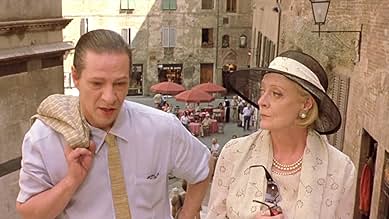
Maggie Smith is delightful as the aged authoress, with a penchant for Grappa who, after a bomb explodes on a train, offer the survivors of her compartment, recuperation at her home in Umbria.
The Italian countryside is simply magnificent, the photography of Maggie Smith's villa and its surrounds(or should I say Mrs Delahunter's villa) gives a beautiful feeling of a somewhat tired place of residence for a somewhat tired individual, who has been there and done that but in a rather upper class British way. There are the usual disparate individuals coming to terms (or not?) with their their problems and then we have the police inspector, trying to suss whether any of the 'guests' can help. Unfortunately this aspect of the film, particularly the dealings with the police inspector, adds little and if anything detracts from the story. It is a necessary component but I feel could have been integrated better.
The supporting cast, particularly Ronnie Barker and Timothy Spall, add to the ambiance of the film and its quiet charm.
Why only seven out of ten? The direction I think is a little too light in that if it were not for the calibre of the actors, this might have been a poor 'B' Movie, but perhaps that is what the Director intended by letting good acting raise the film beyond its basic storyline.
This is now shown on TV, so give yourselves a treat, forget being a film reviewer and just soak up the acting and the atmosphere. If it is not on your local TV, it is worth renting for a night - just make sure you and you partner(it is essential that you and your partner watch this together) have a nice chilled glass of a sparkling Italian wine and indulge in quiet, but thoroughly pleasant entertainment.
Maggie Smith is delightful as the aged authoress, with a penchant for Grappa who, after a bomb explodes on a train, offer the survivors of her compartment, recuperation at her home in Umbria.
The Italian countryside is simply magnificent, the photography of Maggie Smith's villa and its surrounds(or should I say Mrs Delahunter's villa) gives a beautiful feeling of a somewhat tired place of residence for a somewhat tired individual, who has been there and done that but in a rather upper class British way. There are the usual disparate individuals coming to terms (or not?) with their their problems and then we have the police inspector, trying to suss whether any of the 'guests' can help. Unfortunately this aspect of the film, particularly the dealings with the police inspector, adds little and if anything detracts from the story. It is a necessary component but I feel could have been integrated better.
The supporting cast, particularly Ronnie Barker and Timothy Spall, add to the ambiance of the film and its quiet charm.
Why only seven out of ten? The direction I think is a little too light in that if it were not for the calibre of the actors, this might have been a poor 'B' Movie, but perhaps that is what the Director intended by letting good acting raise the film beyond its basic storyline.
This is now shown on TV, so give yourselves a treat, forget being a film reviewer and just soak up the acting and the atmosphere. If it is not on your local TV, it is worth renting for a night - just make sure you and you partner(it is essential that you and your partner watch this together) have a nice chilled glass of a sparkling Italian wine and indulge in quiet, but thoroughly pleasant entertainment.
How does one heal? Alone, or in the company of friends?
A tragedy leaves five people scarred. To heal, one of the survivors invites the others to her home in the Umbrian hills. As she says, to let the beauty of Umbria be a healing balm.
Umbria is one of the stars of the film, yet with a deft hand the director and cinematographer weave its physical beauty to complement the unfolding drama of the film.
Maggie Smith delivers a stunning performance. Her character is a flawed woman who escapes into an alcoholic haze and dreamweaving to explore her soul and the souls of those around her. Ever curious, she delves into places she should not, but always with kind and good intentions.
Chris Cooper plays a persnickety scientist with understated excellence. His facial expressions are magnificent, his words economical, his performance strong.
Ronnie Barker plays a retired English military with aplomb. Beno Furmann delivers a low-key performance, his eyes and his face reflecting guilt and pain. Timothy Spall plays an Irishman with a rare sweetness. A young American girl, Emmy Clarke, plays the film's lynchpin, Aimee, with simple perfection. And Giancarlo Giannini adds a deft touch.
This is a delightful film. There is no glitz, no whiz-bang action. It is a study of the human soul, of the human capacity to deal with pain, to cope, and to survive. The acting ranges from the good to the wonderful, and it is a fabulous example of film-making.
Umbria is one of the stars of the film, yet with a deft hand the director and cinematographer weave its physical beauty to complement the unfolding drama of the film.
Maggie Smith delivers a stunning performance. Her character is a flawed woman who escapes into an alcoholic haze and dreamweaving to explore her soul and the souls of those around her. Ever curious, she delves into places she should not, but always with kind and good intentions.
Chris Cooper plays a persnickety scientist with understated excellence. His facial expressions are magnificent, his words economical, his performance strong.
Ronnie Barker plays a retired English military with aplomb. Beno Furmann delivers a low-key performance, his eyes and his face reflecting guilt and pain. Timothy Spall plays an Irishman with a rare sweetness. A young American girl, Emmy Clarke, plays the film's lynchpin, Aimee, with simple perfection. And Giancarlo Giannini adds a deft touch.
This is a delightful film. There is no glitz, no whiz-bang action. It is a study of the human soul, of the human capacity to deal with pain, to cope, and to survive. The acting ranges from the good to the wonderful, and it is a fabulous example of film-making.
Building a private corner of heaven
Sometimes it is good not to know much about a movie before watching it, so you won't have any prejudices. And it is sometimes even good to have wrong idea about what you're going to see, because you can be pleasantly surprised.
My House in Umbria sounded as it was happening on the beginning of 20th century, either in castle full of aristocrats (like Age of Innocence) or in deserted house with poor artists having no money to leave (Stealing Beauty; Sirens). Room with a View or Under Tuscan Sun came in mind too.
The train in first few minutes was obviously not a century old one. Characters were more likely to fit in Miss Marple story. And that was just a beginning of surprises.
A warm story about so different people that can successfully create a small community (instant family) is so hard to find. Unusual communities are usually shown as unstable group and intense interpersonal relations build the dynamic of group which develops the plot. (Tillsammans, Black Moon, Hair as an example.) But it is developing harmony that we see in House in Umbria, people who learn to lean on each other and help each other in the same time. Almost like an ideal early Christian community. Though religion isn't a topic of the movie, there are more Christian feelings here than in many religious movies. From loving and helping to forgiving. When one of the main characters appears to be the one guilty for all the tragedies that happened to the group, he isn't shown as a villain but rather a seduced man, a poor victim of circumstances.
The only person who is rather odd and doesn't fit is the only one that enters the movie after first five minutes (when we meet all other characters): another surprise - in an American (HBO!) movie the only person we dislike is the only (adult) American character in the movie (played incredible effectively by Chris Cooper as a superb contrast in cast). The interaction between him and the group is the only real conflict we see, and during that time our feelings towards him change. Finally we learn to accept him the way he is (as we should accept all people, says another message of the movie), because he is just that kind of man. He is not evil, he is just different. And, maybe as the only influence he was able to let himself implement, he makes an unexpected choice at the end, realizing that though this community is strange and odious to him, it's not necessary worthless, and it might be wrong forcing someone to replace this warmth and caring love with his scientifically precise but cold, emotionless world.
Something, however, didn't change from the beginning: Maggie Smith is still so Ms Marpleish that I was expecting at least one small murder which she could solve. And all people living in House in Umbria might have been imagined by Agatha Christie, actors (Barker, Spall, Dazzy, Cooper) ideal for Poirot's suspects and even Giannini as inspector could pass well as inspector Japp.
But at the end I didn't mind lack of murder. It was one of those rare TV movies that can be recommended to anyone who prefers emotions and peace instead of action and violence. It is not a soap opera, it is not cheesy; and don't let my words make you understand it is a religious movie: it is humanity in the first place that House in Umbria promotes.
My House in Umbria sounded as it was happening on the beginning of 20th century, either in castle full of aristocrats (like Age of Innocence) or in deserted house with poor artists having no money to leave (Stealing Beauty; Sirens). Room with a View or Under Tuscan Sun came in mind too.
The train in first few minutes was obviously not a century old one. Characters were more likely to fit in Miss Marple story. And that was just a beginning of surprises.
A warm story about so different people that can successfully create a small community (instant family) is so hard to find. Unusual communities are usually shown as unstable group and intense interpersonal relations build the dynamic of group which develops the plot. (Tillsammans, Black Moon, Hair as an example.) But it is developing harmony that we see in House in Umbria, people who learn to lean on each other and help each other in the same time. Almost like an ideal early Christian community. Though religion isn't a topic of the movie, there are more Christian feelings here than in many religious movies. From loving and helping to forgiving. When one of the main characters appears to be the one guilty for all the tragedies that happened to the group, he isn't shown as a villain but rather a seduced man, a poor victim of circumstances.
The only person who is rather odd and doesn't fit is the only one that enters the movie after first five minutes (when we meet all other characters): another surprise - in an American (HBO!) movie the only person we dislike is the only (adult) American character in the movie (played incredible effectively by Chris Cooper as a superb contrast in cast). The interaction between him and the group is the only real conflict we see, and during that time our feelings towards him change. Finally we learn to accept him the way he is (as we should accept all people, says another message of the movie), because he is just that kind of man. He is not evil, he is just different. And, maybe as the only influence he was able to let himself implement, he makes an unexpected choice at the end, realizing that though this community is strange and odious to him, it's not necessary worthless, and it might be wrong forcing someone to replace this warmth and caring love with his scientifically precise but cold, emotionless world.
Something, however, didn't change from the beginning: Maggie Smith is still so Ms Marpleish that I was expecting at least one small murder which she could solve. And all people living in House in Umbria might have been imagined by Agatha Christie, actors (Barker, Spall, Dazzy, Cooper) ideal for Poirot's suspects and even Giannini as inspector could pass well as inspector Japp.
But at the end I didn't mind lack of murder. It was one of those rare TV movies that can be recommended to anyone who prefers emotions and peace instead of action and violence. It is not a soap opera, it is not cheesy; and don't let my words make you understand it is a religious movie: it is humanity in the first place that House in Umbria promotes.


Did you know
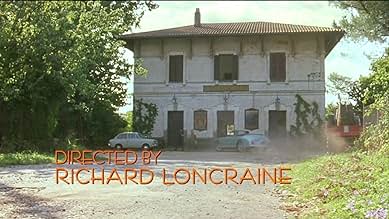
- TriviaMrs. Emily Delahunty's (Dame Maggie Smith's) car is an Alfa Romeo 6C-2500, produced between 1947 and 1953. It is a five-seat touring car popular with affluent post-war customers interested in a sporty yet comfortable vehicle.
- Quotes
Mrs. Emily Delahunty: In the garden, delphiniums were in flower. Through scented twilight, the girl in the white dress walked with a step as light as a morning cobweb. That evening she hadn't a care in the world.
Details
- Release date
- Countries of origin
- Official site
- Languages
- Also known as
- Mitt hus i Umbrien
- Filming locations
- Production companies
- See more company credits at IMDbPro
Box office
- Gross worldwide
- $1,324,900
- Runtime
- 1h 43m(103 min)
- Color
- Sound mix
- Aspect ratio
- 1.85 : 1
Contribute to this page
Suggest an edit or add missing content