
Three stories of never-ending love.Three stories of never-ending love.Three stories of never-ending love.
- Awards
- 3 wins & 7 nominations total




Kyôko Fukada
- Haruna Yamaguchi, the Pop Star
- (as Kyoko Fukada)


- Director
- Writer
- All cast & crew
- Production, box office & more at IMDbPro
7.517.8K
1
2
3
4
5
6
7
8
9
10
Featured reviews
10rooprect
Beautifully told modern-day myth
I was not aware that beauty like this existed in the world. In _Dolls_, director/writer Kitano draws us into a classical myth set in contemporary Japanese society. You may recognize elements borrowed from traditional legends (Oedipus, Arabian Nights, etc); however the central theme is, as far as I know, an original. It is the story of the "leashed beggars" who are introduced in the beginning, and whose story unfolds in a challenging, non-linear way as the film progresses.
I call it "challenging", because the viewer is compelled to pay attention to every detail in order to realize the plot and sublime theme. In that respect, it is much like _Citizen Kane_, told in fragments which the viewer must assemble and interpret. The underlying philosophy is yet more elusive and will have you debating for days afterward.
To me, what made this film superior to _Citizen Kane_ (through no fault of Orson Welles!) is the extreme use of colors and vivid scenery. The stunning backgrounds become a silent character in the movie, filling in for the sparse dialogue and periodic silence. As we evolve through Spring, Summer, Autumn and Winter, the saying comes to mind "a picture is worth a thousand words". If this review makes sense to you, then you will not be disappointed!
I call it "challenging", because the viewer is compelled to pay attention to every detail in order to realize the plot and sublime theme. In that respect, it is much like _Citizen Kane_, told in fragments which the viewer must assemble and interpret. The underlying philosophy is yet more elusive and will have you debating for days afterward.
To me, what made this film superior to _Citizen Kane_ (through no fault of Orson Welles!) is the extreme use of colors and vivid scenery. The stunning backgrounds become a silent character in the movie, filling in for the sparse dialogue and periodic silence. As we evolve through Spring, Summer, Autumn and Winter, the saying comes to mind "a picture is worth a thousand words". If this review makes sense to you, then you will not be disappointed!
deep... haven't fully digested this
3 stories of doomed relation ships. all jumbled together.
I just got done watching this movie. Yes it's slow. Yes there isn't a lot of dialogue. But this movie is brilliant. The visuals, the style, the symbolism, the utter sadness..
This isn't a movie for people who want action. or people who want dialogue. Visuals people, READ the visuals. The story is told through images.
It's beautiful. But very depressing.
HIGHLY recommended.
I just got done watching this movie. Yes it's slow. Yes there isn't a lot of dialogue. But this movie is brilliant. The visuals, the style, the symbolism, the utter sadness..
This isn't a movie for people who want action. or people who want dialogue. Visuals people, READ the visuals. The story is told through images.
It's beautiful. But very depressing.
HIGHLY recommended.
Interweaving Love stories of a Modern Era
Told through a mixture of old Japanese culture and contemporary film- making, the three separate love stories overlap and interweave cleverly but subtly, too.
Without any sullying from saccharine sweetness or melancholy, all three tales strain the credibility of what we would normally think a person's love for another would go to. But, that's the beauty - this is a dream- felt movie, exaggerating hardship and our emotions to emphasise that extraordinary bond that love can be.
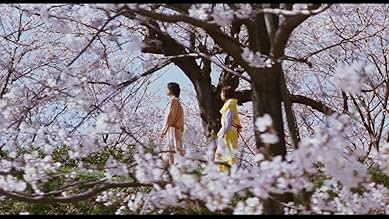
It's all interconnected by symbolisms and the extraordinary cinematography of Katsumi Yanagijima has us shimmering and floating in rose gardens, amongst autumnal leaves and under cherry-tree blossom. It is here that we take breath and sigh, after the often difficult human journeys we've just seen the characters go through. We cannot help but feel that we have journeyed with them - and perhaps suffered too.
To me, it's the first story of the jilted bride who's rejection sends her insane and the subsequent redemption and dedication from her boyfriend to the extent that they become homeless that it the most moving. Their story united the other two stories and adds symbolism at the end. The tale of the ageing Yakuza who finally feels that he needs more than his violent lifestyle to exist as a human being and the fanaticism for a young pop singer also paint vivid pictures on Japan's social and cultural agenda.
It did remind me of south Korea's 'Spring, Summer, Autumn, Winter...' in that often idyllic and contemplative gestures and activities are interspersed with morally questioning random acts that leave cavities in people's lives and the atonement needed to rectify them; or at least to try to, in a soul-satisfying way.
Without any sullying from saccharine sweetness or melancholy, all three tales strain the credibility of what we would normally think a person's love for another would go to. But, that's the beauty - this is a dream- felt movie, exaggerating hardship and our emotions to emphasise that extraordinary bond that love can be.
It's all interconnected by symbolisms and the extraordinary cinematography of Katsumi Yanagijima has us shimmering and floating in rose gardens, amongst autumnal leaves and under cherry-tree blossom. It is here that we take breath and sigh, after the often difficult human journeys we've just seen the characters go through. We cannot help but feel that we have journeyed with them - and perhaps suffered too.
To me, it's the first story of the jilted bride who's rejection sends her insane and the subsequent redemption and dedication from her boyfriend to the extent that they become homeless that it the most moving. Their story united the other two stories and adds symbolism at the end. The tale of the ageing Yakuza who finally feels that he needs more than his violent lifestyle to exist as a human being and the fanaticism for a young pop singer also paint vivid pictures on Japan's social and cultural agenda.
It did remind me of south Korea's 'Spring, Summer, Autumn, Winter...' in that often idyllic and contemplative gestures and activities are interspersed with morally questioning random acts that leave cavities in people's lives and the atonement needed to rectify them; or at least to try to, in a soul-satisfying way.
Guilt and Eternal Love
Matsumoto (Hidetoshi Nishijima) and Sawako (Miho Kanno) are in deep love for each other. When the president of the company where Matsumoto works "selects" him to marry his daughter, Matsumoto's parents force him to accept the engagement. On the wedding day, Matsumoto is informed that Sawako has attempted to commit suicide and is slow and catatonic in a clinic. Matsumoto feels guilty, and takes Sawako out of the clinic; his decision affects their lives.
The old Yakuza boss Hiro (Tatsuya Mihashi) misses his girlfriend from thirty years ago that has promised to wait for him in a park while he would chase success. When Hiro visits the park, he sees her on the bench where they used to meet each other.
The pop-star Haruna Yamagushi (Kyôko Fukada) has an obsessive fan called Nukui (Tsutomu Takeshige) that stalks her. After a car accident, Nukui makes a decision to be close to his beloved idol.
"Dolls" is a sad and depressive movie based on the Japanese Puppet Theater Bunraku that tells three tales of guilt and eternal love. Each tragic love story is disclosed in a very slow pace and supported by stunning cinematography and excellent direction and performances. Takeshi Kitano has also a magnificent work promoting the culture of his country overseas. My vote is eight.
Title (Brazil): "Dolls"
The old Yakuza boss Hiro (Tatsuya Mihashi) misses his girlfriend from thirty years ago that has promised to wait for him in a park while he would chase success. When Hiro visits the park, he sees her on the bench where they used to meet each other.
The pop-star Haruna Yamagushi (Kyôko Fukada) has an obsessive fan called Nukui (Tsutomu Takeshige) that stalks her. After a car accident, Nukui makes a decision to be close to his beloved idol.
"Dolls" is a sad and depressive movie based on the Japanese Puppet Theater Bunraku that tells three tales of guilt and eternal love. Each tragic love story is disclosed in a very slow pace and supported by stunning cinematography and excellent direction and performances. Takeshi Kitano has also a magnificent work promoting the culture of his country overseas. My vote is eight.
Title (Brazil): "Dolls"
10ChrisJPN
Visually beautiful, emotionally brutal.
It takes a while for DOLLS to sink in. Not because of the complexity of the stories intertwined through the film but because of the sheer emotional impact virtually every scene carries with it.
I won't go into details about the three stories but I can say that, above all else, DOLLS is a lesson in love and anguish and it is by far Kitano's most powerful work, even more so than Hana-bi.
I'm baffled by the negative reviews I've seen of this film since it was first aired. I wonder if it might be a case of the viewer needing to understand the way Japanese often tend to act and feel when faced with difficult or unbearable situations and without that understanding you might question if people would ever really act the way they do in DOLLS. The answer is that often they really do.
I've considered Kitano a master film maker for a long time now. The man has only ever made one film that can't be considered good (the embarrassingly poor Getting Any?) and I consider Hana-bi in particular to be one of the finest films ever made. But Dolls almost functions at another level. I don't know how often I will watch it because it genuinely is emotionally draining but this is simply a brilliant piece of film making. The cinematography is exquisite. The acting is fantastic, especially Miho Kanno who gives such a tragic, beautiful performance while hardly saying a world throughout the film. And above all, the emotional bond forged with the viewer is beyond any I think I've ever seen on film.
Anyone who truly loves film should see Dolls. Actors should see Dolls if only to see how little you really need to give in order to portray real emotion. Directors should see Dolls and learn from a master. I genuinely believe Kitano will go down in history as a genius film maker. Dolls may well be his masterpiece.
I won't go into details about the three stories but I can say that, above all else, DOLLS is a lesson in love and anguish and it is by far Kitano's most powerful work, even more so than Hana-bi.
I'm baffled by the negative reviews I've seen of this film since it was first aired. I wonder if it might be a case of the viewer needing to understand the way Japanese often tend to act and feel when faced with difficult or unbearable situations and without that understanding you might question if people would ever really act the way they do in DOLLS. The answer is that often they really do.
I've considered Kitano a master film maker for a long time now. The man has only ever made one film that can't be considered good (the embarrassingly poor Getting Any?) and I consider Hana-bi in particular to be one of the finest films ever made. But Dolls almost functions at another level. I don't know how often I will watch it because it genuinely is emotionally draining but this is simply a brilliant piece of film making. The cinematography is exquisite. The acting is fantastic, especially Miho Kanno who gives such a tragic, beautiful performance while hardly saying a world throughout the film. And above all, the emotional bond forged with the viewer is beyond any I think I've ever seen on film.
Anyone who truly loves film should see Dolls. Actors should see Dolls if only to see how little you really need to give in order to portray real emotion. Directors should see Dolls and learn from a master. I genuinely believe Kitano will go down in history as a genius film maker. Dolls may well be his masterpiece.


Did you know
- TriviaThis is the last Takeshi Kitano film to feature music by Joe Hisaishi. Kitano claimed that it became too expensive to hire Hisaishi for soundtracks while Hisaishi claimed that he didn't like the screenplay of the movie. Actually, they both had an argument about some pieces which weren't selected for the soundtrack, and where to put the others in the movie. They stopped working together since then.
- ConnectionsReferenced in Nobody Knows (2004)
Details
Box office
- Gross US & Canada
- $4,067
- Opening weekend US & Canada
- $2,067
- Dec 12, 2004
- Gross worldwide
- $5,405,725
- Runtime
- 1h 54m(114 min)
- Color
- Sound mix
- Aspect ratio
- 1.85 : 1
Contribute to this page
Suggest an edit or add missing content