IMDb RATING
7.8/10
6.1K
YOUR RATING

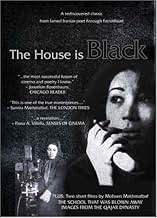
Set in a leper colony in the north of Iran, The House is Black juxtaposes "ugliness", of which there is much in the world as stated in the opening scenes, with religion and gratitude.Set in a leper colony in the north of Iran, The House is Black juxtaposes "ugliness", of which there is much in the world as stated in the opening scenes, with religion and gratitude.Set in a leper colony in the north of Iran, The House is Black juxtaposes "ugliness", of which there is much in the world as stated in the opening scenes, with religion and gratitude.
- Director
- Writer
- Stars

Forugh Farrokhzad
- Self - Narrator
- (uncredited)

Ebrahim Golestan
- Self - Narrator
- (uncredited)
Hossein Mansouri
- Self
- (uncredited)
- Director
- Writer
- All cast & crew
- Production, box office & more at IMDbPro
7.86.1K
1
2
3
4
5
6
7
8
9
10
Featured reviews
Takes you to a place no one will normally see.
Quite surprising to see a documentary like this coming from the country Iran. You wouldn't think they would be too happy of showing leper patients and colonies to the entire world but yet this documentary managed to get made and released and is still globally considered to be an important one and is seen as the beginning of Iranian new wave.
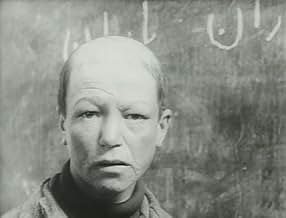
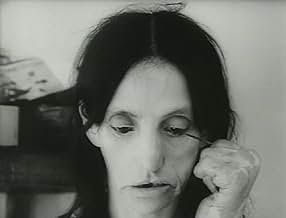
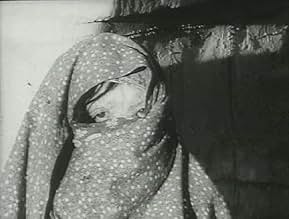
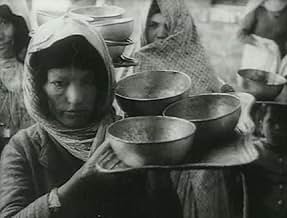
It isn't really a documentary that tries to tell or story or gets a point across but it's more one that simply shows you things with its images. The visuals tell all you need to know. It shows the effects of leprosy on people of all ages and in all its various stages, also in its most gruesome and devastating forms.
It still does provide some information on the disease, to learn the Iranian people about it and make them aware of the decease and the fact that there are leper colonies in the country, in which people are living a normal as possible life and are also receiving treatment and going to school.
In that regard this is also somewhat of a more hopeful documentary, rather than a depressing one that shows you unhappy and incredibly sick or suffering people, who are waiting for their deaths. The documentary even makes it very clear that the decease is indeed curable and is not something that is inherited, so it's something that can be banned out completely with time, when taken the right precautions.
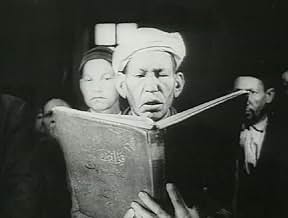
The hopefulness and thankfulness gets also illustrated by the many Koran lines that got put over the documentary and were delivered by the people with leprosy. In it they thank their God for everything they have. Or is there perhaps some reversed deeper meaning to it, trying to make a statement about the treatment of leper sufferers and the ruling power that puts them in these colonies. But this is something we often assume is the case with any movie/documentary coming out from a country that at the time suffers from an oppressing power or government. Perhaps we shouldn't read too much into it and simply appreciate the documentary for what it clearly is on its surface. Still the movie its very last shot makes me think it was a sort of a protest movie as well.
But even when you don't get that out of this documentary or don't want to read too much into things, you should be able than more to appreciate this documentary, since of the entire way it got shot and told. It has some great, beautiful, black & white cinematography, as well as a pleasant quick editing style and directing approach by female director Forugh Farrokhzad, who was better known as an important poet, during and after her lifetime, which ended abruptly in a road accident, only a couple of years after this movie.
An unique watch into a leper colony.
8/10
http://bobafett1138.blogspot.com/
It isn't really a documentary that tries to tell or story or gets a point across but it's more one that simply shows you things with its images. The visuals tell all you need to know. It shows the effects of leprosy on people of all ages and in all its various stages, also in its most gruesome and devastating forms.
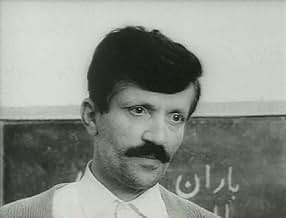
It still does provide some information on the disease, to learn the Iranian people about it and make them aware of the decease and the fact that there are leper colonies in the country, in which people are living a normal as possible life and are also receiving treatment and going to school.
In that regard this is also somewhat of a more hopeful documentary, rather than a depressing one that shows you unhappy and incredibly sick or suffering people, who are waiting for their deaths. The documentary even makes it very clear that the decease is indeed curable and is not something that is inherited, so it's something that can be banned out completely with time, when taken the right precautions.
The hopefulness and thankfulness gets also illustrated by the many Koran lines that got put over the documentary and were delivered by the people with leprosy. In it they thank their God for everything they have. Or is there perhaps some reversed deeper meaning to it, trying to make a statement about the treatment of leper sufferers and the ruling power that puts them in these colonies. But this is something we often assume is the case with any movie/documentary coming out from a country that at the time suffers from an oppressing power or government. Perhaps we shouldn't read too much into it and simply appreciate the documentary for what it clearly is on its surface. Still the movie its very last shot makes me think it was a sort of a protest movie as well.
But even when you don't get that out of this documentary or don't want to read too much into things, you should be able than more to appreciate this documentary, since of the entire way it got shot and told. It has some great, beautiful, black & white cinematography, as well as a pleasant quick editing style and directing approach by female director Forugh Farrokhzad, who was better known as an important poet, during and after her lifetime, which ended abruptly in a road accident, only a couple of years after this movie.
An unique watch into a leper colony.
8/10
http://bobafett1138.blogspot.com/
A Wiseman-esque documentary in a country that needs more cinematic attention
Even with the high popularity of foreign cinema amongst certain groups of cinephiles, I still can't help but feel one of the many countries to get shafted is Iran and its cinematic efforts. Many countries have had some kind of "New Wave" movement in cinema, where age-old, traditionalist ideas are broken and more daring, unconventional works begin to populate the cinematic market, and Iran's New Wave seems to have gotten greatly shortchanged to being a footnote. For one thing, I consistently find myself being impressed with Iranian filmmaking, as I find that for many different audiences, especially American, it offers a window to a country many people unfairly stereotype or simplify, almost as if those residing in the country are useless subhumans. Furthermore, one of the first films in Iran's New Wave, which started in the early 1960's, was Forough Farrokhzad's twenty-minute short film The House is Black, a somber, somewhat poetic documentary fixated around the Behkadeh Raji leper colony, the first of its kind in Iran. Farrokhzad films various patients in this leper colony, with occasional narrations talking about the treatment for the disease and how these colonies - while initially seeming like isolationist practices - have actually helped out in treating this disease. Leprosy is a condition that greatly affects the skin, can result in the numbing of senses, the deterioration of your immune system, and even body parts like toes and fingers to shorten and become stunted. While it's an ugly disease, Farrokhzad dares explore the beauty of human condition in The House is Black, placing a magnifying glass on this specific colony, while emphasizing that there is all different kinds of beauty in the human race. Punctuated by readings of the Old Testament, the Muslim holy-book the Qur'an, and even original poetry by Farrokhzad, The House is Black treads similar ground to the lengthy, American-made documentaries by industry-veteran Frederick Wiseman, who has erected his career off of observational documentaries on some of the most elusive institutions such as a mental hospital, a horse-racing track, and institutes that help the mentally-handicapped. Here is a film that kicks off a colossal, revolutionary movement in cinema and can be talked about on a level that isn't simply adhering to its technical innovations but its story and its commentary on human beauty and the diversity that plagues it.
Directed by: Forough Farrokhzad.
Directed by: Forough Farrokhzad.
10evolv
Don't be too quick to read this film.
One must consider why the religious emphasis is there. Everyone in this film has a message; the Iranians are known for their no frills directness when it comes to film-making.What is Farrokhzad saying about religion?
Additionally; is this film entirely about leprosy, or does it hint toward other kinds of corruption?
Is the previous reviewer certain that there were scripted scenes? I admit it's been a while so I can't clearly remember; however another rule of Iranian film is that can be very hard to distinguish the scripted and the natural. If you want to test this, check out Kiarostami's wonderful "Close-up" or Samira Makhmalbaf's "Apple". The events are real as are the actors, beyond that...well just watch em. With your thinking hat on.
OK i'm done.
Additionally; is this film entirely about leprosy, or does it hint toward other kinds of corruption?
Is the previous reviewer certain that there were scripted scenes? I admit it's been a while so I can't clearly remember; however another rule of Iranian film is that can be very hard to distinguish the scripted and the natural. If you want to test this, check out Kiarostami's wonderful "Close-up" or Samira Makhmalbaf's "Apple". The events are real as are the actors, beyond that...well just watch em. With your thinking hat on.
OK i'm done.
Alireza.Akhlaghi.Official
Masterpiece is the basis of a documentary of its time to this day.
Therefore, Iran's documentary career honor the backing of this work.
Although successful movies have been seen in the Iranian documentary cinema from the first to present day, the collaboration of Ebrahim Golestan and Dear Forough Farrokhzad with documentary subjects has largely distinguished this film.
The documentary refers to a place where lepers people are taken from quarantined villagers.
The colony of lepers living together in an enclosed environment.
The most important thing in the audience's beliefs, as the name suggests, is the mere darkness of the world of leprosy, but with a particular look it can be concluded that the general documented theme is life expectancy.
This look can be viewed from a more in-depth angle at the wedding, kids' play and classroom. Because they laugh, despite physical problems, they play and even get married.
In any case, we can not rule out that the glass of water, in addition to half empty, has full half.
Forough Farrokhzad have lived for about ten days in order to accompany and coordinate of filming, and this represents a great spirit and professional approach.
Signs indicate that the documentary has the 19th place among the fifty documentary titles in the world, in the site and sond, which is typically a special art work for Iran.
It's actually about leprosy...
I noticed some reviewers thought that MAYBE this film is about something other than its obvious subject, leprosy. Well, after seeing it, I think it's about leprosy. Sure, there's a bit more to it than that, but the film really does seem to be about lepers.
As the film progresses, various Muslim prayers and quotes from the Koran are read either by the narrator or by some of the subjects in the film. These are all about beauty and grace of God and are a sharp contrast to the lepers you see throughout the film. Although they appear very pitiful, most seem rather happy, though the film doesn't appear to try to say 'hey, it's great to be a leper'--more that in this day of medical miracles, Hansen's Disease (leprosy) IS curable and it's a horrible thing that so many go untreated. Forugh Farrokhzad (who wrote, directed and appears in the film) does not discuss WHY so many in her native Iran were untreated at the time--just that there is a SHARP contrast between the goodness of God and the plight of these people.
This film is unpleasant and will make you think. However, it's a very well made film--one that strikes the viewer with sadness and forces you to look into the ugly face of the illness.
As the film progresses, various Muslim prayers and quotes from the Koran are read either by the narrator or by some of the subjects in the film. These are all about beauty and grace of God and are a sharp contrast to the lepers you see throughout the film. Although they appear very pitiful, most seem rather happy, though the film doesn't appear to try to say 'hey, it's great to be a leper'--more that in this day of medical miracles, Hansen's Disease (leprosy) IS curable and it's a horrible thing that so many go untreated. Forugh Farrokhzad (who wrote, directed and appears in the film) does not discuss WHY so many in her native Iran were untreated at the time--just that there is a SHARP contrast between the goodness of God and the plight of these people.
This film is unpleasant and will make you think. However, it's a very well made film--one that strikes the viewer with sadness and forces you to look into the ugly face of the illness.


Did you know
- TriviaIt was the only film Farrokhzad directed before her death in 1967. During shooting, she became attached to a child of two lepers, whom she later adopted.
- ConnectionsFeatured in Cinema Iran (2005)
Details
- Release date
- Country of origin
- Language
- Also known as
- The House is Black
- Filming locations
- Production company
- See more company credits at IMDbPro
- Runtime
- 20m
- Color
- Sound mix
- Aspect ratio
- 1.37 : 1
Contribute to this page
Suggest an edit or add missing content