

Kirby Dick's exposé about the American movie ratings board.Kirby Dick's exposé about the American movie ratings board.Kirby Dick's exposé about the American movie ratings board.
- Director
- Writers
- Stars
- Awards
- 4 wins & 3 nominations total





Clark Baker
- Self - Private Investigator
- (as Clark)

- Director
- Writers
- All cast & crew
- Production, box office & more at IMDbPro
7.428.9K
1
2
3
4
5
6
7
8
9
10
Featured reviews
Maybe Not Rated, But Definitely Brilliant
The film rating system in this country is governed by a secret panel created by the major film studios more than 35 years ago. Since its inception the MPAA ratings board has functioned as a sort of 'black box' where movies go in one end and a rating comes out the other, with absolutely no transparency or public accountability of the process.
The MPAA rating system is publicly proclaimed to be merely a voluntary industry system that nobody is 'required' to follow. Unfortunately the reality of the movie industry is entirely divorced from these innocuous proclamations. The rating placed on a film largely determines who gets to see it in a theater, and what sort of publicity for the movie will be accepted by television and newspapers. An NC-17 basically guarantees that only the small sliver of the public with access to art house cinemas will ever sit down in a theater to watch the film, and that there will be virtually no way to promote the film to the public.
So, in the real world, the MPAA ratings board wields considerable unchecked power over the film industry. Since the organization is funded and sustained by the major studios, that influence becomes particularly problematic when applied to independent productions. It would be not unlike a small, local merchant having to go to board set up by Wal-Mart and Target to get approval for what he can put out on his shelves.
Kirby Dick approaches this subject with humor, insight, and tenacity. He undertakes to blow the lid off of the black box of the MPAA rating system. In the process he creates a narrative filled with both information and humor. While I will leave his methods as a surprise for the viewer, suffice it say they are both unconventional and effective.
The interspersing of interviews with independent filmmakers who have been forced to do battle with the MPAA to get their movies seen, provides an excellent counterpoint to Dick's quest to expose the star chamber like proceedings of the rating board to the light of day. As well, his side-by-side comparisons of similar films, one receiving an R rating and the other an NC-17, is illustrative of the particular biases present on the ratings board.
If you care deeply about he art of film, This Film Is Not Yet Rated is a must-see. On the other hand if you just want to learn a little something and have a good laugh, this is a good pick for you too.
The MPAA rating system is publicly proclaimed to be merely a voluntary industry system that nobody is 'required' to follow. Unfortunately the reality of the movie industry is entirely divorced from these innocuous proclamations. The rating placed on a film largely determines who gets to see it in a theater, and what sort of publicity for the movie will be accepted by television and newspapers. An NC-17 basically guarantees that only the small sliver of the public with access to art house cinemas will ever sit down in a theater to watch the film, and that there will be virtually no way to promote the film to the public.
So, in the real world, the MPAA ratings board wields considerable unchecked power over the film industry. Since the organization is funded and sustained by the major studios, that influence becomes particularly problematic when applied to independent productions. It would be not unlike a small, local merchant having to go to board set up by Wal-Mart and Target to get approval for what he can put out on his shelves.
Kirby Dick approaches this subject with humor, insight, and tenacity. He undertakes to blow the lid off of the black box of the MPAA rating system. In the process he creates a narrative filled with both information and humor. While I will leave his methods as a surprise for the viewer, suffice it say they are both unconventional and effective.
The interspersing of interviews with independent filmmakers who have been forced to do battle with the MPAA to get their movies seen, provides an excellent counterpoint to Dick's quest to expose the star chamber like proceedings of the rating board to the light of day. As well, his side-by-side comparisons of similar films, one receiving an R rating and the other an NC-17, is illustrative of the particular biases present on the ratings board.
If you care deeply about he art of film, This Film Is Not Yet Rated is a must-see. On the other hand if you just want to learn a little something and have a good laugh, this is a good pick for you too.
Refreshing. Not perfect, but pretty *expletive removed* good.
A look into the mysterious organization that decides what rating a film is given. And all sorts of other issues/arguments that are created because of it. Numerous actors, directors, producers, former MPAA raters and critics share their thoughts on the good and bad of the highly secretive organization.
I have always found "rating reasons" funny and often absurd, which is why I make my own when writing these things. I have also always liked to look into second opinion on things so maybe whoever reads my little IMDb reviews will get that from them. Since, the often disturbing fact for film makers is the rating is something they have to live with and discussing it with the people who decided it is virtually not an option. And that ultimately decides what theaters decided to show it and how much, which is essentially how films money.
The reason as many of you know for the infamous NC-17 rating is sexual content, especially if it is explicit, and that is basically the focus of this film. Which is both good and bad. Good, because they do a pretty good job comparing R-rated and NC-17 rated sex scenes which are not that different. But bad, because the issue of violence (in my opinion the most potentially objectionable thing shown in film) is attended to on a small scale. There are violent PG-13 movies (Ah-nuld's "The 6th Day" for one) which include bone breaking, dismemberment, and you get the picture. While on the other side you have R-rated movies with really minimal or much more accurate depiction of violence (Michael Mann's "Heat" for one). Yet violence as entertainment is condoned, but showing kids what violence really looks like is not. Darren Aronofsky and Kevin Smith make the film's only points on violence and it'll leave you wanting for more.
Also there wasn't a comparison to other countries rating system, just a mention that those systems are a little less absurd, which is true if you look at the rating sections on most IMDb film profiles, but some thought here would have been invaluable to this film's argument.
However, this remains a pleasantly fresh documentary that many, but mainly John Waters (haha), have been waiting for. 8/10
Not Rated, contains: sexual material and some violent clips - There are many clips of sex scenes shown, but are shown and discussed from a critical perspective. The few violent scenes are discussed in the same manner. So bring your kids! They'll finally know what "it's not for you" means.
I have always found "rating reasons" funny and often absurd, which is why I make my own when writing these things. I have also always liked to look into second opinion on things so maybe whoever reads my little IMDb reviews will get that from them. Since, the often disturbing fact for film makers is the rating is something they have to live with and discussing it with the people who decided it is virtually not an option. And that ultimately decides what theaters decided to show it and how much, which is essentially how films money.
The reason as many of you know for the infamous NC-17 rating is sexual content, especially if it is explicit, and that is basically the focus of this film. Which is both good and bad. Good, because they do a pretty good job comparing R-rated and NC-17 rated sex scenes which are not that different. But bad, because the issue of violence (in my opinion the most potentially objectionable thing shown in film) is attended to on a small scale. There are violent PG-13 movies (Ah-nuld's "The 6th Day" for one) which include bone breaking, dismemberment, and you get the picture. While on the other side you have R-rated movies with really minimal or much more accurate depiction of violence (Michael Mann's "Heat" for one). Yet violence as entertainment is condoned, but showing kids what violence really looks like is not. Darren Aronofsky and Kevin Smith make the film's only points on violence and it'll leave you wanting for more.
Also there wasn't a comparison to other countries rating system, just a mention that those systems are a little less absurd, which is true if you look at the rating sections on most IMDb film profiles, but some thought here would have been invaluable to this film's argument.
However, this remains a pleasantly fresh documentary that many, but mainly John Waters (haha), have been waiting for. 8/10
Not Rated, contains: sexual material and some violent clips - There are many clips of sex scenes shown, but are shown and discussed from a critical perspective. The few violent scenes are discussed in the same manner. So bring your kids! They'll finally know what "it's not for you" means.
Entertaining, But Not as Scathing as It Could Have Been
Kirby Dick's expose of the MPAA's ratings process only confirms the suspicion that motion picture ratings are virtually worthless, arbitrarily assigned by an elite panel who purport to have our country's children's best interests at heart, but who seem to think that an exposed breast is more harmful to them than seeing a gunshot to the head.
It's absolutely infuriating that the country's churches have a seat on the ratings boards and a say in what content is or is not suitable for consumption. It's infuriating that an NC-17 rating exists at all (the board is essentially usurping the judgement and decision-making abilities of parents), but doubly infuriating that it's used as a punishment to "encourage" filmmakers to alter their films so that they're more palatable for mainstream film goers. For a while I was kind of sad that home video and the Internet seems to be supplanting movie theatres as the preferred venue for watching films, but now I appreciate the democratizing effect of companies like Netflix and Blockbuster, who have made great filmmakers less reliant on corporate theatre chains to get their films distributed and seen.
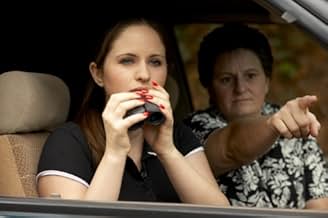
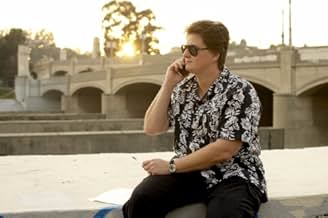
As a documentary, "This Film Is Not Yet Rated" is rather disorganized. Dick has good points to make, but their impact is blunted by tangents and off-topic tirades. Dick hires a private detective to track down the identities of the ratings board, and spends far too much of his 96 minutes following the details of that investigation. On the plus side, it's great to see directors and actors like Kimberly Peirce, Maria Bello and John Waters given a venue to vent their frustrations at the ratings practice.
One of the main points Dick makes, and one I heartily agree with, is that the ratings board focuses far more energy on censoring sex in films than they do violence, a point that is unintentionally driven home by none other than the ratings board chairman herself towards the film's climax. Dick asks why his documentary received an NC-17 rating and she cites the sexual content that appears in some of the clips of films that have received NC-17 ratings sprinkled throughout the documentary. She seems to have no problem with some of the very violent content included in clips from some of those very same movies. What an idiot.
Grade: B+
It's absolutely infuriating that the country's churches have a seat on the ratings boards and a say in what content is or is not suitable for consumption. It's infuriating that an NC-17 rating exists at all (the board is essentially usurping the judgement and decision-making abilities of parents), but doubly infuriating that it's used as a punishment to "encourage" filmmakers to alter their films so that they're more palatable for mainstream film goers. For a while I was kind of sad that home video and the Internet seems to be supplanting movie theatres as the preferred venue for watching films, but now I appreciate the democratizing effect of companies like Netflix and Blockbuster, who have made great filmmakers less reliant on corporate theatre chains to get their films distributed and seen.
As a documentary, "This Film Is Not Yet Rated" is rather disorganized. Dick has good points to make, but their impact is blunted by tangents and off-topic tirades. Dick hires a private detective to track down the identities of the ratings board, and spends far too much of his 96 minutes following the details of that investigation. On the plus side, it's great to see directors and actors like Kimberly Peirce, Maria Bello and John Waters given a venue to vent their frustrations at the ratings practice.
One of the main points Dick makes, and one I heartily agree with, is that the ratings board focuses far more energy on censoring sex in films than they do violence, a point that is unintentionally driven home by none other than the ratings board chairman herself towards the film's climax. Dick asks why his documentary received an NC-17 rating and she cites the sexual content that appears in some of the clips of films that have received NC-17 ratings sprinkled throughout the documentary. She seems to have no problem with some of the very violent content included in clips from some of those very same movies. What an idiot.
Grade: B+
Must See!
This movie is informative, but also funny and clever and kind of mind-blowing. It's not for the faint of heart because it contains quite a bit of graphic footage to illustrate the point that the ratings board is totally arbitrary (in fact, one former board member says there is absolutely no training or standards -- you come in on your first day and start to rate movies). That may seem not to matter, but it matters quite a bit to the film makers whose films are being rated and several appear in the film and make very strong arguments for why the rating their film received was unfair. There are also interviews with several other people (like a free speech lawyer) who add context to Kirby Dick's expose. This really is a must see for anyone who cares about movies and it's a lot of damn fun too.
perhaps not the 'best', but surely my favorite documentary of the year thus far
Kirby Dick is a filmmaker I wasn't aware of before This Film is Noy Yet Rated, but now he is assuredly on my radar, if only for the determination in pulling off his main idea. Like Super Size Me, this documentary has a near-gimmick to it; Dick hires a private investigator in order to track down the anonymous "parents" who decide why a movie will be rated R over PG-13, and NC-17 instead of R. This even leads- more intriguingly- into the more deceptive group of appellant board members of the MPAA. So on the one hand the filmmaker has this extremely entertaining, guerrilla-style aspect to his film, with a hand-held camera in one moment in a fast-food place that draws attention to him, and detectives who will go to any length to get results. On the other hand he gets great interviews and clips and history about the film industry in the US and the near fascist style of the MPAA in relation to the several (corporite) studios.
As a film buff this film already had my interest long before I saw it. For too long the topic of film ratings have both infuriated and fascinated me. Much of what ends up going on with filmmakers's battles with the MPAA to get their R (and indeed the difference between millions of dollars in grosses) instead of an NC-17 is staggering. That Kirby Dick get such insight out of the insiders (two of which former MPAA people, and two who kept anonymous), filmmakers, business people, and other types within the industry, is a good help to add to the basic argument that there is some inherent problems with the current ratings system in the country. This is accentuated in comparisons between NC-17 and R rated sex scenes from other movies, and clips from films that received the NC-17- or close to it- and the inanities and problems filmmakers have to get their whole vision against people who, of course, are not that creative. There are issues of gay sex in movies, how violence is vs. sex in allowance in ratings, and in the end how big business (and religion) are behind the scenes if not pulling strings then giving complete influence.
All of this as a documentary ends up being pulled fantastically off, as it does at the core what a documentary mostly should- stir up conversation about the topic(s), and at the same time still being entertained to an extent. And Kirby Dick even has a slight Michael Moore tinge to him as he goes full-on after his subjects; one of which reminded me of Moore's own confrontation with Charleton Heston, as Dick puts himself in split screen with animated caricatures of his callers. But Dick also is smart enough to put such subject matter with good doses of humor. I loved the little animated explanation as to what each rating means (including dead orphan and Almodovar jokes), and as he revealed with a near relish the full facts on every member (most shockingly the appellate members). Even if you just have a casual interest in movies it should be worth your while, and especially if you're a parent- and try not to let the NC-17 rating deter you as it's in part just in spite of the mirror put up to the ratings board itself- it's especially prudent to see. It's got both tongue-in-cheek and dead-serious aspirations, and all the while making Jack Valenti look worse and worse. It's biased, to be sure, but for the right reasons.
As a film buff this film already had my interest long before I saw it. For too long the topic of film ratings have both infuriated and fascinated me. Much of what ends up going on with filmmakers's battles with the MPAA to get their R (and indeed the difference between millions of dollars in grosses) instead of an NC-17 is staggering. That Kirby Dick get such insight out of the insiders (two of which former MPAA people, and two who kept anonymous), filmmakers, business people, and other types within the industry, is a good help to add to the basic argument that there is some inherent problems with the current ratings system in the country. This is accentuated in comparisons between NC-17 and R rated sex scenes from other movies, and clips from films that received the NC-17- or close to it- and the inanities and problems filmmakers have to get their whole vision against people who, of course, are not that creative. There are issues of gay sex in movies, how violence is vs. sex in allowance in ratings, and in the end how big business (and religion) are behind the scenes if not pulling strings then giving complete influence.
All of this as a documentary ends up being pulled fantastically off, as it does at the core what a documentary mostly should- stir up conversation about the topic(s), and at the same time still being entertained to an extent. And Kirby Dick even has a slight Michael Moore tinge to him as he goes full-on after his subjects; one of which reminded me of Moore's own confrontation with Charleton Heston, as Dick puts himself in split screen with animated caricatures of his callers. But Dick also is smart enough to put such subject matter with good doses of humor. I loved the little animated explanation as to what each rating means (including dead orphan and Almodovar jokes), and as he revealed with a near relish the full facts on every member (most shockingly the appellate members). Even if you just have a casual interest in movies it should be worth your while, and especially if you're a parent- and try not to let the NC-17 rating deter you as it's in part just in spite of the mirror put up to the ratings board itself- it's especially prudent to see. It's got both tongue-in-cheek and dead-serious aspirations, and all the while making Jack Valenti look worse and worse. It's biased, to be sure, but for the right reasons.


Did you know
- TriviaThe MPAA announced that starting in March of 2007, it will change their policy and allow filmmakers to cite other film's ratings as comparison. The MPAA will also provide information about the demographics of its board.
- Quotes
John Waters: I also heard on 'A Dirty Shame' - and I have no proof of this - that there were doctors involved... and that some of the kinkier terms, like felching and stuff, that they explained to the MPAA what felching meant. Now, I would like to have heard that because felching, no one has ever done felching. Felching is when you fuck someone and suck your own cum out of their asshole. Well, I know a lot of perverts and I don't know anyone who's done that.
- Crazy creditsAt the end credits a count of what the film shows: FUCKS(OR DERIVATIONS OF): 20 MOTHERFUCKERS: 3 HUMPS: 220 NIPPLES: 10 INTERCOURSE WITH PIE: 1 CARTOONS/PUPPETS IN SEXUAL POSITIONS: 15 SPLOSHING: 1 FELCHING: 0
- ConnectionsEdited into This Film Is Not Yet Rated: Deleted Scenes (2009)
- SoundtracksAppeals Members
Written and Performed by Michael S. Patterson (ASCAP)
Courtesy of Absynthe Zelery Music (ASCAP)
- How long is This Film Is Not Yet Rated?Powered by Alexa
Details
- Release date
- Countries of origin
- Language
- Also known as
- Los censores de Hollywood
- Filming locations
- Production companies
- See more company credits at IMDbPro
Box office
- Gross US & Canada
- $306,845
- Opening weekend US & Canada
- $30,664
- Sep 3, 2006
- Gross worldwide
- $347,240
- Runtime
- 1h 38m(98 min)
- Color
- Sound mix
- Aspect ratio
- 1.85 : 1
Contribute to this page
Suggest an edit or add missing content