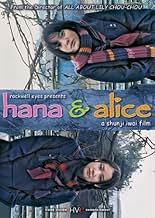
Hana & Alice
Original title: Hana to Arisu
- 2h 15m
IMDb RATING
7.2/10
5.3K
YOUR RATING

When two best friends develop a crush on the same boy, they develop a plan to trick him into dating them.When two best friends develop a crush on the same boy, they develop a plan to trick him into dating them.When two best friends develop a crush on the same boy, they develop a plan to trick him into dating them.
- Awards
- 1 win total


- Director
- Writer
- All cast & crew
- Production, box office & more at IMDbPro
7.25.3K
1
2
3
4
5
6
7
8
9
10
Featured reviews
good relationship
Hana and Alice are good friends and they do everything together. They go to the same high school and they go to school together. One day Hana falls in love with a boy who goes to the same high school. Hana deceives the boy and gets him. However, the boy loves Alice and Alice also loves him. What will happen to the relationship of the three.
I have a lot of friends but I don't have friends like Hana and Alice. They are always together and they say everything each other. They look happy and I think it is good thing. However friends sometimes become rivals. In this movie, Hana and Alice love the same man and they become rivals each other. I think moderate distance is important. We can share glad feeling or sad experience with our friends, but not interfere deeply. By watching this movie, we can rethink about the relationships with our friends.
I have a lot of friends but I don't have friends like Hana and Alice. They are always together and they say everything each other. They look happy and I think it is good thing. However friends sometimes become rivals. In this movie, Hana and Alice love the same man and they become rivals each other. I think moderate distance is important. We can share glad feeling or sad experience with our friends, but not interfere deeply. By watching this movie, we can rethink about the relationships with our friends.
Japanese magic realism
Iwai's tale of friendship and love among 15-year-olds is a bitter-sweet affair, joyous and poignant in fragments. It is not a perfect film, but still imbued with enough of Iwai's visual flair and inventiveness to raise it above much of what Japan has offered up in the first decade of the 21st century.
Hana (Anne Suzuki) is inadvertently brought to Ma-kun by her best friend Alice (Yû Aoi). She utilizes an accident to convince clumsy Ma-kun (Tomohiro Kaku) that he has lost his memory and that she is the love of his life. The lie grows out of control, and sucks in the best friend. Alice, meanwhile, has her own troubles to contend with, namely an eccentric mother, disinterested father, and an acting/modeling opportunity that continually misfires.
Like Iwai's 'Love Letter', the essentials of the plot are intricately laid out, but ultimately matter less than the shot-by-shot, scene-by-scene poetry conjured up by camera, light and direction. There is one breathtaking shot in a classroom, when Astro Boy is revealed watching brazenly over a lover's tiff. The manga motif serves to underline the heightened emotions and extreme dramatics of the tale. Similar optical playfulness is employed when Hana watches Ma-kun on the train, seemingly in conversation with his girlfriend. That shot is matched later when we are optically fooled into thinking Ma-kun will kiss Alice. It is this continual ability to surprise and delight that means the 2-hour plus running time, while self-indulgent, manages not to feel too much of an imposition.
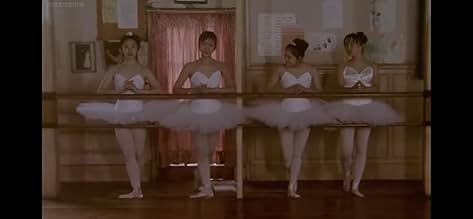
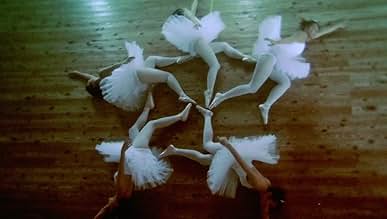
There are some wonderful set pieces to celebrate here. Alice's father making a complete mess of gifting his daughter a fountain pen is painful and hilarious. Ditto Hana's mother appearing in her undies before a shell-shocked Ma-kun. A klutzy classmate's photos of the girls in ballet tutus turn out to be magical. These scenes, stagy and contrived in the hands of a lesser mortal, are fluid, vivid and delightful when presented by Iwai.
It is testament to Iwai's genius that a host of A-listers line up for walk-on parts in this film. For example, Hirsohi Abe, used to playing leads, is practically an extra here when he shows up as the boyfriend of Alice's mum. What other living director elicits such reverence? Hana and Alice glows, quite literally. The film captures that vividness of passionate friendships and love first encountered that only the qualia of a 15-year-old knows. Ultimately, the running time is a shade too flabby to count it among Iwai's masterpieces (the plural is deliberate), but this is a subtle, complex film worthy of repeat viewing.
Hana (Anne Suzuki) is inadvertently brought to Ma-kun by her best friend Alice (Yû Aoi). She utilizes an accident to convince clumsy Ma-kun (Tomohiro Kaku) that he has lost his memory and that she is the love of his life. The lie grows out of control, and sucks in the best friend. Alice, meanwhile, has her own troubles to contend with, namely an eccentric mother, disinterested father, and an acting/modeling opportunity that continually misfires.
Like Iwai's 'Love Letter', the essentials of the plot are intricately laid out, but ultimately matter less than the shot-by-shot, scene-by-scene poetry conjured up by camera, light and direction. There is one breathtaking shot in a classroom, when Astro Boy is revealed watching brazenly over a lover's tiff. The manga motif serves to underline the heightened emotions and extreme dramatics of the tale. Similar optical playfulness is employed when Hana watches Ma-kun on the train, seemingly in conversation with his girlfriend. That shot is matched later when we are optically fooled into thinking Ma-kun will kiss Alice. It is this continual ability to surprise and delight that means the 2-hour plus running time, while self-indulgent, manages not to feel too much of an imposition.
There are some wonderful set pieces to celebrate here. Alice's father making a complete mess of gifting his daughter a fountain pen is painful and hilarious. Ditto Hana's mother appearing in her undies before a shell-shocked Ma-kun. A klutzy classmate's photos of the girls in ballet tutus turn out to be magical. These scenes, stagy and contrived in the hands of a lesser mortal, are fluid, vivid and delightful when presented by Iwai.
It is testament to Iwai's genius that a host of A-listers line up for walk-on parts in this film. For example, Hirsohi Abe, used to playing leads, is practically an extra here when he shows up as the boyfriend of Alice's mum. What other living director elicits such reverence? Hana and Alice glows, quite literally. The film captures that vividness of passionate friendships and love first encountered that only the qualia of a 15-year-old knows. Ultimately, the running time is a shade too flabby to count it among Iwai's masterpieces (the plural is deliberate), but this is a subtle, complex film worthy of repeat viewing.
enchanting look at friendship and love in high school
From the dark world of junior high school boys in "All about Lily Chou-chou", Iwai has shifted to the lighter world of two high school girls.
Hana and Alice are best friends who do everything together. Alice is the leader of the pair, so it is no surprise when Hana follows her on an early morning expedition to the train station where Alice's latest crush gets the train in to school. Alice soon tires of her crush, but Hana meanwhile has fallen for the crush's "younger brother" Miyamoto and continues the trek to the station by herself.
When the two matriculate at the high school that Miyamoto already attends, Hana enters the rakugo (traditional comedic storytelling) club of which Miyamoto is one of two members. And when one day Miyamoto takes a nasty blow to the head she enters into a crazy scheme to get him to fall in love with her.
Alice, meanwhile, has troubles of her own dealing with a flighty mother, a father she rarely sees, and trying to find herself through a series of acting and modeling auditions after being scouted on the streets of Tokyo. And when she gets roped in to Hana's scheme she finds that Miyamoto is falling for her instead, and her relationship with Hana may be threatened.
The two main characters are real and appealing, neither is one-dimensional. Miyamoto is less interesting, and his motivation less clear. The visuals, as usual, are beautiful especially the frozen fields, cherry blossom lanes, and the ballet scenes. Music always plays an important part in Iwai films (especially Swallowtail and Lily Chou-chou), and the music in this one is very good (composed this time by Iwai himself)... but there are points where it is hard to tell which is the focus, the music or the story. Sometimes it seems that the movie is there to complement the music, and not the other way around.
Also the story has a tendency to wander, and may seem long to someone looking for a straight forward love/friendship story.
Personally I enjoyed the film... and found it got better on repeated viewings... I found Aoi Yu and Suzuki Anne very easy to relate to, recalling the confusion, insecurities, etc of high school days. It is one of Iwai's more comedic pieces, and at the same time subtly moving. It was not overly simplistic or clear cut. And I especially enjoyed Aoi's ballet solo toward the end of the film (both for the solo itself and it's place in the story) I think that fans of Iwai's style will enjoy it.
Keep an eye out for the many cameos (Hirosue Ryoko (of ARITA), Osawa Takao (of Lily Chou-chou), Ito Ayumi (of Swallowtail and Lily Chou-chou)... Abe Hiroshi, Yoshioka Hidetaka (voice only)... and many others)
Hana and Alice are best friends who do everything together. Alice is the leader of the pair, so it is no surprise when Hana follows her on an early morning expedition to the train station where Alice's latest crush gets the train in to school. Alice soon tires of her crush, but Hana meanwhile has fallen for the crush's "younger brother" Miyamoto and continues the trek to the station by herself.
When the two matriculate at the high school that Miyamoto already attends, Hana enters the rakugo (traditional comedic storytelling) club of which Miyamoto is one of two members. And when one day Miyamoto takes a nasty blow to the head she enters into a crazy scheme to get him to fall in love with her.
Alice, meanwhile, has troubles of her own dealing with a flighty mother, a father she rarely sees, and trying to find herself through a series of acting and modeling auditions after being scouted on the streets of Tokyo. And when she gets roped in to Hana's scheme she finds that Miyamoto is falling for her instead, and her relationship with Hana may be threatened.
The two main characters are real and appealing, neither is one-dimensional. Miyamoto is less interesting, and his motivation less clear. The visuals, as usual, are beautiful especially the frozen fields, cherry blossom lanes, and the ballet scenes. Music always plays an important part in Iwai films (especially Swallowtail and Lily Chou-chou), and the music in this one is very good (composed this time by Iwai himself)... but there are points where it is hard to tell which is the focus, the music or the story. Sometimes it seems that the movie is there to complement the music, and not the other way around.
Also the story has a tendency to wander, and may seem long to someone looking for a straight forward love/friendship story.
Personally I enjoyed the film... and found it got better on repeated viewings... I found Aoi Yu and Suzuki Anne very easy to relate to, recalling the confusion, insecurities, etc of high school days. It is one of Iwai's more comedic pieces, and at the same time subtly moving. It was not overly simplistic or clear cut. And I especially enjoyed Aoi's ballet solo toward the end of the film (both for the solo itself and it's place in the story) I think that fans of Iwai's style will enjoy it.
Keep an eye out for the many cameos (Hirosue Ryoko (of ARITA), Osawa Takao (of Lily Chou-chou), Ito Ayumi (of Swallowtail and Lily Chou-chou)... Abe Hiroshi, Yoshioka Hidetaka (voice only)... and many others)
Only a Memory...or is it?
After the dark world of _All About Lily Chou Chou_ in which junior high kids are involved in prostitution, extortion, and murder, Iwai returns with _Hana and Alice_, a film that brings the audience to the tried and true theme of the love triangle. This time involving the young trio of Hana, Alice, and Masashi.
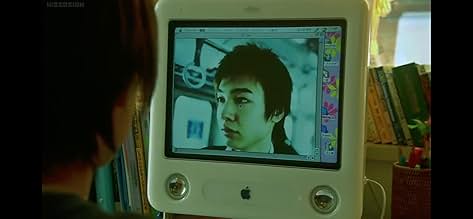
The story begins with the friends Hana, acted by Suzuki Anne, _Returner_, _9 Souls_, and Alice, Aoi Yu, _All About Lily Chou Chou_, _Harmful Insect_, crossing frozen fields to a distant train station. There, Alice shows Hana the object of her affection: a tall Japanese-American. The two girls ride the the train many times. Even taking secret photographs of biracial young man and a younger student who they assume is his half-brother.
However, eventually, Alice's crush is gone and only the younger man, whose nose is always in a book, rides the train. Alice is heartbroken, But Hana continues riding the train, affection for the young man growing in her heart.
When high school begins, Hana joins the Rakugo club because her crush, Miyamoto Masashi, is also a member of the club. One day, while following her crush, Hana witnesses Masashi hits his head hard on a garage door knocking him to the ground. Hana rushes up to him and asks him if he is okay. Masashi begins reciting some of his rakugo lines and is convinced that he is okay, but Hana asks him if he remembers her. On this he is not so clear, Hana then states that she is his girlfriend. This of course shocks Masashi and so begins the process of Masashi trying to recover from an amnesia created by the lovesick Hana.
I was worried by the premise of this film at first, because it has been done a number of times before. However, I should have had more faith in Iwai Shunji. This is truly a good film and it really tugs on the heart strings. Those of us who have had our love for someone else non-reciprocated while definitely be touched. The acting is well done. Especially that of Aoi Yu who played Tsuda Shiori, the young girl forced to be a prostitute in _Lily Chou Chou_. The music, as always, is very nice, and this time it was actually composed by Iwai Shunji.
The story begins with the friends Hana, acted by Suzuki Anne, _Returner_, _9 Souls_, and Alice, Aoi Yu, _All About Lily Chou Chou_, _Harmful Insect_, crossing frozen fields to a distant train station. There, Alice shows Hana the object of her affection: a tall Japanese-American. The two girls ride the the train many times. Even taking secret photographs of biracial young man and a younger student who they assume is his half-brother.
However, eventually, Alice's crush is gone and only the younger man, whose nose is always in a book, rides the train. Alice is heartbroken, But Hana continues riding the train, affection for the young man growing in her heart.
When high school begins, Hana joins the Rakugo club because her crush, Miyamoto Masashi, is also a member of the club. One day, while following her crush, Hana witnesses Masashi hits his head hard on a garage door knocking him to the ground. Hana rushes up to him and asks him if he is okay. Masashi begins reciting some of his rakugo lines and is convinced that he is okay, but Hana asks him if he remembers her. On this he is not so clear, Hana then states that she is his girlfriend. This of course shocks Masashi and so begins the process of Masashi trying to recover from an amnesia created by the lovesick Hana.
I was worried by the premise of this film at first, because it has been done a number of times before. However, I should have had more faith in Iwai Shunji. This is truly a good film and it really tugs on the heart strings. Those of us who have had our love for someone else non-reciprocated while definitely be touched. The acting is well done. Especially that of Aoi Yu who played Tsuda Shiori, the young girl forced to be a prostitute in _Lily Chou Chou_. The music, as always, is very nice, and this time it was actually composed by Iwai Shunji.
A Midsummer Night's...Kao
Near the end of Mike Leigh's Vera Drake (trivial spoiler about Vera Drake but not about Hana and
), Imelda Staunton's Vera stands accused, caught, guilty. For what seems an eternity of fictional if not real time, before an ever-expanding body of those-who-know, she displays, in her eyes and quivery cheeks and chin, her shame. Shame's a fluid thing, grows, changes as one's conscience, if that's what it is, reaches about for new embarrassment on which to feed, and so is Vera's face in these scenes ever-changing. Time races, falls with a dreadful weight, but at the same instant it stops dead. Such embarrassments eventually slip our minds. Everyday rote erases them. We banish, delete, forget them, as well as we can, but they never exactly end. Each moment itself is something like eternal.
Elsewhere I've remarked the map-ability of Iwai's films: Uchiage hanabi, shita kara Miruka? Yoko kara Miruka? (1993) with both it's title conundrum and the on-the-road debarkation point for the alternate endings; April Story with its out-of-place fly casting; Love Letter in which doppelganger heroines overlap in space but never meet; Picnic whose protagonists walk the top edge of a wall that miraculously traverses their city; Yentown where the map one lives represents one's caste. Lily Chou Chou I haven't found time yet to re-watch and digest, but its characters travel, both locally and afar to that "Disney Jungle Ride" bit, and its concert throng near the end moves in a single direction that killer moves against. Motion needs map-able space. Iwai playing a film "director," in Hideyaki Anno's Ritual, walks/strolls/travels into and through the story and the maybe-mad girl's space. Undo has none of this. You hardly know where one set is in relation to another, as if linear space has collapsed into Moemi's bindings.
In Hana and Alice as in Undo, only the protagonists connect sets: trains, school, parkland, dance floor, etc. If anything in it is map-able, it's the two girls', and deadpan Miyamoto's, faces. Whether she's scheming, at a loss, or caught, Hana's face quivers with unceasing thought, at least as credibly and no less momentously than Vera caught. Like many liars, Hana thinks too much. She hasn't mastered yet the art of not thinking, seems not to realize the ease and simplicity of truth-telling. We see, much more often than hear, what Hana is thinking. Though the film's full of music, Hana's pre-verbal, or anti-verbal, thoughts reach us as if in dead silence, in what sounds like silent-film silence. Iwai's camera and his choice of close-ups of both girls suggest he knows this. I imagine Iwai cast Suzuki as Hana because of this silent ability. She'd displayed it to less merit in Returner. Aoi plays Alice less externally, or at least less facially. (My terminology's confusing. Alice is more of an introvert, perhaps, so uses body language which is external. But her face, early on, reveals less.) Note her mime-like dance in the animal suit: She slowly, magically reenters Hana's and our perception. At first Hana and we, for Hana, don't know whether to be annoyed. Is it one of those annoying stalking mimes? Is it sane?
Besides in faces, map Hana and Alice in Time. Amnesia's about losing Time, time already used, already spent, used up, gone, and so wasted if not remembered. The plot's machinations, Miyamoto's beyond-belief credibility, his in and out, on and off belief in the branchings of Hana's out-of-control lie, bend Time. Hana hands him a past, a chunk of time, then implicates Alice in yet another. Riding Hana's materialized daydream, Miyamoto travels to and fro, back and fore, but not in space. Hana and Alice is Iwai's La jetée.
But guess what! The film is hilarious. I can't think offhand of another film as simultaneously pictorial, euphonious, and simply funny. The humor is anything but situational. It has the warming reality of the everyday, of things and people we all know, because it transpires in the two girls cheeks, brows, and eyes.
There was a temptation to call H & A All About Lily Chou Chou's light antithesis. I don't feel that, choose not to. For touch points, besides La jetée and silent film, look maybe to Shakespeare's comedies, maybe even to his noisome clowns.
Elsewhere I've remarked the map-ability of Iwai's films: Uchiage hanabi, shita kara Miruka? Yoko kara Miruka? (1993) with both it's title conundrum and the on-the-road debarkation point for the alternate endings; April Story with its out-of-place fly casting; Love Letter in which doppelganger heroines overlap in space but never meet; Picnic whose protagonists walk the top edge of a wall that miraculously traverses their city; Yentown where the map one lives represents one's caste. Lily Chou Chou I haven't found time yet to re-watch and digest, but its characters travel, both locally and afar to that "Disney Jungle Ride" bit, and its concert throng near the end moves in a single direction that killer moves against. Motion needs map-able space. Iwai playing a film "director," in Hideyaki Anno's Ritual, walks/strolls/travels into and through the story and the maybe-mad girl's space. Undo has none of this. You hardly know where one set is in relation to another, as if linear space has collapsed into Moemi's bindings.
In Hana and Alice as in Undo, only the protagonists connect sets: trains, school, parkland, dance floor, etc. If anything in it is map-able, it's the two girls', and deadpan Miyamoto's, faces. Whether she's scheming, at a loss, or caught, Hana's face quivers with unceasing thought, at least as credibly and no less momentously than Vera caught. Like many liars, Hana thinks too much. She hasn't mastered yet the art of not thinking, seems not to realize the ease and simplicity of truth-telling. We see, much more often than hear, what Hana is thinking. Though the film's full of music, Hana's pre-verbal, or anti-verbal, thoughts reach us as if in dead silence, in what sounds like silent-film silence. Iwai's camera and his choice of close-ups of both girls suggest he knows this. I imagine Iwai cast Suzuki as Hana because of this silent ability. She'd displayed it to less merit in Returner. Aoi plays Alice less externally, or at least less facially. (My terminology's confusing. Alice is more of an introvert, perhaps, so uses body language which is external. But her face, early on, reveals less.) Note her mime-like dance in the animal suit: She slowly, magically reenters Hana's and our perception. At first Hana and we, for Hana, don't know whether to be annoyed. Is it one of those annoying stalking mimes? Is it sane?
Besides in faces, map Hana and Alice in Time. Amnesia's about losing Time, time already used, already spent, used up, gone, and so wasted if not remembered. The plot's machinations, Miyamoto's beyond-belief credibility, his in and out, on and off belief in the branchings of Hana's out-of-control lie, bend Time. Hana hands him a past, a chunk of time, then implicates Alice in yet another. Riding Hana's materialized daydream, Miyamoto travels to and fro, back and fore, but not in space. Hana and Alice is Iwai's La jetée.
But guess what! The film is hilarious. I can't think offhand of another film as simultaneously pictorial, euphonious, and simply funny. The humor is anything but situational. It has the warming reality of the everyday, of things and people we all know, because it transpires in the two girls cheeks, brows, and eyes.
There was a temptation to call H & A All About Lily Chou Chou's light antithesis. I don't feel that, choose not to. For touch points, besides La jetée and silent film, look maybe to Shakespeare's comedies, maybe even to his noisome clowns.


Did you know
- TriviaAlthough released almost 11 years before The Murder Case of Hana & Alice (2015), this movie actually serves as the sequel.
- Quotes
Setsuko "Alice" Arisugawa: I saw 'Hannibal' on satellite last night.
Hana: So did I.
Setsuko "Alice" Arisugawa: I was scared.
Hana: Isn't he creepy?
Setsuko "Alice" Arisugawa: Yeah. Don't you think real people are scarier... than zombies and ghosts?
- ConnectionsFeatures Horus: Prince of the Sun (1968)
- How long is Hana & Alice?Powered by Alexa
Details
- Release date
- Country of origin
- Languages
- Also known as
- Hana and Alice
- Filming locations
- Mizuki, Chigasaki, Kanagawa, Japan(trainstation)
- Production companies
- See more company credits at IMDbPro
Box office
- Gross worldwide
- $654,448
Contribute to this page
Suggest an edit or add missing content