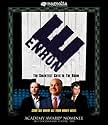
Enron: The Smartest Guys in the Room
- Episode aired Oct 13, 2005
- R
- 1h 49m


Corporate audio and videotapes tell the inside story of the scandal involving one company's manipulation of California's energy supply and its, and how its executives wrung a billion dollars... Read allCorporate audio and videotapes tell the inside story of the scandal involving one company's manipulation of California's energy supply and its, and how its executives wrung a billion dollars out of the resulting crisis.Corporate audio and videotapes tell the inside story of the scandal involving one company's manipulation of California's energy supply and its, and how its executives wrung a billion dollars out of the resulting crisis.
- Director
- Writers
- Stars


- Self
- (archive footage)


- Self
- (as Jim Chanos)


- Self
- (archive footage)

- Self - Young man the stripper dances in front of
- (as Reggie Deets II)


- Director
- Writers
- All cast & crew
- Production, box office & more at IMDbPro
Featured reviews
An Entertaining Introduction to A Business Scandal that Affects Everyone
While the film leaves out some of the technicalities, it does an entertaining job of combining talking heads, lively graphics, news clips, incendiary dramatizations (such as of busy, noisy shredders), company documents and whistleblower-obtained stunningly damning audiotapes, web broadcasts and video tapes to document how a major company could grow out of smoke and mirrors to become the largest bankruptcy of its time, bringing down countless victims with it.
Establishing an arresting time line that serves like a ticking clock, the film is excellent at visually demonstrating how other corporations, particularly lenders and brokerages, profited from not revealing the truth.
The filmmakers particularly gleefully accent the company's political connections, going beyond the popular "Kenny Boy" friendship of CEO Ken Lay with George W. to extend to the Bush clan and inner circle, including the Federal Reserve's Greenspan, to hone in on how it fomented self-serving deregulatory policies, with a special emphasis on California and its frighteningly manipulated energy, and resulting political, crisis.
The filmmakers do make some of the talking heads seem objective when they actually have their own profitable axes to grind, such as shareholder attorney William Lerarch, and let the Johnny-come-lately legislators look a little too good as they puff up at the Congressional hearings.
A bit too much is made of the executives as former nerds, as these guys weren't computer geeks; rather there were class issues at work that are hinted at in the brief biographies in the culture of traders who were entrepreneurally lifting their incomes by gambling. At the same time, whistleblower Sherron Watkins's actions and motivations are not emphasized as particularly heroic in going against the company's macho culture (the many Deep Throats cited in the credits as anonymous sources are amusing).
A delightful range of popular music is also used to emphasize points, from Tom Waits to "God Bless the Child," as well as popular culture references from "The Simpsons" to "Gordon Gekko"'s defining quote also keep the film from just being like a dry episode of PBS's "Frontline". I presume the title itself is meant to recall the classic laying bare of the men who got the U.S. mired in the Viet Nam War, Halberstam's "The Best and The Brightest." The film does slight the clear-eyed folks who were warning about the declining ethics in the accounting profession and the lack of fundamentals in the bubble investments as Enron and its ilk were on the way up -- and who were vilified in the business community for their Cassandra pronouncements.
The film does make the Enron situation seem too unique. While personalizing the stories around the head people at the company --especially as they transformed from geeks to power brokers --makes the story easier to follow in a movie, it makes this corporate culture unusual. It also lets off the management consultants, let alone the business schools' emphasis on stock price analysis, who were cheerleaders for these techniques; McKinsey and Harvard spawned at least one of the colorful figures profiled here.
This kind of egotistical "I'm top of the world, Ma" attitude in business was also typical of the Rigas at Adelphia in Pennsylvania, Ebbers at WorldCom in Mississippi, and Scrushy at HealthSouth in Birmingham, Alabama, and the just dethroned Greenberg at AIG scandal in the heart of Wall Street, shows that enough chutzpah and money can deflect anyone, anywhere, using the same techniques -- a ruthless, macho corporate culture that forces out anyone who disagrees, browbeating regulators, hiding secret accounts and spreading around manipulative corporate philanthropy.
At a NY Financial Writers' Association panel as the Enron story was breaking, they did an introspection that unfortunately is not provided by the film, on why they didn't report earlier that the emperor had no clothes (as one of the sub-chapters in the film puts it). The consensus was that the journalists realized they mistrusted the motives of the warners more than they doubted the motives of the corporate executives who were issuing the bravado reports and deflecting timid questions, even though the journalists too late realized that the executives had way more to gain than the Chicken Littles and they were intimidated by their own lack of accounting expertise to recognize the sliding slope of accounting ethics (though the film does very briefly touch on how the CPAs early on accommodated the bubble by too easily officially approving the now notorious "mark to marketing" accounting procedure that permitted the booking of goods not yet obtained, though there's no mention of casually lax acceptance of external auditing firms to simultaneously do internal auditing and profitable consulting).
McLean, a co-writer of the film whose book is the premise for most of the film, did supplement the film in an interview on Charlie Rose that should be included on the DVD by naming the "shorter" (an investor who gains if prices go down) who first had tipped her off, though she didn't there mention the local Houston business reporter she cited at the panel who was the very first one to report suspicion of Enron's numbers. She also clarified on the show that while her article in Business Week is now seen as the beginning of Enron's end, her actual findings were very mildly stated, particularly compared to the full truth as it came out, and only aroused suspicions by the ferocity of the company's denials.
Even as the film concludes with an it could happen again warning, with no analysis if Sarbanes-Oxley will help, it places too much emphasis on the uniqueness of Enron.
Very very interesting... must see.
Thankfully, I was quite wrong. I found the film to be both factual and evenhanded, and it's portrayal of the key Enron players provided depth, character, and even compassion at times.
There's no doubt that Enron was the defining business fiasco of the last 20 years, but what struck me about this films presentation (and which was wholly lost in most of the media coverage) is that its downfall was not entirely driven by greed. At least, not at the highest levels of the firm.
The primary contributing factor to the disaster was, in fact, ego. These guys didn't wake up in the morning looking to rip off their employees and shareholders and tank the company. They had (what they thought was) a revolutionary idea on how to sell energy in the marketplace. As far as they could tell, it was dynamite on paper, and they had their egos so wrapped up in these ideas, that they became completely blind to the reality that they were hemorrhaging capital because it simply didn't work in reality. It got to the point that in order to conceal their intellectual failure, they embarked on ever-more radical measures to hide the firms losses. Mind you, they all seemed to genuinely believe that eventually these new ideas would begin to work, and they would recoup all the losses and then some. At times, it seemed to resemble the attitude of a gambler who can't get up from the card game because he's waiting for that one perfect hand that never comes, and loses the house and car in the process. It's not what he intended when he sat down, but its the result nonetheless.
Of course, Enron was cheered on by the irrational exuberance of the late-90's boom market, which only served to enable this attitude, and in fact attracted a lot of genuinely greedy and sleazy traders, brokers and banker who were eager to make a buck off of the Enron business model.
Which leads me to the one disappointment that I have with this film, which is that it omits entirely the role that the Clinton Administration played in fostering the irrationally exuberant Wall Street culture of the era. If Ken Lay and Jeff Skilling were the degenerate gamblers, Bill Clinton was the enabling wife who never put her foot down and demanded he get help or get out. (The film, does, however detail the business dealings that Enron had with the Bush family... they should have either left politics out, or been more evenhanded in this regard.) What is remarkable, however, is the relatively short amount of time this all occurred in. Enron went from modest pipeline company, to energy juggernaut to total bust in, what, 5-6 years? Amazing.
Some will walk away from the Enron story convinced that the system will never work. I, however, see it differently. To me, the system worked. If it has proved anything, it's that no matter how rich, powerful or influential you are, you simply can't cook the books for very long in a free market environment before everything comes crashing down around you in a big way. The Enron story should make powerful executives think twice when tempted to do something unethical, regardless of intention. Which really should be a comforting thought for everyone.
See this film. It's definitely worth the time.
Energetic Hubris.
Alex Gibney's absorbing documentary, based on the book co-authored by the first prominent whistle blower and Enron executive, Bethany McLean, begins with the tragic concept of the pervasive fatal flaw, hubris, and applies it meticulously to the tragic figures Ken Lay, Andrew Skilling, and Andrew Fastow. Tragic in the sense that those talented executives allowed the company to fall while they lined their pockets with the assets of its 20, 000 employees, countless investors, and the state of California, which suffered mammoth losses due to its new energy deregulation and manipulation of that energy by Enron.
The documentary succeeds in explaining the crimes while lacing the story with just enough drama to make suspenseful the outcome we all know before we view the film: Fastow is doing time, Lay and Skilling await trial, former employees work past their retirement ages because their pensions have been gobbled up by the crimes, and California now regulates its energy but still suffers from massive deficit.
The documentary fails when it manipulates its audience with background songs that dramatize the obvious ironies, e.g.' "Son of a Preacher Man" plays during Lay's biography. Such skewering is almost impossible to avoid once a documentarian picks up a camera and selects the images; what he doesn't have to do is underscore the ironyThe players will do it all on their own. It also seems to hold back on the cozy relationship between Lay and the Bush family. Perhaps another time.
Meanwhile, this documentary is compelling viewing of a tragedy about a company, as one of the talking heads describes, that was "a house of cards . . . built over a pool of gasoline." It is enjoyable to see it figuratively torched like the House of Wax.
This movie is a must-see
Boys gone amok
In the eighties we called people like the Enron Executives "Masters of the Universe." Now we can call at as we see it, Over grown former nerds with no morality and no conscience.
.

Did you know
- TriviaAmong the protesters who disrupt the meeting with Jeff Skilling at San Francisco's Commonwealth Club is Marla Ruzicka, who was killed on 16 April 2005 in Iraq by a suicide bomber. She founded CIVIC (Campaign for Innocent Victims of Conflict) which worked to help the victims of the war in Iraq and she was a former Global Exchange activist.
- Quotes
Gray Davis: [upon being asked whether the rumors that he was responsible for the black outs in California are just a plot by the Republican party to get him recalled]
[shouts]
Gray Davis: Hello!
- Crazy creditsSpecial thanks includes "all the `Deep Throats' - you know who you are!"
- ConnectionsFeatured in 2006 Independent Spirit Awards (2006)
Details
- Runtime
- 1h 49m(109 min)
- Color
- Sound mix
- Aspect ratio
- 1.85 : 1