IMDb RATING
6.2/10
1.3K
YOUR RATING

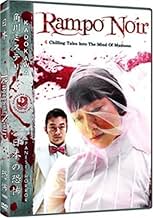
This four-part anthology takes its cue from the short fiction of legendary horror writer Edogawa Rampo.This four-part anthology takes its cue from the short fiction of legendary horror writer Edogawa Rampo.This four-part anthology takes its cue from the short fiction of legendary horror writer Edogawa Rampo.
- Awards
- 1 win total


Ryûhei Matsuda
- Tarô Hirai (story "Imomushi")
- (as Ryuuhei Matsuda)


Tamaki Ogawa
- Fuyu Kinoshita
- (segment "Mushi")

Nao Ômori
- First Lieutenant Sunaga (story "Imomushi")
- (as Nao Oomori)


6.21.3K
1
2
3
4
5
6
7
8
9
10
Featured reviews
Creepy and Kinky Art!
"Rampo Noir" (Rampo Jigoku) is a gorgeous, creepy, kinky to the extreme as well as beautifully conceived and well crafted compendium of four stories by Japanese author Edogawa Rampo (a transliteration of Edgar Allan Poe and the nom de plume of Taro Hirai): "Mars Canal", "Mirror Hell", "The Caterpillar" and "Crawling Bugs". "Mars Canal" bookends the program and launches us into the three other nightmares. "Mirror Hell" was fun and simply GORGEOUS to look at! "The Caterpillar" (which is the pet name a woman has given her husband for horridly KINKY reasons!) totally CREEPED me out! "Crawling Bugs" was dizzyingly lovely to look at, though quite unnerving as the lead character's 'dilemma' was eerily reminiscent of one of my best friends! It has been released on DVD (region 3) in Japan and I. Must. Have. IT!!
Stylish but sickening
This film, an adaptation of four (really three) short stories penned by Edogawa Rampo, is unfortunately more stomach-churning than it is stylish. Given the uniform elegance of RAMPO NOIR's composition and design, that makes the ick factor pretty high. After the relative subtlety and effectiveness of the first piece, "Mirror Hell," the ensuing parade of erotic leeches, quadriplegic sex, sadism, mutilation and necrophilia should be enough to put almost anyone off their dinner. Potential viewers, you've been warned. The images, which are beautiful, will stay with you, but they'll probably inspire a queasy stomach more than they will a sense of fascination and horror. Here's hoping it was more palatable on the page.
Effects or defects??? Some explain what.
I thought the movie was... interesting. Some parts a little too artsy. I'm not really here to debate the movie but, to ask about the warning in the beginning. What are the EXACTLY talking about pertaining the "intended effects"? I'm not sure if they're talking about the blockey distorted appearance of a scratched DVD or if its just the one I'm watching. After a few minutes it gave me a little headache. I thought that that was what they were warning about until towards the end when the guy in crawling bugs says, "what was I thinking?" then the movie was "normal". I had rented the movie from Blockbuster and it was brand new and undamaged.
As challenging as it is horrifically disturbing
Exploring the darker edges of eeriness, sexuality, and bizarre, horror-esque art with unconventional layers of psychological deviance, Rampo Noir is challenging as it is horrifically disturbing, presenting the writer's fiction in radical ways, hoping to push boundaries but never quite succeeding. Partly due to the violent, sadomasochistic sex scenes that often crop up, but also because it's not always immediately clear what the filmmakers are trying to say, thanks to their ponderously slow approach. There's only so much time you can spend on artistically rotting corpses and auditory excess before you're going to annoy someone, but the film remains consistently refreshingly and cinematically striking with an unabashed eroticism and willingness to plunge into the dark realms of Rampo's work. Each director breathes life into their own respective take on the material, all have a unique visual style, which help draw you into their strange worlds, be it exploitation or arthouse; each segment carves its own identity, although, admittedly, some more to my taste than others, with the high points being the two segments that bookend the feature and, ironically, come from the two newcomers. Suguru Takeuchi delivers a full-on avant-garde experimental and introspective short, full of evocative imagery in what is a beautifully surreal and breathtakingly stunning, if bitterly short, dive into existential dread. Atsushi Kaneko, meanwhile, more well-known for his status as a mangaka, makes an impressive directorial debut with the finale, blending his usual sensibilities with a lush cinematic intensity and plenty of darkly comedic moments. That being said, the other two segments are far from a slouch. Adapting his third Rampo tale, Akio Jissoji's usual keen eye for composition and signature stylistic flourishes turn his short into a mesmerising fever dream. Hisayasu Sato, meanwhile, delivers a grimly gruesome tale, taking Rampo's work to its most grotesque extreme, containing mutilation and plenty of bodily fluids. It's presented with an unusual use of light and colour, as unsettling as it is provocative, a visceral commentary on physical and emotional dependency. Despite the mismatched feel of the whole affair, Rampo Noir's hallucinogenic approach to narrative and visuals is nothing short of invigorating.
10olz_15
This achieves exactly what it sets out to do.
I also happened to have seen this at the very same Japanese festival in Sydney, and I enjoyed it quite a lot.
These shorts are sick. The writer behind the original stories may have a disturbed and twisted mind for inspiring these disgusting tales of torture and obsession, and love (love which is so alien it doesn't really fit the word).
Of course many stories by Edogawa Rampo have been banned already in Japan for that very same reason.
However, these shorts were great examples of how dark cinema can get. These push right to the boundaries, where sense, reason, and any sort of real point is left behind in its own madness. And it does try to make points. They draw parallels between conscious and subconscious, reality and delusion. The surreal images and narratives destroy the boundaries between the two and the flow freely into each other. The film challenges what art really is. Whether it's a beautiful reflection, a horrific image, or something that is both beautiful on the outside but dead and corroded inside. Here we see that mirrors have the potential to be god, trapping us in its frame. Love is horrific. Horrific. These shorts have the potential to repel you in disgust, or to draw you in and lose yourself in its insanity, and for that reason alone it is a powerful work of art.
The four individual directors obviously had a daunting task ahead of them trying to make this. They had to present these tales honestly, and also visually uncover the madness behind them. I don't know about the former, as I haven't read any of Rampo's stories, however visually these films are amazing too. Especially Mirror Hell, which has amazing shots of the actors constantly reflected in dozens of different mirrors.
You leave the film feeling as if the makers had thrown a lot of violence and sex at you stylishly but with no real substance. The shorts are too surreal and disjointed to follow through with any of the points they try to make. The are no answers to be found in these shorts, and nothing profound to learn or re-learn. However, these shorts were never made with such intentions. They were made to show the madness of Edogawa Rampo. They were made to disgust you, and to provoke you. And they mastered that exceptionally.
Whether you like it or not, you won't forget this one.
These shorts are sick. The writer behind the original stories may have a disturbed and twisted mind for inspiring these disgusting tales of torture and obsession, and love (love which is so alien it doesn't really fit the word).
Of course many stories by Edogawa Rampo have been banned already in Japan for that very same reason.
However, these shorts were great examples of how dark cinema can get. These push right to the boundaries, where sense, reason, and any sort of real point is left behind in its own madness. And it does try to make points. They draw parallels between conscious and subconscious, reality and delusion. The surreal images and narratives destroy the boundaries between the two and the flow freely into each other. The film challenges what art really is. Whether it's a beautiful reflection, a horrific image, or something that is both beautiful on the outside but dead and corroded inside. Here we see that mirrors have the potential to be god, trapping us in its frame. Love is horrific. Horrific. These shorts have the potential to repel you in disgust, or to draw you in and lose yourself in its insanity, and for that reason alone it is a powerful work of art.
The four individual directors obviously had a daunting task ahead of them trying to make this. They had to present these tales honestly, and also visually uncover the madness behind them. I don't know about the former, as I haven't read any of Rampo's stories, however visually these films are amazing too. Especially Mirror Hell, which has amazing shots of the actors constantly reflected in dozens of different mirrors.
You leave the film feeling as if the makers had thrown a lot of violence and sex at you stylishly but with no real substance. The shorts are too surreal and disjointed to follow through with any of the points they try to make. The are no answers to be found in these shorts, and nothing profound to learn or re-learn. However, these shorts were never made with such intentions. They were made to show the madness of Edogawa Rampo. They were made to disgust you, and to provoke you. And they mastered that exceptionally.
Whether you like it or not, you won't forget this one.


Did you know
- ConnectionsFeatured in WatchMojo: Top 10 Fantastic Asian Movies You Have Not Seen (2018)
- SoundtracksAir du miroir 'Dis-moi que je suis belle' from 'Thais'
Written by Jules Massenet and Louis Gallet
Performed by Usuki Ai and Motosugi Mio
- How long is Rampo Noir?Powered by Alexa
Details
Box office
- Gross worldwide
- $217
Contribute to this page
Suggest an edit or add missing content