IMDb RATING
6.2/10
1.3K
YOUR RATING

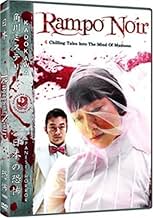
This four-part anthology takes its cue from the short fiction of legendary horror writer Edogawa Rampo.This four-part anthology takes its cue from the short fiction of legendary horror writer Edogawa Rampo.This four-part anthology takes its cue from the short fiction of legendary horror writer Edogawa Rampo.
- Awards
- 1 win total


Ryûhei Matsuda
- Tarô Hirai (story "Imomushi")
- (as Ryuuhei Matsuda)


Tamaki Ogawa
- Fuyu Kinoshita
- (segment "Mushi")

Nao Ômori
- First Lieutenant Sunaga (story "Imomushi")
- (as Nao Oomori)


6.21.3K
1
2
3
4
5
6
7
8
9
10
Featured reviews
Sato Rules. So messed up it's brilliant!
Rampo Noir is one of my favorite horror anthologies, sharing a similar disturbing, visceral feeling to Subconscious Cruelty (2000). (Check out my review for it if you have time.) The film is a fascinating, yet uneven, collection of four stories, each directed by a different filmmaker adapting a tale by Rampo Edogawa. The only constant thread is actor Tadanobu Asano, who takes on a new role in each segment, from a naked wanderer to a private detective. The movie has almost giallo-esque vibes, aesthetically and argumentatively, a strange cocktail of David Cronenberg's body horror and the aesthetic of films like Heroic Purgatory (1970) (check out my review if you have time here) and House (1977).
The directors involved are an interesting mix of seasoned artists. Legendary Akio Jissoji, whose "Buddhist Trilogy" is a work I adore and recommend, and whose name you might also have seen on the famous Ultraman TV series and his acclaimed Art Theatre Guild films, directs one segment. Another is from Hisayasu Satô, an icon of pinku cinema. Mangaka Atsushi Kaneko and director Suguru Takeuchi round out the quartet.
Of the four, the two standout chapters are Takeuchi's opening segment, "Mars Canal," and Satô's "Caterpillar." "Mars Canal" is a short, silent parable about a naked, vulnerable man at a lake, almost like a piece of living art. The simplicity and atmosphere make it a hypnotic start to the film.
The Metamorphosis of Caterpillar: The most absurd and grotesquely captivating storyline is "Caterpillar," the complete story of a war hero who returns home completely dismembered-a quadruple amputee, mute, and facially scarred. His wife, the artist, treats him not as a husband but as a living canvas. She dresses him, feeds him, and parades him around, obsessing over her creation. It's a horrific allegory about control, love, and the monstrous ways in which we can possess another. The wife's affection is a twisted kind of horror; her love is a form of artistic subjugation. She sees her husband as a prize, a bizarre specimen she has reshaped and kept in a jar. In her mind, she's transforming him from a "caterpillar" of war into something beautiful and powerless. The ending climax of this story is a shocking, visceral and fully embracing the erotic grotesque themes of the source material.
The Mirror and the Bugs:
The other two segments, Jissoji's "Mirror Hell" and Kaneko's "Crawling Bugs," are also ingenious but less compelling. "Mirror Hell" follows a detective as he investigates a series of mysterious deaths caused by a man who creates mirrors that seem to burn people's faces off. This segment explores obsession with self-image and the danger of perspective.
"Crawling Bugs" is a strange, unsettling tale of a man with a mental illness that makes him feel like bugs are crawling on his skin whenever he's near other people. He becomes obsessed with a beautiful theater actress, fantasizing about a life with her. This story is an unsettling, dirty dive into the themes of idolization and loneliness, where the protagonist creates his own reality to escape the horrors of the one he's trapped in.
Overall, Rampo Noir is a must-watch for diehards of the directors here and also for anyone who enjoys Japanese horror and isn't afraid of a little absurdity.
The directors involved are an interesting mix of seasoned artists. Legendary Akio Jissoji, whose "Buddhist Trilogy" is a work I adore and recommend, and whose name you might also have seen on the famous Ultraman TV series and his acclaimed Art Theatre Guild films, directs one segment. Another is from Hisayasu Satô, an icon of pinku cinema. Mangaka Atsushi Kaneko and director Suguru Takeuchi round out the quartet.
Of the four, the two standout chapters are Takeuchi's opening segment, "Mars Canal," and Satô's "Caterpillar." "Mars Canal" is a short, silent parable about a naked, vulnerable man at a lake, almost like a piece of living art. The simplicity and atmosphere make it a hypnotic start to the film.
The Metamorphosis of Caterpillar: The most absurd and grotesquely captivating storyline is "Caterpillar," the complete story of a war hero who returns home completely dismembered-a quadruple amputee, mute, and facially scarred. His wife, the artist, treats him not as a husband but as a living canvas. She dresses him, feeds him, and parades him around, obsessing over her creation. It's a horrific allegory about control, love, and the monstrous ways in which we can possess another. The wife's affection is a twisted kind of horror; her love is a form of artistic subjugation. She sees her husband as a prize, a bizarre specimen she has reshaped and kept in a jar. In her mind, she's transforming him from a "caterpillar" of war into something beautiful and powerless. The ending climax of this story is a shocking, visceral and fully embracing the erotic grotesque themes of the source material.
The Mirror and the Bugs:
The other two segments, Jissoji's "Mirror Hell" and Kaneko's "Crawling Bugs," are also ingenious but less compelling. "Mirror Hell" follows a detective as he investigates a series of mysterious deaths caused by a man who creates mirrors that seem to burn people's faces off. This segment explores obsession with self-image and the danger of perspective.
"Crawling Bugs" is a strange, unsettling tale of a man with a mental illness that makes him feel like bugs are crawling on his skin whenever he's near other people. He becomes obsessed with a beautiful theater actress, fantasizing about a life with her. This story is an unsettling, dirty dive into the themes of idolization and loneliness, where the protagonist creates his own reality to escape the horrors of the one he's trapped in.
Overall, Rampo Noir is a must-watch for diehards of the directors here and also for anyone who enjoys Japanese horror and isn't afraid of a little absurdity.
Mind-blowing!
Uh.. wow. Here's one you will never forget. Four disgusting and insane shorts that seem loosely connected at times (themes of torture, mirrors, obsession, love, bugs, and.. uh.. Tadanobou Asano are in most of the shorts), all lovingly filmed by 4 different directors. Great acting and beautiful visuals throughout and never a dull moment in its 2 hour running time, this film is actually shockingly beautiful and very experimental at times (see the first story which is completely silent) and is just so full of ideas and life that it should be required viewing for everyone who's into cinema that's a little bit different than the norm.
Much more so than the overrated 3... Extremes, this is a film that actually manages to disturb you with its images. Just try getting the images of a disgusting, drooling, dying human caterpillar or a very realistic decomposing corpse out of your head. However, what really sets this film apart are actually the BEAUTIFUL visuals. I can't really describe what makes them so beautiful; you just have to see them.
Completely unnerving and endlessly fascinating throughout, this is definitely some kind of masterpiece that doesn't have any of the monotony that bogs down most pictures of this type. In fact, it's hard to choose a favorite short amongst the 4, because they're all so good! Highly recommended.
Much more so than the overrated 3... Extremes, this is a film that actually manages to disturb you with its images. Just try getting the images of a disgusting, drooling, dying human caterpillar or a very realistic decomposing corpse out of your head. However, what really sets this film apart are actually the BEAUTIFUL visuals. I can't really describe what makes them so beautiful; you just have to see them.
Completely unnerving and endlessly fascinating throughout, this is definitely some kind of masterpiece that doesn't have any of the monotony that bogs down most pictures of this type. In fact, it's hard to choose a favorite short amongst the 4, because they're all so good! Highly recommended.
Since I fell in love with you my life has been hell
Lengthy anthology of films made from stories by Edogowa Rampo, that all seem to revolve around obsessive love and the consequences of feeling; 'Since I fell in love with you my life has been hell'. First up, 'Mars Canal' comprises a naked man walking across what appears to be a lunar landscape and recalling a naked fight with a lover (?). Not much in this one for me and 'experimental' would probably be the correct tag. Next up, Mirror Hell was a fairly interesting but rather convoluted tale involving mirrors and ladies dying after a tea ceremony. I liked a lot of this but thought it could have been better told. Caterpillar, I thought was masterful. We are confronted with a mere torso and head of a man who is being further injured and degraded (and whipped) by his wife. She says he has returned injured from war and only she can bear to face him but certainly does not treat him very 'lovingly' as we would conceive of the word. There is a lot here of love and hate, of need and possession and although it is at times very hard to watch I was most impressed. The final, Crawling Bugs, doesn't quite match up to the Sato film but is well shot and certainly well worth watching. All told a surprisingly good quartet and tempts one towards the writings of the mysterious, Mr Rampo.
Stylish but sickening
This film, an adaptation of four (really three) short stories penned by Edogawa Rampo, is unfortunately more stomach-churning than it is stylish. Given the uniform elegance of RAMPO NOIR's composition and design, that makes the ick factor pretty high. After the relative subtlety and effectiveness of the first piece, "Mirror Hell," the ensuing parade of erotic leeches, quadriplegic sex, sadism, mutilation and necrophilia should be enough to put almost anyone off their dinner. Potential viewers, you've been warned. The images, which are beautiful, will stay with you, but they'll probably inspire a queasy stomach more than they will a sense of fascination and horror. Here's hoping it was more palatable on the page.
Effects or defects??? Some explain what.
I thought the movie was... interesting. Some parts a little too artsy. I'm not really here to debate the movie but, to ask about the warning in the beginning. What are the EXACTLY talking about pertaining the "intended effects"? I'm not sure if they're talking about the blockey distorted appearance of a scratched DVD or if its just the one I'm watching. After a few minutes it gave me a little headache. I thought that that was what they were warning about until towards the end when the guy in crawling bugs says, "what was I thinking?" then the movie was "normal". I had rented the movie from Blockbuster and it was brand new and undamaged.


Did you know
- ConnectionsFeatured in WatchMojo: Top 10 Fantastic Asian Movies You Have Not Seen (2018)
- SoundtracksAir du miroir 'Dis-moi que je suis belle' from 'Thais'
Written by Jules Massenet and Louis Gallet
Performed by Usuki Ai and Motosugi Mio
- How long is Rampo Noir?Powered by Alexa
Details
Box office
- Gross worldwide
- $217
Contribute to this page
Suggest an edit or add missing content