IMDb RATING
6.0/10
6.1K
YOUR RATING

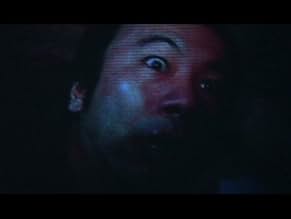
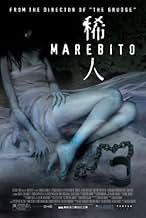
A fear-obsessed freelance cameraman investigates an urban legend involving mysterious spirits that haunt the subways of Tokyo.A fear-obsessed freelance cameraman investigates an urban legend involving mysterious spirits that haunt the subways of Tokyo.A fear-obsessed freelance cameraman investigates an urban legend involving mysterious spirits that haunt the subways of Tokyo.
- Awards
- 2 wins & 1 nomination total




- Director
- Writer
- All cast & crew
- Production, box office & more at IMDbPro
6.06K
1
2
3
4
5
6
7
8
9
10
Featured reviews
Creepy, but ultimately unsatisfying
I honestly cannot say I liked this movie. I appreciate what it is, which is a genuinely creepy movie shot in 8 days on consumer-grade digital video by one of the masters of Japanese horror. However, what I cannot appreciate is the disregard for character development or practical story-telling.
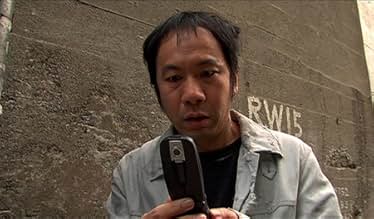
Masuoka is obsessed with video. He's got his own apartment under surveillance (from within, oddly enough), he carries a small camcorder everywhere he goes, and he seems to be plugged into random cameras throughout the city. And what he's looking for in all of this video is the ultimate in fear. One day, walking in the subways, he encounters a bizarre suicide. The victim sees something that only he can which, apparently leads him to stab himself in the eye. Obsessed with finding out what this man saw, Masuoka goes underground. Literally. Underneath the city he finds a bizarre netherworld. And one naked girl chained to a wall. Who may or may not be his daughter.
Sounds weird, hunh? Well, it sure is. The use of digital video, cut with even grainier digital video makes for a creepy look, and the sound work is a constant video hum which increases the paranoia and overall strange feeling. But that's really all the movie is. Just a really creepy exercise that never builds into something coherent. Characters pass through with seemingly no rhyme or reason, but they sure are creepy. Many big ideas are pitched (like another dimension of freaky demons leaking over into ours. Ouch!), but they're never taken anywhere.
If you're a fan of Shimizu's work, you'll notice his fingerprints all over this. However, this is a departure in many ways. It is not built around the "boo" factor which pervades most of this other work. It is a much dreamier, atmospheric film than his others. It doesn't seem as concerned with scaring as it is with just creeping the hell out of people. Which it does. What is missing is who this guy is. What he's all about, why he's videotaping everything. And maybe a coherent story.
But, holy crap, a movie shot in 8 days! Kudos.
Masuoka is obsessed with video. He's got his own apartment under surveillance (from within, oddly enough), he carries a small camcorder everywhere he goes, and he seems to be plugged into random cameras throughout the city. And what he's looking for in all of this video is the ultimate in fear. One day, walking in the subways, he encounters a bizarre suicide. The victim sees something that only he can which, apparently leads him to stab himself in the eye. Obsessed with finding out what this man saw, Masuoka goes underground. Literally. Underneath the city he finds a bizarre netherworld. And one naked girl chained to a wall. Who may or may not be his daughter.
Sounds weird, hunh? Well, it sure is. The use of digital video, cut with even grainier digital video makes for a creepy look, and the sound work is a constant video hum which increases the paranoia and overall strange feeling. But that's really all the movie is. Just a really creepy exercise that never builds into something coherent. Characters pass through with seemingly no rhyme or reason, but they sure are creepy. Many big ideas are pitched (like another dimension of freaky demons leaking over into ours. Ouch!), but they're never taken anywhere.
If you're a fan of Shimizu's work, you'll notice his fingerprints all over this. However, this is a departure in many ways. It is not built around the "boo" factor which pervades most of this other work. It is a much dreamier, atmospheric film than his others. It doesn't seem as concerned with scaring as it is with just creeping the hell out of people. Which it does. What is missing is who this guy is. What he's all about, why he's videotaping everything. And maybe a coherent story.
But, holy crap, a movie shot in 8 days! Kudos.
Weird, but not great
This was just a strange movie, but not in a cool way, like Forbidden Zone, or Uzumaki. Just weird.
All I can say is that a creepy voyeur cameraman sees a guy commit suicide by stabbing himself, and wonders what he had seen that made him so terrified. Any more said would ruin it.
Sure, the acting by the guy was good, and you never know what is going to happen next, and it is well shot, but it is ultimately boring, and the ending doesn't satisfy you. I did enjoy it on some level, but by the end, I was ready to stop watching.
6/10
All I can say is that a creepy voyeur cameraman sees a guy commit suicide by stabbing himself, and wonders what he had seen that made him so terrified. Any more said would ruin it.
Sure, the acting by the guy was good, and you never know what is going to happen next, and it is well shot, but it is ultimately boring, and the ending doesn't satisfy you. I did enjoy it on some level, but by the end, I was ready to stop watching.
6/10
7sol-
Nightcrawler
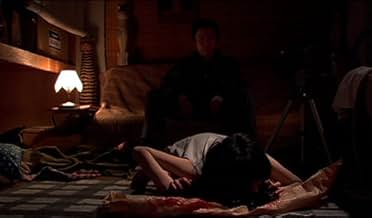
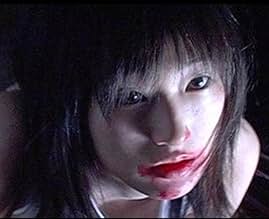
Also known as 'The Stranger from Afar', this Japanese horror film focuses on a freelance photographer who rescues a naked woman chained to a rock in a subway tunnel; he takes her home, only to discover that she is more animalistic than human with a taste for blood. The film is pretty much as weird as it sounds with little indication of just how much of what occurs is hallucination, imaginary or real. It remains a gripping ride though even when everything cannot be deciphered thanks to a truckload of atmosphere and a genuinely unsettling turn by Tomomi Miyashita as the mysterious woman. Some of the symbolism hits home quite well too with the protagonist viewing himself as a vampire, feeding off filming the misery and pain of others (sort of like Jake Gyllenhaal's character in 'Nightcrawler', but with a moral compass here). The film also taps into some curious territory early on as the protagonist announces a desire to find what caused a man to be so terrified that he committed suicide before his camera lens; some of his soliloquies in this early part of the film bring to mind 'Videodrome' as he equates cameras to the retinas of human eyes. One's mileage with 'Marebito' will no doubt vary depending on one's tolerance for the unexplained and deliberate ambiguity, but it is certainly refreshingly different from most other vampire movies out there.
Visual experiment used to tell a story of madness and damnation of almost EC Comics simplicity
This sounded very interesting to me in an abstract/visual experiment kind of way when I read about it. Man takes a movie camera to the subway of Tokyo in search of unspeakable horrors and comes up with some to take back to his apartment. I love movies that take a peripatetic approach, that take us on walkabouts through weird/elaborate architecture, from The Shining to Last Year at Marienbad, and I hoped this would be one of the greats.
I like these films to be shot in DV, lights are harsh and cold and space attains an immediacy that appeals to me. If I was disappointed in this then it's not because it meanders and is short on plot but rather because the lovely visual experiment is used by Shimizu to tell a story of almost EC Comics simplicity, madness and damnation. The protagonist sees news footage of a man stabbing his eye in the Tokyo subway. The epiphany to go looking in the subway for that ultimate terror gleaming in the victim's eyes moments before his death comes seemingly after a quick mashup of superimposed images of video screens, white noise, and reaction shots of the character looking dazed - a visual slapdash chaos that seems like the director's way of saying "something clicked in his mind" and nothing more.
I like that Shimizu simply took a camera to the streets of Tokyo to make Marebito, we really don't see enough films of that kind by people who know how to make them, and I wish he would've used Hollow Earth as a springboard of ideas instead of making direct allusions to it. I was fascinated by the subject in my teens, as with other mystical theories I'm still shocked that there are people who take it at face value, as something more than interesting myth (Shimizu fortunately is not one of them), yet the discussion in the subway tunnel where a bunch of arcane references to the subject are bandied up serves nothing. I'm still glad that I saw it though, made me want to see some more Shinya Tsukamoto.
In the end, Marebito is about a man's struggle with his own madness, but it's a bit slapdash about telling us about it.
I like these films to be shot in DV, lights are harsh and cold and space attains an immediacy that appeals to me. If I was disappointed in this then it's not because it meanders and is short on plot but rather because the lovely visual experiment is used by Shimizu to tell a story of almost EC Comics simplicity, madness and damnation. The protagonist sees news footage of a man stabbing his eye in the Tokyo subway. The epiphany to go looking in the subway for that ultimate terror gleaming in the victim's eyes moments before his death comes seemingly after a quick mashup of superimposed images of video screens, white noise, and reaction shots of the character looking dazed - a visual slapdash chaos that seems like the director's way of saying "something clicked in his mind" and nothing more.
I like that Shimizu simply took a camera to the streets of Tokyo to make Marebito, we really don't see enough films of that kind by people who know how to make them, and I wish he would've used Hollow Earth as a springboard of ideas instead of making direct allusions to it. I was fascinated by the subject in my teens, as with other mystical theories I'm still shocked that there are people who take it at face value, as something more than interesting myth (Shimizu fortunately is not one of them), yet the discussion in the subway tunnel where a bunch of arcane references to the subject are bandied up serves nothing. I'm still glad that I saw it though, made me want to see some more Shinya Tsukamoto.
In the end, Marebito is about a man's struggle with his own madness, but it's a bit slapdash about telling us about it.
Interesting film
First off, I hated Ju-On. I thought it was derivative garbage of the J-horror variety (most J-Horror, which many American's think is "cult", is the equivalent of teen slasher flicks in their respective countries). That said, I was expecting nothing from this film. Instead, I got a Japanese David Cronenberg film, for all intents and purposes. This film would make an excellent companion piece to Cronenberg's Videodrome.
Both deal with technology and alienation in an urban setting. While in Videodrome it's the proliferation of mass media that causes the protagonists reality slip, here it's the creation of such media. The main character is a freelance videographer who makes a living filming the horrible things that people do to each other (and themselves) in the crowded yet isolated world of the big city. He eventually comes to understand that nothing is more cruel than what he does. He is, in a figurative sense, a vampire. He sucks the blood of the living into his lens, and thrives off the rewards. But he is lost.
Then he meets...a girl? A creature? A vampire? A hallucination? The fact that she has no recognizable emotion or attachment, and lives only to feed on the blood of people is a projection of what he is so ashamed of.
This film really gets into the feel of alienation (much the way "Clean, Shaven" and Cronenberg's "Spider" did) and makes you feel the way the populace who views his videos do. Disturbed, but secretly glad and thrilled that misery was put on film.
Which leads me to the presentation. Many have griped about the Digital Film approach, which, as most cinephiles know, leads to a harsh lighting scheme and stark contrasts- none of the lushness of film- and jerky movement feel. Shimizou could have easily done this on film if he had wanted to, but instead, I feel, made a choice to use digital...it's the same format that his protagonist records horrible images on. One turn deserves another. I enjoyed this aspect, as the presentation aspect of a film is rarely intrinsic to both the style and subtext of the film.
That said, it's not entirely successful. A few scenes could have used better FX work or shot choice/editing, but, hey, he shot this on the fly in 8 days, on his way to make another J-Horror "scary-kid" schlockfest. This film shows he is more capable than that. Fans of J-horror may want to avoid this, whereas if, like me, you're a fan of shock-cinema and narrative surrealism (Lynch, some Cronenberg, you) may enjoy this.
Both deal with technology and alienation in an urban setting. While in Videodrome it's the proliferation of mass media that causes the protagonists reality slip, here it's the creation of such media. The main character is a freelance videographer who makes a living filming the horrible things that people do to each other (and themselves) in the crowded yet isolated world of the big city. He eventually comes to understand that nothing is more cruel than what he does. He is, in a figurative sense, a vampire. He sucks the blood of the living into his lens, and thrives off the rewards. But he is lost.
Then he meets...a girl? A creature? A vampire? A hallucination? The fact that she has no recognizable emotion or attachment, and lives only to feed on the blood of people is a projection of what he is so ashamed of.
This film really gets into the feel of alienation (much the way "Clean, Shaven" and Cronenberg's "Spider" did) and makes you feel the way the populace who views his videos do. Disturbed, but secretly glad and thrilled that misery was put on film.
Which leads me to the presentation. Many have griped about the Digital Film approach, which, as most cinephiles know, leads to a harsh lighting scheme and stark contrasts- none of the lushness of film- and jerky movement feel. Shimizou could have easily done this on film if he had wanted to, but instead, I feel, made a choice to use digital...it's the same format that his protagonist records horrible images on. One turn deserves another. I enjoyed this aspect, as the presentation aspect of a film is rarely intrinsic to both the style and subtext of the film.
That said, it's not entirely successful. A few scenes could have used better FX work or shot choice/editing, but, hey, he shot this on the fly in 8 days, on his way to make another J-Horror "scary-kid" schlockfest. This film shows he is more capable than that. Fans of J-horror may want to avoid this, whereas if, like me, you're a fan of shock-cinema and narrative surrealism (Lynch, some Cronenberg, you) may enjoy this.


Did you know
- TriviaTakashi Shimizu shot the film in just eight days, between the production dates for Ju-on: The Grudge (2002) and its remake, The Grudge (2004).
- How long is Marebito?Powered by Alexa
Details
- Release date
- Country of origin
- Language
- Also known as
- The Stranger from Afar
- Production companies
- See more company credits at IMDbPro
Box office
- Budget
- ¥5,000,000 (estimated)
- Gross US & Canada
- $13,983
- Opening weekend US & Canada
- $3,852
- Dec 11, 2005
- Gross worldwide
- $107,259
- Runtime
- 1h 32m(92 min)
- Color
- Aspect ratio
- 1.85 : 1
Contribute to this page
Suggest an edit or add missing content