All Things
- Episode aired Apr 9, 2000
- TV-14
- 45m

Scully is finishing up the autopsy of a person at a hospital. A file mix-up involving the autopsy folder and another patient's x-ray leads Scully to discover a former lover of hers has been ... Read allScully is finishing up the autopsy of a person at a hospital. A file mix-up involving the autopsy folder and another patient's x-ray leads Scully to discover a former lover of hers has been admitted at the hospital. Meeting with him again causes Scully to re-examine the decisions... Read allScully is finishing up the autopsy of a person at a hospital. A file mix-up involving the autopsy folder and another patient's x-ray leads Scully to discover a former lover of hers has been admitted at the hospital. Meeting with him again causes Scully to re-examine the decisions she has made in her life, leading to her where she is to today.
- Director
- Writers
- Stars
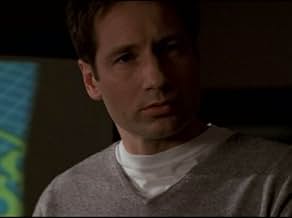


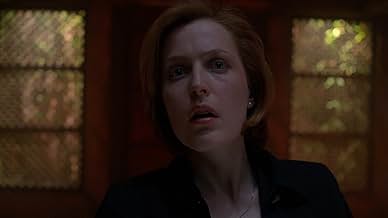


- Nurse #2
- (as Elayn Taylor)


- Hospital Visitor
- (uncredited)
- Director
- Writers
- All cast & crew
- Production, box office & more at IMDbPro
Featured reviews
Intangible Emotions
All Things deals with one of the most difficult objects to film: intangible emotions. Emotions that go beyond being sad, happy, or confused. Emotions that make you sit down and really think out: "What the hell was I just feeling?" I've read comments about this episode that complain that it isn't an X-File. In the tradition of Ray Bradbury's Martian Chronicles, I ask: Why explore other worlds when there is so much of ourselves left unexplored? How well do we really understand these vague, alien dynamics we feel towards ourselves and others? Gillian Anderson offers a depictions of these difficult emotions through original and deeply artistic direction, paired with masterful acting.
On top of that, All Things provides an new and interesting lens through which we can view Scully. She can seem utterly in control of her environments and competent as an individual, yet internally feel lost, confused, and perhaps helpless. Unfortunately, this is a concept that seasons eight and nine failed to follow through with. Instead, we are to settle with just one brief, beautiful glimpse into the potential of Scully's character. All in all, this isn't the slickest X-File, but it is certainly the most emotional for me. Submit to Gillian Anderson's artistic vision and she will show you the way.
A confusing mess
This guy we are supposed to care about means nothing to us, and the writing is all over the place. It was very difficult to follow and all a bit pointless.
The Taoism/Buddhism connection was also completely out of character considering Scully's strong history of Christianity in the show. Again, it was added because Gillian Anderson was interested in it. I think it's an interesting topic and I'm sure the writers could have come up with a real plot for it but it had no place in this episode, which itself has no bearing on the wider show. Just immediately forgotten as the silliness it is. Season 7 really is where The X-Files jumped the shark repeatedly.
The one saving grace of this episode is that it's better than the comedy/musical episode that David Duchovny directs two episodes later.
This is a great insight into Scully's past and psychological make up
i love one scene in this episode
While its abstract narrative and slower pacing may not appeal to all viewers, it stands as a thoughtful meditation on love, loss, and self-discovery
Anderson's direction demonstrates a keen sense of visual storytelling, employing symbolic imagery and dream-like sequences to convey Scully's inner turmoil. The use of soft lighting and fluid camera movements creates an ethereal atmosphere that complements the episode's introspective tone. One of the standout sequences is a montage accompanied by a hauntingly beautiful musical score, illustrating Scully's reflection on pivotal moments in her life. This artistic approach, though ambitious, may feel too abstract for viewers accustomed to the show's more straightforward narrative style.
The script, also penned by Anderson, takes a contemplative approach, focusing heavily on character development rather than external conflict. This narrative shift allows for a rare exploration of Scully's emotional landscape, which has often been overshadowed by the series' paranormal investigations. Anderson delivers a nuanced and heartfelt performance, capturing Scully's vulnerability and strength as she grapples with existential questions. However, the episode's pacing can be uneven, with certain scenes lingering longer than necessary, potentially diminishing the overall impact.
One of the episode's strengths is its thematic exploration of synchronicity and spirituality. Scully's encounters with symbols and moments of serendipity suggest a universe guided by unseen forces. Anderson skillfully integrates these elements without becoming overly didactic, inviting viewers to ponder the mysteries of fate and choice. The absence of Mulder for much of the episode, while initially jarring, allows Scully's journey to take center stage, emphasizing her autonomy and growth.
"All Things" is a bold and introspective entry in The X-Files canon, showcasing Gillian Anderson's talents both in front of and behind the camera. While its abstract narrative and slower pacing may not appeal to all viewers, it stands as a thoughtful meditation on love, loss, and self-discovery. Anderson's creative vision and exploration of Scully's character add depth to the series, making this episode a memorable and meaningful departure from the show's usual structure.


Did you know
- TriviaGillian Anderson's first draft of the screenplay was 15 pages too long and had no fourth act. Chris Carter and Frank Spotnitz stepped in to help fashion it into an X-Files episode. Indeed, one of Spotnitz's major contributions was the ambiguous opening where it is implied that Mulder and Scully have finally slept together.
- GoofsYou can see the string pulling the apothecary sign.
- Quotes
Scully: Time passes in moments... moments, which, rushing past, define the path of a life just as surely as they lead towards its end. How rarely do we stop to examine that path, to see the reasons why all things happen, to consider whether the path we take in life is our own making or simply one into which we drift with eyes closed. But what if we could stop, pause to take stock of each precious moment before it passes? Might we then see the endless forks in the road that have shaped a life and, seeing those choices, choose another path?
- ConnectionsFeatured in The X-Files: Trust No 1 (2002)