IMDb RATING
7.6/10
2K
YOUR RATING

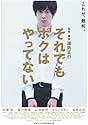
A young man is falsely accused of molesting a high-school girl on a train. He is arrested and charged, and goes through endless court sessions, all the while insisting that he is innocent.A young man is falsely accused of molesting a high-school girl on a train. He is arrested and charged, and goes through endless court sessions, all the while insisting that he is innocent.A young man is falsely accused of molesting a high-school girl on a train. He is arrested and charged, and goes through endless court sessions, all the while insisting that he is innocent.
- Awards
- 19 wins & 12 nominations total


- Director
- Writer
- All cast & crew
- Production, box office & more at IMDbPro
7.61.9K
1
2
3
4
5
6
7
8
9
10
Featured reviews
when film matters
Two ironies attest to critiquing this film a year after it was submitted to the 2008 Oscars for Best Foreign Language Film. First of all, this year, 2009, saw the Japanese feature Okuribito scoop that very award, a film directed by a man whose early credits include a long-running 'train molester' series, a sniggering look at the titillation gained from the sport of groping vulnerable-but-loving-it females on crowded commuter trains.
The second irony is that the Japanese Supreme Court recently overturned a guilty verdict on a man convicted of such a crime, citing the lack of evidence and due procedure on the part of police and prosecutors.
Okuribito's debt to Suo's film is tenuous, but the Supreme Court decision seems unlikely had Sore Demo not been made. The film highlights the primitive and highly dubious procedures that infest the Japanese judicial system, where habeas corpus is trampled upon and a benign and apathetic populace conspire by neglect in the crushing of innocents. The scale of the molester problem is apparent to any visitor to these shores who spends time on commuter trains - Women Only carriages are now the norm at rush-hour, a far cry from the halcyon days previously celebrated by the director of Okuribito, when 'how to molest' programmes were broadcast on mainstream TV channels. Times have changed, and how.
Suo elects to tell the tale as an Educational film, attempting to edify his audience on the corruption of the Japanese judiciary from the base assumption that they know nothing. Such stylistics have come unstuck before in Nihon no Ichiban Kuroi Natsu, where the didactic tone fails to encapsulate the social ramifications of the material it addresses. But Suo's film does not go off on that tangent, presenting as its innocent in need of education a single man falsely accused in a groping incident. He is a decent, loved man who finds circumstances piling up against him in a country he previously, naively, accepted as fundamentally good. Ryo Kase does excellent work as meek Teppei, who puts up with his treatment initially unaware of the hole that is being dug for him. His resolve not to opt for the easy 'guilty' verdict that will secure quick release is a deep moral core by contrast lacking in the police, judges, fourth estate and even his own solicitor.
The preaching can be a bit heavy-handed at times, and the film is at least 30 minutes too long. Some dubious side characters are overdrawn, such as an effeminate cell-mate thrown on stage to provide giggles and more leadership for Teppei. Such small qualms aside, this movie is an epochal event, an important film, that highlights an incredible, mean-spirited flaw in Japanese society, that the recent Supreme Court decision may finally relegate to history.
Suo's direction is spare and unobtrusive, his actors given space to reveal the consequences of such judicial brutality, which they do with aplomb. Brave, important film-making, that history will take note of.
The second irony is that the Japanese Supreme Court recently overturned a guilty verdict on a man convicted of such a crime, citing the lack of evidence and due procedure on the part of police and prosecutors.
Okuribito's debt to Suo's film is tenuous, but the Supreme Court decision seems unlikely had Sore Demo not been made. The film highlights the primitive and highly dubious procedures that infest the Japanese judicial system, where habeas corpus is trampled upon and a benign and apathetic populace conspire by neglect in the crushing of innocents. The scale of the molester problem is apparent to any visitor to these shores who spends time on commuter trains - Women Only carriages are now the norm at rush-hour, a far cry from the halcyon days previously celebrated by the director of Okuribito, when 'how to molest' programmes were broadcast on mainstream TV channels. Times have changed, and how.
Suo elects to tell the tale as an Educational film, attempting to edify his audience on the corruption of the Japanese judiciary from the base assumption that they know nothing. Such stylistics have come unstuck before in Nihon no Ichiban Kuroi Natsu, where the didactic tone fails to encapsulate the social ramifications of the material it addresses. But Suo's film does not go off on that tangent, presenting as its innocent in need of education a single man falsely accused in a groping incident. He is a decent, loved man who finds circumstances piling up against him in a country he previously, naively, accepted as fundamentally good. Ryo Kase does excellent work as meek Teppei, who puts up with his treatment initially unaware of the hole that is being dug for him. His resolve not to opt for the easy 'guilty' verdict that will secure quick release is a deep moral core by contrast lacking in the police, judges, fourth estate and even his own solicitor.
The preaching can be a bit heavy-handed at times, and the film is at least 30 minutes too long. Some dubious side characters are overdrawn, such as an effeminate cell-mate thrown on stage to provide giggles and more leadership for Teppei. Such small qualms aside, this movie is an epochal event, an important film, that highlights an incredible, mean-spirited flaw in Japanese society, that the recent Supreme Court decision may finally relegate to history.
Suo's direction is spare and unobtrusive, his actors given space to reveal the consequences of such judicial brutality, which they do with aplomb. Brave, important film-making, that history will take note of.
Very Heavy Talk but Good!
This movie provides a deep look into a legal system (not sure if it is unique to Japan actually).
What made this movie worked really well is that I believe it is honest in splashing out as much as it can on how much injustice and unfavourable circumstances can happen in a legal proceeding, and the outcome can continue to be unfavourable for a very long period of time. Acting performances are commendable, though I hope that the main character should have been more serious rather than portraying himself as panicky all the time. But anyway, some scenes were really an eye-opener and all in it is a splendid work!
What made this movie worked really well is that I believe it is honest in splashing out as much as it can on how much injustice and unfavourable circumstances can happen in a legal proceeding, and the outcome can continue to be unfavourable for a very long period of time. Acting performances are commendable, though I hope that the main character should have been more serious rather than portraying himself as panicky all the time. But anyway, some scenes were really an eye-opener and all in it is a splendid work!
A poignant film that reflects a perfect society's imperfections
I applaud the film director, Masayuki Suo, for having the courage to put out such a poignant film that speaks volumes about Japan's flawed justice system as a Japanese citizen. The 99.9% guilty rate is a reality not taken seriously by foreigners and many of those living in Japan. As a foreigner, it was interesting to see how laws are applied within the context of such a seemingly modernized and developed country. We follow the main character, Teppei, who is caught at the wrong place at the wrong time as he is accused of committing a crime he did not commit. With the assumption that standing by his innocence will set him free quickly and painlessly, we soon learn about the psychological battle he and those close to him have to battle.
Japan's judicial system is very different from westernized systems. In Canada for instance, much of our outcries and screams of injustice belies on the fact that the justice system "protects" criminals. More guilty people walk away or serve light sentences for crimes committed here. In Japan, it is quite the opposite and it makes one ponder... how many innocent people exactly are locked up? How easy is it for individuals to take advantage on that "trust" and falsely accuse another person of a crime they did not commit for the purpose of a hefty out-of-court settlement? In all, this film was excellent and is an important tool for us to reflect upon how "justice" is applied in different nations. It is exceptionally accurate in its portrayals of the daily ins and outs of those in Japanese jails. To assume that the Japanese system "can't really be THAT bad" is a slap in the face to all those who had to undergo that kind of psychological hardship as INNOCENT men and women. I am saying this as a fact. My boyfriend had spent close to a month in jail with accusations for a crime he did NOT commit. The prosecutor's only goal is to dig up any kind of confession by any means necessary - verbal coercion, bending stories, refusing or providing menial legal counsel, etc. When your ultimate verdict is guilty from the start, what kind of justice does an innocent individual have left? Is it right for an innocent man to say that he is guilty when he is absolutely innocent? Think about that.
Japan's judicial system is very different from westernized systems. In Canada for instance, much of our outcries and screams of injustice belies on the fact that the justice system "protects" criminals. More guilty people walk away or serve light sentences for crimes committed here. In Japan, it is quite the opposite and it makes one ponder... how many innocent people exactly are locked up? How easy is it for individuals to take advantage on that "trust" and falsely accuse another person of a crime they did not commit for the purpose of a hefty out-of-court settlement? In all, this film was excellent and is an important tool for us to reflect upon how "justice" is applied in different nations. It is exceptionally accurate in its portrayals of the daily ins and outs of those in Japanese jails. To assume that the Japanese system "can't really be THAT bad" is a slap in the face to all those who had to undergo that kind of psychological hardship as INNOCENT men and women. I am saying this as a fact. My boyfriend had spent close to a month in jail with accusations for a crime he did NOT commit. The prosecutor's only goal is to dig up any kind of confession by any means necessary - verbal coercion, bending stories, refusing or providing menial legal counsel, etc. When your ultimate verdict is guilty from the start, what kind of justice does an innocent individual have left? Is it right for an innocent man to say that he is guilty when he is absolutely innocent? Think about that.
Welcome Back, Mr Suo
Japan's foreign-film entry to the 2008 Academy Awards is a doozy and arrives from one of the country's preeminent filmmakers, Masayuki Suo. In his first film since 1996's "Shall We Dansu?", he brings the same discriminating eye back to Japan's cultural and social norms and in "I Just Didn't Do It", zeros in on its oppressively rigid judicial system. Observed on a level that can only be described as stark realism, a true departure from Suo's august social comedies and a distinct legal procedural going by its narrative trajectory of showing the inciting incident, investigation and to the courtroom in its various stages of due process Teppei Kaneko (Ryo Kase) is accused of molesting a schoolgirl on his way to a job interview, subsequently coerced by weary detectives to accept the charge and pay the fine instead of pursuing vindication a system that Suo notes as the reason for Japan's almost perfect conviction rate and institutionalised prejudice against the accused.
10ethSin
An Innocent shall not be punished, even if 10 true offenders slip away
A man falsely accused of groping fights for his innocence. Groping leaves no evidence, and the Japanese courtrooms are heavily biased against the offender.
"Soredemo" is one of the greatest Japanese film I've seen to date. This movie deals with the horrifying truths behind the Japanese court system. Life-altering and inspirational movie. I haven't seen Kase Ryou in film before, but he handled this difficult role perfectly, excellent control of his emotions. The supporting cast is filled with actors I consider to be the most talented in acting skills, and they all gave great performances. Casting was incredibly well-done.
This movie was directed by the same person who did "Shall We Dance?" and the lead actor in that movie, Yakusho Kouji appears as the main lawyer. Direction, screenplay, and the story were absolutely perfect.
A must-watch film.
"Soredemo" is one of the greatest Japanese film I've seen to date. This movie deals with the horrifying truths behind the Japanese court system. Life-altering and inspirational movie. I haven't seen Kase Ryou in film before, but he handled this difficult role perfectly, excellent control of his emotions. The supporting cast is filled with actors I consider to be the most talented in acting skills, and they all gave great performances. Casting was incredibly well-done.
This movie was directed by the same person who did "Shall We Dance?" and the lead actor in that movie, Yakusho Kouji appears as the main lawyer. Direction, screenplay, and the story were absolutely perfect.
A must-watch film.


Did you know
- TriviaJapan's Official Submission to the Best Foreign Language Film Category of the 80th Annual Academy Awards (2008).
Details
- Release date
- Country of origin
- Official site
- Language
- Also known as
- Even So, I Didn't Do It
- Filming locations
- Production companies
- See more company credits at IMDbPro
Box office
- Gross worldwide
- $9,666,242
- Runtime
- 2h 23m(143 min)
- Color
- Sound mix
- Aspect ratio
- 1.85 : 1
Contribute to this page
Suggest an edit or add missing content