
When a detective claims someone in Tony's inner circle is talking to the FBI, paranoia spreads and loyalties fray as tensions with Junior's crew escalate.When a detective claims someone in Tony's inner circle is talking to the FBI, paranoia spreads and loyalties fray as tensions with Junior's crew escalate.When a detective claims someone in Tony's inner circle is talking to the FBI, paranoia spreads and loyalties fray as tensions with Junior's crew escalate.
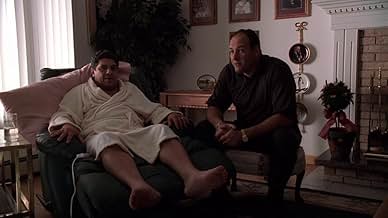
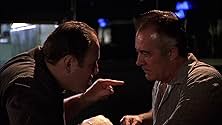


- Jimmy Altieri
- (as Joe Badalucco Jr.)

- Director
- Writer
- All cast & crew
- Production, box office & more at IMDbPro
Featured reviews
The episode serves as a profound exploration of paranoia, trust, and the elusive nature of truth within the volatile world of organized crime
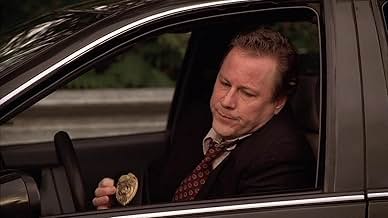
The narrative is propelled by Vin Makazian, a recurring character and mob-connected detective, who informs Tony Soprano that Big Pussy may be "wired for sound," igniting a crisis of trust for Tony. The stakes are immediately personal, as Pussy is depicted not only as a mobster but as Tony's close friend, introducing a painful conflict between friendship and survival. Makazian's burdened psychological state, culminating in his suicide, parallels the episode's central themes of despair and betrayal. The intertwining of Makazian's unraveling with Tony's mounting paranoia reflects the corrosive effects of living in a world where truth is obscured, and loyalties are precarious.
Bronchtein's direction enhances this psychological atmosphere through a polytonal approach that varies from subtle, intimate close-ups of Tony's anguished expressions to the grim mundanity of neighborhood confrontations and the bleak finality of Makazian's death. The episode's visual language uses chiaroscuro lighting and confined framing to emphasize isolation and suspicion, aligning viewer perspective with Tony's fraught internal state. Editing is particularly effective in the suicide scene, with rapid cross-cutting and ambient sound withdrawal amplifying the moment's shock and underscoring the thematic weight of despair. This blend of cinematic techniques elevates the episode's narrative tension and emotional depth.
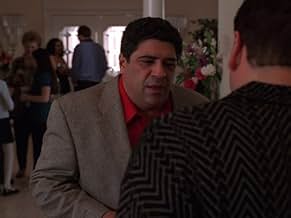
The cast delivers powerful performances throughout. James Gandolfini portrays Tony's turmoil with subtle gradations of disbelief, anger, and sorrow, capturing the agony of potential betrayal by a trusted friend. Vincent Pastore as Big Pussy adds layers of guardedness and ambiguity, contributing to the episode's pervasive aura of uncertainty. Joe Pantoliano's Vin Makazian stands out with a tragically authentic portrayal of a man crushed by guilt and disillusionment, his final moments haunting and poignant. Supporting performances by the ensemble reinforce the sense of pervasive anxiety, reflecting the fragile alliances and psychological burdens threading through the narrative.
Thematically, "Nobody Knows Anything" interrogates the impossibility of absolute knowledge in a world governed by lies, fear, and strategic silence. The title echoes a line repeatedly emphasized, underscoring the futility and peril in trying to ascertain truth amid misinformation and self-deception. The episode also critiques the psychological toll of living double lives, particularly through Pussy's debilitating back pain, symbolizing both physical and moral injury. Tony's visit to Dr. Melfi to discuss Pussy's condition blurs professional and personal realms, emphasizing the interplay between emotional vulnerability and imposed toughness in mafia culture. This nuanced treatment of psychological distress foregrounds mental health as a hidden yet pervasive theme.
Beyond the personal drama, the episode examines broader power dynamics within the Soprano crime family. The release of Jimmy Altieri and his subsequent suspicious behaviors raise alarms of betrayal, deepening Tony's crisis. The episode culminates in Mikey Palmice's ominous discussion about Tony possibly being targeted for elimination, foregrounding the relentless and unpredictable violence underpinning mafia politics. These intense power struggles are underscored not by overt violence but by suspense and psychological gamesmanship, expanding the series' complex portrayal of criminal enterprises as fraught networks of trust and suspicion.
The cinematography and sound design collaborate to reflect these themes through a measured visual style and a soundscape that fluctuates between haunting silence and everyday background noise, heightening the viewer's emotional involvement. The cold, muted color palettes envelop the characters in an atmosphere of foreboding and uncertainty, while sound cues serve as subtle markers of tension and impending crisis. These technical elements reinforce the episode's focus on psychological states and the corrosive influences of fear and mistrust.
The episode also engages in cultural and sociological critiques, particularly through Livia Soprano's manipulative interactions, which exemplify how familial dysfunction and psychological manipulation extend into the criminal sphere. Her ambiguous, forked verbal strategies influence key decisions, demonstrating the potent, if indirect, power exercised within patriarchal systems. The interplay of gender, age, and authority adds further texture to the social dynamics portrayed, highlighting how power operates in both overt and covert modes.
"Nobody Knows Anything" also stands as a turning point in the season, deepening Tony's internal conflicts and setting up crucial narrative arcs. The episode's bleak tone and the unresolved question of Pussy's loyalty underscore The Sopranos' commitment to realism and ambiguity, while simultaneously pushing serialized television narratives toward complex character studies anchored in emotional truth rather than clear outcomes. This episode exemplifies how uncertainty, rather than action, propels character and plot development in the series.
Critically, while some viewers may find the episode's slow-building suspense and psychological focus challenging, it is precisely this inscrutability and tension that distinguishes The Sopranos within the television landscape. The episode embraces ambiguity, refusing to provide easy answers, thereby inviting deeper engagement and reflecting the complexities of human relationships married to criminal realities.
"Nobody Knows Anything" is a masterful installment that combines nuanced writing, atmospheric direction, and powerful performances to distill The Sopranos' thematic core of distrust and psychological complexity. Through its portrayal of paranoia, friendship, and betrayal, it exposes the devastating costs of life in a world where truth is elusive and loyalty is scarce. Henry Bronchtein's direction and the ensemble cast's performances create an emotionally charged, philosophically rich episode that challenges viewers to reflect on the ambiguities of knowledge, power, and human connection.
Burden and preassure!
There were multiple great moments between characters, such as Paulie and Pussy as well as Carmela and Tonys mom! The acting was great and it really carried the scenes!
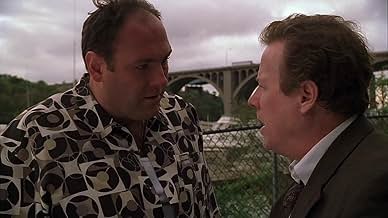
This episode was also full of tension as things get more serious as paranoia sets in, do to a possible traitor! The scene at the bridge proves things are no fun and games no more!
You can also see how much preassure Tony is under, as he struggles with the information he gets, and what to do with it!
Overall things seem to shape up towards the end!
... like a pro
This is a serious and gripping episode with strong drama and character moments.
'Nobody Knows Anything' clouds the life of several characters in dangerous uncertainty. Tony receives information that has major implications if true and it drives so much of the story. That is all I can say about the plot without spoiling, but it's safe to praise the tension and drama created by all scenes relating to this.
Junior, who was bliss with ignorance until this episode, is put in a difficult position where the mob code demands he takes action. This ignites the slow burning plot thread that has been developing since the series began and makes it very intriguing.
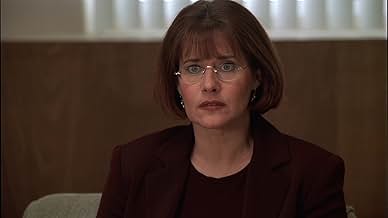
The focus on Vin Makasian gets much deeper and his character arc reaches a very poignant stage. John Heard is excellent in all these scenes and Karen Sillas also has some strong moments.
In the overarching narrative of series one, this episode is arguably the most compelling so far. However, it does not work quite as well as other episodes on a rewatch, as you know what's coming. I find Mikey Palmice to be written as a fairly one-note character. Also one scene involving Tony behaving quite aggressively towards another character feels a bit forced to increase the dramatic tension and shock value.
All performances are superb. James Gandolfini is the star of the show as ever, but Tony Serico, Vincent Pastore, Nancy Marchand and Dominic Chianese all have memorable moments.
Visually it is as strong as ever. A number of scenes involving Makasian are wonderfully shot, but one in particular is very hard hitting. It also captures the paranoia and suspicions of certain characters very well.
9.25/10, Amazing


Did you know
- TriviaPaulie's car horn plays the theme from The Godfather (1972).
- GoofsIn the closing credits, Kevin Bonpensiero's name is misspelled as "Bompensiero".
- Quotes
Meadow Soprano: This country's light-years behind the rest of the world. Most civilized countries have legalized prostitution.
Tony Soprano: Don't you got somewhere to be?
Meadow Soprano: I mean, it's a joke. Look what they're putting the President through.
Carmela Soprano: He deserved what he got.
Anthony 'A.J.' Soprano, Jr.: He got Monica Lewinsky and the broad with the long nose.
Meadow Soprano: I just don't think sex should be a punishable offense.
Tony Soprano: You know honey, that's where I agree with you. I don't think sex should be a punishable offense either. But I do think talking about sex at the breakfast table is a punishable offense. So no more sex talk, OK?
Meadow Soprano: It's the 90s. Parents are supposed to discuss sex with their children.
Tony Soprano: Yeah, but that's where you're wrong. You see out there it's the 1990s but in this house it's 1954.
[points to the window]
Tony Soprano: 1990s.
[points to the floor]
Tony Soprano: 1954. So now and forever, I don't want to hear any more sex talk, OK?
- ConnectionsFeatured in The 51st Annual Primetime Emmy Awards (1999)
- SoundtracksWalking On a Tightrope
Performed by Johnny Adams
Details
- Runtime
- 50m
- Color
- Sound mix
- Aspect ratio
- 1.78 : 1