The City on the Edge of Forever
- Episode aired Apr 6, 1967
- TV-PG
- 50m
IMDb RATING
9.2/10
7.4K
YOUR RATING

When a temporarily insane Dr. McCoy accidentally changes history and destroys his time, Kirk and Spock follow him to prevent the disaster, but the price to do so is high.When a temporarily insane Dr. McCoy accidentally changes history and destroys his time, Kirk and Spock follow him to prevent the disaster, but the price to do so is high.When a temporarily insane Dr. McCoy accidentally changes history and destroys his time, Kirk and Spock follow him to prevent the disaster, but the price to do so is high.


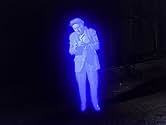


Bart La Rue
- Guardian
- (voice)
- (as Bartell La Rue)
Walter Bacon
- Onlooker on Street
- (uncredited)
Bill Blackburn
- Lieutenant Hadley
- (uncredited)

Bill Borzage
- Drunk
- (uncredited)
Dick Cherney
- Passerby on Sidewalk
- (uncredited)

Noble 'Kid' Chissell
- Server
- (uncredited)
Jane Crowley
- Onlooker on Street
- (uncredited)
- Director
- Writer
- All cast & crew
- Production, box office & more at IMDbPro
9.27.3K
1
2
3
4
5
6
7
8
9
10
Featured reviews
A Truly Memorable Piece Of Television.
Pretty well everybody seems to agree that "The City On The Edge Of Forever" was the very best episode of the original Star Trek series and what a lucky lady was Joan Collins to make her only Star Trek guest star appearance in it. Whilst tending a crew member with an injection from a syringe Dr. McCoy accidentally injects himself with its entire contents after the USS Enterprise jolts suddenly. This sends him temporarily mad & he then transports himself down to a planet that is under study for mysteriously warping space/time. Captain Kirk & Spock decide they will have to follow Dr. McCoy down on to the planet to try to rescue him. On this planet there is a time portal which is the cause of space/time disturbance & is capable of sending people back in time. In his crazy condition McCoy jumps through it & is transported back to planet Earth circa 1930. Kirk & Spock decide they too will have to risk going through the time portal to try & bring McCoy back. Here on Earth in 1930 the members of the Star Trek crew meet Edith Keeler (Joan Collins) who is running a home for down-and-outs. What then follows is a really excellent, creative story that has stayed forever in my memory.
Amazing - Even 52 Years Later
I have never written a review for any Star Trek episode. However, last night on H&I. I saw COTEOF probably for the fifty some time including when it was originally aired in April of 1967. The more I see it over the years, the more amazing it is and severe admiration is to be Harlan Ellison, the writer. It is wonderfully acted by a restrained Kirk who faces the decision of love vs. humanity. Spock knows this and fears if left alone to make the decision, Kirk would choose love. It is rated the best Star Trek, TOS episode and it's easily to see why. If it's your first time watching this episode, one word....ENJOY.
Forever on Our Minds
This is that one episode of the original Trek series which contained a certain inspired, sublime quality, which transcended the limitations of even the best episodes (translation: 10+ stars). We know there is greatness here, but what exactly is this impression that staggers us? Famed writer Harlan Ellison wrote the original teleplay, which was re-written by other hands (causing some controversy that continues to this day) to presumably make it fit better within the confines of Roddenberry's and television's view of the Trek universe. Very briefly, Ellison looked at human beings as more flawed (which, of course, they are) and probably regarded Roddenberry's vision of near-perfect future humanity as a bit too bland. This is television we're speaking about here, when all is said and done, and blandness is de rigueur. But, even the re-writes could not reduce this magnificent piece to anything less than the masterpiece of its day.
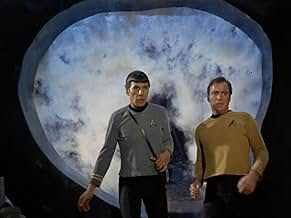
The City that the title refers to, on the surface, appears to be the eerie setting we see in the first act, with ruins, as Kirk notes, stretching to the horizon. It is here that we first see the Guardian of Forever, a strange rock-like arch which actually functions as a time portal. We've all seen time travel stories before, with similar devices ("The Time Travelers" from '64, for example). But, it's what happens after we enter the portal that then defines the story and weaves a tale of bitter, even mind-numbing tragedy. There's a chill odor assaulting us even before all this happens, a foreboding, as the Guardian intones 'All that you knew...is gone' after a deranged McCoy leaps into Earth's past. Without having to show the audience anything - anything physical or expository - the story lets us know that the Federation has been wiped away. All that in the span of a few seconds - all gone... just gone. The cosmic hook is that a particular individual, just another citizen in the dim past, can have a profound effect on the course of events within the known galaxy, while others, such as a skid-row bum, would have no effect at all.
The City may also be the city of New York, in the 1930's, for this is where a piece of Kirk (or his heart) will always be - forever, as it were. During the week that Kirk and Spock are forced to live a brief out-of-time life there, the story now stirs in the most potent human elements with the most dire cosmic dilemma - it's a fantastic, unforgettable mix. Unfortunately for Kirk, this was the one scenario he was not trained for. You might note, watching any of the other episodes, no matter how outlandish the threat or problem, it's always something Kirk is able to take control of eventually, to grasp and handle in his own persuasive manner. Not here - gradually, he becomes helpless, caught in the undertow of that perhaps strongest of human emotions after he meets a social worker. As with everything in this episode, actors Shatner and Collins seem to transcend their normal limitations. It's amazing that this episode, at least while taking place in this timeless New York City, is only the length of about half-an-hour; it seems like we're with Kirk & Edith for a good week there, much as it was meant to be.
As I got older, I found it almost too painful to watch the final act of this episode. It's like a piece of music - so well done, you're compelled to listen, but the notes are heart rending and leave that dull ache, as if you're missing something in life. As a comparison, I would bring to your attention another episode, "Requiem For Methuselah" from the 3rd season; it's actually not that bad of an episode, not without interest. But, in that one, Kirk falls in love in the span of an hour and then Spock erases his pain with his Vulcan abilities. Nothing so trite here. By the look on Kirk's face and his words in the final scene, as he dismisses the incredible Guardian, we know he will have to live with this pain forever. 'All IS as it WAS before' the Guardian intones some more. I'm afraid not. Not ever.
The City that the title refers to, on the surface, appears to be the eerie setting we see in the first act, with ruins, as Kirk notes, stretching to the horizon. It is here that we first see the Guardian of Forever, a strange rock-like arch which actually functions as a time portal. We've all seen time travel stories before, with similar devices ("The Time Travelers" from '64, for example). But, it's what happens after we enter the portal that then defines the story and weaves a tale of bitter, even mind-numbing tragedy. There's a chill odor assaulting us even before all this happens, a foreboding, as the Guardian intones 'All that you knew...is gone' after a deranged McCoy leaps into Earth's past. Without having to show the audience anything - anything physical or expository - the story lets us know that the Federation has been wiped away. All that in the span of a few seconds - all gone... just gone. The cosmic hook is that a particular individual, just another citizen in the dim past, can have a profound effect on the course of events within the known galaxy, while others, such as a skid-row bum, would have no effect at all.
The City may also be the city of New York, in the 1930's, for this is where a piece of Kirk (or his heart) will always be - forever, as it were. During the week that Kirk and Spock are forced to live a brief out-of-time life there, the story now stirs in the most potent human elements with the most dire cosmic dilemma - it's a fantastic, unforgettable mix. Unfortunately for Kirk, this was the one scenario he was not trained for. You might note, watching any of the other episodes, no matter how outlandish the threat or problem, it's always something Kirk is able to take control of eventually, to grasp and handle in his own persuasive manner. Not here - gradually, he becomes helpless, caught in the undertow of that perhaps strongest of human emotions after he meets a social worker. As with everything in this episode, actors Shatner and Collins seem to transcend their normal limitations. It's amazing that this episode, at least while taking place in this timeless New York City, is only the length of about half-an-hour; it seems like we're with Kirk & Edith for a good week there, much as it was meant to be.
As I got older, I found it almost too painful to watch the final act of this episode. It's like a piece of music - so well done, you're compelled to listen, but the notes are heart rending and leave that dull ache, as if you're missing something in life. As a comparison, I would bring to your attention another episode, "Requiem For Methuselah" from the 3rd season; it's actually not that bad of an episode, not without interest. But, in that one, Kirk falls in love in the span of an hour and then Spock erases his pain with his Vulcan abilities. Nothing so trite here. By the look on Kirk's face and his words in the final scene, as he dismisses the incredible Guardian, we know he will have to live with this pain forever. 'All IS as it WAS before' the Guardian intones some more. I'm afraid not. Not ever.
Sister Edith
Joan Collins guest stars in this Star Trek episode concerned with how the Enterprise has changed the course of human history by a simple act. So much so that the Enterprise ceases to exist and a landing party on a planet that contains a time portal leaves several Star Trek regulars stranded in time and space with said portal.
A temporarily maddened Dr. McCoy jumps through the portal and lands in Depression Era Chicago and Kirk and Spock follow him. Kirk and Spock meet up with Sister Edith Keeler who is not a nun, but she is a woman of charity who runs a soup kitchen there. It is she who even in her drab clothing of the time shows off a lot of inner beauty and charisma. No doubt this woman has leadership potential.
The story is a tribute to Leonard Nimoy's scientific skill as he constructs some device that gives them glimpses into alternate history. Edith Keeler becomes the charismatic leader of a pacifist movement which delays America's entry into World War II allowing for an Axis victory and all that means. Remember he's not on the Enterprise and has to do with the technology of the 1930s.
It is the life of Sister Edith which is the turning point of time itself and in the climax there are some great closeups shots of Bill Shatner, Leonard Nimoy, and DeForest Kelley each expressing different emotions to a tragic event. Worth more than 10 pages of dialog.
Collins also in an atypical role registers well. Usually that woman is dressed to the nines in film and here the part doesn't call for that. But she carries it off beautifully.
A classic for Star Trek lovers.
A temporarily maddened Dr. McCoy jumps through the portal and lands in Depression Era Chicago and Kirk and Spock follow him. Kirk and Spock meet up with Sister Edith Keeler who is not a nun, but she is a woman of charity who runs a soup kitchen there. It is she who even in her drab clothing of the time shows off a lot of inner beauty and charisma. No doubt this woman has leadership potential.
The story is a tribute to Leonard Nimoy's scientific skill as he constructs some device that gives them glimpses into alternate history. Edith Keeler becomes the charismatic leader of a pacifist movement which delays America's entry into World War II allowing for an Axis victory and all that means. Remember he's not on the Enterprise and has to do with the technology of the 1930s.
It is the life of Sister Edith which is the turning point of time itself and in the climax there are some great closeups shots of Bill Shatner, Leonard Nimoy, and DeForest Kelley each expressing different emotions to a tragic event. Worth more than 10 pages of dialog.
Collins also in an atypical role registers well. Usually that woman is dressed to the nines in film and here the part doesn't call for that. But she carries it off beautifully.
A classic for Star Trek lovers.
10mstomaso
One of science fiction TV's finest moments (so far)
Before you read any review of this, you should check out 'a l i e n's review - it's the one with the highest vote count, and it's entitled Ellison. This user does a very nice job of explaining Harlan Ellison's various issues with the way the script was handled.
City on the Edge of Forever is a truly remarkable episode of Star Trek's original series. Written by now-veteran sci fi author Harlan Ellison (with help from Roddenberry and his writing team), and directed by one of the original series' most consistently excellent directors - Joseph Pevney - COEF begins with the Enterprise being bombarded by meteors and Sulu knocked unconscious. McCoy injects him with cordrazine and he is fine, but then McCoy falls on the needle and is injected with an overdose. Deranged, McCoy beams down to a nearby planet and the bridge crew follows shortly thereafter.
The rest of the story involves time travel, a bit of romance and some great acting and directing. Kelley, Shatner, Nimoy and guest star Joan Collins give remarkable performances, and bring this fine story to life in a touchingly dramatic and satisfyingly logical manner.
If you want to get somebody hooked on ST, this is a great place to start.
City on the Edge of Forever is a truly remarkable episode of Star Trek's original series. Written by now-veteran sci fi author Harlan Ellison (with help from Roddenberry and his writing team), and directed by one of the original series' most consistently excellent directors - Joseph Pevney - COEF begins with the Enterprise being bombarded by meteors and Sulu knocked unconscious. McCoy injects him with cordrazine and he is fine, but then McCoy falls on the needle and is injected with an overdose. Deranged, McCoy beams down to a nearby planet and the bridge crew follows shortly thereafter.
The rest of the story involves time travel, a bit of romance and some great acting and directing. Kelley, Shatner, Nimoy and guest star Joan Collins give remarkable performances, and bring this fine story to life in a touchingly dramatic and satisfyingly logical manner.
If you want to get somebody hooked on ST, this is a great place to start.


Did you know
- TriviaTo emphasize on the extremely high age of the Guardian in the upper millions, or well into the billions, the starfield of its planet is surrounded by red dwarfs and red giants.
- GoofsIn establishing scenes, the completed Empire State Building can be seen as part of the NYC skyline. Construction on the building didn't begin until early 1930, and wasn't finished until mid-1931.
- Crazy creditsScript Supervisor George Rutter is written as "SCPIPT SUPERVISOR...GEORGE A. RUTTER" in the credits. This happened on numerous other episodes in season one.
- Alternate versionsSpecial Enhanced version Digitally Remastered with new exterior shots and remade opening theme song
- ConnectionsEdited from TrekCulture: 10 Greatest Final Lines In Star Trek Episodes (2022)
Details
- Release date
- Country of origin
- Official sites
- Language
- Filming locations
- Production companies
- See more company credits at IMDbPro
Contribute to this page
Suggest an edit or add missing content