Suddenly Human
- Episode aired Oct 13, 1990
- TV-PG
- 46m
IMDb RATING
6.4/10
3.7K
YOUR RATING
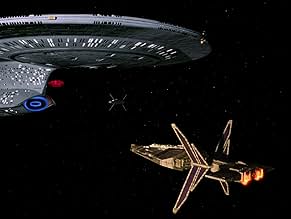
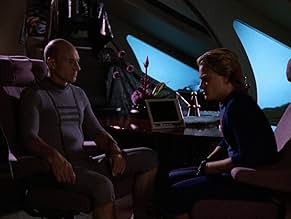
On a mission to an alien training mission, they discover one of its trainees to be a human.On a mission to an alien training mission, they discover one of its trainees to be a human.On a mission to an alien training mission, they discover one of its trainees to be a human.
K.C. Amos
- Operations Division Officer
- (uncredited)
Rachen Assapiomonwait
- Crewman Nelson
- (uncredited)
Majel Barrett
- Enterprise Computer
- (voice)
- (uncredited)
Michael Braveheart
- Crewman Martinez
- (uncredited)
Larry Echerer
- Talarian
- (uncredited)
Eben Ham
- Operations Division Ensign
- (uncredited)
Carrie Henger
- Security Officer
- (uncredited)
6.43.6K
1
2
3
4
5
6
7
8
9
10
Featured reviews
ALLUSIONS TO THE EMERALD ISLE
This episode makes several pointed (albeit unrelated and undiscussed) references to Irish history. This is surprising as none of the episode's listed writers, editors, and actors appear to be or have been Irish or even of Irish descent.
The forename of "Adm. Connaught Rossa" (played by Barbara Townsend) is a clear reference to Connaught (now called Connacht), one of the four provinces that comprise the island of Ireland.
More importantly, the character called "Jono" was born Jeremiah Rossa to human parents, although raised as a Talerian. In real life, a man called Jeremiah O'Donovan Rossa was a 19th-century Fenian. (The Fenians were the Irish rebel group which was the immediate precursor of the Irish Republican Army.) He fled the British authorities to New York City, where he lived until his death, and from whence he delegated violent attacks in London and elsewhere, often involving dynamite. He died in New York in June 1915 but his body was interred in Ireland on August 1, 1915 in a "heroes ceremony" coordinated by the Irish Republican Brotherhood for propaganda value. (The following year, the fateful Easter Rising of 1916, which would eventually lead to the severing of most of Ireland from the United Kingdom, occurred.)
The forename of "Adm. Connaught Rossa" (played by Barbara Townsend) is a clear reference to Connaught (now called Connacht), one of the four provinces that comprise the island of Ireland.
More importantly, the character called "Jono" was born Jeremiah Rossa to human parents, although raised as a Talerian. In real life, a man called Jeremiah O'Donovan Rossa was a 19th-century Fenian. (The Fenians were the Irish rebel group which was the immediate precursor of the Irish Republican Army.) He fled the British authorities to New York City, where he lived until his death, and from whence he delegated violent attacks in London and elsewhere, often involving dynamite. He died in New York in June 1915 but his body was interred in Ireland on August 1, 1915 in a "heroes ceremony" coordinated by the Irish Republican Brotherhood for propaganda value. (The following year, the fateful Easter Rising of 1916, which would eventually lead to the severing of most of Ireland from the United Kingdom, occurred.)
A Battle we too often see
A strong episode about a battle we too often see played out in the media today.
A child adopted at a young age, and raised with a good family, is suddenly taken away from the only home they have ever known, simply because his biological family now asserts a claim on them.
Regardless who the winner is in these situations, the only victim in any such battle is going to the child. Instead of possibility of growing up with two family's, they will now have to give up one of them.
How often we lose that which should have been our main focus all along. The best for the child and what they want.
A child adopted at a young age, and raised with a good family, is suddenly taken away from the only home they have ever known, simply because his biological family now asserts a claim on them.
Regardless who the winner is in these situations, the only victim in any such battle is going to the child. Instead of possibility of growing up with two family's, they will now have to give up one of them.
How often we lose that which should have been our main focus all along. The best for the child and what they want.
Vey touching, but I prefer SciFi
This was a very thoughtful episode, and actually made me tear up at the end. I love Star Trek for the Science Fiction plots, not the soap opera in space episodes. TOS Wink of an Eye (where people were sped up so that they sounded like insects), TOS Requiem for Methuselah (where a man aged hundreds of years and never died), TNG Best of Both Worlds, (where you have enemies that are nearly unconquerable and yet hey find a way to defeat them), and the TNG one (what's it called?) where Beverly Crusher ends up alone on the ship after seemingly having crew members vanish one after the other. But for a human drama episode, this was pretty good, and far more interesting than Worf and his son.
Patrick Stewart rescues it
Enterprise encounters a human boy raised by a different species.
This is an okay episode with good performances.
The story has some interesting themes, particularly the cultural clash aspects and the question of wellbeing of an individual in this type of situation.
For me it is portrayed with some contrivances and instances of over explanation. Do we need Troi to address Picard's role dealing with the situation? Is it even the correct approach? Does it feel forced into the story to fit Picard's character development? Would Worf have been a better fit to lead the story? Is the eventual "I've learned something today" speech simplistic or even necessary? Has Picard been portrayed as too astute a leader in previous episodes to accept he would not see the right course of action from the start? Why introduce a certain character only to disregard her at the story's resolution?
I think these aspects plus some others tend make the characters and plot feel a bit silly for getting to the extreme situations they are faced with.
That being said the performance of Patrick Stewart (as always) lifts the material significantly. So much so you can buy into most situations because he is such an engaging actor. He is supported well by Sherman Howard in certain scenes. Chad Allen does his best with the material he has in the key role of Jono, but the emphasis is more on the conflict between Enterprise and Talarians than the effect on his character.
This is an okay episode with good performances.
The story has some interesting themes, particularly the cultural clash aspects and the question of wellbeing of an individual in this type of situation.
For me it is portrayed with some contrivances and instances of over explanation. Do we need Troi to address Picard's role dealing with the situation? Is it even the correct approach? Does it feel forced into the story to fit Picard's character development? Would Worf have been a better fit to lead the story? Is the eventual "I've learned something today" speech simplistic or even necessary? Has Picard been portrayed as too astute a leader in previous episodes to accept he would not see the right course of action from the start? Why introduce a certain character only to disregard her at the story's resolution?
I think these aspects plus some others tend make the characters and plot feel a bit silly for getting to the extreme situations they are faced with.
That being said the performance of Patrick Stewart (as always) lifts the material significantly. So much so you can buy into most situations because he is such an engaging actor. He is supported well by Sherman Howard in certain scenes. Chad Allen does his best with the material he has in the key role of Jono, but the emphasis is more on the conflict between Enterprise and Talarians than the effect on his character.
10mschrock
Worf.....missed an interesting parallel
Enjoyed watching this episode again.
I was reminded of the missed opportunity I'd pictured when the episode first came out:
Why did they not draw some parallels to Worf's upbringing?
I understand wanting to show Picard trying out parenting skills, but there was a clear opportunity to at LEAST mention and use one scene to reflect a comparison to how Worf would have felt had he been challenged to return to Earth/Earth parents, or to Klingon empire when he was that age.
Still a good episode.
I was reminded of the missed opportunity I'd pictured when the episode first came out:
Why did they not draw some parallels to Worf's upbringing?
I understand wanting to show Picard trying out parenting skills, but there was a clear opportunity to at LEAST mention and use one scene to reflect a comparison to how Worf would have felt had he been challenged to return to Earth/Earth parents, or to Klingon empire when he was that age.
Still a good episode.
Did you know
- TriviaGeordi La Forge appears only for a very brief scene, which is actually stock footage. Prior to the filming of The Best of Both Worlds Part II (1990), LeVar Burton had had surgery and couldn't make an appearance.
- GoofsData clearly checks his cards when playing the card game. As an android, he would not need to check what cards he has; they would be committed to memory. He could, of course, be 'mimicking' human behavior. In reality, he was checking so that viewers at home could see his hand.
The "mimicking" statement is accurate. Data has often indicated his desire to be "more human" as is exemplified by the conversation when Wesley's face is covered with a banana split.
- Quotes
Captain Jean-Luc Picard: Ever since I was a child, I've always known exactly what I wanted to do: be a member of Starfleet. Nothing else mattered to me. Virtually my entire youth was spent in the pursuit of that goal. In fact... I probably skipped my childhood altogether.
- ConnectionsEdited into Star Trek: The Next Generation: Force of Nature (1993)
- SoundtracksStar Trek: The Next Generation Main Title
Composed by Jerry Goldsmith and Alexander Courage
Details
- Runtime
- 46m
- Color
- Sound mix
Contribute to this page
Suggest an edit or add missing content