The Pervert's Guide to Cinema
- 2006
- 2h 30m
IMDb RATING
7.8/10
7.6K
YOUR RATING

Slavoj Zizek examines famous films in a philosophical and a psychoanalytic context.Slavoj Zizek examines famous films in a philosophical and a psychoanalytic context.Slavoj Zizek examines famous films in a philosophical and a psychoanalytic context.
- Director
- Writer
- Stars
- Awards
- 1 nomination total



- Director
- Writer
- All cast & crew
- Production, box office & more at IMDbPro
7.87.6K
1
2
3
4
5
6
7
8
9
10
Featured reviews
Isn't It Perverse To Have Artificial Desires?
Bear in mind, any film (let alone documentary) which asserts any kind of truth, will generate an adverse and proportional amount of cynicism, from those to whom any suggestion of and or search for truths is already meaningless, those of you who are already Masters of psychology, film, and captains of the soul, will no doubt find this movie redundant, after all, you already know everything there is to know. Congrats.
For those of us in the minority like myself, I found "The Perverts Guide To Cinmea"....mostly brilliant, and worth watching for those interested in movies, psychology, and modern philosophy.
A little like Scott Mclouds' "Understanding Comics", director Sophie Fiennes, inter-grates Slovene philosopher, psychologist, and social critic Slavoj Zizek right into many of the films and specif scenes he discusses. The cover is an image from "The Birds"(Zizek takes a boat out to re-create the shot).
Lacanian Psycho-analysis, does not necessarily scream, an evening of great fun...but it is! If you like movies that is.... Having some knowledge of Lacanian psycho-analysis helps (Symbolic, Real, and Imaginary) are terms which get thrown around a little loosely at first, but the scenes which Zizek selects and analyze make remarkably clear what was always for me, a very abstract subject. In fact, it's probably better to have a familiarity with the films he's discussing than with the terminology he uses, which becomes clearer as the film goes on.
Why I love, this film isn't because it picks great films to analyze or reveals great truths about Lacan, but shows in a very practical and clever manner, where film and psychology (and by default philosophy) meet.
Why is "The Sound Of Music" kinda fascistic, why is "Short Cuts" about more than just class and alienation, why do the birds attack in "The Birds", what is there to learn about the mind from "Alien Resurrection", what does the planet of "Solaris" want, what does "Psycho" and "The Marx Brothers" have to do with each other, and what the hell is David Lynch getting across in movie after movie...well Zizek has some ideas.
The role of the voice in both "The Excorcist" and "Star Wars: Revenge Of The Sith", is maybe the movies strongest and most lucid moment, when he gets into feminine sexual subjectivity I begin to wonder...at one point Zizek admits his feeling that flowers are a kind of decorative vagina dentatta, that they are disgusting and should be hidden from children (jokingly, it seems but...).
Anyway, it's a fascinating documentary, which anyone who has ever seen a movie, and thought it meant something more than was literally stated, should make an attempt to see.
And anyone interested in Slavoj Zizek, this is a must as well, much less dry than "Reality Of The Virtual", and more direct than "Zizek!", two other pseudo-docs, about "the Elvis of contemporary cultural criticism", as he is being dubbed, in the English speaking world.
"The Perverts Guide To Cinema" is NOT about the role of sex in cinema. Zizek claims cinema is the ultimate pervert art, because it teaches "how to desire, and not what to desire", and that it is the only contemporary art form that can allow for these desires to be articulated. This is not a film about finding the reality in cinema, it's about finding the cinema in reality, and how important and exciting that can be. Hard to find, and a bit long, but well worth the trouble, one of the most "stimulating" movie watching experiences I've ever had.
For those of us in the minority like myself, I found "The Perverts Guide To Cinmea"....mostly brilliant, and worth watching for those interested in movies, psychology, and modern philosophy.
A little like Scott Mclouds' "Understanding Comics", director Sophie Fiennes, inter-grates Slovene philosopher, psychologist, and social critic Slavoj Zizek right into many of the films and specif scenes he discusses. The cover is an image from "The Birds"(Zizek takes a boat out to re-create the shot).
Lacanian Psycho-analysis, does not necessarily scream, an evening of great fun...but it is! If you like movies that is.... Having some knowledge of Lacanian psycho-analysis helps (Symbolic, Real, and Imaginary) are terms which get thrown around a little loosely at first, but the scenes which Zizek selects and analyze make remarkably clear what was always for me, a very abstract subject. In fact, it's probably better to have a familiarity with the films he's discussing than with the terminology he uses, which becomes clearer as the film goes on.
Why I love, this film isn't because it picks great films to analyze or reveals great truths about Lacan, but shows in a very practical and clever manner, where film and psychology (and by default philosophy) meet.
Why is "The Sound Of Music" kinda fascistic, why is "Short Cuts" about more than just class and alienation, why do the birds attack in "The Birds", what is there to learn about the mind from "Alien Resurrection", what does the planet of "Solaris" want, what does "Psycho" and "The Marx Brothers" have to do with each other, and what the hell is David Lynch getting across in movie after movie...well Zizek has some ideas.
The role of the voice in both "The Excorcist" and "Star Wars: Revenge Of The Sith", is maybe the movies strongest and most lucid moment, when he gets into feminine sexual subjectivity I begin to wonder...at one point Zizek admits his feeling that flowers are a kind of decorative vagina dentatta, that they are disgusting and should be hidden from children (jokingly, it seems but...).
Anyway, it's a fascinating documentary, which anyone who has ever seen a movie, and thought it meant something more than was literally stated, should make an attempt to see.
And anyone interested in Slavoj Zizek, this is a must as well, much less dry than "Reality Of The Virtual", and more direct than "Zizek!", two other pseudo-docs, about "the Elvis of contemporary cultural criticism", as he is being dubbed, in the English speaking world.
"The Perverts Guide To Cinema" is NOT about the role of sex in cinema. Zizek claims cinema is the ultimate pervert art, because it teaches "how to desire, and not what to desire", and that it is the only contemporary art form that can allow for these desires to be articulated. This is not a film about finding the reality in cinema, it's about finding the cinema in reality, and how important and exciting that can be. Hard to find, and a bit long, but well worth the trouble, one of the most "stimulating" movie watching experiences I've ever had.
Freud on brilliant parade with a mind-expanding look at the powers of cinema, and what makes up fantasy and/or reality
There's the danger with the critic/philosopher Slavoj Zizek with his film, directed by Sophie Fiennes, which takes together a wonderful amalgam of silent, horror, sci-fi, surreal and other contemporary thrillers together to make his points ofr Freudian comparisons to overload. But in the Pervert's Guide to Cinema he also makes even the more far-reaching points a point of departure from any other analysis I've seen on a collective section of films. While it doesn't cover the expansive territory Scorsese's movie documentaries cover, the same attachments are there, and Zizek has a definite love for all of these "perverse" examples and films, primarily the work of Hitchcock, Lynch, Chaplin and Tarkovsky. Yet one shouldn't go into seeing this- if you can find it that is, I got to see it almost by luck- thinking Zizek will just try and dissect all of the psycho-sexual parts or parts referring it in an obtuse, deranged manner. If anything he opens up one to points that might never be considered otherwise- would one think of three of the Marx brothers as representations of the Id, Super-Ego and Ego (Harpo's example is most dead-on for me).
He's not just one to take on the classics though, he also considers the food for thought in The Matrix and Fight Club- in representations of the split between fantasy and reality and if the matrix needs the energy as much as the energy needs the matrix for the former, and in the attachment of violence in dealing with one's own self as well as ones double in the latter. He even throws in a piece from the pivotal moment in Revenge of the Sith when Anakin becomes Darth Vader, and the implications of shunning away fatherhood under that back mask at the very moment his children's births happens elsewhere. The ideals of fatherhood, male sexuality, the male point of view in turning fantasy into reality (at which point Zizek rightfully points to as the moment of a nightmare's creation), and female subjectivity, are explored perhaps most dead-on with Vertigo. This too goes for a scene that Zizek deconstructs as if it's the Zapruder film, where he dissects the three colliding points of psycho-sexual stance in the 'don't you look at me' scene in Blue Velvet.
Now it would be one thing if Zizek himself went about making these sincere, excited, and somehow plausible points just face on to the camera or mostly in voice-over as Scorsese does. But he goes a step further to accentuate his points of fantasy and reality, and how they overlap, intersect, become one and the same, or spread off more crucially into some netherworld or primordial feeling for some characters (i.e. Lost Highway) by putting himself IN the locations the films take place in. Funniest is first seeing him in the boat "heading" towards the same dock Tippi Hedren's boat heads to at the beginning of the Birds; equally funny is as he waters the Blue Velvet lawn he goes on to explain the multi-faceted points of Frank Booth; only one, when he's in Solaris-like territory, does it seem a little cheesy. But Zizek seems to be having a lot of fun with this set-up, and after a while one bypasses the potential crux of this gimmick and Zizek's words come through.
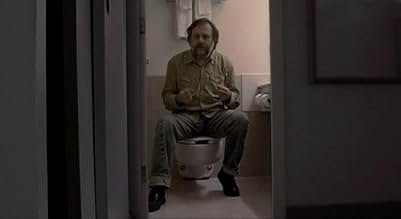
There were some films I of course would've expected, chiefly from Hitchcock and Lynch, but a treat for movie buffs come from seeing two things- the movies that one would never think of seeing in a film about films titled the Pervert's Guide of Cinema (top two for me would be the Disney Pluto cartoon and the exposition on Chaplin's films, albeit with a great note about the power and distinction of 'voice'), and the ones that one hasn't seen yet (i.e. the ventriloquist horror film, Dr. Mabuse, Stalker, among a few others) that inspire immediate feelings of 'wow, I have to see that immediately, no questions asked.' Zizek is a powerful writer with his work, and puts it forward with a clarity that reminds one why we watch movies in the first place, to be entertained, sure, but also to have that actual experience of sitting down and having something up there, as he put it, looking into a toilet. It's probably one of the greatest films about cinema, and in such a splendidly narrow analysis of how Freud works its way into films regarding desire, the Id/Super-Ego/Ego, and of the supernatural in fantasy, that you may never see...unless distribution finally kicks in, if only on the smallest levels.
He's not just one to take on the classics though, he also considers the food for thought in The Matrix and Fight Club- in representations of the split between fantasy and reality and if the matrix needs the energy as much as the energy needs the matrix for the former, and in the attachment of violence in dealing with one's own self as well as ones double in the latter. He even throws in a piece from the pivotal moment in Revenge of the Sith when Anakin becomes Darth Vader, and the implications of shunning away fatherhood under that back mask at the very moment his children's births happens elsewhere. The ideals of fatherhood, male sexuality, the male point of view in turning fantasy into reality (at which point Zizek rightfully points to as the moment of a nightmare's creation), and female subjectivity, are explored perhaps most dead-on with Vertigo. This too goes for a scene that Zizek deconstructs as if it's the Zapruder film, where he dissects the three colliding points of psycho-sexual stance in the 'don't you look at me' scene in Blue Velvet.
Now it would be one thing if Zizek himself went about making these sincere, excited, and somehow plausible points just face on to the camera or mostly in voice-over as Scorsese does. But he goes a step further to accentuate his points of fantasy and reality, and how they overlap, intersect, become one and the same, or spread off more crucially into some netherworld or primordial feeling for some characters (i.e. Lost Highway) by putting himself IN the locations the films take place in. Funniest is first seeing him in the boat "heading" towards the same dock Tippi Hedren's boat heads to at the beginning of the Birds; equally funny is as he waters the Blue Velvet lawn he goes on to explain the multi-faceted points of Frank Booth; only one, when he's in Solaris-like territory, does it seem a little cheesy. But Zizek seems to be having a lot of fun with this set-up, and after a while one bypasses the potential crux of this gimmick and Zizek's words come through.
There were some films I of course would've expected, chiefly from Hitchcock and Lynch, but a treat for movie buffs come from seeing two things- the movies that one would never think of seeing in a film about films titled the Pervert's Guide of Cinema (top two for me would be the Disney Pluto cartoon and the exposition on Chaplin's films, albeit with a great note about the power and distinction of 'voice'), and the ones that one hasn't seen yet (i.e. the ventriloquist horror film, Dr. Mabuse, Stalker, among a few others) that inspire immediate feelings of 'wow, I have to see that immediately, no questions asked.' Zizek is a powerful writer with his work, and puts it forward with a clarity that reminds one why we watch movies in the first place, to be entertained, sure, but also to have that actual experience of sitting down and having something up there, as he put it, looking into a toilet. It's probably one of the greatest films about cinema, and in such a splendidly narrow analysis of how Freud works its way into films regarding desire, the Id/Super-Ego/Ego, and of the supernatural in fantasy, that you may never see...unless distribution finally kicks in, if only on the smallest levels.
Famous movies on the psychoanalyst's couch
Famous movies are subject to Freudian analysis: Possessed, The Matrix, The Birds, Psycho, Vertigo, Duck Soup, Monkey Business, The Exorcist, The Testament of Dr Mabuse, Alien, Alien Resurrection, The Great Dictator, City Lights, The Tramp, Alice in Wonderland, The Wizard of Oz, Dr Strangelove, The Red Shoes, Fight Club, Dead of Night, The Conversation, Blue Velvet, Solaris, Stalker, Mulholland Drive, Lost Highway, Persona, In The Cut, Eyes Wide Shut, The Piano Teacher, Three Colours: Blue, Dogville, Frankenstein, The Ten Commandments, Saboteur, Rear Window, To Catch a Thief, North by Northwest, Star Wars, Dune, Kubanskie Kazaki, Ivan The Terrible, Pluto's Judgment Day (Walt Disney), Wild at Heart.
You may wonder how the Marx Brothers come into play. According To Slavoj Zizek, the host and analyst of this intellectually tickling tour de force, Groucho is the superego, Chico the ego, and Harpo the id.
Scenes from the above listed films are used to illustrate concepts: the role of fantasy in shaping reality and vice-versa, the father figure, male and female libido, death drive, etc. Here are some of Slavoj utterances (most as paraphrases): "desire is a wound on reality", "fantasy realized is a nightmare", "music is the opium of the people" (borrowing from K. Marx), "of all human emotions, anxiety is the only one that is not deceiving". The whole is bracketed by an intro that declares "you don't look for your desires in movies, instead cinema tells you what you should desire" and concludes with the cineaste view that "cinema is needed today so that we can understand our current reality" -- I say, as long as censorship doesn't derail it.
The three part subdivision is merely mechanical, possibly with TV screening in mind. For the theater goer it is irrelevant.
You may wonder how the Marx Brothers come into play. According To Slavoj Zizek, the host and analyst of this intellectually tickling tour de force, Groucho is the superego, Chico the ego, and Harpo the id.
Scenes from the above listed films are used to illustrate concepts: the role of fantasy in shaping reality and vice-versa, the father figure, male and female libido, death drive, etc. Here are some of Slavoj utterances (most as paraphrases): "desire is a wound on reality", "fantasy realized is a nightmare", "music is the opium of the people" (borrowing from K. Marx), "of all human emotions, anxiety is the only one that is not deceiving". The whole is bracketed by an intro that declares "you don't look for your desires in movies, instead cinema tells you what you should desire" and concludes with the cineaste view that "cinema is needed today so that we can understand our current reality" -- I say, as long as censorship doesn't derail it.
The three part subdivision is merely mechanical, possibly with TV screening in mind. For the theater goer it is irrelevant.
one naughty ride
"Cinema is the ultimate pervert art. It doesn't give you what you desire; it tells you how to desire."
So begins "The Pervert's Guide to Cinema," in which Slovenian philosopher and psychoanalyst Slavoj Zizek applies his Freudian/Lacanian brain-scalpel to world cinema. This film in three parts is the second feature documentary directed by Sophie Fiennes (yes, sister of Ralph and Joseph), and it is a notable accomplishment, clocking in at 2 1/2 hours of talk from one man and yet remaining humorous and engaging throughout. In essence, it is an extended film lecture, and one of the best you may ever get. Over the course of the film, Zizek guides us through a catalog of obsession and desire in film history. He touches on more than 40 films and, in particular, spends a great deal of time with Hitchcock, Lynch, Chaplin, Tarkovsky, the Marx Brothers, and Eisenstein. But he also takes a close look at "Persona," "The Conversation," "Three Colors: Blue," "Dogville," "Fight Club," and "The Exorcist." Thematically, Zizek's inquiry into cinema ranges from thoughts on the death drive to the "coordinates of desire," and from Gnosticism to "partial objects."
"The Pervert's Guide" will be a slightly better experience if you've taken a few minutes to bone up on your basic Freudian terminology. However, even if you're not steeped in psychoanalytic theory, Zizek's dynamic and hilarious personality carries the film forward with such gusto that you aren't likely to balk at the specialized lingo. The film frequently cuts from movie clips to images of Zizek *inside* the movie he is talking about--that is, in the original locations and sets. The transitions in these sequences sustain such tension and humor that the trick never gets old. And Zizek himself is constantly making us laugh, either from bizarre little jokes or from his enthusiastic insistence on, for example, a bold Oedipal interpretation of "The Birds." And this go-ahead-and-laugh attitude, on the parts of both Fiennes and Zizek, is essential to the gonzo character of the film. It is the spoonful of sugar that helps us digest Zizek's weird medicine. After all, don't we all have a sense that, past a certain point, psychology theorists are just pulling our legs?
So begins "The Pervert's Guide to Cinema," in which Slovenian philosopher and psychoanalyst Slavoj Zizek applies his Freudian/Lacanian brain-scalpel to world cinema. This film in three parts is the second feature documentary directed by Sophie Fiennes (yes, sister of Ralph and Joseph), and it is a notable accomplishment, clocking in at 2 1/2 hours of talk from one man and yet remaining humorous and engaging throughout. In essence, it is an extended film lecture, and one of the best you may ever get. Over the course of the film, Zizek guides us through a catalog of obsession and desire in film history. He touches on more than 40 films and, in particular, spends a great deal of time with Hitchcock, Lynch, Chaplin, Tarkovsky, the Marx Brothers, and Eisenstein. But he also takes a close look at "Persona," "The Conversation," "Three Colors: Blue," "Dogville," "Fight Club," and "The Exorcist." Thematically, Zizek's inquiry into cinema ranges from thoughts on the death drive to the "coordinates of desire," and from Gnosticism to "partial objects."
"The Pervert's Guide" will be a slightly better experience if you've taken a few minutes to bone up on your basic Freudian terminology. However, even if you're not steeped in psychoanalytic theory, Zizek's dynamic and hilarious personality carries the film forward with such gusto that you aren't likely to balk at the specialized lingo. The film frequently cuts from movie clips to images of Zizek *inside* the movie he is talking about--that is, in the original locations and sets. The transitions in these sequences sustain such tension and humor that the trick never gets old. And Zizek himself is constantly making us laugh, either from bizarre little jokes or from his enthusiastic insistence on, for example, a bold Oedipal interpretation of "The Birds." And this go-ahead-and-laugh attitude, on the parts of both Fiennes and Zizek, is essential to the gonzo character of the film. It is the spoonful of sugar that helps us digest Zizek's weird medicine. After all, don't we all have a sense that, past a certain point, psychology theorists are just pulling our legs?
This is a film about critical theory!
The person who wrote the review "enough with the sweating and spitting already" has no grasp of what cultural, literary, or psycho- critique is. He dismisses Zizek's interpretations because they don't seem "in line" with what the director originally intended. So What? The importance of a director's (or author's) intention is not important in critical theory. This is known as the author's "Intentional Fallacy" and should be avoided.
http://en.wikipedia.org/wiki/Intentional_fallacy A text or movie CAN be analyzed through a number of theories, many of which disagree with one another, as well as completely ignore the author's intention. This is the most fundamental idea of Critical Theory.
Because of this, whoever wrote that wall of text wasted a lot of time and effort on insulting Zizek. In reality, anyone who studies theory would immediately discredit this guys opinion (I suggest you should too) as it is completely off point.
That being said... If you are at all interested in Freudian, Laconian, or Kristevian discourse, this movie is a must. It connects these theories with popular film, making them much more palpable and enjoyable than simply reading or thinking about them.
http://en.wikipedia.org/wiki/Intentional_fallacy A text or movie CAN be analyzed through a number of theories, many of which disagree with one another, as well as completely ignore the author's intention. This is the most fundamental idea of Critical Theory.
Because of this, whoever wrote that wall of text wasted a lot of time and effort on insulting Zizek. In reality, anyone who studies theory would immediately discredit this guys opinion (I suggest you should too) as it is completely off point.
That being said... If you are at all interested in Freudian, Laconian, or Kristevian discourse, this movie is a must. It connects these theories with popular film, making them much more palpable and enjoyable than simply reading or thinking about them.


Did you know
- Quotes
[last lines]
Slavoj Zizek: In order to understand today's world, we need cinema, literally. It's only in cinema that we get that crucial dimension which we are not ready to confront in our reality. If you are looking for what is in reality more real that reality itself, look into the cinematic fiction.
- ConnectionsFeatures City Lights (1931)
Details
- Release date
- Countries of origin
- Official sites
- Language
- Also known as
- Manual de cine para pervertidos
- Filming locations
- Production companies
- See more company credits at IMDbPro
Box office
- Gross worldwide
- $9,633
- Runtime
- 2h 30m(150 min)
- Color
- Aspect ratio
- 1.78 : 1
Contribute to this page
Suggest an edit or add missing content