

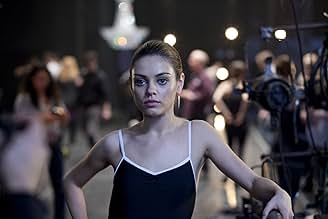
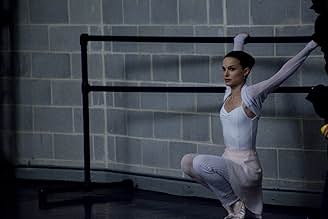
Nina is a talented but unstable ballerina on the verge of stardom. Pushed to the breaking point by her artistic director and a seductive rival, Nina's grip on reality slips, plunging her int... Read allNina is a talented but unstable ballerina on the verge of stardom. Pushed to the breaking point by her artistic director and a seductive rival, Nina's grip on reality slips, plunging her into a waking nightmare.Nina is a talented but unstable ballerina on the verge of stardom. Pushed to the breaking point by her artistic director and a seductive rival, Nina's grip on reality slips, plunging her into a waking nightmare.
- Director
- Writers
- Stars
- Won 1 Oscar
- 98 wins & 279 nominations total








Abraham Aronofsky
- Mr. Stein
- (as Abe Aronofsky)
- …


- Director
- Writers
- All cast & crew
- Production, box office & more at IMDbPro
8.0876.4K
1
2
3
4
5
6
7
8
9
10
Summary
Reviewers say 'Black Swan' is acclaimed for its psychological drama, with Natalie Portman's compelling performance as a ballerina. The film delves into obsession, perfection, and duality, using visual elements like colors and mirrors. Critics praise the choreography and ballet portrayal, though some find horror elements overdone. The supporting cast enhances the atmosphere, making 'Black Swan' notable for its bold storytelling despite mixed opinions on certain aspects.
Featured reviews
An epic and nightmarish delight
Natalie Portman lives a dream and a nightmare when she gets a chance to dance Swan Lake in Darren Aronofsky's new film
Black Swan is a very bi polarized film. Portman dances as the white swan flawlessly, but her 'brilliant' choreographer has doubts about her as the black swan. She needs to 'live a little' and be less mannered, but the closer she gets to that point, the more the walls start to close in all around her.
Darren Aronofsky, though he comes close to being heavy handed, has delivered a project which is fiery, spectacular and clever. He sells us ballet as something dark and off putting, starting from his decision to reveal what dancing does to peoples bodies. One mistake and you can crack a toe nail under your body weight, but I don't wanna oversell it. To look at Black Swan in another way, it is an operatic horror film, It has incredible style, but uses it not so much to dazzle but to confuse and intimidate. The paradox of Black swan is that it creepiness is kind of seductive, because it draws you in (much like the way vampires are supposedly romantic)
But style is only half the picture (not even). The rest is in the cast, and mostly in Natalie Portman. She is slow to get started, but she grows quickly and the result is arguably her best performance yet. I've never loved her that much. She's always struck me as more of a girl than a woman, but I guess all she needs is to get a little blood on her hands, and you have an award worthy performance. Vincent Cassel, though he gets some questionable lines, is also at his best. I would have almost liked to see more of him, because you get the sense that his role has a bit more room to grow.
Black Swan does quite a bit, but it's not for everyone. Do not go into this expecting to be emotionally enriched. From the beginning, it is staged to be a mind-twirl, delighting in playing tricks on the audience. Some might call it cheating, but that would be the wrong way to look at Black Swan. It's quite epic, and with year coming to an end, I think it's fair to say that it is among the best of 2010.
Black Swan is a very bi polarized film. Portman dances as the white swan flawlessly, but her 'brilliant' choreographer has doubts about her as the black swan. She needs to 'live a little' and be less mannered, but the closer she gets to that point, the more the walls start to close in all around her.
Darren Aronofsky, though he comes close to being heavy handed, has delivered a project which is fiery, spectacular and clever. He sells us ballet as something dark and off putting, starting from his decision to reveal what dancing does to peoples bodies. One mistake and you can crack a toe nail under your body weight, but I don't wanna oversell it. To look at Black Swan in another way, it is an operatic horror film, It has incredible style, but uses it not so much to dazzle but to confuse and intimidate. The paradox of Black swan is that it creepiness is kind of seductive, because it draws you in (much like the way vampires are supposedly romantic)
But style is only half the picture (not even). The rest is in the cast, and mostly in Natalie Portman. She is slow to get started, but she grows quickly and the result is arguably her best performance yet. I've never loved her that much. She's always struck me as more of a girl than a woman, but I guess all she needs is to get a little blood on her hands, and you have an award worthy performance. Vincent Cassel, though he gets some questionable lines, is also at his best. I would have almost liked to see more of him, because you get the sense that his role has a bit more room to grow.
Black Swan does quite a bit, but it's not for everyone. Do not go into this expecting to be emotionally enriched. From the beginning, it is staged to be a mind-twirl, delighting in playing tricks on the audience. Some might call it cheating, but that would be the wrong way to look at Black Swan. It's quite epic, and with year coming to an end, I think it's fair to say that it is among the best of 2010.
Engaging psychological horror despite not being as "high-brow" as the ballet frame suggests
Esteemed IMDb writer Theo Robertson messaged me the other day about this film and, while I skimmed it for fear of having him influence me in terms of his opinion, I did read that several older people had walked out of this film, seemingly having expected some sort of high-brow film with its roots in ballet. One can understand why because with all the award buzz and the superficial subject matter (ballet) combined with the actress and of course the previous work of the director, this must surely be an intelligent piece to be "appreciated" and "considered". What one wouldn't expect would be a film that, with a bit more gore, could easily be just another trashy horror/thriller that is released on video and has plenty of sex, violence and jump scares to it.
Well, got news for you, this is what Black Swan is – albeit a superior example of the genre. Essentially our lead character struggles to get in touch with her dark side when she wins the lead in Swan Lake, gradually losing touch with reality and/or being hunted by those around her who wish her harm. This manifests itself through some painful scenes of self-harm, imagined doppelgangers, intense sexual discovery, shadowy figures and a domineering mother who keeps her controlling menace under a veil of vulnerability that only falls here or there. It is trashy stuff in a way but it is done very well so that it produces this genre material but does so in a way that feels slightly classy while also engaging more than it would thanks to a brilliant turn by Portman.
And she is brilliant. I understand the mother because of how well Portman plays – this is not a character she has worked on for a few months, this feels like a product of years under the influence of this mother. She is nervous to her core, frustrated by her own inability to be this "thing" that she has spent her life not being – wild, loose, imperfect. Portman nails it and while I don't think it is a brilliant film, her performance is little less than brilliant. In support Hersey is equally as good with less time to do it. The flickers across her face say so much and I was impressed that with so little I was able to understand roughly what had happened in the previous 20 years. Cassel is simplistic but effective in his predatory director turn. Kunis is unbelievably sexual and again she helps the lead role by showing us everything that Nina struggles to find in herself. Ryder is solid in a smaller role. Aronofsky's direction is strong but particularly impressive is the cinematography – the camera flows so well around the scenes (and yet appears in no mirrors). I think he knows he is making a horror movie so, although he embraces the ballet, he doesn't avoid the shock or the build of the horror.
Some have embraced this film as art and a thing of beauty – while others have come away disappointed because that is what they expected it to be but didn't find it. However Black Swan is an effective psychological horror movie that just happens to be set in the world of ballet. As such it is very much a genre movie even if the director etc lift it to feel like more. In particular Portman makes the film – I cannot think I have seen her better and her Oscar (can there be doubt?) will be deserved.
Well, got news for you, this is what Black Swan is – albeit a superior example of the genre. Essentially our lead character struggles to get in touch with her dark side when she wins the lead in Swan Lake, gradually losing touch with reality and/or being hunted by those around her who wish her harm. This manifests itself through some painful scenes of self-harm, imagined doppelgangers, intense sexual discovery, shadowy figures and a domineering mother who keeps her controlling menace under a veil of vulnerability that only falls here or there. It is trashy stuff in a way but it is done very well so that it produces this genre material but does so in a way that feels slightly classy while also engaging more than it would thanks to a brilliant turn by Portman.
And she is brilliant. I understand the mother because of how well Portman plays – this is not a character she has worked on for a few months, this feels like a product of years under the influence of this mother. She is nervous to her core, frustrated by her own inability to be this "thing" that she has spent her life not being – wild, loose, imperfect. Portman nails it and while I don't think it is a brilliant film, her performance is little less than brilliant. In support Hersey is equally as good with less time to do it. The flickers across her face say so much and I was impressed that with so little I was able to understand roughly what had happened in the previous 20 years. Cassel is simplistic but effective in his predatory director turn. Kunis is unbelievably sexual and again she helps the lead role by showing us everything that Nina struggles to find in herself. Ryder is solid in a smaller role. Aronofsky's direction is strong but particularly impressive is the cinematography – the camera flows so well around the scenes (and yet appears in no mirrors). I think he knows he is making a horror movie so, although he embraces the ballet, he doesn't avoid the shock or the build of the horror.
Some have embraced this film as art and a thing of beauty – while others have come away disappointed because that is what they expected it to be but didn't find it. However Black Swan is an effective psychological horror movie that just happens to be set in the world of ballet. As such it is very much a genre movie even if the director etc lift it to feel like more. In particular Portman makes the film – I cannot think I have seen her better and her Oscar (can there be doubt?) will be deserved.
A Swan Dive into Darkness
Darren Aronofsky's "Black Swan" makes ballet cool—and if that isn't a Herculean feat in itself, I don't know what is. It also happens to be one of the best films of the year, featuring one of the best performances of the year. Natalie Portman will be nominated for her devastating portrayal of petite perfectionist Nina the ballerina or I'll pull a Werner Herzog and eat my shoe.
"Black Swan" is cut from the same cloth as Aronofsky's 2008 film "The Wrestler," if at the opposite end. Interestingly, before either project was realized, the director was reportedly mulling a drama about the relationship between a professional wrestler and a ballerina. Somewhere along the way, however, that concept was split down the middle—and thank God. "Black Swan" is brilliant, but it wouldn't necessarily play well with others.
Like its predecessor, the film examines a physically demanding and widely unappreciated art, and though thematically similar, the two complement each other via mutually exclusive cinematic vernaculars. "The Wrestler" is ultimately a safer film. Its emotional experience is directly conveyed via plot and dialogue. What Aronofsky attempts with "Black Swan" is riskier: he plays genre Frankenstein, taking established themes and transplanting them into that which feels initially least appropriate—horror.
Yet despite certain unmistakable cues, I'd hesitate to call "Black Swan" a horror film. Visually, maybe, but John Carpenter insists "The Thing" is a Western, and likewise there is more to "Black Swan" than is aesthetically obvious. It probably best fits the psychological thriller mold, but as Aronofsky suggests through his manipulation of mirrors, it is not a film that ever casts a clear reflection. For me, that dichotomy is what makes it so fascinating and rewarding.
"Black Swan" strikes an immediate haunting note that seems to grow louder with reverberation rather than quieter. In the first half, the director lays track work; in the second, he runs right off it. Nina begins her journey receiving the coveted role of the Swan Queen in a modernist production of Tchaikovsky's "Swan Lake." Her practiced technique makes her ideal for the role of the goodly White Swan, but her lascivious director (Vincent Cassel) has reservations about her ability to portray her evil twin, the titular Black Swan—a character that embodies impulse and lust. Nina's process of unlearning takes her to increasingly dark, surreal depths.
The final act of the film comprises the most riveting 40 minutes I've seen on screen all year, though "Black Swan" is never the mindf**k some have improperly labeled it. Aronofsky deliberately builds atmosphere and anticipation toward a Kubrickian climax that is at once obvious and stunning. Tchaikovsky's score falls like an aerial assault, and that inherent theatricality collides with Aronofsky's narrative as they come to a dual boil.
Perhaps best of all, however, is that for all the audacity on display, the director knows when to dial it back as well. The casting of Mila Kunis ("Forgetting Sarah Marshall," "That 70's Show") was idyllic. She plays a comic relief of sorts, with a comely, down-to-earth veneer but viperous eyes. Her performance is fantastically calculated—she provides derisive, but much needed perspective on Nina's deteriorating sense of reality.
"Black Swan" is a wholly effective work born from the shadowy underside of the mind, anchored by a career-defining turn by Portman. It is a quick, impulsive piece, but it explains artistic devotion and the consuming nature of obsession as well or better than any film I've ever seen. In hindsight, it feels more characteristic of the filmmaker responsible for "Pi" and "Requiem for a Dream" than "The Wrestler," though the parallels between it and "Black Swan" run deep.
They may be cut from the same cloth, but the difference between the two is as stark as black and white. Hail Aronofsky, the Swan King.
"Black Swan" is cut from the same cloth as Aronofsky's 2008 film "The Wrestler," if at the opposite end. Interestingly, before either project was realized, the director was reportedly mulling a drama about the relationship between a professional wrestler and a ballerina. Somewhere along the way, however, that concept was split down the middle—and thank God. "Black Swan" is brilliant, but it wouldn't necessarily play well with others.
Like its predecessor, the film examines a physically demanding and widely unappreciated art, and though thematically similar, the two complement each other via mutually exclusive cinematic vernaculars. "The Wrestler" is ultimately a safer film. Its emotional experience is directly conveyed via plot and dialogue. What Aronofsky attempts with "Black Swan" is riskier: he plays genre Frankenstein, taking established themes and transplanting them into that which feels initially least appropriate—horror.
Yet despite certain unmistakable cues, I'd hesitate to call "Black Swan" a horror film. Visually, maybe, but John Carpenter insists "The Thing" is a Western, and likewise there is more to "Black Swan" than is aesthetically obvious. It probably best fits the psychological thriller mold, but as Aronofsky suggests through his manipulation of mirrors, it is not a film that ever casts a clear reflection. For me, that dichotomy is what makes it so fascinating and rewarding.
"Black Swan" strikes an immediate haunting note that seems to grow louder with reverberation rather than quieter. In the first half, the director lays track work; in the second, he runs right off it. Nina begins her journey receiving the coveted role of the Swan Queen in a modernist production of Tchaikovsky's "Swan Lake." Her practiced technique makes her ideal for the role of the goodly White Swan, but her lascivious director (Vincent Cassel) has reservations about her ability to portray her evil twin, the titular Black Swan—a character that embodies impulse and lust. Nina's process of unlearning takes her to increasingly dark, surreal depths.
The final act of the film comprises the most riveting 40 minutes I've seen on screen all year, though "Black Swan" is never the mindf**k some have improperly labeled it. Aronofsky deliberately builds atmosphere and anticipation toward a Kubrickian climax that is at once obvious and stunning. Tchaikovsky's score falls like an aerial assault, and that inherent theatricality collides with Aronofsky's narrative as they come to a dual boil.
Perhaps best of all, however, is that for all the audacity on display, the director knows when to dial it back as well. The casting of Mila Kunis ("Forgetting Sarah Marshall," "That 70's Show") was idyllic. She plays a comic relief of sorts, with a comely, down-to-earth veneer but viperous eyes. Her performance is fantastically calculated—she provides derisive, but much needed perspective on Nina's deteriorating sense of reality.
"Black Swan" is a wholly effective work born from the shadowy underside of the mind, anchored by a career-defining turn by Portman. It is a quick, impulsive piece, but it explains artistic devotion and the consuming nature of obsession as well or better than any film I've ever seen. In hindsight, it feels more characteristic of the filmmaker responsible for "Pi" and "Requiem for a Dream" than "The Wrestler," though the parallels between it and "Black Swan" run deep.
They may be cut from the same cloth, but the difference between the two is as stark as black and white. Hail Aronofsky, the Swan King.
Amazing Natalie Portman performance
Nina Sayers (Natalie Portman) is a New York City ballerina living with her overbearing mother (Barbara Hershey). The prima ballerina Beth MacIntyre (Winona Ryder) is being replaced for the opening production of Swan Lake. Nina is the favorite, but new dancer Lily (Mila Kunis) is impressive as well. Nina fits the role of the beautiful, fearful, fragile White Swan perfectly, but she can't get the Black Swan role right unlike Lily. She's obsessed with her deteriorating body as her paranoid mind collapses.
This is a great performance from Natalie Portman. There's a sense of chaos and insanity falling down on her. It definitely has the sensibility of director Darren Aronofsky. Although I do wonder where he's going with this movie at times. It has a realism and a horror feel to the movie. Portman's body slowly turns into a horror show is reminiscent of Jeff Goldblum picking apart his body in 'The Fly'. Mila Kunis is playing a pretty interesting mean girl, or is it all in Nina's head. That's the beauty of this movie. It plays not just with Nina's mind, but the audience's mind.
This is a great performance from Natalie Portman. There's a sense of chaos and insanity falling down on her. It definitely has the sensibility of director Darren Aronofsky. Although I do wonder where he's going with this movie at times. It has a realism and a horror feel to the movie. Portman's body slowly turns into a horror show is reminiscent of Jeff Goldblum picking apart his body in 'The Fly'. Mila Kunis is playing a pretty interesting mean girl, or is it all in Nina's head. That's the beauty of this movie. It plays not just with Nina's mind, but the audience's mind.
Black swan song
Darren Aronofsky is a filmmaker who, over the course of five films, has thoroughly explored the various ways in which people can be consumed when their passions become self-destructive obsessions. It seems to be a bit of an obsession in and of itself for Aronofsky, and frankly, I've been with him every step of the way. The best cinema is the kind that makes you feel something, which Aronofsky's work does in spades. Taking up residence in the darkest recesses of the human psyche is no picnic.
Nina Sayers has toiled for years and years in Thomas Leroy's New York ballet company. Having fallen on hard times, Leroy exiles his lead dancer and hopes that a fresh face in the company's upcoming version of "Swan Lake" will renew interest and revenue. Nina believes that she has what it takes to tackle the role of Swan Queen, and while Thomas chooses her for the part, he is adamant about her being able to nail both the pure innocence of the White Swan and the dark, sultry essence of the Black Swan. He doesn't feel that she is yet capable of pulling off the latter, but he suspects that she has the ability bottled up inside. Nina, ever the perfectionist, just needs to let herself go and perhaps explore her sexuality. Unfortunately, she's had to deal with an overbearing mother who has sheltered her to the point of psychological damage. Experiencing what she needs to in order to embody the Black Swan, combined with the pressure of the role and the paranoia over new girl, Lily, possibly being after her spot, may just push Nina over the edge.
"Black Swan" has been cited as a companion piece to "The Wrestler", and in many ways, it is. They even share similar instances of a pseudo-documentary shooting style. However, whereas the latter utilized such a style to create a heightened sense of realism, "Black Swan" takes the approach and creates a claustrophobic hell akin to something like Polanski's "The Tenant". It's a disorienting portrait of the madness that infects many who possess the desire to create art. Nina's sanity is in question early on, and from there, we are kept on our toes in relation to what is hallucinated and what is real. Speaking of being kept on one's toes, we get an up close look at how hard ballet is on the human body. As if the psychological turmoil wasn't enough for poor Nina, the physical toll is just as prominent.
As the ballerina seeking the pinnacle of perfection, Natalie Portman achieves that which her character so desperately desires. Her performance is a milestone, not only in her career, but in acting, period. Every ounce of praise directed toward her is richly deserved. Nina goes through a ringer of emotional changes, be it the sweet, delicate girl she starts out as, the rebellious grown-up Lily unleashes in her or the manic frenzy she's reduced to when things really get out of hand. Portman never misses a beat. When I first heard that Mila Kunis had been cast as Lily, I wasn't exactly thrilled. I'm happy to say that I was wrong about her, as she is terrific here. She made me forget all about her role on "That 70's Show". Vincent Cassel is also fantastic as Thomas Leroy, and his relationship with Nina is one of the film's strongest aspects. He had serious doubts about her, but he believed in her all the same. Enough so that he put his doubts aside and took the biggest possible risk on her. Barbara Hershey is unnerving as Nina's overprotective mother, and Winona Ryder makes the most of her brief role as Beth, the aging star whom Nina replaces.
Matthew Libatique's cinematography is beautifully realized. Combining the raw grittiness of the pseudo-documentary material with the nightmarish imagery of Nina's hallucinations and the elegance of the ballet, the film is a joy to behold. Clint Mansell's music, complete with elements from "Swan Lake", is also amazing, just as much a character as any breathing person on screen. I was disappointed that Mansell didn't have more of a presence in "The Wrestler", so I was happy to have him back in full force with "Black Swan".
Aronofsky is my favorite director to come along in the last 20 years or so. "Pi" was a solid debut, "Requiem for a Dream" is an utter masterpiece (still my favorite film in general), "The Fountain" is an underrated gem and "The Wrestler" is a strong character study. I'm pleased, but not surprised, to say that "Black Swan" is another film that further solidifies his position as a master filmmaker. As for Portman, she doesn't need the "Best Actress" Oscar to solidify how great she is. Besides, after Sandra Bullock "won" last year, they'll obviously give that award to anybody.
Nina Sayers has toiled for years and years in Thomas Leroy's New York ballet company. Having fallen on hard times, Leroy exiles his lead dancer and hopes that a fresh face in the company's upcoming version of "Swan Lake" will renew interest and revenue. Nina believes that she has what it takes to tackle the role of Swan Queen, and while Thomas chooses her for the part, he is adamant about her being able to nail both the pure innocence of the White Swan and the dark, sultry essence of the Black Swan. He doesn't feel that she is yet capable of pulling off the latter, but he suspects that she has the ability bottled up inside. Nina, ever the perfectionist, just needs to let herself go and perhaps explore her sexuality. Unfortunately, she's had to deal with an overbearing mother who has sheltered her to the point of psychological damage. Experiencing what she needs to in order to embody the Black Swan, combined with the pressure of the role and the paranoia over new girl, Lily, possibly being after her spot, may just push Nina over the edge.
"Black Swan" has been cited as a companion piece to "The Wrestler", and in many ways, it is. They even share similar instances of a pseudo-documentary shooting style. However, whereas the latter utilized such a style to create a heightened sense of realism, "Black Swan" takes the approach and creates a claustrophobic hell akin to something like Polanski's "The Tenant". It's a disorienting portrait of the madness that infects many who possess the desire to create art. Nina's sanity is in question early on, and from there, we are kept on our toes in relation to what is hallucinated and what is real. Speaking of being kept on one's toes, we get an up close look at how hard ballet is on the human body. As if the psychological turmoil wasn't enough for poor Nina, the physical toll is just as prominent.
As the ballerina seeking the pinnacle of perfection, Natalie Portman achieves that which her character so desperately desires. Her performance is a milestone, not only in her career, but in acting, period. Every ounce of praise directed toward her is richly deserved. Nina goes through a ringer of emotional changes, be it the sweet, delicate girl she starts out as, the rebellious grown-up Lily unleashes in her or the manic frenzy she's reduced to when things really get out of hand. Portman never misses a beat. When I first heard that Mila Kunis had been cast as Lily, I wasn't exactly thrilled. I'm happy to say that I was wrong about her, as she is terrific here. She made me forget all about her role on "That 70's Show". Vincent Cassel is also fantastic as Thomas Leroy, and his relationship with Nina is one of the film's strongest aspects. He had serious doubts about her, but he believed in her all the same. Enough so that he put his doubts aside and took the biggest possible risk on her. Barbara Hershey is unnerving as Nina's overprotective mother, and Winona Ryder makes the most of her brief role as Beth, the aging star whom Nina replaces.
Matthew Libatique's cinematography is beautifully realized. Combining the raw grittiness of the pseudo-documentary material with the nightmarish imagery of Nina's hallucinations and the elegance of the ballet, the film is a joy to behold. Clint Mansell's music, complete with elements from "Swan Lake", is also amazing, just as much a character as any breathing person on screen. I was disappointed that Mansell didn't have more of a presence in "The Wrestler", so I was happy to have him back in full force with "Black Swan".
Aronofsky is my favorite director to come along in the last 20 years or so. "Pi" was a solid debut, "Requiem for a Dream" is an utter masterpiece (still my favorite film in general), "The Fountain" is an underrated gem and "The Wrestler" is a strong character study. I'm pleased, but not surprised, to say that "Black Swan" is another film that further solidifies his position as a master filmmaker. As for Portman, she doesn't need the "Best Actress" Oscar to solidify how great she is. Besides, after Sandra Bullock "won" last year, they'll obviously give that award to anybody.
Soundtrack
Preview the soundtrack here and continue listening on Amazon Music.


Did you know
- TriviaDarren Aronofsky told journalist Kim Masters in a radio interview (KCRW's "The Business" broadcast February 14, 2011) that Natalie Portman not only trained for a year as a dancer to prepare for the role, but paid for the training out of her own pocket until the film found investors. Aronofsky attributed the film getting made at all to Portman's dedication and enthusiasm. She even accepted a role in Your Highness (2011) mainly for the money in case she needed to help co-finance Black Swan.
- Goofs(at around 24 mins) When Nina returns home and looks for her mother, after being assigned a role, a camera operator is visible in a mirror.
- Crazy creditsMany cast members are credited both as their role in this film and said character's corresponding role in the Swan Lake ballet
- SoundtracksApotheosis
Written and Performed by Peter Min (as Pete Min)
Contains "Swan Lake" written by Pyotr Ilyich Tchaikovsky
Everything New on Hulu & Disney+ in December
Everything New on Hulu & Disney+ in December
Freshen up your Watchlist with the latest roster of streaming movies and TV shows coming to Hulu and Disney+, featuring old favorites and top-notch newcomers.

Details
- Release date
- Country of origin
- Official site
- Languages
- Also known as
- El cisne negro
- Filming locations
- Production companies
- See more company credits at IMDbPro
Box office
- Budget
- $13,000,000 (estimated)
- Gross US & Canada
- $107,770,258
- Opening weekend US & Canada
- $1,443,809
- Dec 5, 2010
- Gross worldwide
- $330,213,626
Contribute to this page
Suggest an edit or add missing content