IMDb RATING
7.4/10
6.7K
YOUR RATING
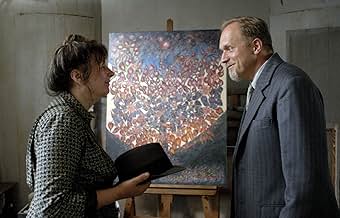
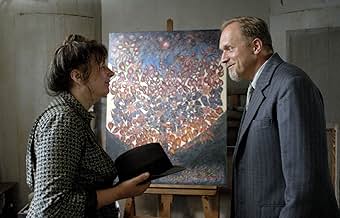
In 1912 German collector Wilhelm Uhde rents a flat in Senlis to write and take a break from Parisian life. He hires a 48-year old cleaning lady, Séraphine. Some time later, he notices a smal... Read allIn 1912 German collector Wilhelm Uhde rents a flat in Senlis to write and take a break from Parisian life. He hires a 48-year old cleaning lady, Séraphine. Some time later, he notices a small painting on wood at a local notable home.In 1912 German collector Wilhelm Uhde rents a flat in Senlis to write and take a break from Parisian life. He hires a 48-year old cleaning lady, Séraphine. Some time later, he notices a small painting on wood at a local notable home.
- Director
- Writers
- Stars
- Awards
- 20 wins & 10 nominations total
Léna Breban
- Soeur Marguerite
- (as Léna Bréban)
Sandrine Bodenes
- Marie-Louise
- (as Sandrine Bodènés)
Anne Benoît
- Madame Delonge
- (as Anne Benoit)
- Director
- Writers
- All cast & crew
- Production, box office & more at IMDbPro
7.46.7K
1
2
3
4
5
6
7
8
9
10
Featured reviews
Beautiful cinematography and good acting don't equal a great film
I enjoy French films very much and saw Seraphine in Paris. While the movie looks beautiful and the acting is excellent, overall the film bored me. There wasn't enough dramatic tension or intense character development to sustain my interest. I was very surprised that it won so many awards, but then again if the French academy is similar to the one in the U.S., they tend to play it safe. Seraphine is worth seeing if you are interested in thinking about the artistic soul. But there is nothing groundbreaking here. I would have liked to see a version of this artist's life that was less academic and more thought provoking. The one thing I admired very much was the performance of the lead actress. I was trying to imagine anyone equivalent to her in the U.S. and was unable to conjure any names. She is not classically beautiful, yet clearly she is an actress of great stature in France to have won this role. The lesson I took away from the film was the appreciation of talent, both of Seraphine and the actress who portrayed her.
Polished enchantment
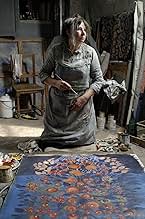
Cinema is a language of deception. The set we see, the mise-en-scene, is what the director wants us to see. Conditioning us visually before an actor even speaks their lines. In costume dramas, the historical clothing is a further weapon to impress a specific artistic vision on us, further cloaking any subtext, whether the transformation of a marriage market story into 'rom-com' (Pride & Prejudice) or consciously travestying the past (Moulin Rouge!, Marie Antoinette). French cinema has achieved respected and less controversial use of costume with films like Jean de Florette and Manon des sources. In these examples, beautiful, nostalgic settings were contrasted with dystopian visions of the hard life. When we move to the biopic, cinematic techniques are routinely used to persuade us of 'what really happened.' Séraphine continues the proud French tradition of costume and historical drama, yet in a very accessible vein. It tells the (true) story of a minor French painter, Séraphine Louis (later known as Séraphine de Senlis, after the village where she lived.) Our story picks up Séraphine working as a maid for Madame Duphot. This lady of the house also rents an apartment to a German art critic-dealer, Wilhelm Uhde. Uhde believes in the 'primitive' artists and takes a liking to some of the maid's work he spots. Yolande Moreau's assured performance gives weight to what may be an unvarnished account. The discovery of the peasant woman's talent, her humble charm as she goes about collecting the ingredients for paint (wine, mud, fruits, flowers) as she goes about her chores as a domestic servant. Everything draws us sympathetically into Séraphine's world.
Udhe nurtures Séraphine's embryonic talent, ensuring it is seen worldwide. But as war hits the economy, support evaporates. Séraphine's inner voices of inspiration lead her to psychosis and she meets her demise in an insane asylum.
The painting itself is of the so-called 'naïve' style, characterized by childlike simplicity. (One of the most famous exponents, according to some, is L. S. Lowry.) The style seems natural to the childlike (if brilliant) personality of our peasant woman, although of course many naive art painters, including Lowry had, unlike Séraphine, plenty of schooling and formal knowledge of art technique.
Production values in the film are high all round. Costume, acting, direction, all achieve a high standard, as evidenced by the many awards heaped on it in its own country. The overall effect is touching without being sentimental.
Séraphine is a continuation of one woman's barely recognised legacy. Any subtext is about serving up a fine character from France's past, a commemoration of national greatness from the early 20th century. (Visits to the exhibition of her work in Senlis have, predictably, quadrupled since the release of the film.) If there is any ideological weakness, it is simply that held by the character herself, a Christian attitude of sacrifice and acceptance of fate. There is no strong judgement on whether Séraphine could have lived her life differently. No real analysis of her painting style. It is, after all, a classy and enchanting fairy tale hung on the hook of a historical person, a harmless deception perhaps. The viewer, should she or he wish, can make their own judgement. Just as they can on the deeply religious and fairly distinctive artworks she left for posterity.
Udhe nurtures Séraphine's embryonic talent, ensuring it is seen worldwide. But as war hits the economy, support evaporates. Séraphine's inner voices of inspiration lead her to psychosis and she meets her demise in an insane asylum.
The painting itself is of the so-called 'naïve' style, characterized by childlike simplicity. (One of the most famous exponents, according to some, is L. S. Lowry.) The style seems natural to the childlike (if brilliant) personality of our peasant woman, although of course many naive art painters, including Lowry had, unlike Séraphine, plenty of schooling and formal knowledge of art technique.
Production values in the film are high all round. Costume, acting, direction, all achieve a high standard, as evidenced by the many awards heaped on it in its own country. The overall effect is touching without being sentimental.
Séraphine is a continuation of one woman's barely recognised legacy. Any subtext is about serving up a fine character from France's past, a commemoration of national greatness from the early 20th century. (Visits to the exhibition of her work in Senlis have, predictably, quadrupled since the release of the film.) If there is any ideological weakness, it is simply that held by the character herself, a Christian attitude of sacrifice and acceptance of fate. There is no strong judgement on whether Séraphine could have lived her life differently. No real analysis of her painting style. It is, after all, a classy and enchanting fairy tale hung on the hook of a historical person, a harmless deception perhaps. The viewer, should she or he wish, can make their own judgement. Just as they can on the deeply religious and fairly distinctive artworks she left for posterity.
An evocative tail of a gifted, gentle soul struggling to survive.
A beautifully crafted film about a genius with a gentle soul set in a time of war and recession. The sense of period is brought to life in this heart warming tale of Seraphine de Senlis. Anyone who has ever laid under a large tree as the leaves rustle in the wind or near the waters edge as the sea laps the shore, will appreciate the calm and beauty contained in this wonderful film.
A poem about shadow
An artist. Fragile, gray, small. Some dreams. A fall. And drops of hope. Few images. A mecena. In fact, story of an ordinary existence. Testimony of forms of beauty . Words of a warm confession, with a brilliant Yolande Moreau and an great director. Everything is in best place. Light and cast, details and looks. And the air of small persons , delicate gestures, definition of art and art as refuge are pieces of this movie. So, it is not a biographic film. Seraphines are many men and women, basic instruments for others who believes that life is more than lies and hypocrisy. Beginning for discover of reality without appearance, sad and beautiful, poem about shadows of a fight, word of a late fame, "Seraphine" must be see again and again. In every Senlis lives a Seraphine.
10JustApt
She Saw the Flowers of Eden
This extraordinary biographical film tells the dramatic story of French paintress Séraphine de Senlis. The tale starts in the summer before the First World War when a known German art collector and critic Wilhelm Uhde accidentally finds out that his servant woman is an amateur artiste painting in naïve but highly innovative and original style. She was doing so because she had a vision of divine being who has told her to begin to paint pictures. Where does genius end and madness begin? Or are they just two sides of the same phenomenon? Questions poised by this artful drama hardly have the answers. To say that Yolande Moreau playing the role of Séraphine Louis is unique is to say the least. Camille Claudel is another brilliant movie in the same vein.
Did you know
- TriviaSince the film's release, the number of visitors at the museum of Senlis exhibiting Séraphine's works has quadrupled (August 2009).
- GoofsThe film opens in 1914 showing the arrival of Wilhelm and Anne-Marie at the village. Wilhelm actually arrived in 1912, two years before the start of the war.
- Crazy creditsThe credits list the names of the paintings which are seen in the film - 10 paintings by Séraphine and the artworks owned by Uhde and Kolle.
- SoundtracksConsonent laudes!
Written by Louis Rousseau
Performed by Yolande Moreau, Françoise Lebrun and Léna Breban
- How long is Seraphine?Powered by Alexa
Details
- Release date
- Countries of origin
- Official sites
- Languages
- Also known as
- Séraphine
- Filming locations
- Production companies
- See more company credits at IMDbPro
Box office
- Budget
- €3,674,000 (estimated)
- Gross US & Canada
- $884,613
- Opening weekend US & Canada
- $38,637
- Jun 7, 2009
- Gross worldwide
- $9,402,702
- Runtime
- 2h 5m(125 min)
- Color
- Sound mix
- Aspect ratio
- 1.85 : 1
Contribute to this page
Suggest an edit or add missing content