The Inheritance
- Episode aired Oct 5, 2008
- TV-14
- 48m

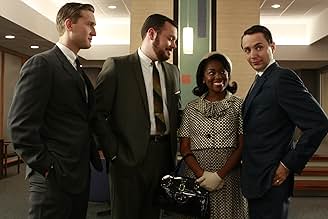
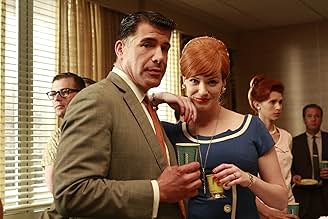
Don and Betty try to keep up appearances as they go to Betty's parents after her dad has a stroke. Peter has a long-dreaded meeting with his mother before he and Kinsey leave for a conventio... Read allDon and Betty try to keep up appearances as they go to Betty's parents after her dad has a stroke. Peter has a long-dreaded meeting with his mother before he and Kinsey leave for a convention in Los Angeles.Don and Betty try to keep up appearances as they go to Betty's parents after her dad has a stroke. Peter has a long-dreaded meeting with his mother before he and Kinsey leave for a convention in Los Angeles.





Featured reviews
I really love this series...
Return of Peter "Glen Bishop" Lorre
This episode is a kind of... not really filler but a moment to relax after two really good back-to-back episodes...
Something about Betty's dad is really scary, like anything can happen at any time... Now THAT is good casting...
This show has a way of giving you the creeps, which is a good thing... Both Mad Men and Breaking Bad are similar in that both center on awkward situations... like being stuck in an addictive purgatory...
And that's also what soap operas are like, but binging shows take the best aspect of soaps, add great actors and stories, and an entirely new generation of addicts are born... and am very glad to be one...
Oh no, no... not Glen again... I keep expecting him to say, "Dawd" (aka "Dad") in a Valley Girl accent like Sofia Coppola in The Godfather 3, but he's even worse...
"I... don't... like... ham..."
He's like a robot. I get it; he's supposed to be troubled and a bit creepy... And he's attempting a Summer of 42' thing with Betty, but, he simply doesn't seem part of the same show as everyone else...
And now I have to wait to see him as a teenager... I guess nothing is perfect, and Matthew made sure of that.
A memorable Betty episode
Some scenes involving Betty are painfully awkward to watch, particularly her family interaction and some moments with Glen. The writers include some good character development in her behaviour. For me, her scenes are the strongest in the episode. I have experience with family members suffering from dementia, and the portrayal of Gene feels very familiar. There is nothing like the declining health of a parent to thrust responsibility on you and a feeling that you have to finally grow up.
Other characters have interesting moments in smaller focus, like Peggy and Joan. It is quite amusing watching office clown Paul Kinsey's pretentiousness in full flow.
The narrative structure bifurcates the storyline into two distinct geographical and emotional landscapes
The subplot involving Don, Paul Kinsey, Harry Crane, and Salvatore Romano traveling to Los Angeles serves as a crucial counterpoint to the domestic heaviness. Andrew Bernstein captures the West Coast not as a paradise, but as a blindingly bright, almost sterile environment that exposes the characters' pretentions. For Salvatore Romano, played with heartbreaking nuance by Bryan Batt, this trip becomes a tragic theater of what could be. In a hotel room interaction that evokes the plays of Tennessee Williams, Sal encounters a bellhop/engineer whose overt admiration creates a thick, sexually charged silence. The direction here is subtle; there are no grand declarations, only the heavy air of unacted desire. Sal's retreat into the safety of his persona-chiding the others, playing the sophisticated art director-is a defense mechanism against a truth that the sunny laissez-faire attitude of California threatens to illuminate. The cinematography emphasizes the brightness of the hotel suite, washing out the shadows where Sal usually hides, forcing him to confront his identity in the harsh light of day, only to retreat back into the closet of his mind, reinforcing the era's suffocating normative pressures.
Kinsey's journey in Los Angeles provides the episode's satiric edge, exposing the superficiality of the burgeoning counterculture within the corporate sphere. Kinsey, desperate to be perceived as a bohemian intellectual, finds his affectations useless in the face of genuine West Coast casualness. His obsession with his "Negro girlfriend" Sheila, whom he drags along on the trip only to neglect for business, reveals his progressiveness as performative narcissism. The script ruthlessly undercuts Kinsey; he is a tourist in the revolution, trying to buy authenticity with a corporate expense account. His failure to connect with the actual culture of LA, contrasting with Harry Crane's accidental competence, highlights the show's critique of the East Coast intellectual who theorizes about the changing world but cannot actually navigate it. The direction isolates Kinsey in frames, often placing him on the periphery of the action, visually reinforcing his irrelevance and the emptiness of his posturing, foreshadowing the inevitable clash between the established corporate order and the chaotic freedom of the coming decade.
The emotional core of the episode lies in the Drapers' visit to Betty's childhood home following her father Gene's stroke. January Jones delivers a performance of chilling regression; as soon as she steps across the threshold of the house, she ceases to be the suburban mother and reverts to the frightened daughter. The production design of the Hofstadt home is pivotal-it is dark, cluttered, and frozen in time, a sharp contrast to the modernist, airy Draper residence. This visual stagnation mirrors the emotional stagnation of the family. Betty's inability to cope with her father's vulnerability manifests in petulance towards her stepmother, Gloria, who serves as a reality principal Betty refuses to accept. The episode explores the terrifying realization that parents are mortal and fallible. Betty's anger is not just about the stroke, but about the disruption of the "perfect family" tableau she has been trained to uphold. She is losing the patriarch who defined her world, and the terror of that loss renders her incapable of empathy, highlighting the emotional stuntedness often fostered in women of her class and generation.
The interactions between Don and his father-in-law, Gene, are laden with hostility and grudging respect. Gene represents the old-world establishment that views men like Don-self-made, rootless, and slick-with deep suspicion. However, the script cleverly subverts this by showing that Don is the only one who can manage Gene's chaotic state. While Betty crumbles and Gloria check out, Don steps in to handle the logistics, a testament to his survivalist nature. The scene where Don helps the confused Gene is poignant; it shows Don's capacity for care, often obscured by his selfishness. However, it also highlights the tragedy of his existence: he is most useful in a crisis because he is accustomed to disaster. He navigates the wreckage of the Hofstadt family with the same detached efficiency he uses to fix an ad campaign. The thematic implication is that the "fake" man is more substantial than the "real" men who are crumbling around him.
Alison Brie's Trudy Campbell emerges as a formidable force in this episode, contrasting sharply with Betty's fragility. When faced with the loss of the Campbell fortune and the refusal of Pete's mother to liquidate her remaining assets for Pete's adoption plans, Trudy does not despair; she strategizes. Her willingness to navigate the familial politics and her pragmatic approach to the adoption issue reveal a steeliness that Pete lacks. The episode juxtaposes the two wives: Betty, who is paralyzed by the loss of the past, and Trudy, who is aggressively trying to secure a future (a child). This comparison illuminates the different ways women navigated the patriarchal constraints of the 1960s. Trudy operates within the system to manipulate it, while Betty is crushed by it. The acting in the Campbell scenes balances the absurdity of the situation with genuine marital friction, showing a partnership that, while flawed, possesses a level of communication absent in the Draper marriage.
While the episode focuses on personal inheritances, the broader historical context of late 1962 is palpable. The tension of the Cold War and the looming Cuban Missile Crisis (which becomes central in later episodes) permeates the atmosphere. The obsession with aerospace and rockets in the California plot is not just about business; it is about survival and dominance in a polarized world. The characters' personal anxieties about legacy and future are microcosms of the national anxiety. The "inheritance" of the atomic age is the possibility of total annihilation, which adds a layer of nihilism to the characters' desperate grasping for money and status. Weiner situates the personal dramas against this backdrop to suggest that the institutions these characters cling to-family, money, lineage-are fragile defenses against a much larger, encroaching darkness.
The writing in this episode is dense with literary allusion and subtext. The concept of "inheritance" is deconstructed to reveal that what is passed down is often trauma. Pete inherits his father's irresponsibility; Betty inherits her parents' emotional repression. The dialogue is sharp, particularly in the confrontations between Pete and his brother, and Don and Betty. There is a Chekhovian quality to the family scenes, where what is not said is as important as what is spoken. The script refuses to offer easy resolutions. The debt is not paid; the stroke victim does not recover; the marriage is not healed. Instead, the characters are left to inhabit the wreckage. This commitment to realism over dramatic catharsis is a hallmark of Mad Men, forcing the audience to sit with the discomfort of unresolved grief.
The episode draws heavily from the tradition of American family dramas, echoing the works of Eugene O'Neill and Arthur Miller. The Hofstadt house scenes recall Long Day's Journey into Night, with the family trapped in a cycle of blame and substance abuse (Gene's drinking). The California sequences, conversely, nod to the "road movie" genre and the films of the mid-century that fetishized the West Coast, such as The Graduate (though predating it slightly in setting, the mood is similar). The direction also pays homage to Douglas Sirk's melodramas, particularly in the framing of Betty, whose suffering is aestheticized through mirrors and framing devices that emphasize her entrapment. By blending these cinematic languages, the episode situates the Draper saga within the broader canon of American storytelling about the dissolution of the family unit.
"The Inheritance" is a pivotal episode that ruthlessly strips away the illusions of security that the characters have built their lives around. It posits that the American Dream is a Ponzi scheme, where the next generation pays for the excesses of the last.

Did you know
- TriviaEarly in the episode Pete remarks "Pasadena? Isn't it just people with T.B.?" He's most likely referring to the fact that many people struggling with tuberculosis, asthma and other respiratory ailments had been moving to Pasadena seeking the healing powers of the towns clean air and climate since it's founding in 1874.
- GoofsIn a scene set in 1962, Glen carries a blue Pan Am flight bag bearing a Pan Am logo that was only introduced in the 1970s.
- Quotes
Pete Campbell: I don't know if I could love a child that's not even related to me.
Trudy Campbell: We're not related by blood, and you love me.
- ConnectionsReferences The Wizard of Oz (1939)
- SoundtracksA Beautiful Mine
(uncredited)
Written by RJD2
Performed by RJD2
(opening credits)
Details
- Release date
- Country of origin
- Official sites
- Language
- Filming locations
- Production companies
- See more company credits at IMDbPro