
Don and Duck try to bury the hatchet, and Peggy attempts to join in on the execs' after-hours meetings. Also, Duck receives a family visit at the office.Don and Duck try to bury the hatchet, and Peggy attempts to join in on the execs' after-hours meetings. Also, Duck receives a family visit at the office.Don and Duck try to bury the hatchet, and Peggy attempts to join in on the execs' after-hours meetings. Also, Duck receives a family visit at the office.


Rich Sommer
- Harry Crane
- (credit only)


- Director
- Writers
- All cast & crew
- Production, box office & more at IMDbPro
7.93K
1
2
3
4
5
6
7
8
9
10
Featured reviews
A swift dose of self awareness
Maidenform is a strong reflective episode with standout moments.
I like the how the central theme of identity and the various perceptions of characters are addressed at various points in the plot. Don's interactions with the character Bobbie Barrett and his family are memorable moments for the character. Though I sense that someone like Bobbie would have enough sense of Don's insecurities by this point not to make certain comments. Likewise Peggy's struggle with image perception within the male dominated world and her history with Pete are visualised well in various scenes. It all ties in nicely to this chapter's advertising pitch.
The writers thankfully explore the character Duck further. His scenes work well and paint a strong picture of a troubled individual. As a good a piece of symbolism as it is when shown his treatment of Chauncey, you cannot help but feel manipulated into disliking the character, rather than witnessing a plausible action.
Visually it is excellent as always. The use of mirrors, reflections and the reactions of certain characters in various moments work brilliantly. Facial expressions can sometimes tell you everything you need to know and this is a great example.
I like the how the central theme of identity and the various perceptions of characters are addressed at various points in the plot. Don's interactions with the character Bobbie Barrett and his family are memorable moments for the character. Though I sense that someone like Bobbie would have enough sense of Don's insecurities by this point not to make certain comments. Likewise Peggy's struggle with image perception within the male dominated world and her history with Pete are visualised well in various scenes. It all ties in nicely to this chapter's advertising pitch.
The writers thankfully explore the character Duck further. His scenes work well and paint a strong picture of a troubled individual. As a good a piece of symbolism as it is when shown his treatment of Chauncey, you cannot help but feel manipulated into disliking the character, rather than witnessing a plausible action.
Visually it is excellent as always. The use of mirrors, reflections and the reactions of certain characters in various moments work brilliantly. Facial expressions can sometimes tell you everything you need to know and this is a great example.
The agency's attempt to develop a new campaign for Playtex, a brand of women's undergarments, which becomes a catalyst for the characters to confront their own perceptions
"Maidenform," the sixth episode of the second season of "Mad Men," directed by Phil Abraham explores identity, gender roles, and the pervasive influence of self-image in both personal and professional spheres. The episode centers on the agency's attempt to develop a new campaign for Playtex, a brand of women's undergarments, which becomes a catalyst for the characters to confront their own perceptions of themselves and each other.
The title, "Maidenform," is layered with meaning, referencing both the brand and the episode's central theme of transformation and self-reflection.
The episode opens with a striking sequence of women-Betty Draper (January Jones), Joan Holloway (Christina Hendricks), and Peggy Olson (Elisabeth Moss)-putting on their undergarments, a scene rendered with a cold, clinical quality that underscores the objectification and scrutiny women face. The cinematography in these scenes is sharp and deliberate, using tight framing and subtle shifts in lighting to emphasize the characters' discomfort and the weight of their secrets.
The production design, from the office furniture to the costumes, immerses viewers in the world of early 1960s America, while the editing is seamless, highlighting the contrasts between the characters' public and private personas.
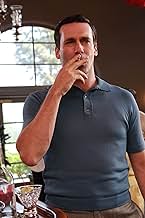
Don Draper (Jon Hamm) is at the center of the episode's narrative, grappling with his own image and reputation. After discovering that Bobbie Barrett (Melinda McGraw) has been talking about his sexual exploits with other women, Don reacts with fury, tying her to the bed as a form of revenge. This moment is handled with nuance, capturing the complexity of Don's relationship with Bobbie and the ways in which he is both celebrated and marginalized. The direction and editing in these scenes are sharp and deliberate, highlighting the contrasts between Don's public and private personas.
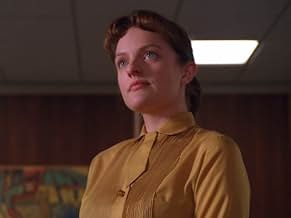
Peggy's storyline is equally significant, as she begins to assert herself more confidently in the office, seeking advice from Joan and Bobbie on how to navigate the agency's male-dominated culture. The episode's portrayal of Peggy's ambition and her willingness to navigate the office's complex social dynamics is handled with sensitivity, capturing her sense of accomplishment and the ways in which she is both celebrated and marginalized. The direction and editing in these scenes are sharp and deliberate, highlighting the contrasts between Peggy's public and private personas.
Duck Phillips (Mark Moses) is also given a significant subplot, as he struggles to be a strong role model for his children and confronts his own failures and insecurities. The episode's portrayal of Duck's emotional vulnerability is handled with nuance, capturing the complexity of his relationship with his peers and the ways in which he is both celebrated and marginalized.
The title, "Maidenform," is layered with meaning, referencing both the brand and the episode's central theme of transformation and self-reflection.
The episode opens with a striking sequence of women-Betty Draper (January Jones), Joan Holloway (Christina Hendricks), and Peggy Olson (Elisabeth Moss)-putting on their undergarments, a scene rendered with a cold, clinical quality that underscores the objectification and scrutiny women face. The cinematography in these scenes is sharp and deliberate, using tight framing and subtle shifts in lighting to emphasize the characters' discomfort and the weight of their secrets.
The production design, from the office furniture to the costumes, immerses viewers in the world of early 1960s America, while the editing is seamless, highlighting the contrasts between the characters' public and private personas.
Don Draper (Jon Hamm) is at the center of the episode's narrative, grappling with his own image and reputation. After discovering that Bobbie Barrett (Melinda McGraw) has been talking about his sexual exploits with other women, Don reacts with fury, tying her to the bed as a form of revenge. This moment is handled with nuance, capturing the complexity of Don's relationship with Bobbie and the ways in which he is both celebrated and marginalized. The direction and editing in these scenes are sharp and deliberate, highlighting the contrasts between Don's public and private personas.
Peggy's storyline is equally significant, as she begins to assert herself more confidently in the office, seeking advice from Joan and Bobbie on how to navigate the agency's male-dominated culture. The episode's portrayal of Peggy's ambition and her willingness to navigate the office's complex social dynamics is handled with sensitivity, capturing her sense of accomplishment and the ways in which she is both celebrated and marginalized. The direction and editing in these scenes are sharp and deliberate, highlighting the contrasts between Peggy's public and private personas.
Duck Phillips (Mark Moses) is also given a significant subplot, as he struggles to be a strong role model for his children and confronts his own failures and insecurities. The episode's portrayal of Duck's emotional vulnerability is handled with nuance, capturing the complexity of his relationship with his peers and the ways in which he is both celebrated and marginalized.
Duck is the Devil
Well it's obvious why Duck ditched his dog... he wanted a drink, that's all... Oh and, hey, did you hear the one about the ducks in the pond... Someone off-shore threw a ball and it was about to hit one duck in the head, and another duck, seeing this, yelled, "JOEL!!!!!"
Anyhow, good episode following a previous good episode... Mostly it's about Peggy's morphing into becoming a progressive woman in business... One of the strip club guys is Peter Jason, an actor who died in John Wayne's arms and was Orson Welles's favorite, and a former interviewee of mine... I think I mentioned this episode... He didn't like talking too much about the past and that's all I did... But being part of this show is like being on Star Trek or Seinfeld... You become part of the fabric...
The story about Pete and the blonde was intriguing, although she looked a bit too modern... Guess it's that whole Marilyn thing, and the fact women in this era depicted were either trying to resemble the wife or mistress of JFK makes me happy I was born when women had braincells.
Anyhow, good episode following a previous good episode... Mostly it's about Peggy's morphing into becoming a progressive woman in business... One of the strip club guys is Peter Jason, an actor who died in John Wayne's arms and was Orson Welles's favorite, and a former interviewee of mine... I think I mentioned this episode... He didn't like talking too much about the past and that's all I did... But being part of this show is like being on Star Trek or Seinfeld... You become part of the fabric...
The story about Pete and the blonde was intriguing, although she looked a bit too modern... Guess it's that whole Marilyn thing, and the fact women in this era depicted were either trying to resemble the wife or mistress of JFK makes me happy I was born when women had braincells.

Did you know
- TriviaThis is series' creator Matthew Weiner's favorite episode of the show.
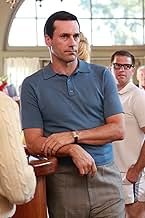
- GoofsAs the emcee introduces the veterans and active soldiers at the country club, many of the uniformed soldiers are wearing their hats. Hats are not to be worn inside.
- Quotes
[Don's secretary is completely sunburned after a day at the beach]
Roger Sterling: Has your wife seen that yet? Do me a favor. Let me be there when it happens.
- ConnectionsReferences American Bandstand (1952)
Details
- Release date
- Country of origin
- Official sites
- Language
- Filming locations
- Production companies
- See more company credits at IMDbPro
Contribute to this page
Suggest an edit or add missing content