

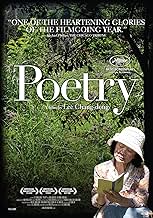
A sixty-something woman, faced with the discovery of a heinous family crime and in the early stages of Alzheimer's disease, finds strength and purpose when she enrolls in a poetry class.A sixty-something woman, faced with the discovery of a heinous family crime and in the early stages of Alzheimer's disease, finds strength and purpose when she enrolls in a poetry class.A sixty-something woman, faced with the discovery of a heinous family crime and in the early stages of Alzheimer's disease, finds strength and purpose when she enrolls in a poetry class.
- Awards
- 27 wins & 25 nominations total
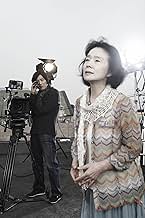
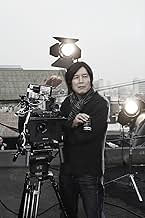


- Director
- Writer
- All cast & crew
- Production, box office & more at IMDbPro
7.814.5K
1
2
3
4
5
6
7
8
9
10
Featured reviews
"We All Carry Poetry In Our Hearts"
As a lover of World Cinema and having had a few poems of my own published here and there, South Korea's 'Poetry' was always going to be a double treat for me.
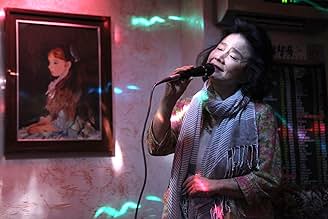
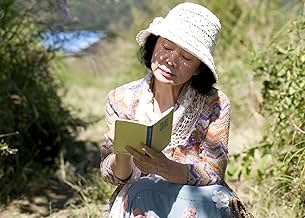
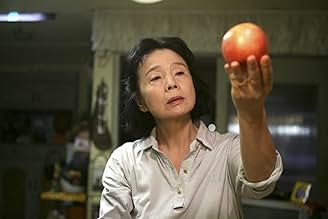
The film's beauty is that it's not just about poetry but how that it can fit into everyday lives and help folk the see the inner beauty that it brings. Mija (an excellent Jeong-he Yun) a 66 year old woman, suffering the onset of Alzheimers, sees the simple beauty in an apple and of fallen apricots on the ground.
She gets this after starting poetry classes and whilst she fails to get her 'poetic awakening', she sets herself the target of writing just one poem.
Considering that this gentle, graceful lady is bringing up a teenage grandson who has committed a serious crime and as a job cares part-time for an elderly stroke victim these poetical leanings are a soothing diversion for both us - and her. (She's not bad at badminton, either!) It's actually the way the film contrasts several issues, the modern contemporary ones that give the film its backbone, the age difference clashes with the grandson and the lyrical - but unsentimental - softer side and you get a modest and modern masterpiece.
Avoid if only Iron Man 2 can move you. But if you have a heart, one where a soul and emotion can flourish and you enjoy a well acted, straightforward modern film - wherever in the world that it might come from - then 'Poetry' has a wide and worthwhile appeal.
The film's beauty is that it's not just about poetry but how that it can fit into everyday lives and help folk the see the inner beauty that it brings. Mija (an excellent Jeong-he Yun) a 66 year old woman, suffering the onset of Alzheimers, sees the simple beauty in an apple and of fallen apricots on the ground.
She gets this after starting poetry classes and whilst she fails to get her 'poetic awakening', she sets herself the target of writing just one poem.
Considering that this gentle, graceful lady is bringing up a teenage grandson who has committed a serious crime and as a job cares part-time for an elderly stroke victim these poetical leanings are a soothing diversion for both us - and her. (She's not bad at badminton, either!) It's actually the way the film contrasts several issues, the modern contemporary ones that give the film its backbone, the age difference clashes with the grandson and the lyrical - but unsentimental - softer side and you get a modest and modern masterpiece.
Avoid if only Iron Man 2 can move you. But if you have a heart, one where a soul and emotion can flourish and you enjoy a well acted, straightforward modern film - wherever in the world that it might come from - then 'Poetry' has a wide and worthwhile appeal.
Tears In Heaven
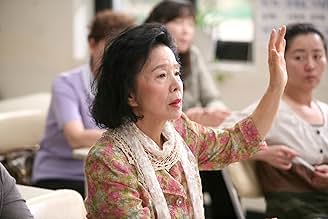
POETRY (dir. Chang-dong Lee) POETRY is a slow-moving character drama which is disarmingly powerful, yet haunting and meditative. Mija is a sixty-six year old suffering from early onset Alzheimer's disease who lives in a rural Korean town with her indolent teen aged grandson, Jongwook. In an attempt to stimulate her cognitive abilities, she enrolls in a poetry class. Things are looking up until she learns that her grandson was involved in the suicide of one of his classmates. Jongwook and some of his friends had been sexually abusing a classmate, and this drove the young girl to take her life. Soon Mija is contacted by the fathers of the boys and learns that they want to pay the girl's mother a large sum of money to keep her from going to the authorities. In her poetry class at the community center Mija learns that in order to create poetry one must learn, 'to observe', 'to notice', and 'to witness'. The need for a heightened awareness or sensibility becomes the compelling dichotomy of the film. We observe that the fathers only focus on the ramifications of the incident on the lives of their sons, while Mija becomes moved and deeply empathizes with the loss of this innocent young girl to her family and the community. And, in the end Mija forces her grandson to face up to his responsibility, and she also constructs a loving and heartfelt poetic eulogy for the young girl. And, in a remarkable way of relating these two crucial events, the character of Mija is not even present as the actions unfold. Director, Chang-dong Lee, delivers a wonderful film which touches on a wide range of difficult subjects; poetry, dementia, sexual abuse and suicide, and casts an elderly semi-retired Korean actress as the star of the film. However, these kinds of mature topics and deliberate presentation are out of favor in Hollywood and unpopular with contemporary film audiences. I'm afraid that this film will never garner much commercial success, but if you take the time 'to witness', you will enjoy a truly rewarding cinematic experience.
subtle and beautiful
Lee Chang Dong has always been a favorite Korean director of mine. His films, including "Poetry," have a subtle yet captivating force. "Poetry" is not for the average film viewer, but is for more mature audiences who are not afraid to confront life as it is and the existential aspects of life in general. The film is an exploration of complex human conditions that people can often find boring. But "Poetry" is inarguably meaningful and deep in its own way. It presents life realistically, but also paves way for finding positive little things within the worst conditions. "Poetry" is a film that will make you think in a way that almost no Hollywood movie can. Certainly, it is a powerful film as well. The only problem is that the majority of the population can misunderstand a film such as this one. It is a film that requires effort on the part of the audience to think and interpret the film for what it is. But once the purpose of the film is appreciated, it is a wonderful film for what it's worth. Go and watch it. It's a film that can change the way you look at everyday things.
Real, revealing, moving, interesting...what else can you ask for?
Poetry (2010)
Steady and stealthy, this film proposes to be as lyrical and compact as a poem, but then it keeps going and ends up larger and more impressive than you'd expect. And the acting by leading female actress, the Korean star Jeong-hie Yun, is startling and nuanced, a great performance.
At the heart of the plot are two plots. The first is the title line—elderly Mija has decided to learn how to write poetry, so she attends a class (filled with younger students). The second is about a sex crime—a gang rape it turns out—by her grandson, who she is raising alone. The two are nearly opposites in so many ways we see how life itself balances the beautiful and ugly, and responsibility and indifference. In a larger way, "Poetry" is about contemporary life in Korea, and the interactions of ordinary people in extreme situations will be revealing to many outside of Korea.
It's hard to overstate how well this movie pulls off something socially serious and yet makes it all understated and almost matter of fact. There are these several lines of thought that keep going throughout, and that don't quite converge until the very end, which is both tragic (truly) and a bit mysterious. What exactly is the implication of that last scene on the bridge, and the water that shows nothing? It hearkens to the beginning, of course, but we have our main character at hand.
In that sense, it's a brilliant, almost perfect evocation of contemporary Korea on the most normal, middle class level. Lovely and loving, and cold and brutal. And it shows the glib sexism of the men there, much like everywhere at various times. And how to survive you sometimes have to just proceed. And then, of course, sometimes you do not survive.
Steady and stealthy, this film proposes to be as lyrical and compact as a poem, but then it keeps going and ends up larger and more impressive than you'd expect. And the acting by leading female actress, the Korean star Jeong-hie Yun, is startling and nuanced, a great performance.
At the heart of the plot are two plots. The first is the title line—elderly Mija has decided to learn how to write poetry, so she attends a class (filled with younger students). The second is about a sex crime—a gang rape it turns out—by her grandson, who she is raising alone. The two are nearly opposites in so many ways we see how life itself balances the beautiful and ugly, and responsibility and indifference. In a larger way, "Poetry" is about contemporary life in Korea, and the interactions of ordinary people in extreme situations will be revealing to many outside of Korea.
It's hard to overstate how well this movie pulls off something socially serious and yet makes it all understated and almost matter of fact. There are these several lines of thought that keep going throughout, and that don't quite converge until the very end, which is both tragic (truly) and a bit mysterious. What exactly is the implication of that last scene on the bridge, and the water that shows nothing? It hearkens to the beginning, of course, but we have our main character at hand.
In that sense, it's a brilliant, almost perfect evocation of contemporary Korea on the most normal, middle class level. Lovely and loving, and cold and brutal. And it shows the glib sexism of the men there, much like everywhere at various times. And how to survive you sometimes have to just proceed. And then, of course, sometimes you do not survive.
Contemplation of Life And Death: A Leisurely Mystery
What a contrast to the average Hollywood product which highlights guns afire, frantic car chases and exploding buildings--noise and action aplenty: this subtle and enticing tale of self-realization is the antithesis of the action film, although within the first few minutes of the film, in the midst of children playing near a river, a body floats by and sets an odd tone for the remainder of the film. A grandmother who learns she has an incurable illness and who discovers her grandson is not merely a disaffected teen who cannot clean up after himself--but something worse-- the woman inexplicably enrolls in a poetry class and for the next two hours we are taken along her journey in a most leisurely fashion, a film with powerful cinematography and at last, a puzzling, thoughtful conclusion: if you want easy entertainment with pat answers, this is not your film. If you enjoy an immersion in another culture from another point of view, this might be a great treat for you--it was for me


Did you know
- TriviaThe idea for the film had its origin in a real-life case where a small town schoolgirl had been raped by a gang of teenage boys. When director Lee Chang-dong heard about the incident, it made an impact on him, although he hadn't been interested in basing a film on the actual events. Later, during a visit in Japan, Lee saw a television program in his hotel room. The program was edited entirely from relaxing shots of nature, "a peaceful river, birds flying, fishermen on the sea with soft new-age music in the background," and a vision for a possible feature film started to form. "Suddenly, it reminded me of that horrible incident, and the word 'poetry' and the image of a 60-year old woman came up in my mind."
- ConnectionsFeatured in At the Movies: Cannes Film Festival 2010 (2010)
- How long is Poetry?Powered by Alexa
Details
- Release date
- Countries of origin
- Official sites
- Language
- Also known as
- Thi Ca
- Filming locations
- Production companies
- See more company credits at IMDbPro
Box office
- Budget
- ₩1,300,000,000 (estimated)
- Gross US & Canada
- $356,149
- Opening weekend US & Canada
- $18,900
- Feb 13, 2011
- Gross worldwide
- $2,539,040
- Runtime
- 2h 19m(139 min)
- Color
- Sound mix
- Aspect ratio
- 1.85 : 1
Contribute to this page
Suggest an edit or add missing content