IMDb RATING
5.7/10
6.9K
YOUR RATING


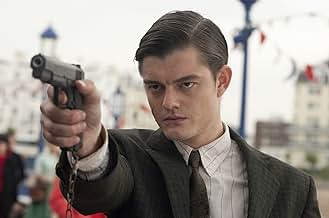
Charts the headlong fall of Pinkie, a razor-wielding disadvantaged teenager with a religious death wish.Charts the headlong fall of Pinkie, a razor-wielding disadvantaged teenager with a religious death wish.Charts the headlong fall of Pinkie, a razor-wielding disadvantaged teenager with a religious death wish.
- Awards
- 1 win & 8 nominations total



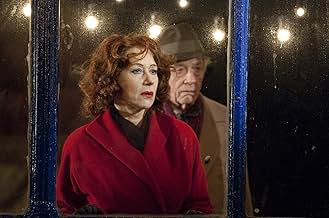


Phil Davis
- Spicer
- (as Philip Davis)


- Director
- Writers
- All cast & crew
- Production, box office & more at IMDbPro
5.76.9K
1
2
3
4
5
6
7
8
9
10
Featured reviews
I was fond of him. poor old Fred.
Sometimes it's a character you liked that attracts, like the role Philip Davis played in Midsomer Murders. Other times it's to see a great star like Helen Mirren.
Whatever the reason, it's always good to see a film based on a Graham Greene novel, like The Third Man, This Gun for Hire, The Quiet American, and many more.
A young Richard Attenborough played in this movie in the 40's, here is falls to Sam Riley (Control, Maleficent) to play the lead. He is capably assisted by Andrea Riseborough (Oblivion, Shadow Dancer), as the waitress he marries to keep her from testifying as a witness.
A good neo-noir with contributions from William Hurt and Nonso Anozie (The Grey, Game of Thrones).
Whatever the reason, it's always good to see a film based on a Graham Greene novel, like The Third Man, This Gun for Hire, The Quiet American, and many more.
A young Richard Attenborough played in this movie in the 40's, here is falls to Sam Riley (Control, Maleficent) to play the lead. He is capably assisted by Andrea Riseborough (Oblivion, Shadow Dancer), as the waitress he marries to keep her from testifying as a witness.
A good neo-noir with contributions from William Hurt and Nonso Anozie (The Grey, Game of Thrones).
Curate's Egg of a film
As a Brighton resident, I had to see this, but also probably spent more time looking at the locations (and more critically) than a normal viewer. On the plus side, there is excellent cinematography, and the film creates an atmospheric mid 60's version of Brighton that might be convincing to anyone too young to remember that time, but which contained too many jarring anachronisms for me. For example Rose lives in a tower block, which could have existed in 1964, and would have still been soulless and depressing, but would also have been practically brand spanking new, not run down and shabby with 20 years of neglect. This highlights another failing of the film, the clichéd exaggerated unrelenting squalor that all the criminals live in, which again is untrue to the period, twitching net curtains and keeping up (often threadbare) appearances was how things worked then, in working class neighbourhoods especially. You could create an oppressive atmosphere from these real elements (and the culture clash of the pre and post war worlds) perhaps more easily than from this invented total squalor.
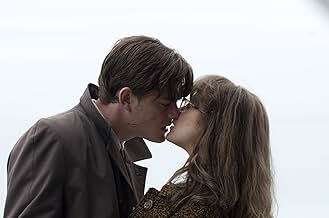
So if the world the film creates is a Hollywood version of 1960's Brighton, do the characters engage you? Well I loved Helen Mirren and John Hurt, they brought a touch of class whenever they appeared, and Phil Davis is another very fine actor who is always watchable. Sadly the two main characters don't quite pull it off, and if I have to lay the blame it is chiefly with Sam Riley's Pinkie. If he could have alternated his cold unsmiling thuggishness with some charm, shown Rose a little tenderness some vulnerability even, that would have made her falling for him, and her naive notion that she could save him more convincing, and maybe made his cruelty and occasional physical violence toward her more shocking. Andrea Riseborough as Rose gives a fair performance, given that she does not have much to work with.
I'm sorry if this review makes the film sound worse than it is, because truth be told despite its failings it is consistently watchable, and still managed to engage me. An interesting failure.
So if the world the film creates is a Hollywood version of 1960's Brighton, do the characters engage you? Well I loved Helen Mirren and John Hurt, they brought a touch of class whenever they appeared, and Phil Davis is another very fine actor who is always watchable. Sadly the two main characters don't quite pull it off, and if I have to lay the blame it is chiefly with Sam Riley's Pinkie. If he could have alternated his cold unsmiling thuggishness with some charm, shown Rose a little tenderness some vulnerability even, that would have made her falling for him, and her naive notion that she could save him more convincing, and maybe made his cruelty and occasional physical violence toward her more shocking. Andrea Riseborough as Rose gives a fair performance, given that she does not have much to work with.
I'm sorry if this review makes the film sound worse than it is, because truth be told despite its failings it is consistently watchable, and still managed to engage me. An interesting failure.
Mildly engaging crime drama
The main character of this movie is Pinkie Brown, a small-time thug in Brighton, England, in the 1960s. Pinkie's true evil nature comes out when he tries to take over a small gang of criminals after their leader had been killed by a rival gang. As played here, Pinkie is in his 20s and, as brash and amoral as he is, he and his mediocre cohorts are no match for the rival gang that basically runs underground crime in Brighton.
The action is sordid and ugly, but the glossy color photography works at cross purposes to conveying that mood. Much of the photography is more appropriate for an art film than for this down-and-dirty fare, making me think that maybe black and white would have been a more appropriate choice. As Pinkie, I found Sam Riley just a little too handsome for the part--he does not exude the menace and harsh personality that is Pinkie's nature.
I found the initial setup scenes rapid-paced and confusing, requiring close attention; if you don't follow what has happened early on, you will be at a loss to fully understand what happens later. An additional complication to my following the opening scenes was the fact that I am not a Brit and didn't always follow the cadences and clipped manner of speaking. I confess to starting the movie over after about fifteen minutes, with English subtitles turned on. That was a great help.
The score that often seems to aspire to the transcendent seems greatly out of place.
I wish I had seen this movie before having read the book, since having some of the images in mind would have been good. Never having been to Brighton, my mental picture of it would have been greatly enhanced by what is well captured here. While the movie strips from the book much of the depth of the themes of sexuality, morality, loyalty, and sin, there are things in the movie that I found improved upon the book. I liked Helen Mirren's portrayal of Ida as a more centered person than the blithe Ida of the book, and John Hurt fleshed out Ida's friend Phil better than what I got from the book. And there are a lot of little things. For example, I pictured the candy, Brighton rock, as being something like a candy cane rather than the weighty rod seen in the movie. I regret that Pinkie's lawyer Prewitt was deleted--he was a truly Dickensian character in the book. And why the great ending in the book was changed is beyond me.
The action is sordid and ugly, but the glossy color photography works at cross purposes to conveying that mood. Much of the photography is more appropriate for an art film than for this down-and-dirty fare, making me think that maybe black and white would have been a more appropriate choice. As Pinkie, I found Sam Riley just a little too handsome for the part--he does not exude the menace and harsh personality that is Pinkie's nature.
I found the initial setup scenes rapid-paced and confusing, requiring close attention; if you don't follow what has happened early on, you will be at a loss to fully understand what happens later. An additional complication to my following the opening scenes was the fact that I am not a Brit and didn't always follow the cadences and clipped manner of speaking. I confess to starting the movie over after about fifteen minutes, with English subtitles turned on. That was a great help.
The score that often seems to aspire to the transcendent seems greatly out of place.
I wish I had seen this movie before having read the book, since having some of the images in mind would have been good. Never having been to Brighton, my mental picture of it would have been greatly enhanced by what is well captured here. While the movie strips from the book much of the depth of the themes of sexuality, morality, loyalty, and sin, there are things in the movie that I found improved upon the book. I liked Helen Mirren's portrayal of Ida as a more centered person than the blithe Ida of the book, and John Hurt fleshed out Ida's friend Phil better than what I got from the book. And there are a lot of little things. For example, I pictured the candy, Brighton rock, as being something like a candy cane rather than the weighty rod seen in the movie. I regret that Pinkie's lawyer Prewitt was deleted--he was a truly Dickensian character in the book. And why the great ending in the book was changed is beyond me.
Excellent overall, shame about the ending
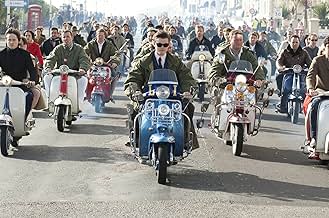
I went to see this film with some trepidation. The original Graham Greene novel is very good and one of my favourites. The original film from 1947 was also extremely good, with Richard Attenborough as an unlikely but splendid villain. However this version was excellent. The fact that it had been updated to the 60s, which had worried me a little, worked well. Of course it did not have the period feel, but the aggression, violence and fighting for territory of the Mods and Rockers (which I remember well) echoed beautifully the behaviour of the gangsters and gave the opportunity for some very effective scenes visually. The acting I found completely plausible, with Phill Davies, John Hurt, Sam Riley and Andrea Riseborough all giving authentic portrayals. Helen Mirren, perhaps, looked a little too glamorous physically, but her acting was fine. Brighton itself was a wonderful additional character in all this. The contrast between the somewhat mindless hedonism of the holiday makers and the violent and ugly activities of the underworld was extremely effective and the use of the landscape beautiful and horrific in equal measure. The theme of sin, guilt and Catholicism was probably not dealt with as interestingly as in the novel, but that is a frequent limitation of the medium of film. Why on earth the makers of the film felt that they were entitled to "improve" on Graham Greene's ending I do not know. But it did not spoil my overall judgement that this was a very good film. I hope it will inspire those who have not already done so to read the novel.
7rbrb
Can You Handle The Truth?
This is a dark,intense 'film noir' type drama.
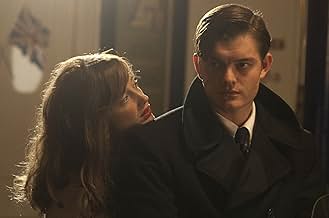
The backdrop to it is Brighton, England of the 1960's with rebelling youth(mods and rockers).The actual story is about a young murderous psychopath thug involved in a gang war. A gullible waitress unwittingly becomes a witness to murder and the thug needs to deal with it.
The movie is atmospheric and grim. No hint of much happiness nor any likable characters.Everyone in the movie is flawed in one way or another. Maybe that is why many people did not rate this movie highly.
There is a religious and moral agenda in this picture which if recognized may disturb some viewers.
I thought all the main actors gave edgy and compelling performances. The 2 leads namely Sam Riley and Andrea Riseborough are outstanding with on balance the latter stealing the show.
The very last scene in the film is brilliant and thought provoking.
7/10
The backdrop to it is Brighton, England of the 1960's with rebelling youth(mods and rockers).The actual story is about a young murderous psychopath thug involved in a gang war. A gullible waitress unwittingly becomes a witness to murder and the thug needs to deal with it.
The movie is atmospheric and grim. No hint of much happiness nor any likable characters.Everyone in the movie is flawed in one way or another. Maybe that is why many people did not rate this movie highly.
There is a religious and moral agenda in this picture which if recognized may disturb some viewers.
I thought all the main actors gave edgy and compelling performances. The 2 leads namely Sam Riley and Andrea Riseborough are outstanding with on balance the latter stealing the show.
The very last scene in the film is brilliant and thought provoking.
7/10


Did you know
- TriviaPhil Davis (Frank Spicer) previously played the mod Chalky in Quadrophenia (1979), which was likewise set in Brighton in 1964.
- GoofsWhen Rose opens the record player, it has a modern British plug on it. In 1960s Britain plug pins were round. Safety switches wall sockets would not have been in place at this time, either.
- ConnectionsFeatured in Breakfast: Episode dated 28 January 2011 (2011)
- How long is Brighton Rock?Powered by Alexa
Details
- Release date
- Countries of origin
- Official site
- Language
- Also known as
- Băng Đảng Brighton
- Filming locations
- Production companies
- See more company credits at IMDbPro
Box office
- Budget
- $12,000,000 (estimated)
- Gross US & Canada
- $229,653
- Opening weekend US & Canada
- $32,774
- Aug 28, 2011
- Gross worldwide
- $2,913,599
- Runtime
- 1h 51m(111 min)
- Color
- Sound mix
- Aspect ratio
- 2.39 : 1
Contribute to this page
Suggest an edit or add missing content