

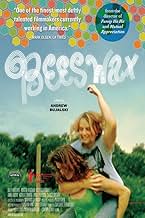
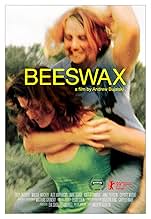
A pair of identical twin sisters -- one, who has been paraplegic since youth and gets around in a wheelchair, and the other -- 'same face, different bodies.'A pair of identical twin sisters -- one, who has been paraplegic since youth and gets around in a wheelchair, and the other -- 'same face, different bodies.'A pair of identical twin sisters -- one, who has been paraplegic since youth and gets around in a wheelchair, and the other -- 'same face, different bodies.'
- Awards
- 1 nomination total


- Director
- Writer
- All cast & crew
- Production, box office & more at IMDbPro
6.1904
1
2
3
4
5
6
7
8
9
10
Featured reviews
I enjoy it
No super.. (unrealistic stories, heroes, models etc.), it may happen next to our neighbors, I appreciate that..
+ believable actress + camera + story flow
= good for me :-)
---------
Your review does not contain enough lines - the minimum length for reviews is 10 lines of text. Please see the guidelines. Attempts to pad the comment with junk words can result in your account being blocked from future submissions.
---------
+ believable actress + camera + story flow
= good for me :-)
---------
Your review does not contain enough lines - the minimum length for reviews is 10 lines of text. Please see the guidelines. Attempts to pad the comment with junk words can result in your account being blocked from future submissions.
---------
I watched it as a vote for Indie filmmaking. I wish I could take back my vote.
An earlier reviewer, Dom-Donald, wrote: "There were no developed characters, there was no plot, no beginning, middle or end. There were no interesting relationships, no questions asked of the audience, no explorations of ideas or emotions. There were no challenging subjects, nothing shocking or controversial. Nothing actually even happened, so there were no events for the characters to even discuss. Even the relationship between the two sisters wasn't explored in any way.
"The movie just started and then a bit later it finished at some random point (the camera ran out of film?) .... I challenge you to watch it, for that is probably the only valid reason for doing so!"
I accepted his challenge. He is right. The movie would have been better had they run out of film earlier. In fact the earlier the film ran out, the better it would have been.
Another reviewer, Mike Mellon, wrote: "I'm having a hard time believing it was actually written instead of made up as the filming progressed. Pass on it, and instead, go eavesdrop on a random stranger's conversation. You will get the same experience."
Mike is on the right track, but is not quite correct. I eavesdropped on some customers at a 99 Cents Store to test his theory. It was not the same experience. My experience at the 99 Cents Store was more entertaining and the strangers on whom I eavesdropped were more interesting.
The characters in Beeswax were dumber than they would have been in real life. The aspiring lawyer could not have gotten through law school without a sharper intellect than his character displays.
Like others who were disappointed in this film, I am not a consumer of mass market culture and I tend to favor the avant garde. So I don't think the people responsible for this film should have their artistic license revoked... just put on probation and be required to attend boredom management training, and make restitution. I think there are a lot of victims who want their 100 minutes back.
"The movie just started and then a bit later it finished at some random point (the camera ran out of film?) .... I challenge you to watch it, for that is probably the only valid reason for doing so!"
I accepted his challenge. He is right. The movie would have been better had they run out of film earlier. In fact the earlier the film ran out, the better it would have been.
Another reviewer, Mike Mellon, wrote: "I'm having a hard time believing it was actually written instead of made up as the filming progressed. Pass on it, and instead, go eavesdrop on a random stranger's conversation. You will get the same experience."
Mike is on the right track, but is not quite correct. I eavesdropped on some customers at a 99 Cents Store to test his theory. It was not the same experience. My experience at the 99 Cents Store was more entertaining and the strangers on whom I eavesdropped were more interesting.
The characters in Beeswax were dumber than they would have been in real life. The aspiring lawyer could not have gotten through law school without a sharper intellect than his character displays.
Like others who were disappointed in this film, I am not a consumer of mass market culture and I tend to favor the avant garde. So I don't think the people responsible for this film should have their artistic license revoked... just put on probation and be required to attend boredom management training, and make restitution. I think there are a lot of victims who want their 100 minutes back.
A Successful Cinematic Experiment
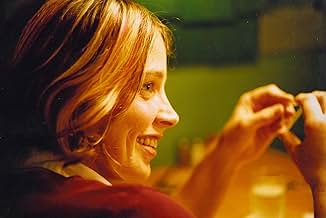
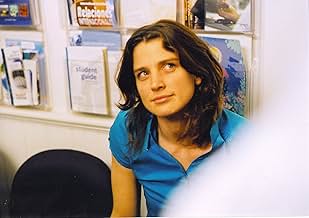
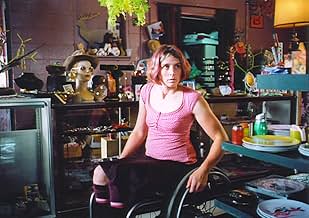
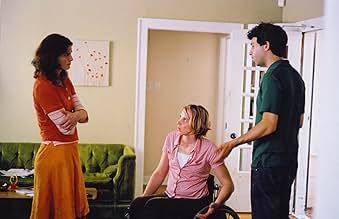
Jeannie (Tilly Hatcher), a girl in a wheelchair, owns a vintage clothing store. Amanda, her business partner, is deeply unsatisfied with how she runs the business and is considering a legal battle for ownership. Merrill (Alex Karpovsky), a young law student tries to help Jeannie by offering emotional support and legal advice, as well as introducing her to potential buyers. In the meanwhile, Lauren (Maggie Hatcher), Jeannie's slacker twin sister, looks for steady work and a general direction in her aimless drifter lifestyle. Finally, a new clerk is a welcome addition to the store but things get complicated when she turns out to be a tad too sentimental.
Heralded as the King of the Mumblecore movement, Bujalski's films are uneventful "slices of life" naturalistic depictions of youth in shambles. Each story is a tragic tale of emotional teetering on the edge of madness. For this he has been compared to Cassavetes, but Bujalski's life depictions are actually sexless, unrooted, and deceptively intellectual (but not in a negative way).
His characters recede inside themselves as they attempt to grasp for an adequate language to express what might be a conditionally repressed intensity. In a sense, they are the opposite of Cassavetes' bombastic, larger than life, overexpressive characters. But his means of examination are the same: full shots of bodies, matter-of-fact depictions of communicative behavior (mannerisms, tics), faces chosen for their anti-cinematic potential, so plain that they make our expected systems of dramatic representation collapse. Along the way we discover new modes of being, and an almost ethnographic look at human presence.
Above it all, there is a kind of hidden essay on filmmaking and creativity:
The sisters are twins. ('Same face, different bodies')
The clothing store is called Storyville.
Jeannie, paralyzed from the waist down as an audience surrogate, the "sitting down" metaphor, the watcher/observer, and the "real" manager of Storyville. She's involved in a legal dispute over the ownership of the store. The differences with the other owner are creative ones.
Merrill, a law student, interested romantically in Jeannie, but also an artist, a kind of surrealist writer, always commenting on situations with non sequiturs, exaggerations, cartoonish excesses.
Lauren, the second twin, her introductory scene sees her breaking up with a "boyfriend". She appears confused, or fickle. But she's obviously a lesbian. Throughout the movie she looks for work, speculates on possible futures, hangs out with drug addicts. The closest thing to a 'drifter' character in the story. She's the quantum fulcrum. It is through her presence that everyone else can feel anchored.
Bujalski is popularly misunderstood. His desire to shoot 16mm, "small" stories and his use of first-time actors, tie him to a deeply experimental and innovative tradition of art cinema (Cassavetes, Jem Cohen, Andy Warhol, Pedro Costa). One can only hope he keeps on working without being too affected by the lack of popular approval. In my mind, he is constantly refreshing, layered, and dangerous, if you see cinema as a kind of schizophrenic simulation machine.
Heralded as the King of the Mumblecore movement, Bujalski's films are uneventful "slices of life" naturalistic depictions of youth in shambles. Each story is a tragic tale of emotional teetering on the edge of madness. For this he has been compared to Cassavetes, but Bujalski's life depictions are actually sexless, unrooted, and deceptively intellectual (but not in a negative way).
His characters recede inside themselves as they attempt to grasp for an adequate language to express what might be a conditionally repressed intensity. In a sense, they are the opposite of Cassavetes' bombastic, larger than life, overexpressive characters. But his means of examination are the same: full shots of bodies, matter-of-fact depictions of communicative behavior (mannerisms, tics), faces chosen for their anti-cinematic potential, so plain that they make our expected systems of dramatic representation collapse. Along the way we discover new modes of being, and an almost ethnographic look at human presence.
Above it all, there is a kind of hidden essay on filmmaking and creativity:
The sisters are twins. ('Same face, different bodies')
The clothing store is called Storyville.
Jeannie, paralyzed from the waist down as an audience surrogate, the "sitting down" metaphor, the watcher/observer, and the "real" manager of Storyville. She's involved in a legal dispute over the ownership of the store. The differences with the other owner are creative ones.
Merrill, a law student, interested romantically in Jeannie, but also an artist, a kind of surrealist writer, always commenting on situations with non sequiturs, exaggerations, cartoonish excesses.
Lauren, the second twin, her introductory scene sees her breaking up with a "boyfriend". She appears confused, or fickle. But she's obviously a lesbian. Throughout the movie she looks for work, speculates on possible futures, hangs out with drug addicts. The closest thing to a 'drifter' character in the story. She's the quantum fulcrum. It is through her presence that everyone else can feel anchored.
Bujalski is popularly misunderstood. His desire to shoot 16mm, "small" stories and his use of first-time actors, tie him to a deeply experimental and innovative tradition of art cinema (Cassavetes, Jem Cohen, Andy Warhol, Pedro Costa). One can only hope he keeps on working without being too affected by the lack of popular approval. In my mind, he is constantly refreshing, layered, and dangerous, if you see cinema as a kind of schizophrenic simulation machine.
The So-Far Best of the Mumblecore Movement
By the time the movie Chop Shop ended I wanted to move to New York and befriend writer/director Ramin Bahrani, simply because his movie was so good and made me feel so much. I thought that would be a one-of-a-kind reaction, but the moment writer/director Andrew Bujalski's third feature, Beeswax, ended, I was looking around online, trying to find his contact info.
I gave up on that quickly, instead opting to start the movie over from the beginning. If you've seen Bujalski's other works, you know what to expect: artfully told - and small - stories that feel very authentic. Beeswax, even more than his other films, feels very, very real. And while the story is simple, there's so much nuance in the performances and production style that you feel as if you've seen some grand tale unfold.
So, the story. Two twin twenty-something sisters living in the city of Austin, Texas work their way through two very different struggles. Jeannie (played by Tilly Hatcher) is an overachieving boutique clothing/thrift store owner who is worried that her business partner, Corinne (Katy O'Connor), is planning to sue her; all along she spends time with Merrill (Alex Karpovsky), her on-again love who attempts at every turn to help her through her legal woes. Jeannie's sister, Lauren (Maggie Hatcher), is kinda/sorta looking for work and, more or less, just sort of breezing through life - hanging out, getting high and just being all around socially pleasant and fun. We get the impression that Lauren's only real concern (aside from maybe money) is her need to be around for her sister, who, in addition to having problems at work, is a paraplegic young woman with much stress in her life. Both sisters are incredibly kind and soulful people who I came to love through the movie - especially Jeannie. (Also, both of the sisters are absolute knockouts who resemble Juliette Binoche, which can only be a good thing.)
I won't say too much more about the story, aside from mentioning that, at most times, you simply feel like you're hanging out with the sisters and Merrill, who, despite tense times, seem to almost always be enjoying themselves - joking and teasing each other in loving ways. The dialogue never feels too much like a movie and the story just sort of falls into place - less a framework than it is a reason to talk. All that said, Bujalski's script is wonderful, and brought to life very well by the solid, very natural cast.
I kept thinking that, at some point, I'd feel the wear of Bujalski's style-over-substance approach, as this was my experience with his other two movies (which are both worth checking out). Didn't happen. Not even close. I was very into the story of the two sisters at every moment, not so much caring about where the story was going as I was excited to see what I'd learn next about these girls and their world.
And then there's the end. Ohhhhhhh what an ending. I won't say a peep, other than that it was the very rare conclusion that had me simultaneously screaming, shouting, howling and smiling. It was, in a word, perfect. Major, major kudos to Bujalski, his crew and the Hatcher sisters. Great, great work all around; okay, time for a third viewing!
I gave up on that quickly, instead opting to start the movie over from the beginning. If you've seen Bujalski's other works, you know what to expect: artfully told - and small - stories that feel very authentic. Beeswax, even more than his other films, feels very, very real. And while the story is simple, there's so much nuance in the performances and production style that you feel as if you've seen some grand tale unfold.
So, the story. Two twin twenty-something sisters living in the city of Austin, Texas work their way through two very different struggles. Jeannie (played by Tilly Hatcher) is an overachieving boutique clothing/thrift store owner who is worried that her business partner, Corinne (Katy O'Connor), is planning to sue her; all along she spends time with Merrill (Alex Karpovsky), her on-again love who attempts at every turn to help her through her legal woes. Jeannie's sister, Lauren (Maggie Hatcher), is kinda/sorta looking for work and, more or less, just sort of breezing through life - hanging out, getting high and just being all around socially pleasant and fun. We get the impression that Lauren's only real concern (aside from maybe money) is her need to be around for her sister, who, in addition to having problems at work, is a paraplegic young woman with much stress in her life. Both sisters are incredibly kind and soulful people who I came to love through the movie - especially Jeannie. (Also, both of the sisters are absolute knockouts who resemble Juliette Binoche, which can only be a good thing.)
I won't say too much more about the story, aside from mentioning that, at most times, you simply feel like you're hanging out with the sisters and Merrill, who, despite tense times, seem to almost always be enjoying themselves - joking and teasing each other in loving ways. The dialogue never feels too much like a movie and the story just sort of falls into place - less a framework than it is a reason to talk. All that said, Bujalski's script is wonderful, and brought to life very well by the solid, very natural cast.
I kept thinking that, at some point, I'd feel the wear of Bujalski's style-over-substance approach, as this was my experience with his other two movies (which are both worth checking out). Didn't happen. Not even close. I was very into the story of the two sisters at every moment, not so much caring about where the story was going as I was excited to see what I'd learn next about these girls and their world.
And then there's the end. Ohhhhhhh what an ending. I won't say a peep, other than that it was the very rare conclusion that had me simultaneously screaming, shouting, howling and smiling. It was, in a word, perfect. Major, major kudos to Bujalski, his crew and the Hatcher sisters. Great, great work all around; okay, time for a third viewing!
Trying to be Woody Allen-esque?
I won't say this is the worst film I've ever seen, but it sure won't make it to the top of my recommended films list. I saw it at a film festival in North Carolina. The thing that kept me in my seat for the entire film was that I was fascinated with the actresses. Having only seen them in this one film, I don't know what kind of range they possess, but it seemed to me like they were (or could be) very talented.
The problem with this film does not lie in the acting, whatever they were doing was working! It was the story..or screenplay, if there was one. Mike Mellon posted in an earlier review that he was "having a hard time believing it was actually written instead of made up as the filming progressed." I absolutely feel the same way. Was there a screenplay written? I was also disappointed in the ending. I'd made it all the way through the film and then...it just...ended. What happened there? Another reviewer joked that the film may have run out. Yeah, where was the structure here? What was the point? The sisters were interesting characters (or people), I just wish they'd been given a more interesting story to portray.
The problem with this film does not lie in the acting, whatever they were doing was working! It was the story..or screenplay, if there was one. Mike Mellon posted in an earlier review that he was "having a hard time believing it was actually written instead of made up as the filming progressed." I absolutely feel the same way. Was there a screenplay written? I was also disappointed in the ending. I'd made it all the way through the film and then...it just...ended. What happened there? Another reviewer joked that the film may have run out. Yeah, where was the structure here? What was the point? The sisters were interesting characters (or people), I just wish they'd been given a more interesting story to portray.


Did you know
- TriviaThe two leads, Maggie and Tilly Hatcher, are real life long time friends of Director Andrew Bujalski. His script was inspired by his feeling of how the sisters would project as performers (as they are not professional actors).
- SoundtracksStarlight
Written and Performed by Escort
Published by Sweet Sensation Publishing (ASCAP)
Courtesy of Escort Records
Details
Box office
- Gross US & Canada
- $46,590
- Opening weekend US & Canada
- $5,844
- Aug 9, 2009
- Gross worldwide
- $46,590
Contribute to this page
Suggest an edit or add missing content