

A look at four seasons in the lives of a happily married couple and their relationships with their family and friends.A look at four seasons in the lives of a happily married couple and their relationships with their family and friends.A look at four seasons in the lives of a happily married couple and their relationships with their family and friends.
- Nominated for 1 Oscar
- 23 wins & 57 nominations total






- Director
- Writer
- All cast & crew
- Production, box office & more at IMDbPro
7.431.9K
1
2
3
4
5
6
7
8
9
10
Featured reviews
All Four Seasons
Greetings again from the darkness. How DARE he? Mike Leigh is such a non-compliant filmmaker. He just refuses to follow the rules ... and film goers are the benefactors of his daring. Mind you, his daring is not in the regards of special effects, stunt work or trick photography. No sir. His daring is with the subject, theme, tone and characters. He is ... GASP ... unafraid of real people! If you have seen Mr. Leigh's work in "Happy-Go-Lucky" or "Vera Drake", you understand that his films can be simplistic on the surface, while carrying multiple layers of commentary and observations. He also has the classic British sense of humor in that very few "punchlines" exist. Instead the humor comes in allowing the viewer to recognize the characters as someone they know, or God forbid, even their own self!
Mr. Leigh has a history of making films without a script ... only broad based outlines for the characters. The actors then work to fill in the details of the individuals, which in turn, forms a story. This explains why the story does not follow the traditional arc. In fact, the story has no real beginning or ending. What we see are the interactions of people who are friends, relatives, co-workers, acquaintances and strangers.
The foundation of the film, as well as the foundation for most of the other characters in the film, is the happily married couple of Tom and Gerri, played by the terrific Jim Broadbent and Ruth Sheen. This is a couple who not only love and respect each other, but also enjoy being together. Their friends and family come in and out of their lives, but their bond is strong.
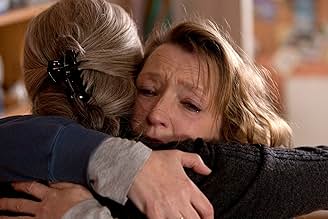
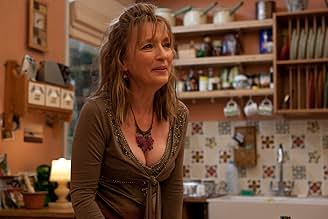
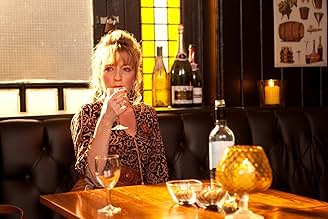
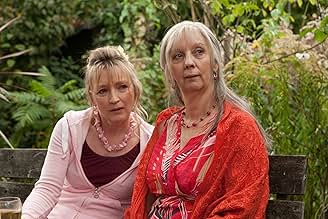
Key amongst this group is their friend, and Gerri's co-worker, Mary (Lesley Manville). Mary is someone we all recognize. She is single, not getting any younger, desperately trying to avoid loneliness (too often with a bottle), masking her fear through fake excitement, and latched onto the security blanket offered by Tom and Gerri's friendship.
When family friend Ken (Peter Wight) makes a move on Mary, she shuns him because of his lack of perfection. She always thinks she can do better. When she begins fixating on Tom and Gerri's son Joe (Oliver Maltman), we really feel her pain but just want to slap some sense into her. The relationships all take a hit when Mary shows up for dinner and is introduced to Joe's new girlfriend ... a wonderfully charming and talented Katie (Karina Fernandez). Mary acts the selfish fool and it drives a wedge between she and Gerri. There is even a line of dialogue earlier on ... never come between a mother and her son! Another character we are witness to includes the great Imelda Staunton as a depressed middle-aged woman who comes to Gerri for professional guidance. We also meet David Bradley as Tom's older brother, Ronnie, whose wife has recently passed.
All of these situations and personalities are balanced by Tom and Gerri as they provide a stable environment ... it's as if they are a fountain of sanity from which everyone wishes to drink. As an added touch, none of the characters are Hollywood beauties. Broadbent and Ms. Sheen would never be mistaken for Brad and Angelina. Rather they are more likely to look like someone you know ... and better yet, their characters live like people you WANT to know. So again I ask ... How dare he?
Mr. Leigh has a history of making films without a script ... only broad based outlines for the characters. The actors then work to fill in the details of the individuals, which in turn, forms a story. This explains why the story does not follow the traditional arc. In fact, the story has no real beginning or ending. What we see are the interactions of people who are friends, relatives, co-workers, acquaintances and strangers.
The foundation of the film, as well as the foundation for most of the other characters in the film, is the happily married couple of Tom and Gerri, played by the terrific Jim Broadbent and Ruth Sheen. This is a couple who not only love and respect each other, but also enjoy being together. Their friends and family come in and out of their lives, but their bond is strong.
Key amongst this group is their friend, and Gerri's co-worker, Mary (Lesley Manville). Mary is someone we all recognize. She is single, not getting any younger, desperately trying to avoid loneliness (too often with a bottle), masking her fear through fake excitement, and latched onto the security blanket offered by Tom and Gerri's friendship.
When family friend Ken (Peter Wight) makes a move on Mary, she shuns him because of his lack of perfection. She always thinks she can do better. When she begins fixating on Tom and Gerri's son Joe (Oliver Maltman), we really feel her pain but just want to slap some sense into her. The relationships all take a hit when Mary shows up for dinner and is introduced to Joe's new girlfriend ... a wonderfully charming and talented Katie (Karina Fernandez). Mary acts the selfish fool and it drives a wedge between she and Gerri. There is even a line of dialogue earlier on ... never come between a mother and her son! Another character we are witness to includes the great Imelda Staunton as a depressed middle-aged woman who comes to Gerri for professional guidance. We also meet David Bradley as Tom's older brother, Ronnie, whose wife has recently passed.
All of these situations and personalities are balanced by Tom and Gerri as they provide a stable environment ... it's as if they are a fountain of sanity from which everyone wishes to drink. As an added touch, none of the characters are Hollywood beauties. Broadbent and Ms. Sheen would never be mistaken for Brad and Angelina. Rather they are more likely to look like someone you know ... and better yet, their characters live like people you WANT to know. So again I ask ... How dare he?
Acting at it's best. Nominations will follow.
Another Year is the kind of film an actor wishes they had been in and any director wishes they had made. Mike Leigh's skillful directing is at its peak. Long, lingering shots of the characters angst (which normally frustrate the audience) are achieved in an effortless way. The acting is so flawless that it is difficult to find fault. The story is simple and meandering...but it works, and works incredibly well. Another Year will not be to the taste of the young kick-cutting action packed generation. It requires a mature audience or an audience that have at least pondered about what their life would be like after their forties.
This will gain nominations and should win Oscars.
This will gain nominations and should win Oscars.
Big theme movie
This is a big movie tackling big themes, and may, like Happy-Go-Lucky (Mike Leigh's previous film) prove extremely Marmitish. The latter comment may prove hard to understand if you're not British, and that's just like the film (Marmite is a British spread made from yeast extract with a love-it-or-hate-it umami/savoury/salty flavour). Another Year deals with a particularly British form of social breakdown and emotional constipation.
In Britain, from the 40s to the 70s there was widespread use of an exam system called the 11+. Up until the age of 11-12 students were schooled together, after that point, students considered to have more potential by the standards of the 11+ examinations were streamed separately in Grammar Schools, prepared for success, whilst those below the boundary line were sent to Secondary Modern Schools where the focus was much more on practical education (bricklaying, "home economics", woodwork, etc). The legacy of this system has been huge social resentment. There is a feeling in Another Year that the system is back, in the form of university education. With the UK attempting to educate 50% of the secondary school student population to university level, a socially engineered bifurcation to haves and have-nots is being created once again.
All of the characters in the film are from working class backgrounds and yet the fortunes that life has graced them with are distinctly uneven, they have gone in different directions, absent any idea of a shared experience that may have been the rock of previous generations of Britons. Graduates Tom and Gerri (pun intended) have fulfilling careers, heartfelt love for one another, high incomes, and have had the opportunity to travel widely. Tom's brother and Gerri's friend Mary are aging and alone, undereducated, lacking in the kind of accomplishments that are social currency, living with hurt, and in Mary's case, desperation. The message is not all one way, old friend of the family Ken is also a graduate and yet has not managed to find a place in life either.
Scenes in the movie almost exclusively concern Tom and Gerri's catering to this group of friends and family. They deal with the misfortunes of this circle with a mixture of humour, irony, good cooking and alcohol, but mostly conceal their compassion and are helpless onlookers.
The mating game is key here, the unwedded 40+s exist in a state of unsalved distress, futureless, scrapped. Even 30-year-old Joe, functional, graduate, well-employed and witty has struggled to find someone to be with. A notable absence in the movie is a sense of solidarity, community, public events, shared lives and shared values. There's an illiquidity in the relationships marketplace, a lack of feeling and connection, all leading to a general anomie and social constipation.
However painful the lives of Ken and Mary are, the film gives occasional glimpses of far more infernal lives, lower circles of hell where dissatisfaction has paralysed characters with rage or utter resignation. Anything more than a glimpse would have made the film unwatchable.
Gone are the days when WWII veterans would whimper their way through night-times of post-traumatic hallucination for forty years without mentioning it to a soul, however the British "stiff upper lip" still remains as a guiding principle in this movie. There is still very much the assumption that one should keep one's private hell to oneself, or else outsource emotion to a therapist.
What may be controversial in the film is the way you look at how Tom and Gerri treat Mary. A German lady in the audience voiced her opinion to Mike Leigh that the way they treated her was to look down on her, and that she felt this was inappropriate. Mike Leigh responded that the lady felt like this because she was a German and Germans did not understand irony. Maybe I suffer from the same problem because I for one felt that Mary was treated as little more than a baby, and with a certain hauteur, arms-length love. I think people who are lonely need to feel useful. Mary for example was never allowed to help with anything, though this does not excuse her, at times, appalling behaviour (depression makes people selfish, however I feel it necessary to point out as well that someone who is drowning in a river and calling for a life ring, is also being "selfish" in the same way, and I think metaphorically the position is very similar).
Dour joyless watching, maybe one for the Cabinet to watch, after the example of the film La Haine, which concentrated on French malaise and was screened in front of the French cabinet at the instigation of Prime Minister Alain Juppé.
In Britain, from the 40s to the 70s there was widespread use of an exam system called the 11+. Up until the age of 11-12 students were schooled together, after that point, students considered to have more potential by the standards of the 11+ examinations were streamed separately in Grammar Schools, prepared for success, whilst those below the boundary line were sent to Secondary Modern Schools where the focus was much more on practical education (bricklaying, "home economics", woodwork, etc). The legacy of this system has been huge social resentment. There is a feeling in Another Year that the system is back, in the form of university education. With the UK attempting to educate 50% of the secondary school student population to university level, a socially engineered bifurcation to haves and have-nots is being created once again.
All of the characters in the film are from working class backgrounds and yet the fortunes that life has graced them with are distinctly uneven, they have gone in different directions, absent any idea of a shared experience that may have been the rock of previous generations of Britons. Graduates Tom and Gerri (pun intended) have fulfilling careers, heartfelt love for one another, high incomes, and have had the opportunity to travel widely. Tom's brother and Gerri's friend Mary are aging and alone, undereducated, lacking in the kind of accomplishments that are social currency, living with hurt, and in Mary's case, desperation. The message is not all one way, old friend of the family Ken is also a graduate and yet has not managed to find a place in life either.
Scenes in the movie almost exclusively concern Tom and Gerri's catering to this group of friends and family. They deal with the misfortunes of this circle with a mixture of humour, irony, good cooking and alcohol, but mostly conceal their compassion and are helpless onlookers.
The mating game is key here, the unwedded 40+s exist in a state of unsalved distress, futureless, scrapped. Even 30-year-old Joe, functional, graduate, well-employed and witty has struggled to find someone to be with. A notable absence in the movie is a sense of solidarity, community, public events, shared lives and shared values. There's an illiquidity in the relationships marketplace, a lack of feeling and connection, all leading to a general anomie and social constipation.
However painful the lives of Ken and Mary are, the film gives occasional glimpses of far more infernal lives, lower circles of hell where dissatisfaction has paralysed characters with rage or utter resignation. Anything more than a glimpse would have made the film unwatchable.
Gone are the days when WWII veterans would whimper their way through night-times of post-traumatic hallucination for forty years without mentioning it to a soul, however the British "stiff upper lip" still remains as a guiding principle in this movie. There is still very much the assumption that one should keep one's private hell to oneself, or else outsource emotion to a therapist.
What may be controversial in the film is the way you look at how Tom and Gerri treat Mary. A German lady in the audience voiced her opinion to Mike Leigh that the way they treated her was to look down on her, and that she felt this was inappropriate. Mike Leigh responded that the lady felt like this because she was a German and Germans did not understand irony. Maybe I suffer from the same problem because I for one felt that Mary was treated as little more than a baby, and with a certain hauteur, arms-length love. I think people who are lonely need to feel useful. Mary for example was never allowed to help with anything, though this does not excuse her, at times, appalling behaviour (depression makes people selfish, however I feel it necessary to point out as well that someone who is drowning in a river and calling for a life ring, is also being "selfish" in the same way, and I think metaphorically the position is very similar).
Dour joyless watching, maybe one for the Cabinet to watch, after the example of the film La Haine, which concentrated on French malaise and was screened in front of the French cabinet at the instigation of Prime Minister Alain Juppé.
Best Actor Academy Award due
Lesley Manville as Mary truly deserves the Best Actor Oscar for her perfectly nuanced, scary and convincing portrayal of a woman on the brink of personal desperation due to her many life mistakes and to her extremely fragile emotional nature that served to spiral her further and further down toward mental illness with every romantic disappointment and life mistake she made. Honestly, I do not think Meryl Streep could have played this role as well. Lesley was that great in it. An astounding performance, and so touching, as you felt every pain Mary felt due to Lesley's spot-on interpretation of her character's neediness and weaknesses and what they cost her.
This film tells a story(by the 4 seasons)of a year in the lives of a UK couple and their friends. Mary is a secretarial co-worker and friend of Gerri, a professional counselor and the sweet wife of her well-rumpled and very likable engineer/geologist husband, Tom(yes, Tom and Gerri). Mary is the woman we all know at some time or another in our lives.... a woman too attractive to always be alone but always is alone after every failed attempt at a relationship, always suffering badly from each failure to find what she wants so badly.
Not much of an intricate plot here, as in all Mike Leigh films, but the story was such an absorbing and typical Mike Leigh take on the day-to-day happenings in the ordinary and everyday lives of a normal UK couple and some at-risk friends. Tom and Gerri were the couple with these friends in various states of decline, and they always tried hard through their gentle patience, understanding and humor to help them and always be there for them. Ruth Sheen and the great Tom Broadbent played the wife/husband roles to perfection, and were so loving, likable and comfortable with each other and with friends that you wished you had them for your own friends. Wonderful portrayals, both.
See this film for engaging personal interaction and for the best acting performance of 2010, but be prepared for your own uncomfortable and awkward feelings throughout due to Mary's many sufferings and how her endless tales of them affected her(long-suffering)friends. It was a truly human story, sometimes warm and funny, sometimes pathetic and difficult to watch, but at the end you knew you had seen acting greatness.
This film tells a story(by the 4 seasons)of a year in the lives of a UK couple and their friends. Mary is a secretarial co-worker and friend of Gerri, a professional counselor and the sweet wife of her well-rumpled and very likable engineer/geologist husband, Tom(yes, Tom and Gerri). Mary is the woman we all know at some time or another in our lives.... a woman too attractive to always be alone but always is alone after every failed attempt at a relationship, always suffering badly from each failure to find what she wants so badly.
Not much of an intricate plot here, as in all Mike Leigh films, but the story was such an absorbing and typical Mike Leigh take on the day-to-day happenings in the ordinary and everyday lives of a normal UK couple and some at-risk friends. Tom and Gerri were the couple with these friends in various states of decline, and they always tried hard through their gentle patience, understanding and humor to help them and always be there for them. Ruth Sheen and the great Tom Broadbent played the wife/husband roles to perfection, and were so loving, likable and comfortable with each other and with friends that you wished you had them for your own friends. Wonderful portrayals, both.
See this film for engaging personal interaction and for the best acting performance of 2010, but be prepared for your own uncomfortable and awkward feelings throughout due to Mary's many sufferings and how her endless tales of them affected her(long-suffering)friends. It was a truly human story, sometimes warm and funny, sometimes pathetic and difficult to watch, but at the end you knew you had seen acting greatness.
Another Happy-go-lucky?
Mike Leighs wonderfully ironic yet sweet look at life takes a little twist in this super ensemble movie which centers around Tom and Gerri and shows us these characters mainly as reflected by their friends and kin. What makes the twist is something written in a different review and which is apparently a Continental European viewpoint if I must believe Mr. Leigh. The minor flaw of this film is that Tom and Gerri hardly develop and if they do, it really is downwards as - when you leave the theatre - you are left with some questions as to whether they really are as warm and supportive as they appear prima facie. Why are all their friends alcoholic losers? And why are they so supportive, yet so aloof? We found a few scenes that show how Tom and Gerri feel about Mary (a shoe-in for any award because of the slightly over-the-top, nail biter performance by Lesley Manville). Their friends really make them feel better about themselves. Whatever may be of this Continental take, it is a tremendously enjoyable movie, as always.


Did you know
- TriviaTo simulate the four seasons of a year, cinematographer Dick Pope used four different film stocks, and much attention was paid to details in the props so that the passage of time would appear believable.
- GoofsOne of Mary's outlays on her troublesome car was for a new carburettor, but the vehicle in the film had fuel injection.
- ConnectionsFeatured in At the Movies: Cannes Film Festival 2010 (2010)
- SoundtracksAll Shook Up
Written by Elvis Presley & Otis Blackwell
Used by kind permission of Carlin Music Corp & EMI Publishing
- How long is Another Year?Powered by Alexa
Details
- Release date
- Countries of origin
- Official sites
- Language
- Also known as
- Thêm Một Năm Nữa
- Filming locations
- Production companies
- See more company credits at IMDbPro
Box office
- Budget
- $8,000,000 (estimated)
- Gross US & Canada
- $3,205,706
- Opening weekend US & Canada
- $111,869
- Jan 2, 2011
- Gross worldwide
- $19,722,766
- Runtime
- 2h 9m(129 min)
- Color
- Sound mix
- Aspect ratio
- 2.35 : 1
Contribute to this page
Suggest an edit or add missing content