

A group of assassins come together for a suicide mission to kill an evil lord.A group of assassins come together for a suicide mission to kill an evil lord.A group of assassins come together for a suicide mission to kill an evil lord.
- Awards
- 15 wins & 28 nominations total




- Director
- Writers
- All cast & crew
- Production, box office & more at IMDbPro
7.571.1K
1
2
3
4
5
6
7
8
9
10
Featured reviews
A Future Classic by Takashi Miike
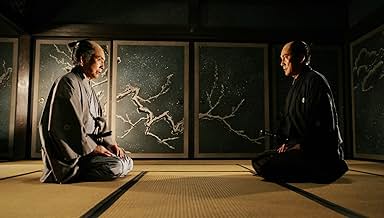
In 1844, the peace of the Feudal Japan is threatened by the cruel Lord Naritsugu Matsudaira (Gorô Inagaki) that is politically rising and getting closer to his half-brother, the shogun. After the harakiri of Namiya clan leader, the samurai Shinzaemon Shimada (Kôji Yakusho) is summoned by the shogun's adviser Sir Doi (Mikijiro Hira) of the Akash Clan to listen to the tragedy of Makino Uneme ((Takumi Saitô), whose son and daughter-in-law have been murdered by Naritsugu. Then Sir Doi shows a woman with arms, legs and tongue severed by Naritsugu and she writes with her forearm a request to Shinza to slaughter Naritsugu and his samurais.
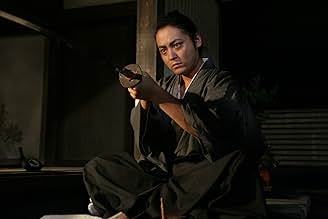
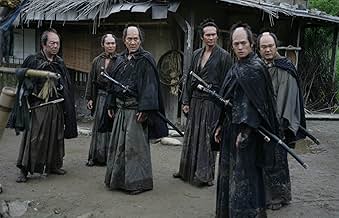
Shinza promises to kill Naritsugu and he gathers eleven other samurais and plots a plan to attack Naritsugu in his trip back to the Akash land. But the cunning samurai Hanbei Kitou (Masachika Ichimura) that is responsible for the security of his master foresees Shinza's intent. Shinza decides to go with his samurais through the mountain, where they find the hunter Koyata (Yûsuke Iseya) that guides them off the mountain and joins the group. Now the thirteen men prepare an ambush to Naritsugu and his army of two hundred samurais in a suicide mission to stop evil.
"Jûsan-nin no shikaku", a.k.a, "13 Assassins", is a future classic of the samurai genre by Takashi Miike. It is inevitable to compare this film with Akira Kurosawa's "Seven Samurais" and the epic "The 300 Spartans", but "13 Assassins" is among the best samurais movies I have ever seen, with a solid story in the Edo period of Japan, stunning cinematography, wonderful performances and fantastic choreography in the battle scenes. My vote is nine.
Title (Brazil): "13 Assassinos" ("13 Assassins")
Shinza promises to kill Naritsugu and he gathers eleven other samurais and plots a plan to attack Naritsugu in his trip back to the Akash land. But the cunning samurai Hanbei Kitou (Masachika Ichimura) that is responsible for the security of his master foresees Shinza's intent. Shinza decides to go with his samurais through the mountain, where they find the hunter Koyata (Yûsuke Iseya) that guides them off the mountain and joins the group. Now the thirteen men prepare an ambush to Naritsugu and his army of two hundred samurais in a suicide mission to stop evil.
"Jûsan-nin no shikaku", a.k.a, "13 Assassins", is a future classic of the samurai genre by Takashi Miike. It is inevitable to compare this film with Akira Kurosawa's "Seven Samurais" and the epic "The 300 Spartans", but "13 Assassins" is among the best samurais movies I have ever seen, with a solid story in the Edo period of Japan, stunning cinematography, wonderful performances and fantastic choreography in the battle scenes. My vote is nine.
Title (Brazil): "13 Assassinos" ("13 Assassins")
The Master Strikes Again
I'm a huge fan of Takashi Miike, so I was very excited to be able to attend a sneak peek of his latest film. Miike's one of those directors who seems to be trying to make at least one film in every style, and this latest is his foray into the classic "samurai avenging injustices" genre. Only, we all know by now that Miike's style is anything but "classic." He always manages to find a way to infuse his own unique, warped imprint into everything he touches. Especially since he insists on making the most bizarre cameos possible in all the films he directs. They are always really fun to watch for.
So, this film is great. It starts off just as slowly as any of these old period pieces set in feudal era Japan, but it quickly descends into pure mayhem and madness. Shinzaemon is a retired samurai, but he is prompted back into action when he learns that the Shogun's "adopted" (code for bastard) son, Lord Naritsugu, has been terrorizing peasants. He's been killing and mutilating men, women and children all throughout the land, and all with the most cold- hearted, disinterested cruelty. So Shinzaemon decides to assemble a band of other idle samurai to hunt this despot down and assassinate him. Those would be the thirteen assassins that give this film its title. And they really are a very mismatched band of warriors. And these men are caricatures—each outrageous in his own way.
The one thing I really love about Takashi Miike's style is that he's never afraid to just go for it. He's got no shame, and absolutely no restraint. I think this is because he has a deep-rooted sense of humor (albeit a very dark one). It's an ability to identify and appreciate the absurdity in life. Miike's films have a reputation for being pretty violent and bloody (and this one is certainly no exception). But they are also incredibly funny. The gore is certainly meant to shock, but I don't think it's just for the sake of a cheap thrill. I think it's meant to throw us of balance. His work is horrifying where we expect delicacy, and actually quite subtle where viewers typically expect to find vulgarity. Of course, we can always count on Miike for some truly silly stunts too. The result is audiences that are quite delighted and amused, even after witnessing all the horror and disfigurement and devastation. Those moments are upsetting and heartbreaking, for sure. But, Miike really understands how a film should flow, and balances these difficult scenes with the right dose of irreverence. He's a true master, and this film is a roaring success.
So, this film is great. It starts off just as slowly as any of these old period pieces set in feudal era Japan, but it quickly descends into pure mayhem and madness. Shinzaemon is a retired samurai, but he is prompted back into action when he learns that the Shogun's "adopted" (code for bastard) son, Lord Naritsugu, has been terrorizing peasants. He's been killing and mutilating men, women and children all throughout the land, and all with the most cold- hearted, disinterested cruelty. So Shinzaemon decides to assemble a band of other idle samurai to hunt this despot down and assassinate him. Those would be the thirteen assassins that give this film its title. And they really are a very mismatched band of warriors. And these men are caricatures—each outrageous in his own way.
The one thing I really love about Takashi Miike's style is that he's never afraid to just go for it. He's got no shame, and absolutely no restraint. I think this is because he has a deep-rooted sense of humor (albeit a very dark one). It's an ability to identify and appreciate the absurdity in life. Miike's films have a reputation for being pretty violent and bloody (and this one is certainly no exception). But they are also incredibly funny. The gore is certainly meant to shock, but I don't think it's just for the sake of a cheap thrill. I think it's meant to throw us of balance. His work is horrifying where we expect delicacy, and actually quite subtle where viewers typically expect to find vulgarity. Of course, we can always count on Miike for some truly silly stunts too. The result is audiences that are quite delighted and amused, even after witnessing all the horror and disfigurement and devastation. Those moments are upsetting and heartbreaking, for sure. But, Miike really understands how a film should flow, and balances these difficult scenes with the right dose of irreverence. He's a true master, and this film is a roaring success.
Another brilliant genre masterpiece from Takashi Miike
Takashi Miike is arguably one of Japan's hardest working directors who has tackled several different genres, generally with good results. It used to be he would do a dozen or so projects a year, and more in his earlier days. This, of course, has diminished in place of bigger projects, but the man still remains one of Japan's most well known and prolific directors. So, it shouldn't surprise anyone that his undertaking of yet another new genre, the samurai epic, is something of a highly anticipated film. And yes, it succeeds in being another brilliant masterpiece from the man.
13 Assassins, though full of characters, is quite simple actually. A master Shogun samurai is charged with the killing of a cruel and masochistic Shogun lord before he can become more influential in the Japanese Shogunate. With this mission, he gathers together 13 samurai to join him in what appears to be a mostly suicidal mission as they take on a small army of soldiers. For years I have argued that Miike is a master filmmaker that doesn't get nearly the kind of recognition he deserves, as his experience and resume put him up with the likes of other classic filmmakers. This shows in Assassins as he brilliantly puts together this simple, yet purposeful film that calls back to the era of epic samurai films of the likes of Akira Kurosawa. In fact, the influence of Seven Samurai is quite apparent here, even going so far as to model some similar characters. However, do not be mistaken, as this is very much a Miike film, a combination of his abilities to craft a mainstream film and a cult hit.
And the trademarks are certainly there, with the sadistic young Shogun lord bearing the bizarre violent fetishes that have been displayed in Miike's more obscure works, namely Ichi the Killer. As you might suspect, the violence early on is shocking, effective, and often unexpected. This gives way later on to more stylish violence, but none the less, the film is incredibly violent, worthy of a hard R rating by American standards. Miike fans should be very pleased as he both employs his skills as a filmmaker while at the same time adhering to the general guidelines of making a samurai film. Here, he delves greatly into the genre, showing what it means to be a samurai and questioning their purpose through multiple views. Our master samurai, Shinzaemon, sees samurai as being for the people, while Hanbei, his rival, sees them as entirely in servitude to their master without question. Even the young lord, Shinzaemon's target, has a view, thought it is certainly the most negative of any of them.
If I have any complaints, it's two. First, the film does little exposition of the large cast and most of the assassins are simply there to be a fighting force. We learn very little about most of them, and even the samurai we do learn about, including Shinzaemon, get little exposition besides what we already expect, that he's a great samurai of justice. The second would be the clunking over the head about samurai ideals. Miike continues to push messages we've already acquired early in the film and it becomes slightly redundant by the end. However, these are minor complaints that are mostly easily ignored as the film runs at a fast pace with a 45 minute battle that is one of the best samurai battles I've seen on film, comparing to Azumi or Zatoichi's finale, but arguably handled better and with a master's touch.
It's hard to know if this is Miike's pinnacle. He certainly creates a modern samurai masterpiece of an epic here. One particularly powerful scene will remain with you for a long time, and this is the power of Miike's film, one that goes to places many are afraid to tread to leave a lasting impression. Violent, entertaining, and with good examination of the samurai and their duties, fans of Miike's previous films and fans of the samurai epic will not be disappointed.
13 Assassins, though full of characters, is quite simple actually. A master Shogun samurai is charged with the killing of a cruel and masochistic Shogun lord before he can become more influential in the Japanese Shogunate. With this mission, he gathers together 13 samurai to join him in what appears to be a mostly suicidal mission as they take on a small army of soldiers. For years I have argued that Miike is a master filmmaker that doesn't get nearly the kind of recognition he deserves, as his experience and resume put him up with the likes of other classic filmmakers. This shows in Assassins as he brilliantly puts together this simple, yet purposeful film that calls back to the era of epic samurai films of the likes of Akira Kurosawa. In fact, the influence of Seven Samurai is quite apparent here, even going so far as to model some similar characters. However, do not be mistaken, as this is very much a Miike film, a combination of his abilities to craft a mainstream film and a cult hit.
And the trademarks are certainly there, with the sadistic young Shogun lord bearing the bizarre violent fetishes that have been displayed in Miike's more obscure works, namely Ichi the Killer. As you might suspect, the violence early on is shocking, effective, and often unexpected. This gives way later on to more stylish violence, but none the less, the film is incredibly violent, worthy of a hard R rating by American standards. Miike fans should be very pleased as he both employs his skills as a filmmaker while at the same time adhering to the general guidelines of making a samurai film. Here, he delves greatly into the genre, showing what it means to be a samurai and questioning their purpose through multiple views. Our master samurai, Shinzaemon, sees samurai as being for the people, while Hanbei, his rival, sees them as entirely in servitude to their master without question. Even the young lord, Shinzaemon's target, has a view, thought it is certainly the most negative of any of them.
If I have any complaints, it's two. First, the film does little exposition of the large cast and most of the assassins are simply there to be a fighting force. We learn very little about most of them, and even the samurai we do learn about, including Shinzaemon, get little exposition besides what we already expect, that he's a great samurai of justice. The second would be the clunking over the head about samurai ideals. Miike continues to push messages we've already acquired early in the film and it becomes slightly redundant by the end. However, these are minor complaints that are mostly easily ignored as the film runs at a fast pace with a 45 minute battle that is one of the best samurai battles I've seen on film, comparing to Azumi or Zatoichi's finale, but arguably handled better and with a master's touch.
It's hard to know if this is Miike's pinnacle. He certainly creates a modern samurai masterpiece of an epic here. One particularly powerful scene will remain with you for a long time, and this is the power of Miike's film, one that goes to places many are afraid to tread to leave a lasting impression. Violent, entertaining, and with good examination of the samurai and their duties, fans of Miike's previous films and fans of the samurai epic will not be disappointed.
Brave Samurais are making the plot truly strong
Taksshi Mike gives a new face to the 1963 classic '13 Assassins' and he has executed it at grandeur level portraying an event which took place in Japans feudal era.
When an evil and sadistic lord is bringing horror to countrymen, few Samurais who were once loyal to the throne foresee a greater danger. If this Lord Naritsugu Matsudaira plunges himself to the throne in near future the country will be devastated and torn with war. Thus these brave set of men creates a silent and elite secret force in order to assassinate the lord. Gathering only 13 men to their force they fearlessly goes head to head against an army of 200 to fulfill their goal. Brutal and merciless Samurai swords speak for themselves.
This movie is a wonder of its own creation. It brings out ancient lifestyle of Japan in to light with details. And more than that the spirit of the brave Samurais are making the plot truly strong and when they fall and die one by one still they keep the heads high and hearts strong. Courage and determination of a worrier may not seem this strong in any recent movie which I recall.
However be warned that 13 Assassins is not an easy movie to digest. It has blood and gore in great volumes and violence sometimes you might not really expect. Yet they are important in order make the story run to your blood stream. And once the war hits the screen after a long and silent slow momentum, it goes right until the end which is nearly 30-40 mts. So you might actually lose the count of killing.
My reviews at flickshout.tk
When an evil and sadistic lord is bringing horror to countrymen, few Samurais who were once loyal to the throne foresee a greater danger. If this Lord Naritsugu Matsudaira plunges himself to the throne in near future the country will be devastated and torn with war. Thus these brave set of men creates a silent and elite secret force in order to assassinate the lord. Gathering only 13 men to their force they fearlessly goes head to head against an army of 200 to fulfill their goal. Brutal and merciless Samurai swords speak for themselves.
This movie is a wonder of its own creation. It brings out ancient lifestyle of Japan in to light with details. And more than that the spirit of the brave Samurais are making the plot truly strong and when they fall and die one by one still they keep the heads high and hearts strong. Courage and determination of a worrier may not seem this strong in any recent movie which I recall.
However be warned that 13 Assassins is not an easy movie to digest. It has blood and gore in great volumes and violence sometimes you might not really expect. Yet they are important in order make the story run to your blood stream. And once the war hits the screen after a long and silent slow momentum, it goes right until the end which is nearly 30-40 mts. So you might actually lose the count of killing.
My reviews at flickshout.tk
Film of two halves but both work well in different ways
I'm a little wary of films from Takashi Miike as, although they are generally received as good, my experience of them has been that they are bloody and very odd. Thirteen Assassins though seemed a bit more accessible in terms of being more straightforward, which in some ways then makes the violence a little easier to watch. The plot here sees the amoral behaviour of Lord Naritsugu infuriate a small group of men who, led by veteran samurai Shinzaemon, set out to trap him and his 100+ entourage of guards (led by samurai Hanbei) in order to kill him and end his rise to power for the greater good.
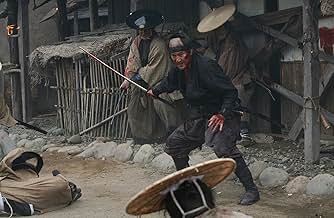
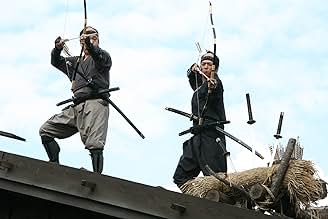
This plot essentially cuts the film in half. The first half of the film is the setup and is mostly dialogue driven. It is slow and patient but not dull as the main thing it does is to turn the main character (and the audience) against Naritsugu by virtue of the terrible things he has done. This is brutal and quite shocking in regards some of the things we see, half-see or view the aftermath of. At the same time it gives us some time to get to know the thirteen main characters; although there is an air of honour to all of them, the characters do have traits of humour, weakness, anger and so on, which mark them out but also add some colour to the telling. The second half of the film begins when the trap is sprung and a small village becomes a contained killing field soon to be filled with bodies and blood.
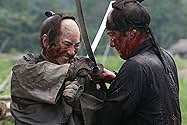
I had wondered how I would find this because there was always the potential that action involving this size of a crowd would just be a mess of flailing and blood and that it wouldn't have any tension or flow to it. To a certain extent, this is a bit of a problem at times but mostly Miike overcomes it by splitting up the characters across the village and mixing smaller conflicts with bigger ones. You do still need to buy the sight of tired individual men cutting through a stream of 20 men but the narrative sort of makes this easy (it is a time of peace with a lower standard of samurai) but also it isn't all this type of action. It is bloody but without being overly gory for the sake of it. The delivery manages to make me believe the concept of the honourable death (not something I do normally) because of how dishonourable Naritsugu is and how likable Shinzaemon is throughout. The cast do well in this regard not only to make characters but also to remain distinguishable in the midst of the chaos and blood. Yakusho is strong in the lead and he contrasts well with Ichimura and Inagaki well; both of whom are also good even if Inagaki has a bit of an open goal in regards doing a simple amoral character. The supporting cast are good and mix their characters well with my favourite being Iseya who is fun and funny even if what his character represents sort of doesn't work for my western viewpoint.
Overall though, Thirteen Assassins is an engaging film that has good build-up which explodes into chaos and violence for the second half. I don't think it is perfect but in fairness some of the problems I had with it came with the plot and the territory, so they are not failings so much as just part of the film.
This plot essentially cuts the film in half. The first half of the film is the setup and is mostly dialogue driven. It is slow and patient but not dull as the main thing it does is to turn the main character (and the audience) against Naritsugu by virtue of the terrible things he has done. This is brutal and quite shocking in regards some of the things we see, half-see or view the aftermath of. At the same time it gives us some time to get to know the thirteen main characters; although there is an air of honour to all of them, the characters do have traits of humour, weakness, anger and so on, which mark them out but also add some colour to the telling. The second half of the film begins when the trap is sprung and a small village becomes a contained killing field soon to be filled with bodies and blood.
I had wondered how I would find this because there was always the potential that action involving this size of a crowd would just be a mess of flailing and blood and that it wouldn't have any tension or flow to it. To a certain extent, this is a bit of a problem at times but mostly Miike overcomes it by splitting up the characters across the village and mixing smaller conflicts with bigger ones. You do still need to buy the sight of tired individual men cutting through a stream of 20 men but the narrative sort of makes this easy (it is a time of peace with a lower standard of samurai) but also it isn't all this type of action. It is bloody but without being overly gory for the sake of it. The delivery manages to make me believe the concept of the honourable death (not something I do normally) because of how dishonourable Naritsugu is and how likable Shinzaemon is throughout. The cast do well in this regard not only to make characters but also to remain distinguishable in the midst of the chaos and blood. Yakusho is strong in the lead and he contrasts well with Ichimura and Inagaki well; both of whom are also good even if Inagaki has a bit of an open goal in regards doing a simple amoral character. The supporting cast are good and mix their characters well with my favourite being Iseya who is fun and funny even if what his character represents sort of doesn't work for my western viewpoint.
Overall though, Thirteen Assassins is an engaging film that has good build-up which explodes into chaos and violence for the second half. I don't think it is perfect but in fairness some of the problems I had with it came with the plot and the territory, so they are not failings so much as just part of the film.


Did you know
- TriviaThe opening sequence of this film is a shot by shot recreation of the 1960s era original.
- Quotes
Kujuro Hirayama: No mercy! There's no samurai code or fair play in battle! No sword? Use a stick. No stick? Use a rock. No rock? Use your fists and feet! Lose your life, but make the enemy pay!
- Crazy creditsAlthough most of the opening credits after the distributor's name are in Japanese, there are three in English: Recorded Picture Company, Yahoo! Japan, and Tsutaya.
- Alternate versionsThe runtime of the Japanese release is 141 minutes, for but the international distribution a reduced cut of 126 minutes was released, which among other things omits some scenes referring to Japanese mythology (such as several scenes which indicate that the hunter Koyata is not of human flesh, but a demon).
- ConnectionsFeatured in At the Movies: Venice Film Festival 2010 (2010)
Details
- Release date
- Countries of origin
- Official sites
- Language
- Also known as
- 13 asesinos
- Filming locations
- Production companies
- See more company credits at IMDbPro
Box office
- Budget
- $6,000,000 (estimated)
- Gross US & Canada
- $802,778
- Opening weekend US & Canada
- $45,854
- May 1, 2011
- Gross worldwide
- $18,689,058
- Runtime
- 2h 21m(141 min)
- Color
- Sound mix
- Aspect ratio
- 2.35 : 1
Contribute to this page
Suggest an edit or add missing content