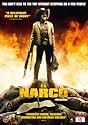
After being deported back to Mexico, a man has no choice but to join the vicious drug cartel that has corrupted his hometown in order to survive.After being deported back to Mexico, a man has no choice but to join the vicious drug cartel that has corrupted his hometown in order to survive.After being deported back to Mexico, a man has no choice but to join the vicious drug cartel that has corrupted his hometown in order to survive.
- Director
- Writers
- Stars
- Awards
- 28 wins & 6 nominations total
- Director
- Writers
- All cast & crew
- Production, box office & more at IMDbPro
7.713.4K
1
2
3
4
5
6
7
8
9
10
Featured reviews
To all those who say it's a sad Mexican reality...
This movie shows the reality of corruption, church and drug traffic but don't make it sound like everyone in Mexico is a slave to this. What the director did was focus on some drug trafficker and what he moves up his cartel's ladder but Mexico is just like all of the countries in the world, there are opportunities for everyone who really looks for them and the people in general are not dehumanized they are scared by what they see in the news and what they see in papers which is only the bad news. In all the time I've been here I have only heard s h i t in the news and what people say they heard. Sure the economic crisis hurt the people but that's everywhere not just in Mexico. This is a good movie but don't be a victim and say it's a sad reality, instead do something about it, demand the government what you want because in the end the people have the power to do anything.
Very good in its own way.
Many of my acquaintances refused to watch this film, accusing it of trying to justify the life of a drug dealer or of being just another violent movie-something they might already be tired of seeing.
But I didn't see it that way. In El infierno, I found a film with a very deliberate pace (Luis Estrada has truly refined his craft) that delves into a world of violence which, sadly, is part of everyday life for many Mexicans. Like many others, I started the film laughing, but ended it almost trembling.
The humor-something that could easily be criticized given the subject matter-is actually what makes the world Estrada portrays bearable. Through simplicity and realism, he exposes situations that are far more complex than they seem, where everyone plays their part.
Hand in hand with Damián Alcázar, Luis Estrada delivers a third film we never thought possible in Mexico-one that calls things by their name and forces us to reflect on what we've become, and what we might still become.
But I didn't see it that way. In El infierno, I found a film with a very deliberate pace (Luis Estrada has truly refined his craft) that delves into a world of violence which, sadly, is part of everyday life for many Mexicans. Like many others, I started the film laughing, but ended it almost trembling.
The humor-something that could easily be criticized given the subject matter-is actually what makes the world Estrada portrays bearable. Through simplicity and realism, he exposes situations that are far more complex than they seem, where everyone plays their part.
Hand in hand with Damián Alcázar, Luis Estrada delivers a third film we never thought possible in Mexico-one that calls things by their name and forces us to reflect on what we've become, and what we might still become.
A sad Mexican reality
This is a picture of Mexico's reality: drugs, violence, corruption and zero opportunities to people. Estrada is a no-fear director that shows what are happening in my country, he told about corruption in police corps, army, politicians inclusive with president Calderon y former's presidents, the church (catholic) has a important role in the film. Damian Alcazar is a warranty, Joaquin Cosio, Gomez Cruz, Maria Rojo, Salvador Sanchez all of them great actors that make a brilliant movie. The story is about Benny Garcia (Alcazar) a deported Mexican who found his town worst than ever, without job and no money he was introduced to mob group by his best friend Cochiloco (Cosio). Love and violence, loyalty and human feelings is mixed in this picture. Congratulations to Estrada for his courage to say the things like are in a country like Mexico.
A good film
As a Mexican who lives in México I have to say that it is very different to read the stories about crime, death, drugs, etc. in the newspapers than watching this film that put names and faces to the people involved in this kind of lifestyle. Some of the reviewers are very offended with the stereotypes in this movie, but it is undeniable that this movie portrays just one piece of reality about a part of our society. The offensive part should be that the rest of us live our lives normally without thinking about these things. It seems that many of us live in a different country, so far from this hell, and this movie is a great remainder of the problems we have as a country. I think that many of us are indifferent to these problems; we do not even imagine that this "war" affects all of us. I have read some reviews in which the way of telling the story is questioned and criticised. Many people think that the comedy is unnecessary, that it is a safe and easy way to say this kind of things, but I wonder if people are ready to pay to watch a film that does not involve comedy or any kind of humorous situation... sad but true, our TV and cinema culture is pathetic. Good for Luis Estrada, not everything is tequila, mariachi loco, spring break and telenovelas in México.
Brutal, sharp, overwhelmingly real and just extraordinaire.
This is by far one of the most intense, realistic and utterly depressing portrait of Mexican reality nowadays. Given the fact that this film was released as part of the Mexican Independence Bicentennial, it is a slap in the face of the society, the government and the organised crime. Its tag line says it all: "Nothing to celebrate".
With much of irony, black comedy, and criticism, it disses everybody and everything: from the corrupted government institutions of a failed state, to the hypocrisy of a rotten Catholic church, to a de-humanised and selfish society. This film accurately reflects the current situation in Mexico. And it does with such mastery and accuracy, it shocks the viewer.
Best Mexican film this year by a wide margin. And one of the bests of all time.
With much of irony, black comedy, and criticism, it disses everybody and everything: from the corrupted government institutions of a failed state, to the hypocrisy of a rotten Catholic church, to a de-humanised and selfish society. This film accurately reflects the current situation in Mexico. And it does with such mastery and accuracy, it shocks the viewer.
Best Mexican film this year by a wide margin. And one of the bests of all time.
Did you know
- TriviaThis film and "Un mundo maravilloso (2006)" are the films in the series that received less censorship during their projection in Mexico. This could be because the other two, "Herod's Law (1999)" and "The Perfect Dictatorship (2014)," were released when the most powerful and controversial political party of the country, PRI, known in Mexico for its intolerance to criticism, was ruling the country.
- GoofsThe close-up of the grenade tossed under the pickup truck reveals a big hole at the bottom of the grenade, which indicates it is a dummy grenade, usual Army surplus store stock and commonly used for training.
- ConnectionsFollowed by The Perfect Dictatorship (2014)
- How long is Hell?Powered by Alexa
Details
Box office
- Gross worldwide
- $6,703,873
- Runtime
- 2h 29m(149 min)
- Sound mix
- Aspect ratio
- 2.35 : 1
Contribute to this page
Suggest an edit or add missing content