IMDb RATING
6.2/10
9.4K
YOUR RATING


A look at the platonic relationship between Marie Antoinette and one of her female readers during the first days of the French Revolution.A look at the platonic relationship between Marie Antoinette and one of her female readers during the first days of the French Revolution.A look at the platonic relationship between Marie Antoinette and one of her female readers during the first days of the French Revolution.
- Director
- Writers
- Stars
- Awards
- 6 wins & 12 nominations total



Julie-Marie Parmentier
- La servante Honorine Aubert
- (as Julie-Marie Parmentier de la Comédie Française)

Marthe Guérin Caufman
- La domestique Alice
- (as Marthe Caufman)


Hervé Pierre
- L'abbé Hérissé
- (as Hervé Pierre de La Comédie Française)


- Director
- Writers
- All cast & crew
- Production, box office & more at IMDbPro
6.29.4K
1
2
3
4
5
6
7
8
9
10
Featured reviews
More about seduction, loyalty, and betrayal than social upheaval
Written and directed by Benoît Jacquot and based on the novel by Chantal Thomas, Farewell, My Queen explores the death throes of the French monarchy over a period of three days in July, 1789. Set in the Palace of Versailles at the beginning of the French Revolution, Sidonie (Lea Seydoux), known as the reader for Queen Marie-Antoinette (Diane Kruger), is responsible for selecting books and reading them aloud to the queen. Because of her closeness to the monarch, she is able to act as a spy, securing information about events taking place inside and outside the palace, pressing selected servants for information, and eavesdropping on conversations to gather the most up-to-date gossip to pass along to Marie.
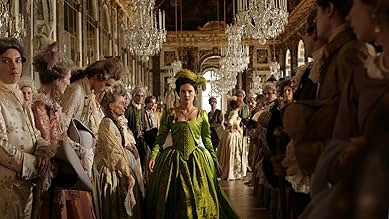
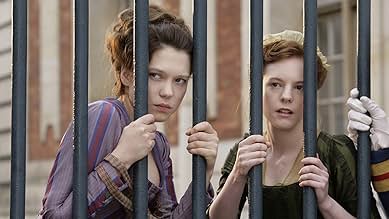
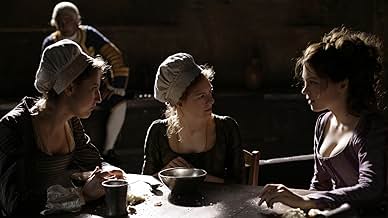
The film is seen from Sidonie's point of view, a vantage point that illuminates the sharp social divisions inside the palace with the servants living in crowded rat-infested quarters, and the royals dwelling in opulent accommodations. Lea Seydoux delivers a powerful performance as the devoted servant of the queen, conveying an air of mystery about who she really is in a way that adds to her allure. Kruger portrays Marie-Antoinette as sensual and hedonistic and there is a hint of more than Platonism in the way she interacts with both Sidonie and the Duchess de Polignac (Virginie Ledoyen), a relationship that tests Sidonie's loyalty.
On the morning of July 15th, news spreads rapidly that the king had been awakened at two in the morning. No one knows the reason, but fear spreads throughout the court. If the king is ill, who will protect those totally dependent on the nobles who control their lives? It is soon revealed, however, that the king is not ill, but that a mob has stormed the Bastille and a revolt has begun against the aristocracy. Little information is available. Rumors abound based only on conversations whispered in the hallways and the servant's quarters. When the King travels to Paris and the Queen decides against an escape to Metz, an aura of inevitably descends on the Palace and the nobles begin to abandon ship, competing for places on the coaches seeking a safe haven.
Antoinette makes every effort to continue with business as usual, looking at magazines to admire new styles and colors for the coming season, paying scant attention to the fact that her name is number one in a list of 300 targets for the guillotine. Fearful of losing her only connection to the world, Sidonie is willing to risk the ultimate sacrifice if it is in the queen's best interest. Even though Farewell, My Queen is historically questionable and may hold us at arms length emotionally, it provides a fresh view of events that we know about only from history books or stuffy costume dramas.
Jacquot captures the authenticity of time and place and also the human side of the power struggle. Unfortunately, the film pays little attention to the issues that led to the revolt, never mentioning the abuse of power by the monarchy. Indeed, the Revolution serves only as a backdrop for the story which is more about seduction, loyalty, and betrayal than social upheaval. Rather than making a statement that is relevant for our times, the intricacies of sexual intrigue and love triangles dominate the film, titillating rather than persuading, and making the goings on difficult to care about.
The film is seen from Sidonie's point of view, a vantage point that illuminates the sharp social divisions inside the palace with the servants living in crowded rat-infested quarters, and the royals dwelling in opulent accommodations. Lea Seydoux delivers a powerful performance as the devoted servant of the queen, conveying an air of mystery about who she really is in a way that adds to her allure. Kruger portrays Marie-Antoinette as sensual and hedonistic and there is a hint of more than Platonism in the way she interacts with both Sidonie and the Duchess de Polignac (Virginie Ledoyen), a relationship that tests Sidonie's loyalty.
On the morning of July 15th, news spreads rapidly that the king had been awakened at two in the morning. No one knows the reason, but fear spreads throughout the court. If the king is ill, who will protect those totally dependent on the nobles who control their lives? It is soon revealed, however, that the king is not ill, but that a mob has stormed the Bastille and a revolt has begun against the aristocracy. Little information is available. Rumors abound based only on conversations whispered in the hallways and the servant's quarters. When the King travels to Paris and the Queen decides against an escape to Metz, an aura of inevitably descends on the Palace and the nobles begin to abandon ship, competing for places on the coaches seeking a safe haven.
Antoinette makes every effort to continue with business as usual, looking at magazines to admire new styles and colors for the coming season, paying scant attention to the fact that her name is number one in a list of 300 targets for the guillotine. Fearful of losing her only connection to the world, Sidonie is willing to risk the ultimate sacrifice if it is in the queen's best interest. Even though Farewell, My Queen is historically questionable and may hold us at arms length emotionally, it provides a fresh view of events that we know about only from history books or stuffy costume dramas.
Jacquot captures the authenticity of time and place and also the human side of the power struggle. Unfortunately, the film pays little attention to the issues that led to the revolt, never mentioning the abuse of power by the monarchy. Indeed, the Revolution serves only as a backdrop for the story which is more about seduction, loyalty, and betrayal than social upheaval. Rather than making a statement that is relevant for our times, the intricacies of sexual intrigue and love triangles dominate the film, titillating rather than persuading, and making the goings on difficult to care about.
Don't bother
This is a modern historical drama. Characters are not well-developed, and their motivations are not clear. Why is Sidonie so devoted to the Queen? Why does she suddenly want to have sex with the gondolier? Instead, there is LOTS of atmosphere, which makes for one slow film.
You won't learn much about what actually happened in the week that followed the fall of the Bastille, since the story, to the extent that there is a story, is told through the eyes of one of the Queen's domestics. (It does remind you that, in a day not only before computers and the internet, but even television and radio, you could live 30 miles away from momentous events and have no idea what was going on.) Nor will you learn much about Marie-Antoinette or Louis XVI. The latter is a minor character here. MA comes off as very capricious, which she evidently was. But why? Again, there is no character development.
And then, finally, the movie stops, and you go "Oh, is it over?" As I said, LOTS of atmosphere. If that floats your boat, you might like this movie.
It did nothing for me, and I'm very interested in French history.
You won't learn much about what actually happened in the week that followed the fall of the Bastille, since the story, to the extent that there is a story, is told through the eyes of one of the Queen's domestics. (It does remind you that, in a day not only before computers and the internet, but even television and radio, you could live 30 miles away from momentous events and have no idea what was going on.) Nor will you learn much about Marie-Antoinette or Louis XVI. The latter is a minor character here. MA comes off as very capricious, which she evidently was. But why? Again, there is no character development.
And then, finally, the movie stops, and you go "Oh, is it over?" As I said, LOTS of atmosphere. If that floats your boat, you might like this movie.
It did nothing for me, and I'm very interested in French history.
Life at Versailles
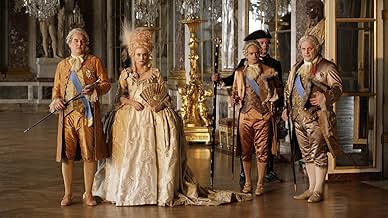
Farewell My Queen screened recently at the Rendezvous with French Cinema festival in New York. A different take on the oft-told story of Marie Antoinette and the storming of the Bastille, this French film focuses on the difficult behind-the-scenes life at Versailles. An "Upstairs Downstairs" at the grandest palace of all, the protagonist is not the queen but rather her "lectrice" - a lady in waiting whose job is to read books to the bored Marie Antoinette. The film is best at depicting the petty backstabbing, gossiping and ambitions of the hangers-on at court. The crowded and dirty "back stairs" rooms are vividly contrasted to the opulence of the grand state halls. A well acted, nicely paced historical drama.
Beautiful, but boring
I love a good costume drama, but anything that includes Marie-Antoinette is apparently bound to be a repetition of the same old clichés over and over.
We get it, she was completely disconnected from reality, careless and pampered and bored and tended to for every bit a normal human being does itself. Age-old cliché that Marie-Antoinette was nothing more than a self-absorbed bimbo? Check.
We get it also, the French Revolution was an immense shock to the royalty and aristocracy; not only did they not see it coming, they didn't think it was possible at all to see the end of their reign. Again, the tried-and-true representation of 18th century French aristocrats as clueless morons? Check.
So, after reinstating the same backdrop again (and again), this version puts forth a bigger focus on rumours of a lesbian love affair the queen was accused of having back then, because that would make the movie so unique.. or not. The story was already a snorefest on paper so let's toss in some sexual material to spice it up in spite of one's better judgement? Check.
The list goes on.
The photo direction is beautiful, the costumes and decors are gorgeous, the actors are all excellent, all this movie is missing is an actual story worthy of your attention. A real shame.
We get it, she was completely disconnected from reality, careless and pampered and bored and tended to for every bit a normal human being does itself. Age-old cliché that Marie-Antoinette was nothing more than a self-absorbed bimbo? Check.
We get it also, the French Revolution was an immense shock to the royalty and aristocracy; not only did they not see it coming, they didn't think it was possible at all to see the end of their reign. Again, the tried-and-true representation of 18th century French aristocrats as clueless morons? Check.
So, after reinstating the same backdrop again (and again), this version puts forth a bigger focus on rumours of a lesbian love affair the queen was accused of having back then, because that would make the movie so unique.. or not. The story was already a snorefest on paper so let's toss in some sexual material to spice it up in spite of one's better judgement? Check.
The list goes on.
The photo direction is beautiful, the costumes and decors are gorgeous, the actors are all excellent, all this movie is missing is an actual story worthy of your attention. A real shame.
Versailles days
I must admit, when I went to see this film I thought: Not another picture about the revolution in France, I must have seen 20 already. I was pleased to find however that Benoit Jacquot has given the period a lot of thought, and has made one of the more effective costume films in recent years. His Sade of 2000 starred Daniel Auteuil and Isild le Besco, treating one of the lesser figures of the period with great insight into his character. Les adieux a la reine is no less engrossing; he takes us into the cramped corridors of the palace, where the small people live in dingy quarters and hope (usually fruitlessly) to be noticed by the royal couple. The night scene with the courtiers fearfully scanning the list of 286 notables who must have their heads chopped off, lit with a brackish yellow candle light is wonderfully effective.
The performances make the film. Diane Kruger, with her slight accent, makes a wonderful Marie Antoinette: sensing doom, yet still able to reach out to those around her. It's easy to see why Sidonie reveres her. Lea Seydoux, whom I hadn't noticed much up to now, shows much promise as an actress, scurrying around the palace trying to gather information about the riots in Paris. Her face is sometimes sullen, sometimes smiling, always interesting. Xavier Beauvois does well as the King. Finally Virginie Ledoyen as Yolande de Polignac--"the indisputably ravishing but dim-witted Yolande" as Simon Schama calls her. Ledoyen is as imperious and shallow as you could wish. You see how the Queen could lose her head (in both senses) over her.
The performances make the film. Diane Kruger, with her slight accent, makes a wonderful Marie Antoinette: sensing doom, yet still able to reach out to those around her. It's easy to see why Sidonie reveres her. Lea Seydoux, whom I hadn't noticed much up to now, shows much promise as an actress, scurrying around the palace trying to gather information about the riots in Paris. Her face is sometimes sullen, sometimes smiling, always interesting. Xavier Beauvois does well as the King. Finally Virginie Ledoyen as Yolande de Polignac--"the indisputably ravishing but dim-witted Yolande" as Simon Schama calls her. Ledoyen is as imperious and shallow as you could wish. You see how the Queen could lose her head (in both senses) over her.


Did you know
- TriviaIn this movie, Diane Kruger speaks French with a German/Austrian accent - which is undoubtedly how the Austrian-born Marie Antoinette would have spoken herself.
- GoofsOn several occasions when soldiers are marching through the main and side gates of Versailles, and also when Sidonie goes to Le Petite Trianon for the first time and falls into a puddle, you can clearly see the very 21st century anti-terrorism concrete security barriers and bollards flanking the gates.
- Quotes
Agathe-Sidonie Laborde: In a way, Your Majesty, you're asking me to go as bait.
La reine Marie Antoinette: An ugly word for a pretty mouth!
Agathe-Sidonie Laborde: Words are all I possess. I wield them well.
- ConnectionsReferenced in Parole de cinéaste: Benoît Jacquot (2017)
- How long is Farewell, My Queen?Powered by Alexa
Details
- Release date
- Countries of origin
- Official sites
- Languages
- Also known as
- Tạm Biệt, Nữ Hoàng Của Tôi
- Filming locations
- Production companies
- See more company credits at IMDbPro
Box office
- Gross US & Canada
- $1,597,998
- Opening weekend US & Canada
- $72,100
- Jul 15, 2012
- Gross worldwide
- $6,366,835
- Runtime
- 1h 40m(100 min)
- Color
- Sound mix
- Aspect ratio
- 2.35 : 1
Contribute to this page
Suggest an edit or add missing content