

Conversations with death row inmate Michael Perry and those affected by his crime serve as an examination of why people - and the state - kill.Conversations with death row inmate Michael Perry and those affected by his crime serve as an examination of why people - and the state - kill.Conversations with death row inmate Michael Perry and those affected by his crime serve as an examination of why people - and the state - kill.
- Awards
- 2 wins & 13 nominations total

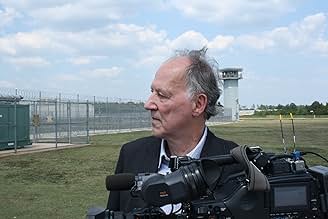




Werner Herzog
- Self - Narrator
- (voice)
Richard Lopez
- Self - Death House Chaplin
- (as The Reverend Richard Lopez)

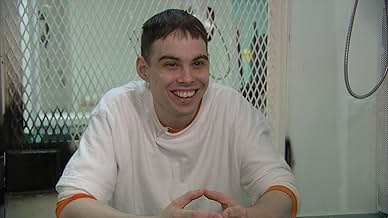
Michael Perry
- Self - Death Row Inmate
- (as Michael James Perry)


Melyssa Thompson-Burkett
- Self - Jason Burkett's Wife
- (as Melyssa Burkett)

- Director
- Writer
- All cast & crew
- Production, box office & more at IMDbPro
7.317.8K
1
2
3
4
5
6
7
8
9
10
Featured reviews
10JoeC345
True Documentation
The art of making a real documentary has become lost in recent years with filmmakers consistently using stylistic editing and asking questions only to prove the point there trying to make. One thing that struck me with "Into The Abyss" by Werner Herzog was how brilliantly he stayed on task of what he was trying to say. He clearly states once that he does not believe in the death penalty.
The thing that impressed me the most was how he was never on screen and only asked honest and pertinent questions to all his interviewees without leading them to the answers he wanted. He probed but always let the person say exactly what they wanted to say. He never tries to excuse or romanticize the crime led the one person he interviewed to death row but is firm in his belief that capital punishment is just as much a sin as the crimes perpetrated by the death row inmates
As I understand it, The United States is one of the last few developed countries that still imposes the death penalty and Texas has the highest rate of death row inmates and the lowest rate of appeals for death row inmates in the nation. While pondering that question you have to ask yourself, "why is that?" is crime being any more deterred by this, I would say no since they still have the highest rate of death row inmates even to this day.
The commentary by the different people that Herzog talks too is extraordinary. The two that I found to be the best were the father Jason Burkett who is also in prison and the man who was once captain of the guard where Perry was to be executed. This mans conclusion on why the death penalty should not be used is perhaps the best and most profound.
Herzog poses no enlightening statement at the end and even provides no commentary minus the questions he asks the people he interviews and this is perhaps the best way he could have approached this subject. He let's the viewer determine for themselves what they want to take away from the evidence he provides.
This is a hard film to review but is a film that should be seen, and the two questions stuck with me even after the film was over, Who has the right to take another life? and, Is there a point where the taking of a life is not a sin?
The thing that impressed me the most was how he was never on screen and only asked honest and pertinent questions to all his interviewees without leading them to the answers he wanted. He probed but always let the person say exactly what they wanted to say. He never tries to excuse or romanticize the crime led the one person he interviewed to death row but is firm in his belief that capital punishment is just as much a sin as the crimes perpetrated by the death row inmates
As I understand it, The United States is one of the last few developed countries that still imposes the death penalty and Texas has the highest rate of death row inmates and the lowest rate of appeals for death row inmates in the nation. While pondering that question you have to ask yourself, "why is that?" is crime being any more deterred by this, I would say no since they still have the highest rate of death row inmates even to this day.
The commentary by the different people that Herzog talks too is extraordinary. The two that I found to be the best were the father Jason Burkett who is also in prison and the man who was once captain of the guard where Perry was to be executed. This mans conclusion on why the death penalty should not be used is perhaps the best and most profound.
Herzog poses no enlightening statement at the end and even provides no commentary minus the questions he asks the people he interviews and this is perhaps the best way he could have approached this subject. He let's the viewer determine for themselves what they want to take away from the evidence he provides.
This is a hard film to review but is a film that should be seen, and the two questions stuck with me even after the film was over, Who has the right to take another life? and, Is there a point where the taking of a life is not a sin?
Engrossing, sobering look into the dramatics of death
You know and value Herzog because he's one of few these days who can offer a glimpse of cosmologic infrastructure. The wheels and chains that move the world beneath the stories we make up to describe it. What he does, is that he frames chaotic nature where it has a story to tell - say a man living with bears, or an island about to explode - builds this as opera while maintaining the illusion of spontaneous life, blurring document with fiction, then uses this to bring to the surface an image that explains the madness of those stories. A boat being tugged over a hill, as pure as this.
The story here is about death-row inmates awaiting execution in a Texas penitentiary, structured so that we absorn not just the heinous, meaningless crime but the broader world that leads up to it, allows it to happen, is dependent on and reflects it. Broken homes, unemployment, casual street violence, Herzog provides enough background detail to ground this in a larger systemic failure: so-called civilized society as only a facade of chaotic nature left to seed.
As with Caves the previous year, the film is talky, dependent on people being able to conjure an experience we only have a handful of images for; the crime scene, dried blood still spattered on the walls, the quietly ominous-looking execution chamber, the prison cemetery lined with crosses of the executed.
And this is the whole point. Here is a story of immense, sobering power, interviewing a man who will be dead by Monday, but of course Herzog cannot film the moment, much to the chagrin of many. He has to tell a story around it.
No, the point is that we only have words, memories, stories to say. Many of these are recounted in the film. The execution itself is pieced together from objects and testimonies, very much like we would process a memory. But these stories are still powerful enough to decide life and death. Two were convicted for the crime, and going beyond who pulled the trigger, since both planned for it, only one was sentenced to die.
This is what is so sobering to me; one man just had a better story to tell the court, more touching drama to explain his being, and we get to note this in the film for a clear effect, he's just more agreeable to listen to, appears more responsible, more level-headed and contrite, whereas the other is just a little wacky. Asked about a story, he blurts out something about monkeys and camp. Herzog himself is markedly disinterested in him, whereas a lot of time is devoted to the man who isn't going to die, a long soliloquy by his guilt-wracked father - serving life in the same prison - that we presume is as sentimental as he pled to the court with it.
The bitter, hard-to-swallow truth is that this guy's life is simply better movie material, makes for a better story, and this decides life - notice too his wife's sappy story about their first encounter, misty-eyed soap as it is.
So even though the film seems more streamlined and ordinary for Herzog, talky opposed to visually primal, it is as pure as he ever delivered, perhaps without himself knowing it.
The whole system we have devised to support life, call it state, society, civilization, is not an infallible, impartial machine but hinges on the bias of storytelling and emotion. The law is arbitrary, equally chaotic as what is meant to organize. At the bottom of that, there is only time and emptiness.
Observant Herzog fans will note that he used this intertitle - 'Time and Emptiness' - for the closing segment of his Buddhist documentary Wheel of Time. See if you can spot the powerful connection between these two, the floating worlds and ritual they portray.
The story here is about death-row inmates awaiting execution in a Texas penitentiary, structured so that we absorn not just the heinous, meaningless crime but the broader world that leads up to it, allows it to happen, is dependent on and reflects it. Broken homes, unemployment, casual street violence, Herzog provides enough background detail to ground this in a larger systemic failure: so-called civilized society as only a facade of chaotic nature left to seed.
As with Caves the previous year, the film is talky, dependent on people being able to conjure an experience we only have a handful of images for; the crime scene, dried blood still spattered on the walls, the quietly ominous-looking execution chamber, the prison cemetery lined with crosses of the executed.
And this is the whole point. Here is a story of immense, sobering power, interviewing a man who will be dead by Monday, but of course Herzog cannot film the moment, much to the chagrin of many. He has to tell a story around it.
No, the point is that we only have words, memories, stories to say. Many of these are recounted in the film. The execution itself is pieced together from objects and testimonies, very much like we would process a memory. But these stories are still powerful enough to decide life and death. Two were convicted for the crime, and going beyond who pulled the trigger, since both planned for it, only one was sentenced to die.
This is what is so sobering to me; one man just had a better story to tell the court, more touching drama to explain his being, and we get to note this in the film for a clear effect, he's just more agreeable to listen to, appears more responsible, more level-headed and contrite, whereas the other is just a little wacky. Asked about a story, he blurts out something about monkeys and camp. Herzog himself is markedly disinterested in him, whereas a lot of time is devoted to the man who isn't going to die, a long soliloquy by his guilt-wracked father - serving life in the same prison - that we presume is as sentimental as he pled to the court with it.
The bitter, hard-to-swallow truth is that this guy's life is simply better movie material, makes for a better story, and this decides life - notice too his wife's sappy story about their first encounter, misty-eyed soap as it is.
So even though the film seems more streamlined and ordinary for Herzog, talky opposed to visually primal, it is as pure as he ever delivered, perhaps without himself knowing it.
The whole system we have devised to support life, call it state, society, civilization, is not an infallible, impartial machine but hinges on the bias of storytelling and emotion. The law is arbitrary, equally chaotic as what is meant to organize. At the bottom of that, there is only time and emptiness.
Observant Herzog fans will note that he used this intertitle - 'Time and Emptiness' - for the closing segment of his Buddhist documentary Wheel of Time. See if you can spot the powerful connection between these two, the floating worlds and ritual they portray.
Texas life and death
Filmmaker Werner Herzog does a documentary about Michael James Perry. He's on death row in Livingston, Texas scheduled to be executed in 8 days. He was convicted along with his friend Jason Burkett for a triple homicide. They killed a housewife in her home to steal a car and then killed two young people to get passcode for the community gate. This is not really a whodunit unless you believe Burkett or even Perry. It's not impossible to believe them and there are certainly people willing to do that. This is really about the whole society in general. It is about the victims. It is about the daughter who lost her family. It is about Burkett's father who watches his various family members get incarcerated along with him. It is about the friend and Herzog who is more interested in him learning to read as an adult. It is about the executioner who had to quit. This is quite a tapestry of Texan life.
Death and life
I have seen many Herzog films: Encounters at the End of the World, Rescue Dawn, Grizzley Man, and Aguirre: The Wrath of God, just to name a few. I have always been fascinated with his work.
Herzog documentaries are notable for using locals instead of professionals to give it a ring of truth. It makes for a more interesting story.
This film was made 8 days before Michael Perry, a man on death row convicted of murdering Sandra Stotler, a fifty-year-old nurse, was to be executed. He was suspected, but never charged, in two other murders which occurred in Conroe, Texas, with his accomplice Jason Burkett. Perry was convicted eight years earlier of the October 2001 murder, apparently committed in order to steal a car for a joyride. Perry denies that he was responsible for the killings, blaming Burkett (also appearing in the film) who was convicted of the other two murders. Burkett, who received a lesser life sentence for his involvement, likewise blames Perry.
The tales of all involved, especially the inmate's father, and the warden, were fascinating.
Herzog documentaries are notable for using locals instead of professionals to give it a ring of truth. It makes for a more interesting story.
This film was made 8 days before Michael Perry, a man on death row convicted of murdering Sandra Stotler, a fifty-year-old nurse, was to be executed. He was suspected, but never charged, in two other murders which occurred in Conroe, Texas, with his accomplice Jason Burkett. Perry was convicted eight years earlier of the October 2001 murder, apparently committed in order to steal a car for a joyride. Perry denies that he was responsible for the killings, blaming Burkett (also appearing in the film) who was convicted of the other two murders. Burkett, who received a lesser life sentence for his involvement, likewise blames Perry.
The tales of all involved, especially the inmate's father, and the warden, were fascinating.
Herzog's weakest effort
Directed by one of my favorite masters of all time, Werner Herzog, Into the Abyss is a documentary which uses a crime and the impending execution of one of its perpetrators to try and answer the question why do people and the government kill? The movie begins with a long dialogue between the director and a priest whose duty is to administer last rites to the prisoners. It becomes clear during the very first sequence that the director is intensely anti-capital punishment. Then this moves towards the crime which was the killing of three people for a particular car and how the case was made against the killers. Herzog, with his sympathetic and German accented tone, expertly interviews the killers, one of whom was executed eight days after talking to him. There are echoes of In Cold Blood in this but they don't really resonate with you. The movie is well intentioned and manages to stir you for a few times. However, it lacks any real punch. There are no great revelations and I thought that the structure of the story telling was a bit convoluted at times as if the editor had f***ed up a bit. There are better documentaries and movies on this subject and two notable mentions have to be the life of David Gale and the Thin Blue Line. This is good cinema but doesn't hold a candle to those great and life changing works of art. For me personally, this is Herzog's weakest effort. But as a documentary it is above average. 3 out of 5


Did you know
- Quotes
Fred Allen: Hold still and watch the birds. Once you get up into your life like that, and once you feel good about your life, you do start watching what the birds do. What the doves are doing. Like the hummingbirds. Why are there so many of them.
- ConnectionsFeatured in Ebert Presents: At the Movies: Episode #2.17 (2011)
- SoundtracksEnd Credits and Incidental Music
(untitled)
Composer: Mark De Gli Antoni
Sebastian Steinberg - guitars and contra bass.
Lisa Germano - violins.
David Byrne - guitar.
Peter Beck - winds.
Colin Stevens - instrument designs.
Mark De Gli Antoni - keyboards and percussion.
- How long is Into the Abyss?Powered by Alexa
Details
Box office
- Gross US & Canada
- $223,880
- Opening weekend US & Canada
- $47,559
- Nov 13, 2011
- Gross worldwide
- $393,714
- Runtime
- 1h 47m(107 min)
- Color
- Sound mix
- Aspect ratio
- 1.78 : 1
Contribute to this page
Suggest an edit or add missing content