

Conversations with death row inmate Michael Perry and those affected by his crime serve as an examination of why people - and the state - kill.Conversations with death row inmate Michael Perry and those affected by his crime serve as an examination of why people - and the state - kill.Conversations with death row inmate Michael Perry and those affected by his crime serve as an examination of why people - and the state - kill.
- Awards
- 2 wins & 13 nominations total

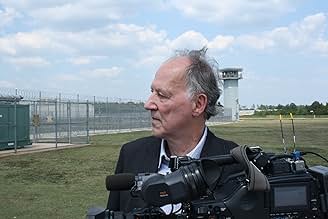


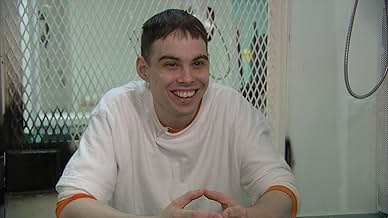


Werner Herzog
- Self - Narrator
- (voice)
Richard Lopez
- Self - Death House Chaplin
- (as The Reverend Richard Lopez)

Michael Perry
- Self - Death Row Inmate
- (as Michael James Perry)


Melyssa Thompson-Burkett
- Self - Jason Burkett's Wife
- (as Melyssa Burkett)

- Director
- Writer
- All cast & crew
- Production, box office & more at IMDbPro
7.317.8K
1
2
3
4
5
6
7
8
9
10
Featured reviews
'The State of Texas wants to kill me'
He's taken us into a forgotten cave; alongside bears; to the end of the world; and now Werner Herzog takes us straight into the mind of a madman, in a documentary about what causes people to kill and what society's attitude to such people should be.
Herzog concentrates on just one case, which is more than enough to make his points. Although he doesn't appear on screen, Herzog's voice is important. He dons the role of interviewer, which I believe contributes to the film's power. He asks very precise questions, persists when necessary, but does so in a very innocent, nonchalant way, sometimes even cracking a joke with his subject, who is usually an emotional wreck. And why not? They give more of themselves to someone who they feel is on their side, and we get an insight that is much more accurate than it otherwise could have been.
Michael Perry was a boy when he was convicted of killing a nurse and suspected of killing two youths in 2001. The state of Texas executed him eight days after the film's release. His accomplice to the latter murders, Jason Burkett, received a life sentence. These and other relevant people, such as family members and prison officials, are interviewed to gain a broad range of views on what has always been a difficult political and moral topic.
Documentaries tend to stand back from their topics; Herzog gets right up under their nose. At times I felt he was oblivious to his audience, as though trying to satisfy his own curiosity. And that's why he has always been highly respected: his selfishness is the key to his charity.
All interviews are incredibly moving, not just because almost all involve tears, but because I felt that interviewees had nothing else to reveal and what they did reveal was utterly sincere. This docu-drama uses actual police footage of the crime scenes which, when accompanied by an austere soundtrack, gives the film a sombre, eerie tone.
There's no doubt about it: the crimes were heinous. Both Perry and Burkett blamed each other. Both denied involvement. What's clear is that the crimes were unprovoked and victims perished needlessly. (We're led to believe that people were murdered for the sake of a red sports car.)
Although Herzog states unequivocally that he is anti-capital punishment ('I don't think human beings should be executed. Simple as that'), he never proselytises. He produces an equal account of the merits and pitfalls of state-sponsored execution and, like any objective filmmaker, allows his audience the final say.
www.moseleyb13.com
Herzog concentrates on just one case, which is more than enough to make his points. Although he doesn't appear on screen, Herzog's voice is important. He dons the role of interviewer, which I believe contributes to the film's power. He asks very precise questions, persists when necessary, but does so in a very innocent, nonchalant way, sometimes even cracking a joke with his subject, who is usually an emotional wreck. And why not? They give more of themselves to someone who they feel is on their side, and we get an insight that is much more accurate than it otherwise could have been.
Michael Perry was a boy when he was convicted of killing a nurse and suspected of killing two youths in 2001. The state of Texas executed him eight days after the film's release. His accomplice to the latter murders, Jason Burkett, received a life sentence. These and other relevant people, such as family members and prison officials, are interviewed to gain a broad range of views on what has always been a difficult political and moral topic.
Documentaries tend to stand back from their topics; Herzog gets right up under their nose. At times I felt he was oblivious to his audience, as though trying to satisfy his own curiosity. And that's why he has always been highly respected: his selfishness is the key to his charity.
All interviews are incredibly moving, not just because almost all involve tears, but because I felt that interviewees had nothing else to reveal and what they did reveal was utterly sincere. This docu-drama uses actual police footage of the crime scenes which, when accompanied by an austere soundtrack, gives the film a sombre, eerie tone.
There's no doubt about it: the crimes were heinous. Both Perry and Burkett blamed each other. Both denied involvement. What's clear is that the crimes were unprovoked and victims perished needlessly. (We're led to believe that people were murdered for the sake of a red sports car.)
Although Herzog states unequivocally that he is anti-capital punishment ('I don't think human beings should be executed. Simple as that'), he never proselytises. He produces an equal account of the merits and pitfalls of state-sponsored execution and, like any objective filmmaker, allows his audience the final say.
www.moseleyb13.com
10JoeC345
True Documentation
The art of making a real documentary has become lost in recent years with filmmakers consistently using stylistic editing and asking questions only to prove the point there trying to make. One thing that struck me with "Into The Abyss" by Werner Herzog was how brilliantly he stayed on task of what he was trying to say. He clearly states once that he does not believe in the death penalty.
The thing that impressed me the most was how he was never on screen and only asked honest and pertinent questions to all his interviewees without leading them to the answers he wanted. He probed but always let the person say exactly what they wanted to say. He never tries to excuse or romanticize the crime led the one person he interviewed to death row but is firm in his belief that capital punishment is just as much a sin as the crimes perpetrated by the death row inmates
As I understand it, The United States is one of the last few developed countries that still imposes the death penalty and Texas has the highest rate of death row inmates and the lowest rate of appeals for death row inmates in the nation. While pondering that question you have to ask yourself, "why is that?" is crime being any more deterred by this, I would say no since they still have the highest rate of death row inmates even to this day.
The commentary by the different people that Herzog talks too is extraordinary. The two that I found to be the best were the father Jason Burkett who is also in prison and the man who was once captain of the guard where Perry was to be executed. This mans conclusion on why the death penalty should not be used is perhaps the best and most profound.
Herzog poses no enlightening statement at the end and even provides no commentary minus the questions he asks the people he interviews and this is perhaps the best way he could have approached this subject. He let's the viewer determine for themselves what they want to take away from the evidence he provides.
This is a hard film to review but is a film that should be seen, and the two questions stuck with me even after the film was over, Who has the right to take another life? and, Is there a point where the taking of a life is not a sin?
The thing that impressed me the most was how he was never on screen and only asked honest and pertinent questions to all his interviewees without leading them to the answers he wanted. He probed but always let the person say exactly what they wanted to say. He never tries to excuse or romanticize the crime led the one person he interviewed to death row but is firm in his belief that capital punishment is just as much a sin as the crimes perpetrated by the death row inmates
As I understand it, The United States is one of the last few developed countries that still imposes the death penalty and Texas has the highest rate of death row inmates and the lowest rate of appeals for death row inmates in the nation. While pondering that question you have to ask yourself, "why is that?" is crime being any more deterred by this, I would say no since they still have the highest rate of death row inmates even to this day.
The commentary by the different people that Herzog talks too is extraordinary. The two that I found to be the best were the father Jason Burkett who is also in prison and the man who was once captain of the guard where Perry was to be executed. This mans conclusion on why the death penalty should not be used is perhaps the best and most profound.
Herzog poses no enlightening statement at the end and even provides no commentary minus the questions he asks the people he interviews and this is perhaps the best way he could have approached this subject. He let's the viewer determine for themselves what they want to take away from the evidence he provides.
This is a hard film to review but is a film that should be seen, and the two questions stuck with me even after the film was over, Who has the right to take another life? and, Is there a point where the taking of a life is not a sin?
A life-affirming rhapsody on the death penalty
In September 2011, two events reignited the death-penalty debate in America.
The first came on the seventh of the month at the Republican Presidential Debates in Simi Valley, California. Texas governor Rick Perry was asked by an NBC News correspondent whether he was able to sleep at night, given that his state had executed 234 inmates during his time in office. Before the question was even finished, the audience broke into rapturous applause, cheering the body count.
Two weeks later came the execution of Troy Davis in Georgia, who had spent 20 years protesting his innocence on death row for killing a security guard in a parking-lot altercation. Nine former witnesses signed affidavits retracting their original statements and claiming they had been coerced by police into identifying Davis. However, in spite of this, and significant pressure from an array of human-rights groups, the Supreme Court refused to overturn Davis's death sentence.
Coincidentally, German filmmaker Werner Herzog's Into the Abyss: A Tale of Death, A Tale of Life premiered at the Toronto film festival in the weeks between the Californian GOP debate and Davis's execution. The documentary focuses on three murders that took place in a rural Texas town in 2001, for which Jason Burkett and Michael Perry received a life sentence and the death penalty respectively. Due to the film's timeliness, it was rushed for a November release and has now landed on UK screens. Yet while Herzog enters the film making no bones about his opposition to capital punishment, he refuses to exploit his tentative subject for his own political purposes.
From the outset, Herzog has clearly gone to great lengths to avoid the sort of manipulative didacticism popularised by Michael Moore that has blighted mainstream documentary for the past decade. Whereas he might have chosen to focus on cases of questionable guilt in order to make his case, Herzog opts for a series of murders which are straightforward and frighteningly trivial in their motivations. Both Perry and Burkett continue to place blame on each other, but according to a local cop, who talks us through the case in the film's opening minutes, the two young men killed a middle-aged mother and two teenage boys, all in order to steal the woman's red convertible. Interviewing Perry days before his execution, the victim's families and the state officials involved in the lethal injections that take place in Texas - an average of around two per month since 2001 - the film offers a sombre meditation on the barbarism which survives in modern civilised society.
Yet there remains in many of these interviews an aching humanity achieved through the plain spectacle of real people talking about deeply affecting moments in their lives. Their candour brings a distinctly life-affirming quality to film, which Herzog comes dangerously close to ruining by his recurring need to put words into the mouths of his subjects.
With his last project, Cave of Forgotten Dreams, which explored the Chauvet caves and the ancient pre-historic paintings that adorn their walls, Herzog was free to rhapsodise as much as he liked. He brings a similar compulsion to impose his own poetic meaning onto the images to Into the Abyss. During one of the film's most heartrending interviews, in which a former state executioner explains the moment he realised he couldn't continue, Herzog asks 'Was this the first time when you felt like yourself?'. Needless to say, the interviewee looks rather nonplussed. In moments like this, Herzog comes across like an aloof auteur shamelessly attempting to envelop his subjects into his own poignant conception of events.
While he abstains from narration and never strays from behind the camera, his unmistakable low drawl is a constant and manipulative presence. Similarly his carving of the film into chapters, complete with such melodramatic titles as 'Time and Emptiness', feels like a needless framework that only compromises the manifold beauty of the film.
With Into the Abyss, Herzog stays true to his word and doesn't allow partisan fingerwagging to distance us from the horror of capital punishment. Unfortunately, his heavy-handed poeticising has much the same effect, interrupting the flow of what is an otherwise gripping and unassuming conversation about the shadowy border between justice and revenge, and the inimitable value of human life.
The first came on the seventh of the month at the Republican Presidential Debates in Simi Valley, California. Texas governor Rick Perry was asked by an NBC News correspondent whether he was able to sleep at night, given that his state had executed 234 inmates during his time in office. Before the question was even finished, the audience broke into rapturous applause, cheering the body count.
Two weeks later came the execution of Troy Davis in Georgia, who had spent 20 years protesting his innocence on death row for killing a security guard in a parking-lot altercation. Nine former witnesses signed affidavits retracting their original statements and claiming they had been coerced by police into identifying Davis. However, in spite of this, and significant pressure from an array of human-rights groups, the Supreme Court refused to overturn Davis's death sentence.
Coincidentally, German filmmaker Werner Herzog's Into the Abyss: A Tale of Death, A Tale of Life premiered at the Toronto film festival in the weeks between the Californian GOP debate and Davis's execution. The documentary focuses on three murders that took place in a rural Texas town in 2001, for which Jason Burkett and Michael Perry received a life sentence and the death penalty respectively. Due to the film's timeliness, it was rushed for a November release and has now landed on UK screens. Yet while Herzog enters the film making no bones about his opposition to capital punishment, he refuses to exploit his tentative subject for his own political purposes.
From the outset, Herzog has clearly gone to great lengths to avoid the sort of manipulative didacticism popularised by Michael Moore that has blighted mainstream documentary for the past decade. Whereas he might have chosen to focus on cases of questionable guilt in order to make his case, Herzog opts for a series of murders which are straightforward and frighteningly trivial in their motivations. Both Perry and Burkett continue to place blame on each other, but according to a local cop, who talks us through the case in the film's opening minutes, the two young men killed a middle-aged mother and two teenage boys, all in order to steal the woman's red convertible. Interviewing Perry days before his execution, the victim's families and the state officials involved in the lethal injections that take place in Texas - an average of around two per month since 2001 - the film offers a sombre meditation on the barbarism which survives in modern civilised society.
Yet there remains in many of these interviews an aching humanity achieved through the plain spectacle of real people talking about deeply affecting moments in their lives. Their candour brings a distinctly life-affirming quality to film, which Herzog comes dangerously close to ruining by his recurring need to put words into the mouths of his subjects.
With his last project, Cave of Forgotten Dreams, which explored the Chauvet caves and the ancient pre-historic paintings that adorn their walls, Herzog was free to rhapsodise as much as he liked. He brings a similar compulsion to impose his own poetic meaning onto the images to Into the Abyss. During one of the film's most heartrending interviews, in which a former state executioner explains the moment he realised he couldn't continue, Herzog asks 'Was this the first time when you felt like yourself?'. Needless to say, the interviewee looks rather nonplussed. In moments like this, Herzog comes across like an aloof auteur shamelessly attempting to envelop his subjects into his own poignant conception of events.
While he abstains from narration and never strays from behind the camera, his unmistakable low drawl is a constant and manipulative presence. Similarly his carving of the film into chapters, complete with such melodramatic titles as 'Time and Emptiness', feels like a needless framework that only compromises the manifold beauty of the film.
With Into the Abyss, Herzog stays true to his word and doesn't allow partisan fingerwagging to distance us from the horror of capital punishment. Unfortunately, his heavy-handed poeticising has much the same effect, interrupting the flow of what is an otherwise gripping and unassuming conversation about the shadowy border between justice and revenge, and the inimitable value of human life.
Haunting Herzog
Into the Abyss is Herzogs most haunting piece since his 1979 remake of Nosferatu and to me, it would appear to be his most personal work to date. Herzog has always been an outspoken warrior against capitol punishment, so I assumed this would be preachy, overstated, and direct. To my surprise this is one of the most understated documentaries on death row inmates and those around them I have ever had the pleasure of watching.
Centering around the homicides committed by two Texas youths over a car in the early 2000's and the consequences felt by all the people involved, Into the Abyss isn't about guilt or innocence, nor is it about wrong or right. Into the Abyss is about staring the reality of it all in the face.
Herzog leaves no stone unturned as he interviews the perpetrators, the victims families, the wife and father of one of the prisoners, the prison chaplain, a series of acquaintances, the police captain, and a retired prison guard that was once the modern day equivalent of the town executioner. None of whom dwell on the deaths of those killed or the upcoming death of Micheal Perry (the inmate that was given death) but life after the events. How their worlds were effected is the topic and even though Herzog states clearly he opposes the death penalty he never harps on it.
The subjects that are interviewed were obviously hand picked with care and it all amounts to an eerie retrospect on how the world misses the big picture when it comes to taking the life of another for crimes they have committed. Easily the most jaw dropping documentary of the young 2010's decade. I cant think of another film that got me so emotionally involved while seemingly dancing around the main subject. Herzog has done it again, but I cant call it triumphant. No, Into the Abyss isn't a triumph at all. It is an epic tragedy that should be watched by those both pro and anti capitol punishment.
Centering around the homicides committed by two Texas youths over a car in the early 2000's and the consequences felt by all the people involved, Into the Abyss isn't about guilt or innocence, nor is it about wrong or right. Into the Abyss is about staring the reality of it all in the face.
Herzog leaves no stone unturned as he interviews the perpetrators, the victims families, the wife and father of one of the prisoners, the prison chaplain, a series of acquaintances, the police captain, and a retired prison guard that was once the modern day equivalent of the town executioner. None of whom dwell on the deaths of those killed or the upcoming death of Micheal Perry (the inmate that was given death) but life after the events. How their worlds were effected is the topic and even though Herzog states clearly he opposes the death penalty he never harps on it.
The subjects that are interviewed were obviously hand picked with care and it all amounts to an eerie retrospect on how the world misses the big picture when it comes to taking the life of another for crimes they have committed. Easily the most jaw dropping documentary of the young 2010's decade. I cant think of another film that got me so emotionally involved while seemingly dancing around the main subject. Herzog has done it again, but I cant call it triumphant. No, Into the Abyss isn't a triumph at all. It is an epic tragedy that should be watched by those both pro and anti capitol punishment.
Texas life and death
Filmmaker Werner Herzog does a documentary about Michael James Perry. He's on death row in Livingston, Texas scheduled to be executed in 8 days. He was convicted along with his friend Jason Burkett for a triple homicide. They killed a housewife in her home to steal a car and then killed two young people to get passcode for the community gate. This is not really a whodunit unless you believe Burkett or even Perry. It's not impossible to believe them and there are certainly people willing to do that. This is really about the whole society in general. It is about the victims. It is about the daughter who lost her family. It is about Burkett's father who watches his various family members get incarcerated along with him. It is about the friend and Herzog who is more interested in him learning to read as an adult. It is about the executioner who had to quit. This is quite a tapestry of Texan life.


Did you know
- Quotes
Fred Allen: Hold still and watch the birds. Once you get up into your life like that, and once you feel good about your life, you do start watching what the birds do. What the doves are doing. Like the hummingbirds. Why are there so many of them.
- ConnectionsFeatured in Ebert Presents: At the Movies: Episode #2.17 (2011)
- SoundtracksEnd Credits and Incidental Music
(untitled)
Composer: Mark De Gli Antoni
Sebastian Steinberg - guitars and contra bass.
Lisa Germano - violins.
David Byrne - guitar.
Peter Beck - winds.
Colin Stevens - instrument designs.
Mark De Gli Antoni - keyboards and percussion.
- How long is Into the Abyss?Powered by Alexa
Details
Box office
- Gross US & Canada
- $223,880
- Opening weekend US & Canada
- $47,559
- Nov 13, 2011
- Gross worldwide
- $393,714
- Runtime
- 1h 47m(107 min)
- Color
- Sound mix
- Aspect ratio
- 1.78 : 1
Contribute to this page
Suggest an edit or add missing content