

A young Pakistani man chasing corporate success on Wall Street finds himself embroiled in a conflict between his American Dream, a hostage crisis, and the enduring call of his family's homel... Read allA young Pakistani man chasing corporate success on Wall Street finds himself embroiled in a conflict between his American Dream, a hostage crisis, and the enduring call of his family's homeland.A young Pakistani man chasing corporate success on Wall Street finds himself embroiled in a conflict between his American Dream, a hostage crisis, and the enduring call of his family's homeland.
- Awards
- 3 wins total






Imaaduddin Shah
- Sameer
- (as Imaad Shah)

Christopher Nicholas Smith
- Mike Rizzo
- (as Chris Smith)


Madhavan
- Bandy Uncle
- (as a different name)

6.815.1K
1
2
3
4
5
6
7
8
9
10
Featured reviews
Simply Beautiful !!
This beautiful movie is about how the new era of fear is dividing East and West, featuring UK-based writer Mohsim Hamid's critically acclaimed book, The Reluctant Fundamentalist, about the impact of Sept 11th on Muslims living abroad post 9/11 attacks & its psychological and political damage. It's a tale of mixed loyalties and one man's journey into the heart of the conflict.
Hamid has published a novel about the aftermath of September 11th. It's based on a character whose life mirrors his own accomplishments, but whose subsequent journey and fate is very different. The book is entitled "The Reluctant Fundamentalist".
The main character, Chengez, is living in New York at the time of the attacks. The new western hostility towards his country, to his people, and to an ancient and complex civilization shocks Chengez, to the core. He feels as though he has to take sides. Then, quite simply, he has a crackup, followed by a mysterious journey back to Pakistan that may or may not lead to the embrace of fundamentalism.
At a café table in Lahore, a bearded Pakistani man converses with an uneasy American stranger. As dusk deepens to night, he begins the tale that has brought them to this fateful encounter . . .
Changez is living an immigrant's dream of America. At the top of his class at Princeton, he works at the elite valuation firm of Underwood Samson. He thrives on the energy of New York, and his budding romance with elegant, beautiful Erica promises entry into Manhattan society at the same exalted level once occupied by his own family back in Lahore.
But in the wake of September 11, Changez finds his position in his adopted city suddenly overturned, and his budding relationship with Erica eclipsed by the reawakened ghosts of her past. The romance is negligible; Erica is emotionally unavailable, endlessly grieving the death of her lifelong friend and boyfriend, Chris. And Changez's own identity is in seismic shift as well, unearthing allegiances more fundamental than money, power, and maybe even love.
Told in a single monologue, the narrative never flags. Changez is by turn's naive, sinister, unctuous, mildly threatening, overbearing, insulting, angry, resentful, and sad.
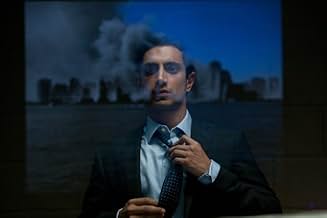
Changez is in Manila on 9/11 and sees the towers come down on TV. He tells the American, "...I smiled. Yes, despicable as it may sound, my initial reaction was to be remarkably pleased... I was caught up in the symbolism of it all, the fact that someone had so visibly brought America to her knees..." When he returns to New York, there is a palpable change in attitudes toward him, starting right at immigration. His name and his face render him suspect.
He exorcises that feeling and once again appreciates his home for its "unmistakable personality and idiosyncratic charm." While at home, he lets his beard grow. Advised to shave it, even by his mother, he refuses.
His company sends him to Istanbul for another business valuation; his mind filled with the troubles in Pakistan and the U.S. involvement with India that keeps the pressure on. Beautiful screenplay and great Urdu- English blend of dialogues makes it really worth a watch on the big screen.
Hamid has published a novel about the aftermath of September 11th. It's based on a character whose life mirrors his own accomplishments, but whose subsequent journey and fate is very different. The book is entitled "The Reluctant Fundamentalist".
The main character, Chengez, is living in New York at the time of the attacks. The new western hostility towards his country, to his people, and to an ancient and complex civilization shocks Chengez, to the core. He feels as though he has to take sides. Then, quite simply, he has a crackup, followed by a mysterious journey back to Pakistan that may or may not lead to the embrace of fundamentalism.
At a café table in Lahore, a bearded Pakistani man converses with an uneasy American stranger. As dusk deepens to night, he begins the tale that has brought them to this fateful encounter . . .
Changez is living an immigrant's dream of America. At the top of his class at Princeton, he works at the elite valuation firm of Underwood Samson. He thrives on the energy of New York, and his budding romance with elegant, beautiful Erica promises entry into Manhattan society at the same exalted level once occupied by his own family back in Lahore.
But in the wake of September 11, Changez finds his position in his adopted city suddenly overturned, and his budding relationship with Erica eclipsed by the reawakened ghosts of her past. The romance is negligible; Erica is emotionally unavailable, endlessly grieving the death of her lifelong friend and boyfriend, Chris. And Changez's own identity is in seismic shift as well, unearthing allegiances more fundamental than money, power, and maybe even love.
Told in a single monologue, the narrative never flags. Changez is by turn's naive, sinister, unctuous, mildly threatening, overbearing, insulting, angry, resentful, and sad.
Changez is in Manila on 9/11 and sees the towers come down on TV. He tells the American, "...I smiled. Yes, despicable as it may sound, my initial reaction was to be remarkably pleased... I was caught up in the symbolism of it all, the fact that someone had so visibly brought America to her knees..." When he returns to New York, there is a palpable change in attitudes toward him, starting right at immigration. His name and his face render him suspect.
He exorcises that feeling and once again appreciates his home for its "unmistakable personality and idiosyncratic charm." While at home, he lets his beard grow. Advised to shave it, even by his mother, he refuses.
His company sends him to Istanbul for another business valuation; his mind filled with the troubles in Pakistan and the U.S. involvement with India that keeps the pressure on. Beautiful screenplay and great Urdu- English blend of dialogues makes it really worth a watch on the big screen.
The War on Ignorance
What a shame, though how predictable, that the multiplexes chose not to show Mira Nair's brave and provocative political thriller about the intricacies of fighting extremist Islam.
Nair uses Mohsin Hamid's fictional novel to explore very real Western attitudes towards the East in the ongoing 'war on terror'. She has directed a film of huge cultural, political and moral significance at a critical juncture between the Muslim and non-Muslim world.
Rising star Riz Ahmed (Four Lions) gives a memorable lead performance as Changez, a Pakistani immigrant in New York, who has an identity crisis in the wake of 9/11. He returns to live in Lahore when an MIT professor has been captured and held ransom there by terrorists, who use him as leverage to make demands of the US.
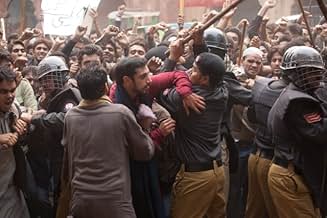
Posing as a journalist, Secret Service Agent Bobby Lincoln (Liev Schreiber) visits Lahore to interview Changez, who has developed a reputation for being anti-American. The US authorities believe that Changez, if not a terrorist, at least knows something about the kidnapping. They exert pressure on him by harassing his family, a move which only deepens his hatred.
During their interview, Changez asks Bobby to make a judgement about him only after hearing his entire story, and Changez's reminiscence allows for the film to unfurl as a flashback of epic proportions.
Raised in a secular, literate Muslim household in Pakistan, Changez finds it easy to break the covenants of his religion. He consumes alcohol, eats pork and sleeps with non-Muslims, everything Islam forbids. He wins a scholarship to study at Princeton in the late 90s, where he claims never to have scored a B.
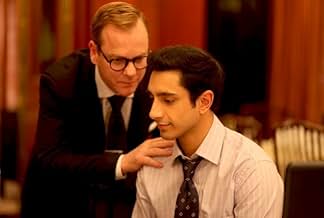
There he is headhunted to work for a prestigious valuation firm where he ensures a rapid promotion by impressing his boss (Kiefer Sutherland). On the day of his promotion the towers come down. He tells Bobby that instead of feeling sadness, he felt awe. 'David had struck Goliath'.
Ahmed gave his most famous performance in Lions, but this is his greatest. As an 'Asian' (I abhor the term but include it for your convenience) man myself, I have long had to suffer stereotypical performances by brown-skinned actors, who are used by ignorant directors to add colour and Schadenfreude to their ignorant stories. Ahmed transcends all that. This time we're analysing the reactions of White actors.
Changez's hatred of America germinates slowly, against his will, as his life slowly falls apart. Colleagues turn on him. The bond he had with his widowed girlfriend Erica (Kate Hudson) withers. Ordinary citizens view him as the enemy. His choice to move back to Pakistan is made for him.
Nair purposely shows much of Changez's life back home, as one of her clear aims is to challenge some key stereotypes. Changez's father (Om Puri) is a distinguished poet, not a farmer or rickshaw puller. The family is quite well off, not destitute. And the country is generally shown to be colourful, vibrant and civilised, instead of corrupt, backward and dangerous, as we normally see.
The horror of the recent Woolwich (London) terrorist attack may do something to restrict the impact of this excellent film. Paradoxically, the attack serves to reinforce the arguments of the film. It makes several points, makes them powerfully and forces you to in future question what you are told.
Nair uses Mohsin Hamid's fictional novel to explore very real Western attitudes towards the East in the ongoing 'war on terror'. She has directed a film of huge cultural, political and moral significance at a critical juncture between the Muslim and non-Muslim world.
Rising star Riz Ahmed (Four Lions) gives a memorable lead performance as Changez, a Pakistani immigrant in New York, who has an identity crisis in the wake of 9/11. He returns to live in Lahore when an MIT professor has been captured and held ransom there by terrorists, who use him as leverage to make demands of the US.
Posing as a journalist, Secret Service Agent Bobby Lincoln (Liev Schreiber) visits Lahore to interview Changez, who has developed a reputation for being anti-American. The US authorities believe that Changez, if not a terrorist, at least knows something about the kidnapping. They exert pressure on him by harassing his family, a move which only deepens his hatred.
During their interview, Changez asks Bobby to make a judgement about him only after hearing his entire story, and Changez's reminiscence allows for the film to unfurl as a flashback of epic proportions.
Raised in a secular, literate Muslim household in Pakistan, Changez finds it easy to break the covenants of his religion. He consumes alcohol, eats pork and sleeps with non-Muslims, everything Islam forbids. He wins a scholarship to study at Princeton in the late 90s, where he claims never to have scored a B.
There he is headhunted to work for a prestigious valuation firm where he ensures a rapid promotion by impressing his boss (Kiefer Sutherland). On the day of his promotion the towers come down. He tells Bobby that instead of feeling sadness, he felt awe. 'David had struck Goliath'.
Ahmed gave his most famous performance in Lions, but this is his greatest. As an 'Asian' (I abhor the term but include it for your convenience) man myself, I have long had to suffer stereotypical performances by brown-skinned actors, who are used by ignorant directors to add colour and Schadenfreude to their ignorant stories. Ahmed transcends all that. This time we're analysing the reactions of White actors.
Changez's hatred of America germinates slowly, against his will, as his life slowly falls apart. Colleagues turn on him. The bond he had with his widowed girlfriend Erica (Kate Hudson) withers. Ordinary citizens view him as the enemy. His choice to move back to Pakistan is made for him.
Nair purposely shows much of Changez's life back home, as one of her clear aims is to challenge some key stereotypes. Changez's father (Om Puri) is a distinguished poet, not a farmer or rickshaw puller. The family is quite well off, not destitute. And the country is generally shown to be colourful, vibrant and civilised, instead of corrupt, backward and dangerous, as we normally see.
The horror of the recent Woolwich (London) terrorist attack may do something to restrict the impact of this excellent film. Paradoxically, the attack serves to reinforce the arguments of the film. It makes several points, makes them powerfully and forces you to in future question what you are told.
...on fundementalism
Whilst it is tempting to dismiss this as just another 9/11 related tale, it goes a little deeper than one might think.
A young Pakistani whose upward path to wealth in the finance industry in New York is interrupted by the atrocities of September 11, 2001 who then becomes the Asian looking man with a beard, the centre of everyone's suspicions. The country he had come to grow so fond of, suddenly puts him in a dark corner, which raises some uneasy questions; is hatred the response to hatred, or extremism the cure to extremism? A single event, with a chain of events that followed caused him to question everything.
This is a story about two extremes. On the one hand is the religious fundamentalism which drives people to kill for the sake of dogma and blind obedience to a book whilst on the other hand lies the financial fundamentalism which drives people to gamble the livelihoods of others for the sake of individual profit maximisation and wealth accumulation. The former type of extremism is well noted and condemned, whilst the latter is noted but not so openly condemned although it is possible that it is causing more damage than religious fundamentalism. Regardless where one stands on such issues this film puts a young man in the middle of two extremes.
Changez is a conflicted soul and whilst he starts out as a financial fundamentalist, should he not swap one extreme for another? Can he realise that fanaticism is harmful no matter whichever root it has?
An interesting, and very relevant film.
A young Pakistani whose upward path to wealth in the finance industry in New York is interrupted by the atrocities of September 11, 2001 who then becomes the Asian looking man with a beard, the centre of everyone's suspicions. The country he had come to grow so fond of, suddenly puts him in a dark corner, which raises some uneasy questions; is hatred the response to hatred, or extremism the cure to extremism? A single event, with a chain of events that followed caused him to question everything.
This is a story about two extremes. On the one hand is the religious fundamentalism which drives people to kill for the sake of dogma and blind obedience to a book whilst on the other hand lies the financial fundamentalism which drives people to gamble the livelihoods of others for the sake of individual profit maximisation and wealth accumulation. The former type of extremism is well noted and condemned, whilst the latter is noted but not so openly condemned although it is possible that it is causing more damage than religious fundamentalism. Regardless where one stands on such issues this film puts a young man in the middle of two extremes.
Changez is a conflicted soul and whilst he starts out as a financial fundamentalist, should he not swap one extreme for another? Can he realise that fanaticism is harmful no matter whichever root it has?
An interesting, and very relevant film.
"That beard is making people a little uncomfortable."
Treading on both American and Islamic ideals this somewhat daring dive into the deep and disturbing Psychology and Ideology of the current clash of Cultures is not an easy thing to get across in a Movie. Maybe in a Book, but even that has its limitations to "listen carefully to the whole story, not just bits and pieces".
A Movie, by Nature is bits and pieces put together in a narrative that needs to tell a Story quickly, smoothly, and has not much time for Debate and in depth analysis. But it can do some Justice to the Subject Matter even if it is complex and Politically charged.
It is a beautifully Photographed Film and is Artistically quite impressive as it paints a Portrait of a successful Corporate Number Cruncher who has little time to feel for the Lives of those affected by His Downsizing Data. But as things unfold, this Stranger in a Strange Land, of Pakistani Origin, but Princeton Educated, finds that just being a Foreigner from the Middle East post 9-11, He is about to be brought down to size, for nothing more than His place of Origin.
It is a complex Scenario of changing perspectives, coping and becoming more than a Superficial player of High Finance or High Religious Dogma. He chooses not to be influenced or persuaded by the Fundamentalism of Corporate or Religious Thugs. He is more than that and so is this Movie as it attempts to put a Face on those that are usually viewed as Faceless.
A Movie, by Nature is bits and pieces put together in a narrative that needs to tell a Story quickly, smoothly, and has not much time for Debate and in depth analysis. But it can do some Justice to the Subject Matter even if it is complex and Politically charged.
It is a beautifully Photographed Film and is Artistically quite impressive as it paints a Portrait of a successful Corporate Number Cruncher who has little time to feel for the Lives of those affected by His Downsizing Data. But as things unfold, this Stranger in a Strange Land, of Pakistani Origin, but Princeton Educated, finds that just being a Foreigner from the Middle East post 9-11, He is about to be brought down to size, for nothing more than His place of Origin.
It is a complex Scenario of changing perspectives, coping and becoming more than a Superficial player of High Finance or High Religious Dogma. He chooses not to be influenced or persuaded by the Fundamentalism of Corporate or Religious Thugs. He is more than that and so is this Movie as it attempts to put a Face on those that are usually viewed as Faceless.
A movie made from a different viewpoint
This movie challenged my views of American policy. I thought that it was definitely written with an Indian audience as the demographic it would do best in. We had an opportunity to listen to the Director (Mira Nair) speak about this and her other movies. She told us "This movie is intended to start a conversation", and that it does. If you are a Hollywood / blockbuster fan you probably will not enjoy this as much. If you are open- minded, watch film for more than just entertainment, and like Bollywood / Indian film, this is for you. I think that just as 20 years ago film depicting disability, or sexuality was far less popular such is true about a film that illustrates a point of view that's not that of a gun toting American.


Did you know
- Trivia"Changez" is a Pakistani version of Genghis, from Genghis Khan.
- GoofsIn Chang's flashback to 2001, Erica takes a photo with her Canon EOS 5D, but the camera was not announced by Canon until 2005.
- ConnectionsFeatured in At the Movies: Venice Film Festival 2012 (2012)
- SoundtracksKangna
Performed by Fareed Ayaz and Abu Muhammad
Written by Unknown/Traditional Folk Song
Produced by Rohail Hyatt
Tabla Player Ali Akbar
Dholak Player Gayoor Ahmed
Chorus Ghulum Akram, Moiz Uddin
Small Vocalist Fattah Ul Khair
- How long is The Reluctant Fundamentalist?Powered by Alexa
Details
Box office
- Gross US & Canada
- $552,959
- Opening weekend US & Canada
- $30,920
- Apr 28, 2013
- Gross worldwide
- $2,176,576
- Runtime
- 2h 10m(130 min)
- Color
- Sound mix
- Aspect ratio
- 2.35 : 1
Contribute to this page
Suggest an edit or add missing content